



Gilded Wood Accent Table
A gilded wood accent table brings metallic brilliance and Continental style to a room, serving as a striking focal point for lamps and decorative objects.

Gilded Wood Accent Table
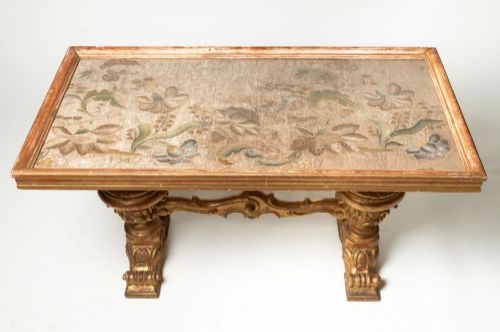
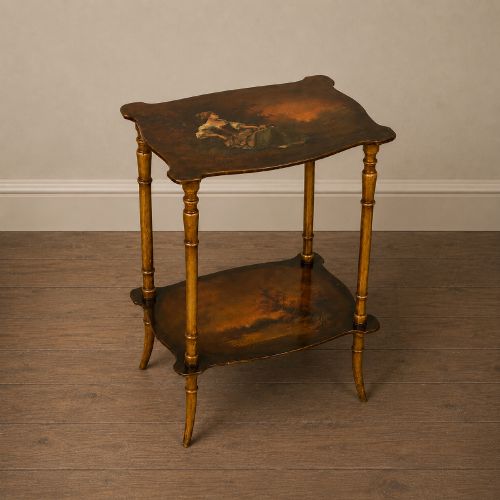
A gilded wood accent table encompasses a variety of small surfaces designed to catch the light and anchor a seating arrangement. Buyers seeking a gilded wood accent table will frequently encounter 19th-century examples alongside early 20th-century interpretations drawing on Regency, Baroque, and Rococo traditions.
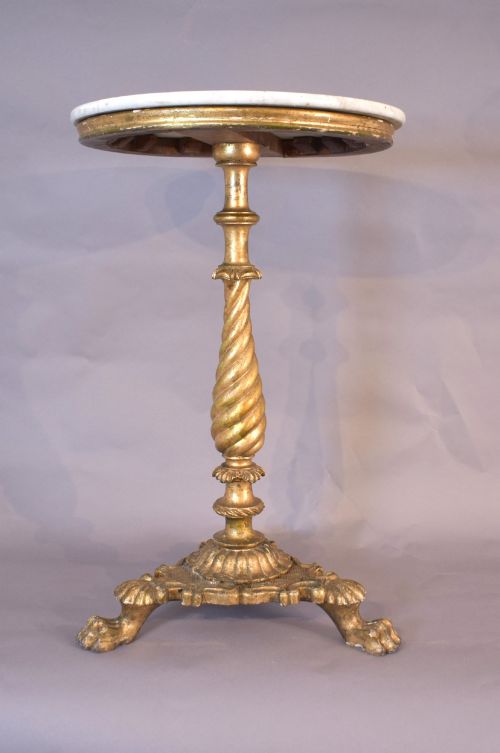
The selection ranges from occasional tables and coffee tables to marble-topped pedestals and two-tier étagères. Formats vary from tripod stands and circular lamp tables to ornate side tables featuring carved figures or swans.
Materials and Techniques
Craftsmen built these pieces from foundational timbers such as mahogany, rosewood, lime wood, and general painted woods, often applying gesso to smooth the surface before gilding. Gold leaf was then meticulously laid over the prepared wood to achieve a luminous, reflective finish.
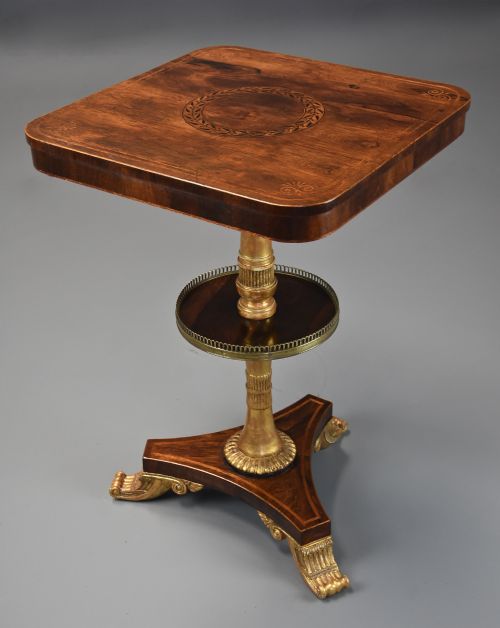
Many classical forms incorporate inset marble tops or brass details, while others rely on parcel-gilt and painted decoration to create contrast against the gilded highlights.
Carved wooden dolphins and swans occasionally double as table supports, proving that historical craftsmen loved a nautical theme.
Assessing Quality
Quality rests upon the crispness of the wood carving and the depth of the gilding applied over the gesso layers. Tables displaying hand-carved details like dolphins, swans, or figurative supports show a higher degree of sculptural ambition than simpler turned versions.
The integration of materials also defines the standard, particularly where heavy marble slabs are fitted precisely into carved wooden frames or where secondary timbers like rosewood and amboyna are selected for their grain.
George Bullock·Thomas Hope·Whytock and Reid
The Gilded Wood Accent Table Glossary
- Giltwood
- Wood that has been coated with gold leaf or gold dust using a size or gesso base. This finish provides the characteristic metallic gleam seen across Italian and French decorative pieces.
- Gesso
- A plaster-like mixture applied to wood surfaces to prepare them for gilding or painting. It creates a smooth, receptive ground for intricate carving details.
- Tripod table
- A small freestanding table supported by a central pillar resting on three feet. These pieces gained popularity for their versatility in domestic interiors.
- Étagère
- A small open shelving unit or side table with multiple tiers for displaying objects. They appeared frequently in Edwardian and Continental interiors.
- Parcel-gilt
- Woodwork that is partially gilded, leaving portions of the underlying painted or natural wood exposed. This technique highlights specific carved motifs.
Gilded Wood Accent Table: Frequently Asked Questions
What rooms suit a gilded wood accent table?
These tables find a natural home in drawing rooms, hallways, and studies where they function as lamp tables or display stands. Their reflective surfaces brighten darker corners and introduce a layer of historic texture.
Because they occupy a modest footprint, they pair easily beside armchairs or sofas without overwhelming the proportions of a domestic space.
How do I care for a gilded surface?
Gold leaf requires gentle handling and should only be dusted with a soft, dry cloth. Avoid chemical cleaning agents and moisture, which can lift the delicate leaf from its gesso ground.
Keeping the table away from direct sunlight and excessive heat sources prevents the underlying wood and gesso from drying and cracking over time.
What distinguishes Regency from Rococo styles?
Regency designs favour neoclassical restraint, drawing on classical Greek and Roman motifs with symmetrical lines and often incorporating rosewood or mahogany. Rococo styles embrace asymmetry, curving lines, and exuberant carved ornamentation.
Identifying the underlying stylistic cues helps date the piece and understand the regional workshop traditions that influenced its creation.
Are marble tops original to these tables?
Many 19th-century and Continental occasional tables were designed specifically to support heavy inset marble slabs, prized for their cool surface and durability. The weight of the stone required robust wooden frames beneath.
Examining the rebate where the marble rests helps confirm whether the top belongs to the original construction of the base.