

French Gilded Side Table
A french gilded side table brings warmth and ornate detail to a room through carved timber, gilt, and stone.
French Gilded Side Table
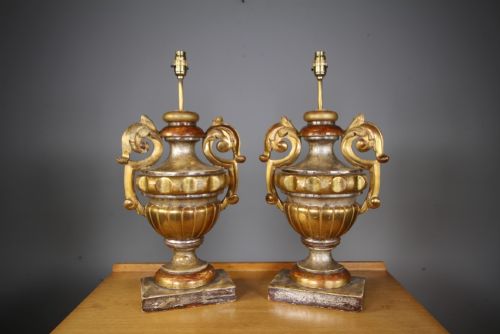
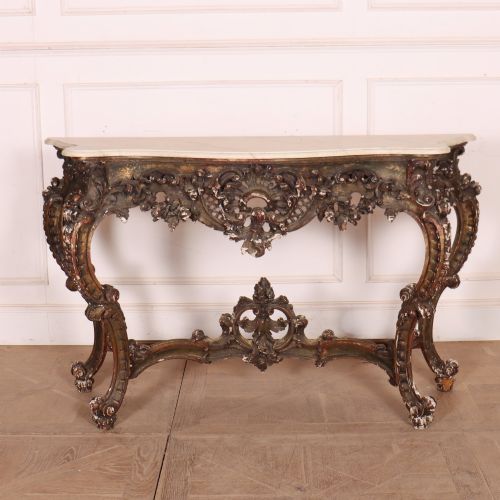
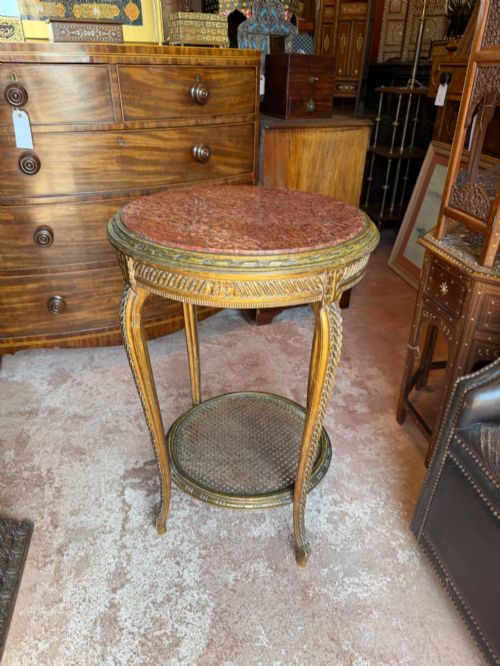
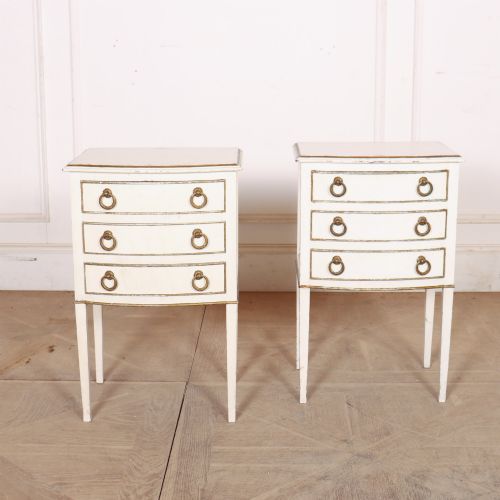
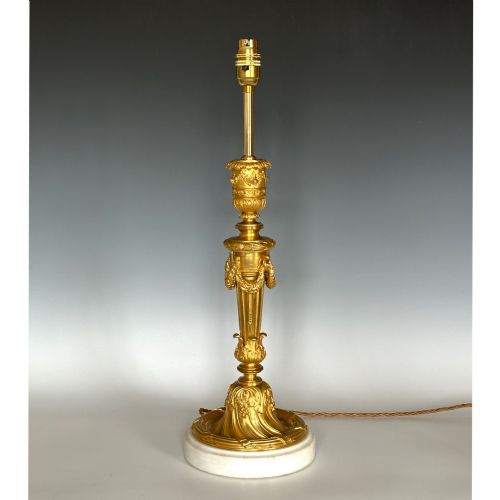
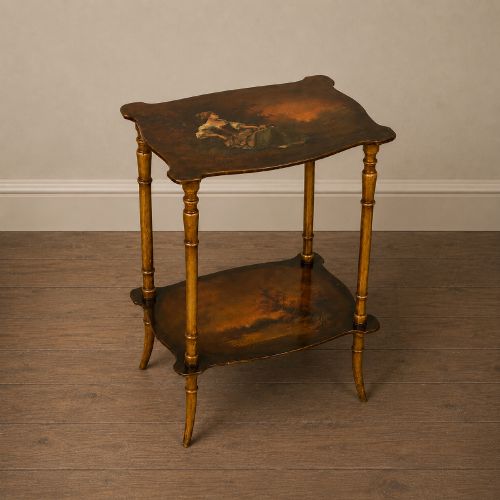
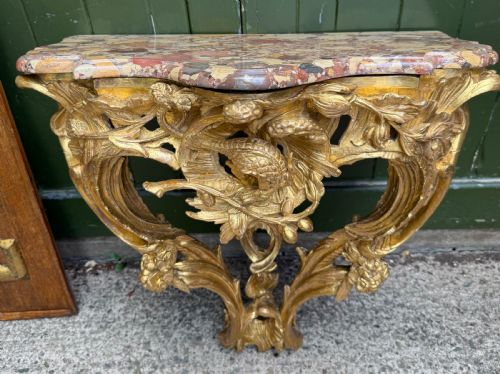
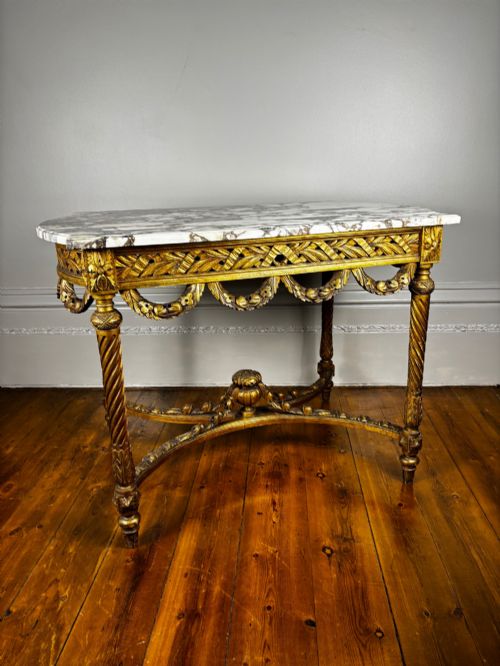
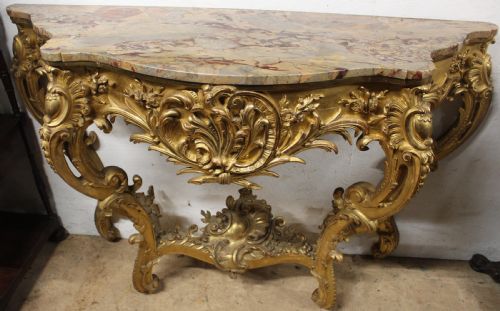
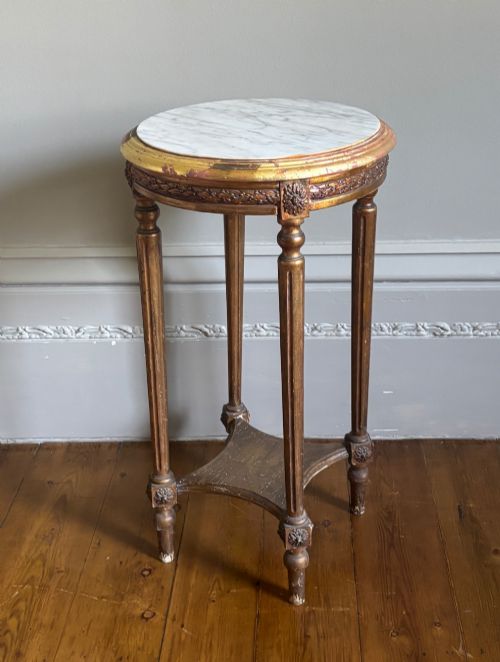
A french gilded side table spans console tables, lamp tables, gueridons, and occasional tables originating from the eighteenth to the twentieth centuries. Buyers seeking a french gilded side table most frequently encounter nineteenth-century console tables and marble-topped occasional pieces influenced by Louis styles.
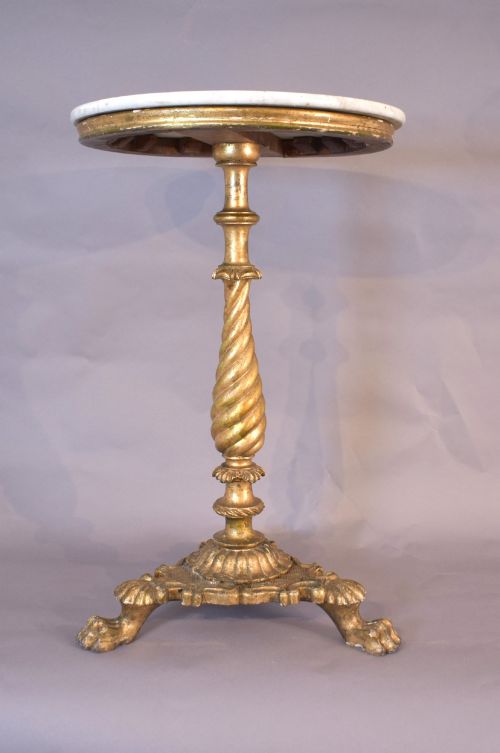
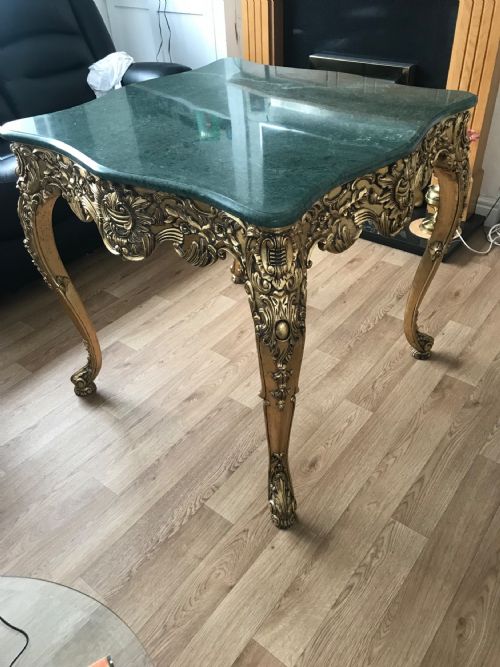
The selection includes serpentine front consoles, tripod tables, and two-tier étagères reflecting periods such as the Victorian era, Edwardian period, and the interwar years. These tables serve utility and display functions in hallways, drawing rooms, and bedrooms across the inventory.
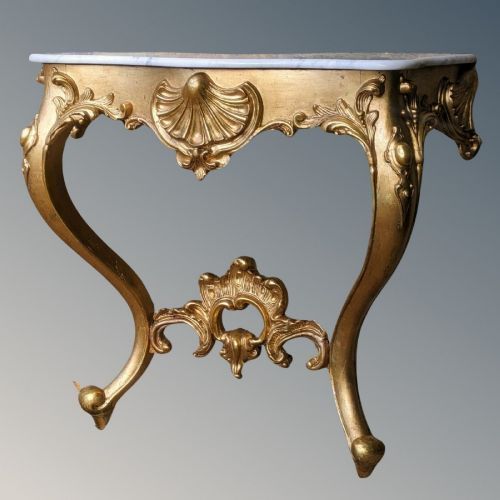
Craftsmen built these items in forms ranging from wall-fixed console tables to free-standing centre and wine tables. The designs draw heavily from French Rococo, Neoclassical, and Louis XVI aesthetics.
Materials and Technique
Makers constructed the structural framework using pine, walnut, kingwood, and mahogany, often applying gesso to prepare surfaces for gilding. Gold leaf and metallic paint provide the luminous finish characteristic of these furnishings.
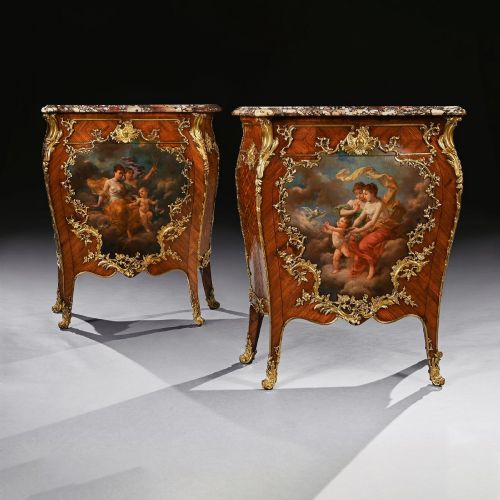
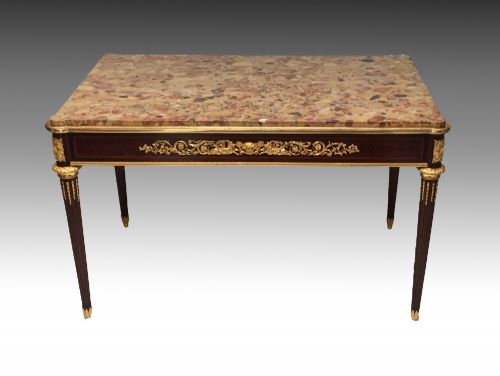
Tops feature heavy slabs of white, green, and figured marble, alongside polished onyx. Ormolu and gilt bronze mounts, handles, and gallery rails accent the timber and stone structures.
Listings span the eighteenth, nineteenth, and twentieth centuries, incorporating materials such as marble, giltwood, ormolu, and onyx.
Craftsmanship and Proportion
Quality rests in the crispness of the wood carving and the depth of the gesso application beneath the leaf. Fine examples show hand-tooled detail in the foliage and scrollwork rather than soft, moulded resin substitutes.
The thickness and geological character of the marble top distinguish better examples from standard pieces, alongside the precision of bronze or ormolu mount castings. Structural stability in slender tripod and gueridon frames dictates the enduring integrity of the furniture.
The French Gilded Side Table Glossary
- Giltwood
- Timber coated with gold leaf or metallic powder over a prepared gesso ground. This finish provides a reflective surface that catches natural light in a room.
- Ormolu
- Gilded bronze used for decorative mounts and accents on furniture. The technique involves applying a mercury and gold amalgam to bronze before firing.
- Gueridon
- A small round table supported by a central pillar or three legs. Originating in seventeenth-century France, these pieces often feature marble or onyx inserts.
- Console Table
- A table designed to stand against a wall, frequently secured with brackets. Eighteenth and nineteenth-century versions often pair with matching wall mirrors.
French Gilded Side Table: Frequently Asked Questions
Where should I place a console table?
Console tables fit naturally in entrance halls or against living room walls beneath a mirror or artwork. Their shallow depth allows them to sit flush without blocking walkways.
Pairing a wall-fixed console with table lamps or decorative objects creates a formal focal point upon entering a space.
How do I care for a marble top?
Wipe marble surfaces using a soft cloth dampened with warm water and mild, neutral soap. Avoid acidic cleaners, vinegar, and citrus substances that etch polished stone.
Using coasters under glasses prevents moisture rings from forming on porous marble and onyx surfaces.
What is the difference between Louis XV and Louis XVI styles?
Louis XV furniture relies on asymmetrical curves, rococo scrolls, and flowing natural motifs. The frames feel organic and dynamic.
Louis XVI design shifts toward neoclassical symmetry, straight fluted legs, and geometric restraint with classical urn and ribbon carvings.
Are these tables sturdy enough for daily use?
Most occasional and side tables function well for holding lamps, books, and small decorative items. Heavy marble tops provide a low centre of gravity that keeps the base stable.
Console tables secured directly to the wall offer extra stability for daily use in busy hallways.