



Empire Style Console Table
An empire style console table brings architectural symmetry and classical grandeur to a room, drawing the eye with rich mahogany, polished marble, and gleaming mounts.

Empire Style Console Table
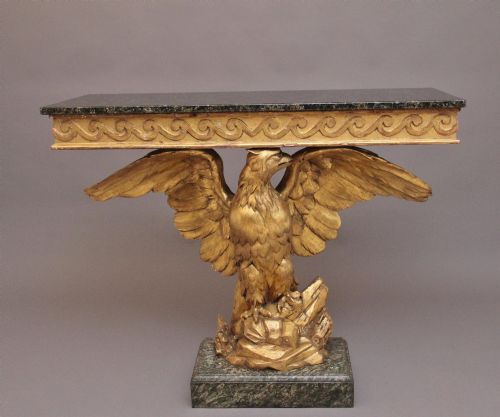
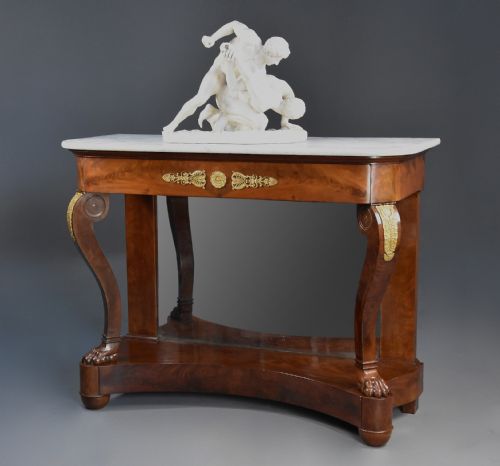
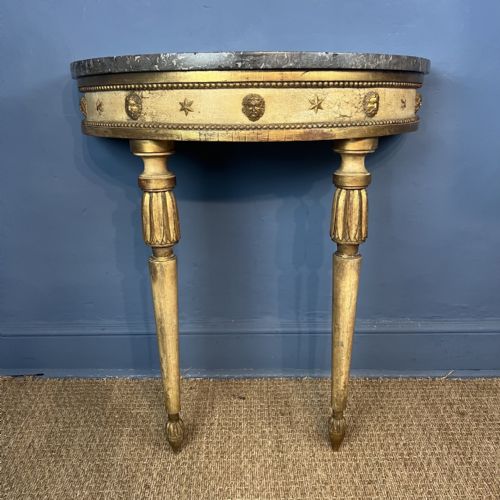
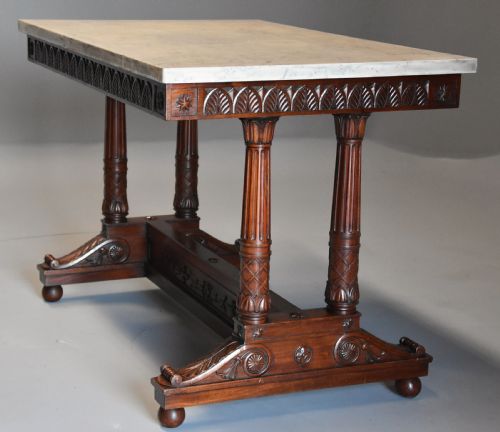
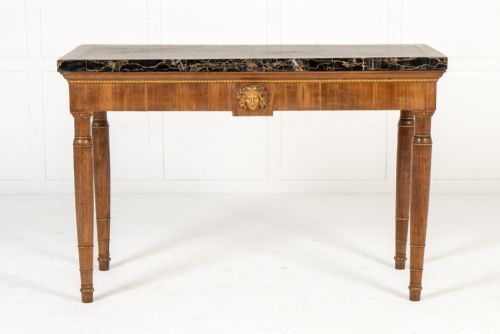
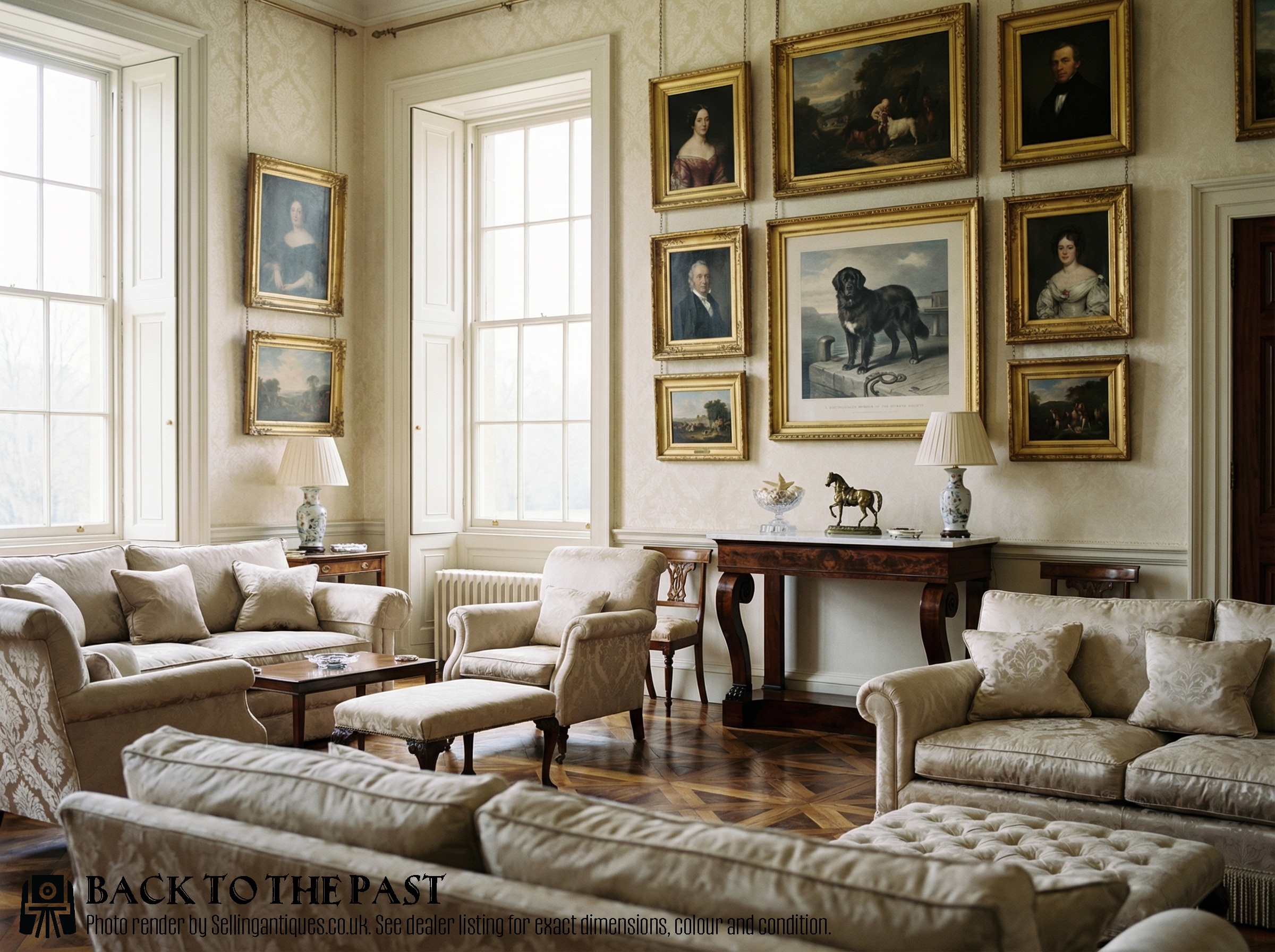
An empire style console table stands against a wall or functions as a pier table, bringing formal classical proportions to an interior. These tables emerge primarily from nineteenth century French, Italian, and English workshops, carrying the heavy architectural influence of neoclassical design.
The versions most common on this page date from the nineteenth century through to early twentieth century revivals. They frequently combine rich woods with contrasting stone tops, fulfilling the historic function of displaying decorative objects in grand reception rooms.
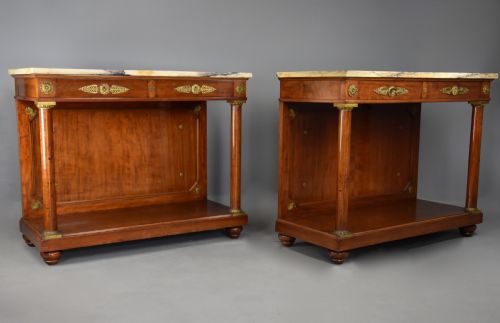
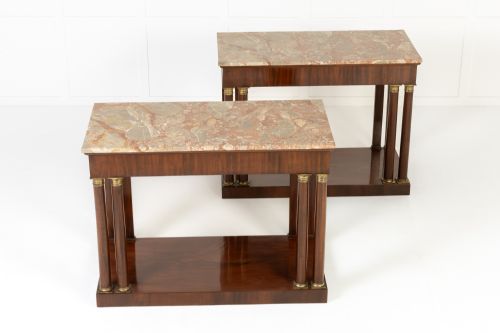
Makers construct these forms using solid timbers and veneers, ranging from simple side tables to grand pairs mounted with gilt brass. Alongside standard console tables, buyers frequently encounter related forms such as centre tables, sofa tables, and chiffoniers sharing the same vocabulary.
How they were made
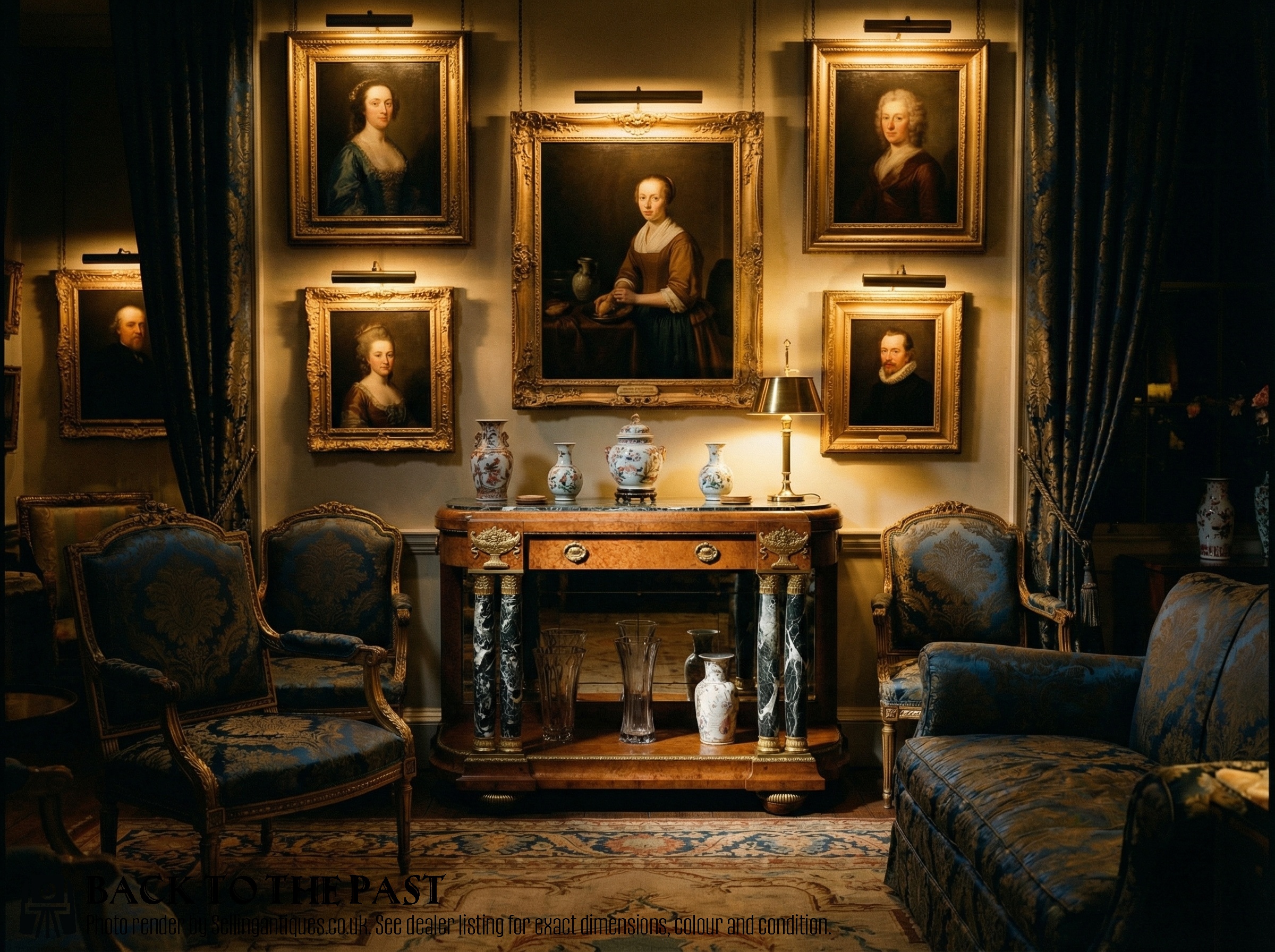
Cabinetmakers build these tables using dense timbers like mahogany, walnut, and birch, often applying figured veneers over sturdy secondary woods. The surfaces receive deep polishing to highlight the natural grain patterns of the wood.
Many examples feature heavy contrasting details in marble, glass, and painted or gilded surfaces. Ormolu and brass mounts are cast and chased with classical motifs, then secured to the wooden frames to accent the structural lines.
Empire Style Console Table Retail Price Guide 2026
Typical asking prices for empire style console table among the pieces listed under this phrase on Sellingantiques today, from the lower quarter to the upper quarter. They describe what is for sale here now, not the wider market.
Swans and classical mounts peer out from the corners of these tables, watching over the nineteenth century drawing rooms.
What varies in quality
Quality rests in the crispness of the cast mounts and the selection of the wood veneers. Finer pieces display finely chased ormolu and carefully matched timber grains that wrap evenly around the carcass.
The integration of the marble top and the weight of the underlying timber structure dictate the rigidity and presence of the table. Superior examples exhibit tighter joinery and more substantial stone slabs with sophisticated edge moulding.
Krieger Paris·JACOB
The Empire Style Console Table Glossary
- Ormolu
- Gilded bronze used for decorative mounts on furniture. This technique creates a rich golden contrast against dark mahogany and ebonised wood.
- Console table
- A table designed to stand against a wall, traditionally fixed with brackets. These pieces provide a shallow surface for display without crowding a hallway or drawing room.
- Biedermeier
- A Central European style prioritising clean lines and utility over excessive ornamentation. This aesthetic appears frequently in birch and walnut tables from the nineteenth century.
- Giltwood
- Wood that has been coated with a thin layer of gold leaf. This finish catches the light and emphasises carved architectural details.
- Pier table
- A table specifically designed to sit beneath a wall mirror between two windows. They share the structural form of the standard console table.
Empire Style Console Table: Frequently Asked Questions
Where should I place an empire style console table?
These tables suit hallways, living rooms, and dining spaces where they sit flush against a wall. Their shallow depth allows them to provide a surface for lamps and objects without obstructing walkways.
Pairing a console table with a wall mirror creates a balanced focal point reminiscent of period interiors. They also function well in pairs to anchor larger architectural walls.
How do I care for the marble top?
Marble requires gentle cleaning with warm water and a soft cloth to avoid scratching the polished surface. Acidic liquids like wine or citrus should be wiped away immediately to prevent staining.
Applying a neutral stone wax periodically helps protect the finish from moisture and general wear. Avoid placing abrasive items directly onto the stone without protective pads.
What is the difference between an empire table and a regency table?
Empire and Regency styles develop from the same classical revival period at the start of the nineteenth century. Empire design originates primarily from French neoclassical ideals under Napoleon, featuring heavy ormolu mounts and architectural forms.
Regency design represents the contemporary English interpretation of these classical motifs. While both styles utilise mahogany and marble, Regency pieces often show slightly lighter proportions.
How do I identify a revival piece from an original nineteenth century table?
Nineteenth century originals display construction techniques and timber ageing consistent with early manufacture, including hand-cut joinery. Revival pieces from the early twentieth century often employ machine precision and different secondary woods.
Examining the underside of the table and the wear on the mounts reveals clues about the age of the piece. Makers stamps and workshop signatures also help establish the date of manufacture.