
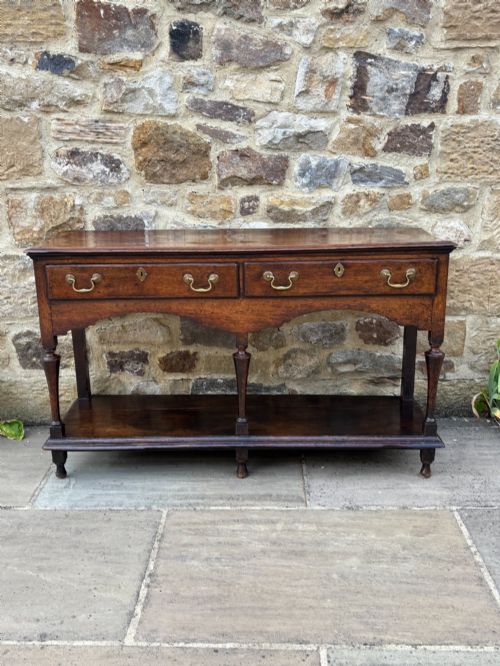
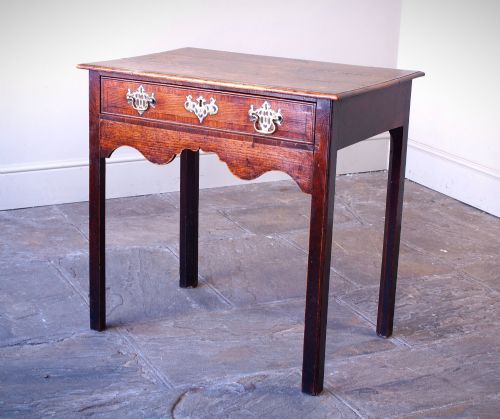
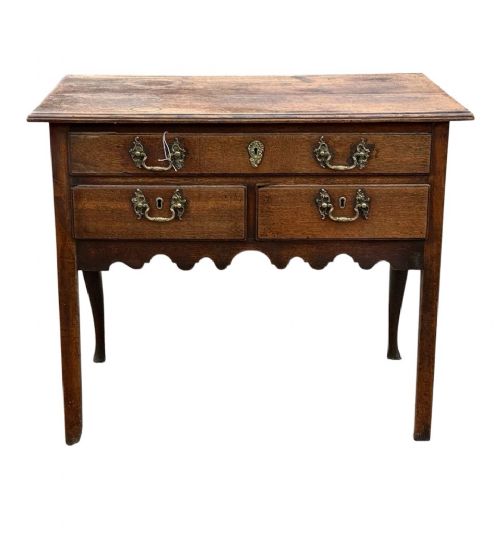

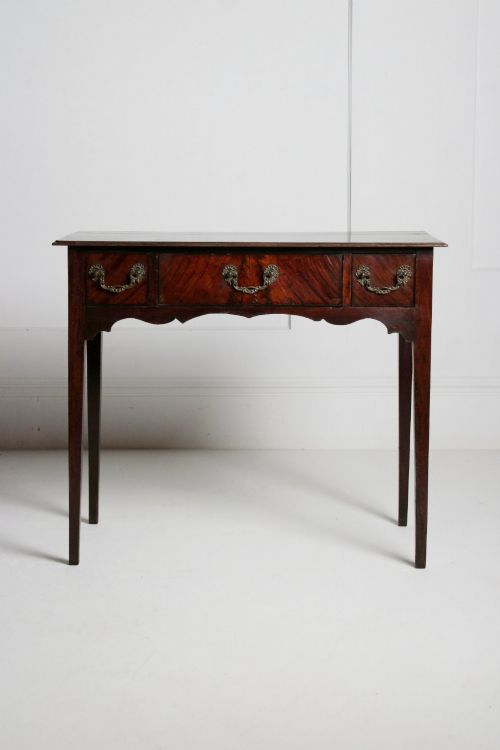


Carved Apron Hall Table
A carved apron hall table brings period character to an entranceway, offering a practical surface with detailed woodwork below.

Carved Apron Hall Table
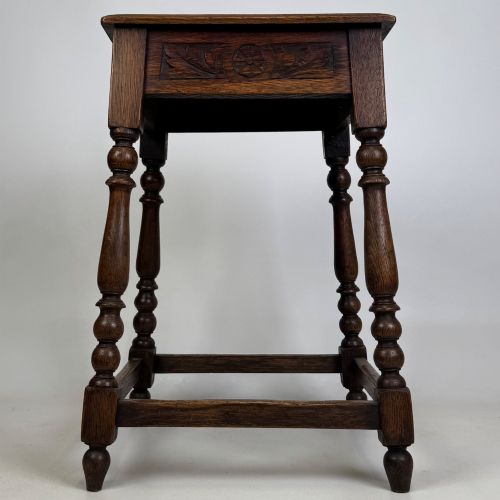
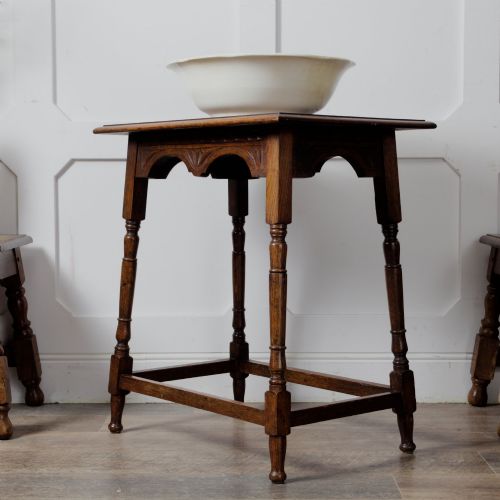
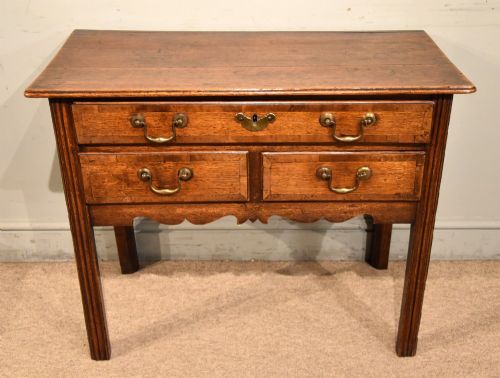
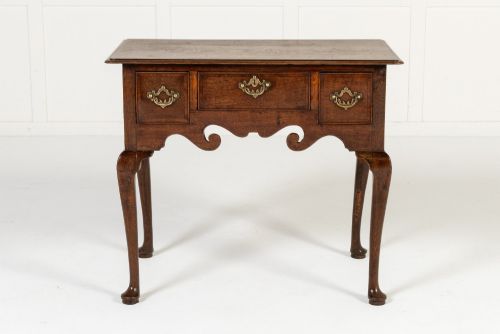
A carved apron hall table typically takes the form of a lowboy, side table, or console designed to sit against an entrance wall. These pieces provide a useful surface for everyday items while displaying ornamental carving directly beneath the tabletop.
The selections span from the seventeenth century through the Edwardian period, drawing on Georgian, Queen Anne, and Regency styles. Oak and mahogany appear most frequently, accompanied by walnut, rosewood, and fruitwood.
Buyers will encounter regional variations, such as Welsh oak lowboys and Irish influenced console tables featuring marble tops. Forms range from compact lamp tables to large serving tables and dresser bases.
Materials and construction methods
Cabinet makers relied predominantly on solid hardwoods like oak, mahogany, and walnut, frequently selecting native timber for eighteenth-century lowboys and dense imported rosewood or mahogany for later centre tables.
Carving was executed directly into the timber frame, particularly along the frieze or apron, creating relief patterns that define the style of pieces from George II designs to Edwardian revivals.
Secondary materials such as brass handles and marble inserts appear on specific console and serving tables, while paint finishes feature on select eighteenth-century baroque pieces.
Several tables carry the subtle ghost marks of vanished locks and long-lost keys, hinting at generations of whispered household secrets.
Distinctions in quality and execution
Quality rests heavily on the depth and crispness of the hand carving along the apron, where sharper chisel work separates superior cabinet making from simpler commercial output.
The selection of timber grain, particularly in figured mahogany, burr walnut, or quarter-sawn oak, determines the visual richness of the top and drawer fronts.
Structural integrity depends on period-appropriate joinery and timber stability, ensuring that tables retain their original proportions and standing stance over centuries of use.
The Carved Apron Hall Table Glossary
- Lowboy
- A small kneehole dressing table or side table with drawers, popular during the eighteenth century and typically raised on cabriole or straight legs.
- Console table
- A table designed to be fixed against a wall, frequently supported by ornamental legs or brackets rather than standing independently.
- Apron
- The structural member running beneath the tabletop and between the legs, often the primary location for decorative carving.
- Dresser base
- A lower cabinet framework featuring drawers or cupboards, serving a similar domestic function to larger side and serving tables.
- Serpentine
- A curved line of furniture frontals featuring a convex centre flanked by concave curves, common in eighteenth and nineteenth-century pieces.
Carved Apron Hall Table: Frequently Asked Questions
What is the difference between a lowboy and a hall table?
A lowboy is a specific form of small table featuring one or more rows of drawers beneath the top, originating primarily in the eighteenth century. While often used today in hallways, they were historically built for dressing or serving.
Other hall tables take the form of simple side tables, console tables, or centre tables without the characteristic multi-drawer arrangement of a traditional lowboy.
How do I identify an 18th-century oak table?
Eighteenth-century oak pieces display distinctive timber characteristics such as medullary rays, hand-cut joints, and patination developed through long use. Construction methods involve pegged mortise and tenon joints rather than modern fixings.
Stylistic cues include vernacular regional traits, particularly from Welsh workshops, or formal Georgian proportions with cabriole legs and shaped aprons.
Where should I place a console table?
Console tables suit entrance halls, narrow corridors, and reception rooms where floor space is limited. Because many historical examples were designed to stand against a wall, they fit efficiently behind sofas or beneath mirrors.
Freestanding centre tables require placement in open spaces where they can be viewed from all sides, whereas console and side tables function best anchored to a vertical surface.
How do mahogany and oak tables differ in style?
Oak tables generally belong to earlier periods, spanning the seventeenth and eighteenth centuries, and lean towards vernacular or country Georgian aesthetics. Their grain is robust and golden brown.
Mahogany tables frequently reflect later Georgian, Regency, or Edwardian revivals, offering a darker reddish-brown hue and supporting finer, sharper carved details like those seen in Chippendale or Adam revival pieces.