



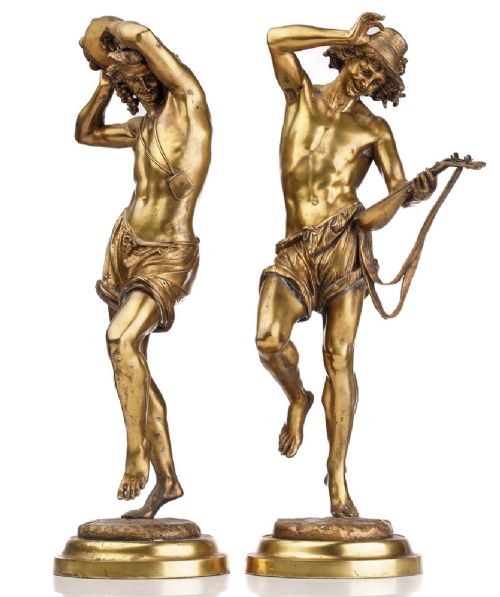


Neapolitan Bronze Statue
A neapolitan bronze statue captures classical antiquity and southern Italian life, offering collectors tangible fragments of nineteenth-century Grand Tour travels.
Neapolitan Bronze Statue
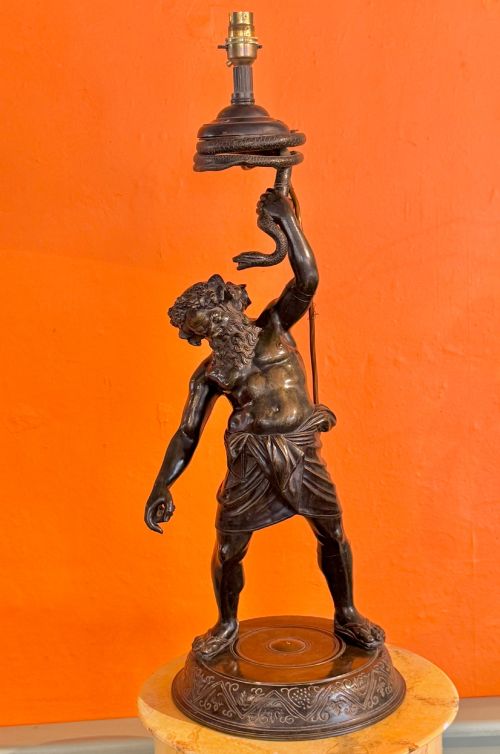
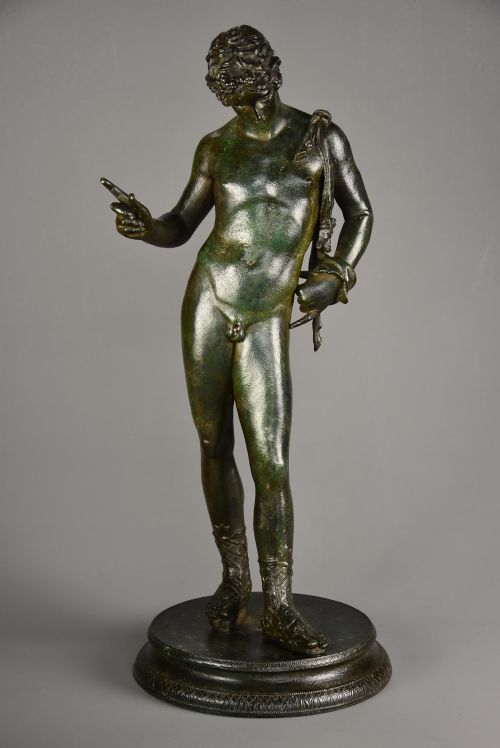
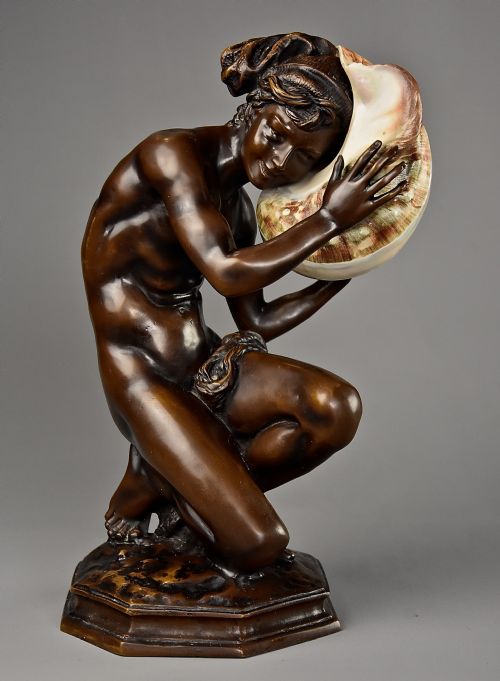
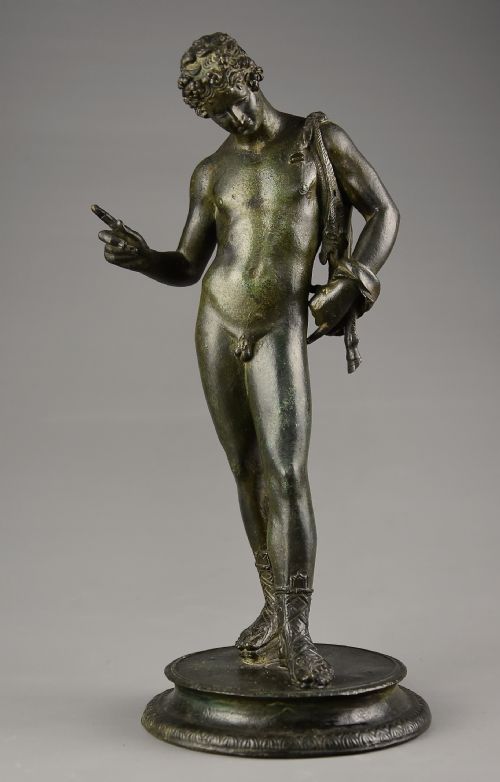
A neapolitan bronze statue typically presents classical mythological figures or vernacular subjects associated with southern Italy, reflecting the cultural interests of nineteenth-century travellers on the Grand Tour. Buyers encounter subjects such as Narcissus, Dionysus, dancing fauns, and local fisher boys or musicians.
The objects span from the nineteenth century into the early twentieth century, appearing as freestanding sculptures, table lamps, and figures mounted on stone bases. These pieces range in scale from cabinet sculptures to larger exhibition-size works cast in workshops across Italy and France.
Materials and casting methods
Foundries utilised traditional bronze casting techniques to reproduce classical antiquities and contemporary academic subjects, often finishing the metal with patination in dark green or brown tones, or employing gilt bronze. Many examples incorporate polished marble or fossil marble as integral bases for the bronze figures.
Current listings feature patinated bronze, gilt bronze, and fossil marble across nineteenth-century and early twentieth-century periods.
Assessing quality and execution
The distinction between standard souvenir pieces and superior works lies in the crispness of the bronze chasing and the fidelity of the cast to the original antique source. Finer sculptures display precise muscular definition, articulate facial expressions, and careful hand-finishing of small details like fingers and drapery.
The quality of the secondary materials, particularly heavy fossil marble or carved marble bases fitted to the bronze, contributes significantly to the overall presence and stability of the sculpture.
G Amodio Naples·Giuseppe Renda·Vincenzo Gemito·Albert Ernest Carrier-Belleuse·Francisque Joseph Duret·Michele Amodio
The Neapolitan Bronze Statue Glossary
- Grand Tour
- A traditional journey through Europe undertaken by upper-class young men in the eighteenth and nineteenth centuries to study classical art. Souvenirs purchased along the way frequently included bronze reductions of famous ancient sculptures.
- Patinated bronze
- A bronze sculpture treated with chemical solutions to produce a specific surface colour, most commonly dark green or brown. This process protects the metal and enhances visual depth.
- Gilt bronze
- Bronze that has been coated with a thin layer of gold or gold amalgam. This technique provides a bright, reflective surface finish seen on decorative figures and lamps.
- Fossil marble
- A limestone matrix containing visible organic fossils used frequently for sculptural bases. Its varied natural patterns complement the dark tones of patinated bronze.
Neapolitan Bronze Statue: Frequently Asked Questions
What is a neapolitan bronze statue?
These bronze sculptures depict mythological subjects modelled on classical antiquities or everyday figures from southern Italy. They were produced primarily during the nineteenth century as souvenirs for travellers or as independent decorative works.
Foundries in Naples and Paris cast these figures in bronze, often mounting them on marble bases. They represent a significant category of nineteenth-century European sculpture.
How do I care for a bronze sculpture?
Bronze requires minimal maintenance, needing only occasional dusting with a soft, dry cloth to prevent particulate accumulation. Avoid using chemical cleaners, oils, or abrasives that might damage the patinated surface.
Keep the sculpture in a stable environment away from high humidity and direct sunlight. This preserves both the bronze patina and any fitted marble base.
Are these pieces original antiques?
The selection consists of nineteenth-century and early twentieth-century bronze castings. Many are reductions or interpretations after ancient Roman and Greek sculptures found in Italian museums.
Documentation, foundry marks, and stylistic markers help distinguish nineteenth-century productions from later reproductions. Casts bear the technical characteristics of period bronze-working methods.
Why are some figures mounted on marble?
Marble bases provide structural stability for slender bronze figures while adding aesthetic contrast to the metal. Fossil marble and green marble were common choices for nineteenth-century workshops.
The weight of the stone base grounds the composition, particularly for figures balanced on one foot or standing on rockwork.