


Bronze Narcissus Figure
A bronze narcissus figure captures the classical grace of the antique original, offering a tangible piece of Grand Tour heritage for the home.

Bronze Narcissus Figure
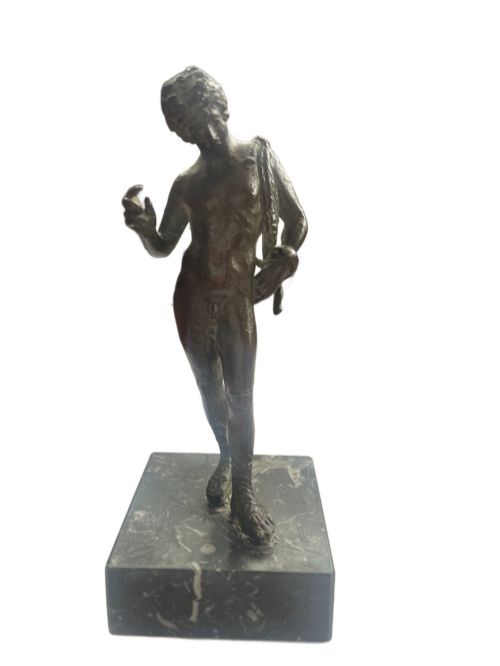
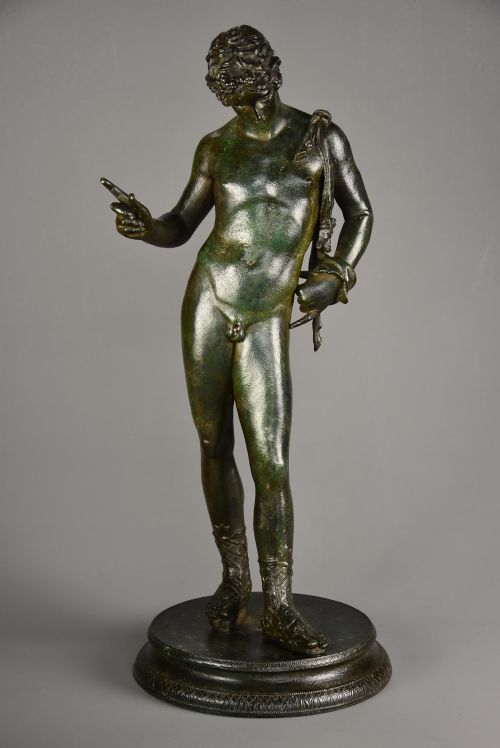
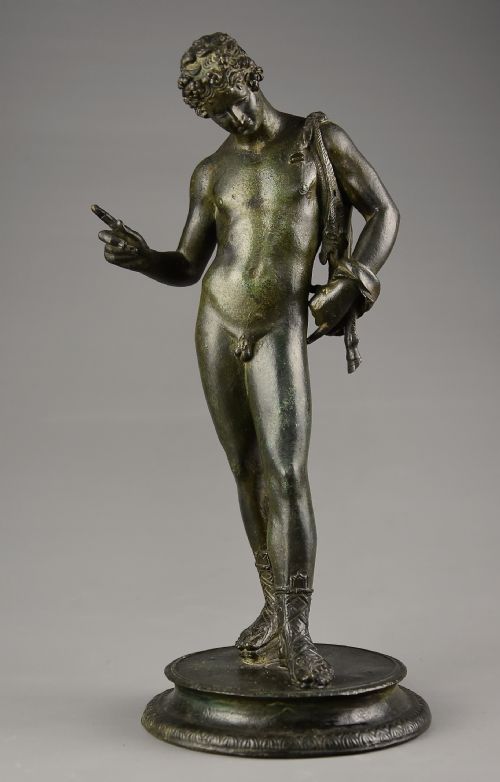
A bronze narcissus figure represents the celebrated classical subject inspired by ancient statuary discovered in Pompeii. These pieces typically take the form of nineteenth century Grand Tour sculptures and souvenirs produced in Italy for travellers.
The version most commonly met on this page is a nineteenth century patinated bronze cast, often mounted upon a marble or fossil marble base. Such figures reflect the neoclassical taste of the period and frequently draw inspiration from the famous bronze found in the Museo Nazionale in Naples.
How they were made
These sculptures are produced using traditional metal casting methods to replicate ancient models with fidelity. Molten bronze is poured into moulds derived from classical prototypes, capturing the intricate musculature and posture of the original figure.
Makers apply chemical patination to the metal surface to achieve varied tones ranging from dark green to classic patinated bronze. Many examples are then secured to bases of solid marble or fossil marble to complete the classical presentation.
Listings feature nineteenth century materials including patinated bronze, marble and fossil marble across neoclassical Grand Tour sculptures.
What varies in quality
The choice and preparation of the mounting base also distinguish the range. Substantial fossil marble or layered marble bases combined with carefully controlled green patination elevate the visual presence of the sculpture.
Michele Amodio
The Bronze Narcissus Figure Glossary
- Grand Tour
- A cultural journey undertaken by wealthy young Europeans through France and Italy to study classical antiquities. Souvenirs such as bronze figures were purchased to commemorate these travels.
- Patination
- The process of applying chemical treatments to the surface of bronze to produce a specific colour or aged appearance. Green patination is particularly common on these classical bronzes.
- Fossil Marble
- A type of limestone containing organic fossils, frequently used as a heavy contrasting base for nineteenth century sculpture. It provides stability and visual depth to the mounted figure.
- Neoclassical
- An artistic movement drawing inspiration from the classical art and culture of ancient Greece and Rome. This style dictated the aesthetic of nineteenth century Grand Tour souvenirs.
- Cast
- An object formed by pouring molten metal into a mould. The quality of the cast determines how closely the sculpture mirrors the antique original.
Bronze Narcissus Figure: Frequently Asked Questions
What is a bronze narcissus figure?
A bronze narcissus figure is a nineteenth century souvenir sculpture modelled after the famous ancient Roman bronze found in Pompeii. These pieces were collected by travellers on the Grand Tour.
They serve as classical decorative objects, capturing the neoclassical interest in antiquity. Most examples depict the mythological youth standing in a graceful pose.
How do I identify a Grand Tour bronze?
Grand Tour bronzes typically date from the nineteenth century and exhibit distinct patination, often in shades of dark green or brown. They frequently stand upon marble or fossil marble bases.
Many of these figures replicate specific excavations from Pompeii or Naples. Examining the quality of the metalwork and the character of the base helps confirm the period.
Why is the figure sometimes called Bacchus?
Early excavators and collectors occasionally debated whether the Pompeian bronze depicted Narcissus or Dionysus, also known as Bacchus. This dual identification persists in nineteenth century titles.
Despite the interchangeable names, the visual form remains consistent with the celebrated original sculpture. The posture and attributes continue to spark scholarly discussion.
Where should I display these sculptures?
These bronzes suit placement on mantelpieces, desks or dedicated display surfaces where their patination can be appreciated. Their compact scale makes them adaptable for various interior settings.
Keeping them away from direct heat sources protects the metal surface and the marble base. Regular gentle dusting preserves the finish of the patinated bronze.