




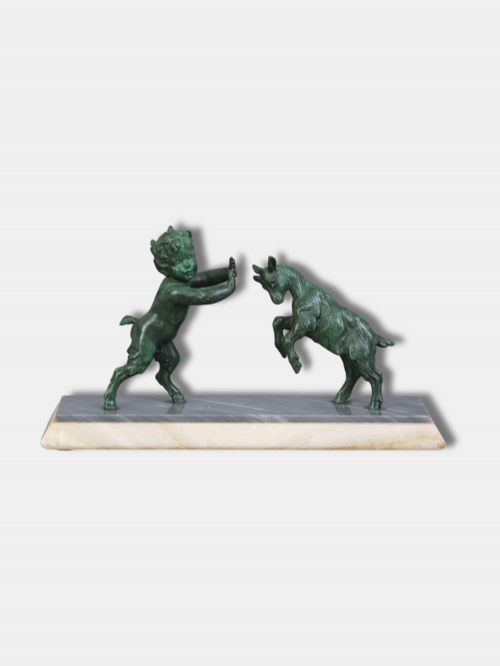

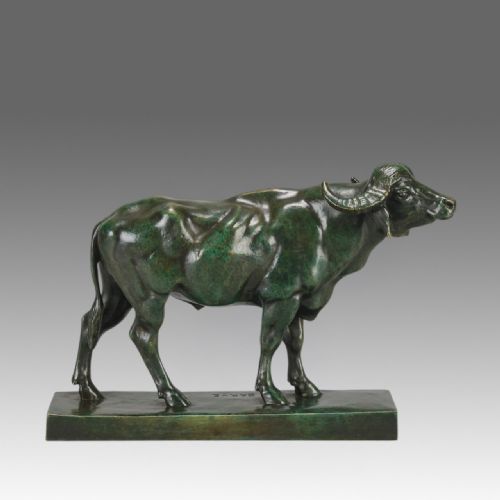
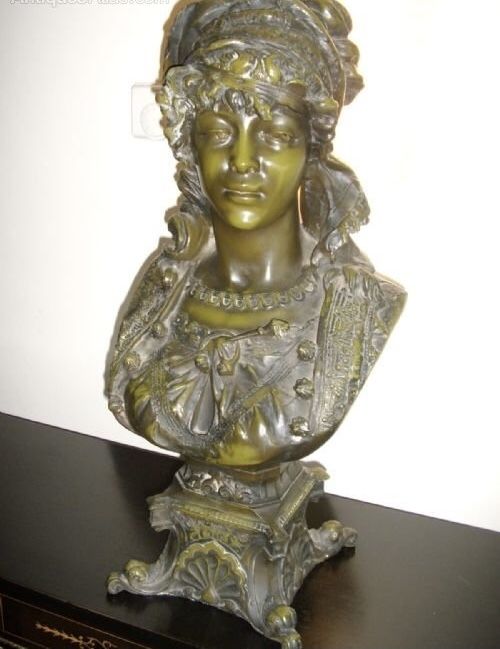
Green Bronze Statue
These green bronze statue pieces bring classical antiquity and nineteenth-century foundry skill straight into your study.
Identifying green bronze statue pieces
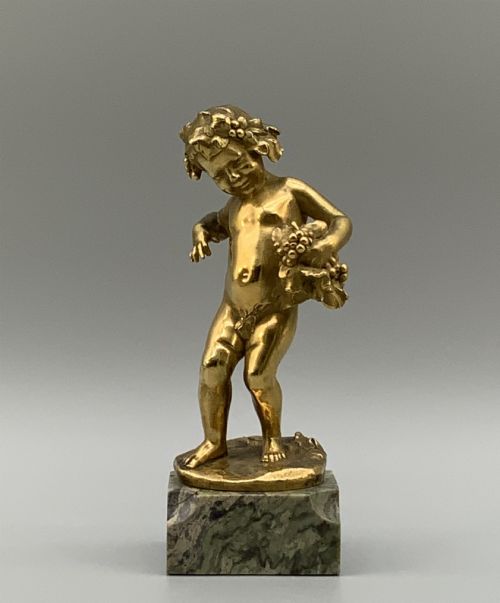
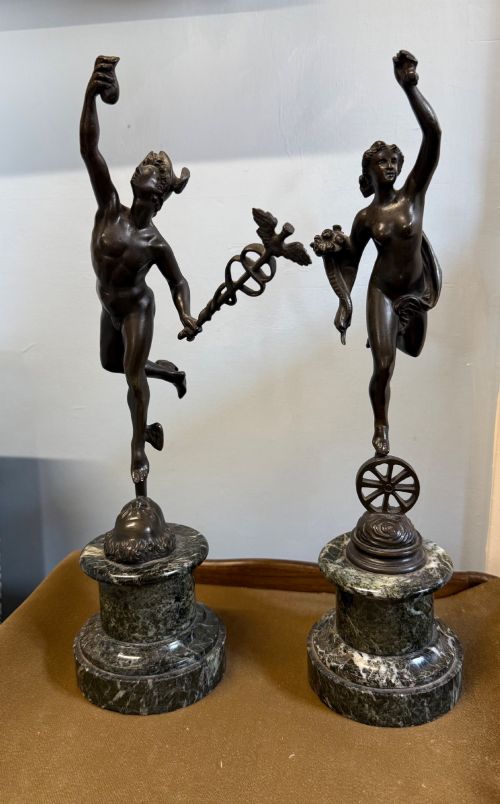
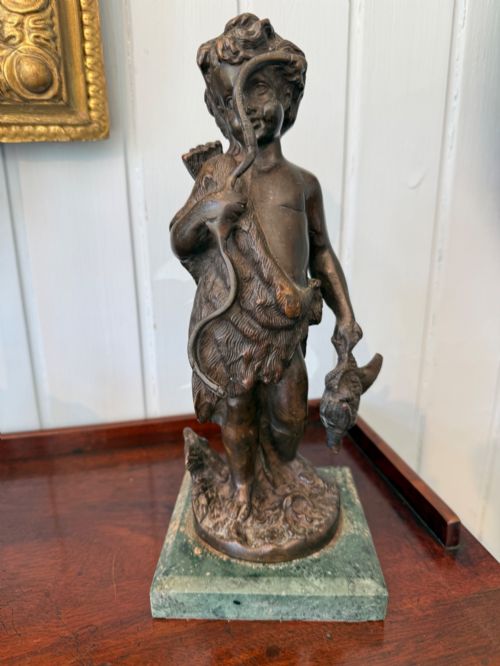
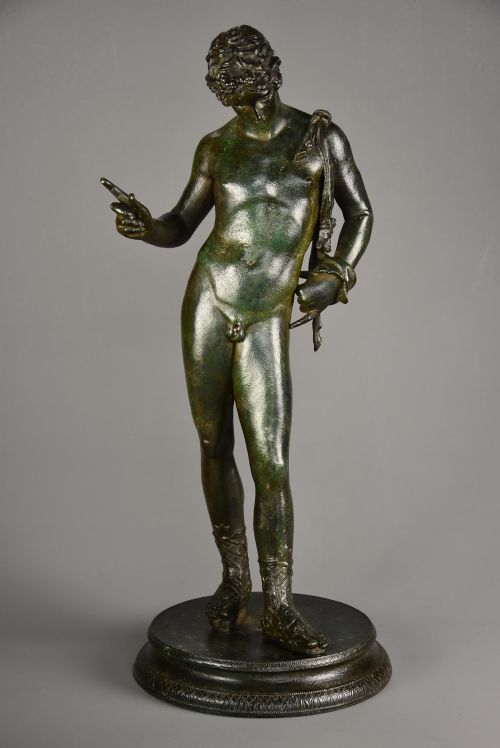
A green bronze statue captures classical figures, mythological subjects, and allegorical forms modelled after ancient antiquities. Buyers searching for a green bronze statue find nineteenth-century Grand Tour casts from Naples alongside Victorian classical revival figurines.
The inventory on this page leans heavily toward late nineteenth-century productions, particularly Neapolitan figures of Narcissus and Bacchus. These pieces often rest upon integral bases or separate marble and stone plinths.
Victorian workshops and named makers such as Elizabeth Anna Clapp produced distinct interpretations ranging from muscular centaurs to idealised youths. Each green bronze statue reflects the nineteenth-century fascination with archaeological discovery and classical proportion.
Materials and casting methods
Foundries utilised traditional lost-wax casting and sand-casting techniques to shape the molten metal into complex anatomical forms. The resulting bronze sculptures display sharp details in hair, drapery, and musculature.
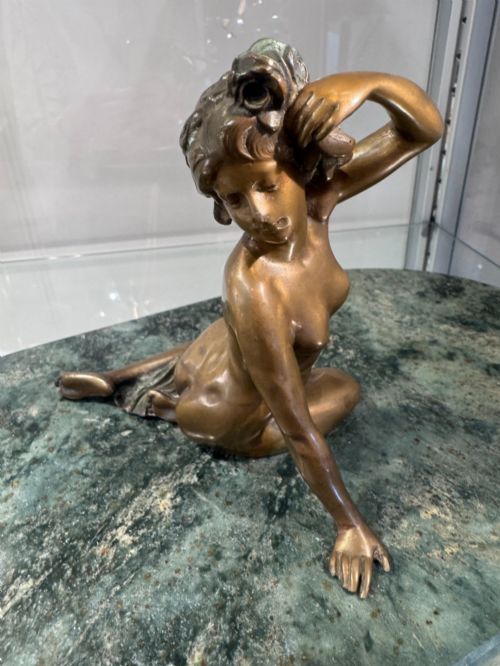
Artisans applied chemical treatments to achieve the characteristic green patination, verdigris, and dark green surfaces seen across these examples. Many figures were then mounted onto heavy bases made of marble or stone to provide stability and visual contrast.
Retail Price Guide 2026
Typical UK retail prices for green bronze statue, calculated from the Sellingantiques database of over a million retail prices indexed since 2003. This retail price guide relies exclusively on Sellingantiques data; no external sources or auction records are used, so the figures do not describe the wider market.
Nineteenth-century travellers regularly packed heavy bronze centaurs into luggage trunks alongside their shirts.
Judging quality and execution
The depth and nuance of the green patination also separate superior works from ordinary production, with master patinators layering chemical solutions to mimic ancient buried bronze. The quality of the supporting marble or stone plinth further indicates the care taken in presentation.
Elizabeth Anna Clapp
The Green Bronze Statue Glossary
- Grand Tour
- A cultural journey undertaken by wealthy young Europeans in the eighteenth and nineteenth centuries to study classical art. Travellers purchased bronze reductions of famous antique sculptures as souvenirs.
- Patination
- The chemical colouring applied to the surface of bronze to alter its appearance. Green patination mimics the natural ageing of ancient metals exposed to soil and moisture over centuries.
- Verdigris
- A bright green pigment formed by the oxidation of copper alloys. Foundries simulate this weathering effect to give new bronze statues an antique character.
- Lost-wax casting
- A historic method where a molten metal is poured into a mould that has been created by means of a wax model. This technique allows for intricate undercut details and slender limbs.
Frequently Asked Questions
What is a Grand Tour bronze?
A Grand Tour bronze is a nineteenth-century miniature or reduction cast of a famous classical sculpture. Travellers bought these pieces in Italy to display their classical learning at home.
These statues capture ancient works housed in European museums, rendered in portable sizes for domestic display on desks and mantelpieces.
How do I care for bronze?
Dust your bronze gently with a soft, dry microfibre cloth to prevent particulate accumulation. Avoid using chemical cleaners, polishes, or abrasive cloths that can strip the original patina.
Keep the statue away from direct sunlight and damp environments to protect both the metal surface and any attached marble plinth.
Why is the patina green?
The green colour mimics the natural oxidation that occurs when copper-bearing metals age outdoors or underground over centuries. Foundries apply chemical agents to accelerate this process for an antique appearance.
This green patination protects the underlying bronze while giving the sculpture the visual depth of an excavated antiquity.
How do I date these figures?
Dating relies on stylistic markers, casting texture, and the character of the base material. Nineteenth-century pieces often display specific casting seams and patination styles associated with Neapolitan foundries.
Comparing the finishing work and mounting techniques with documented period pieces helps narrow down the decade of production.