




Navy Wool Prayer Mat
A navy wool prayer mat brings centuries of tribal and regional weaving traditions straight to your floor.
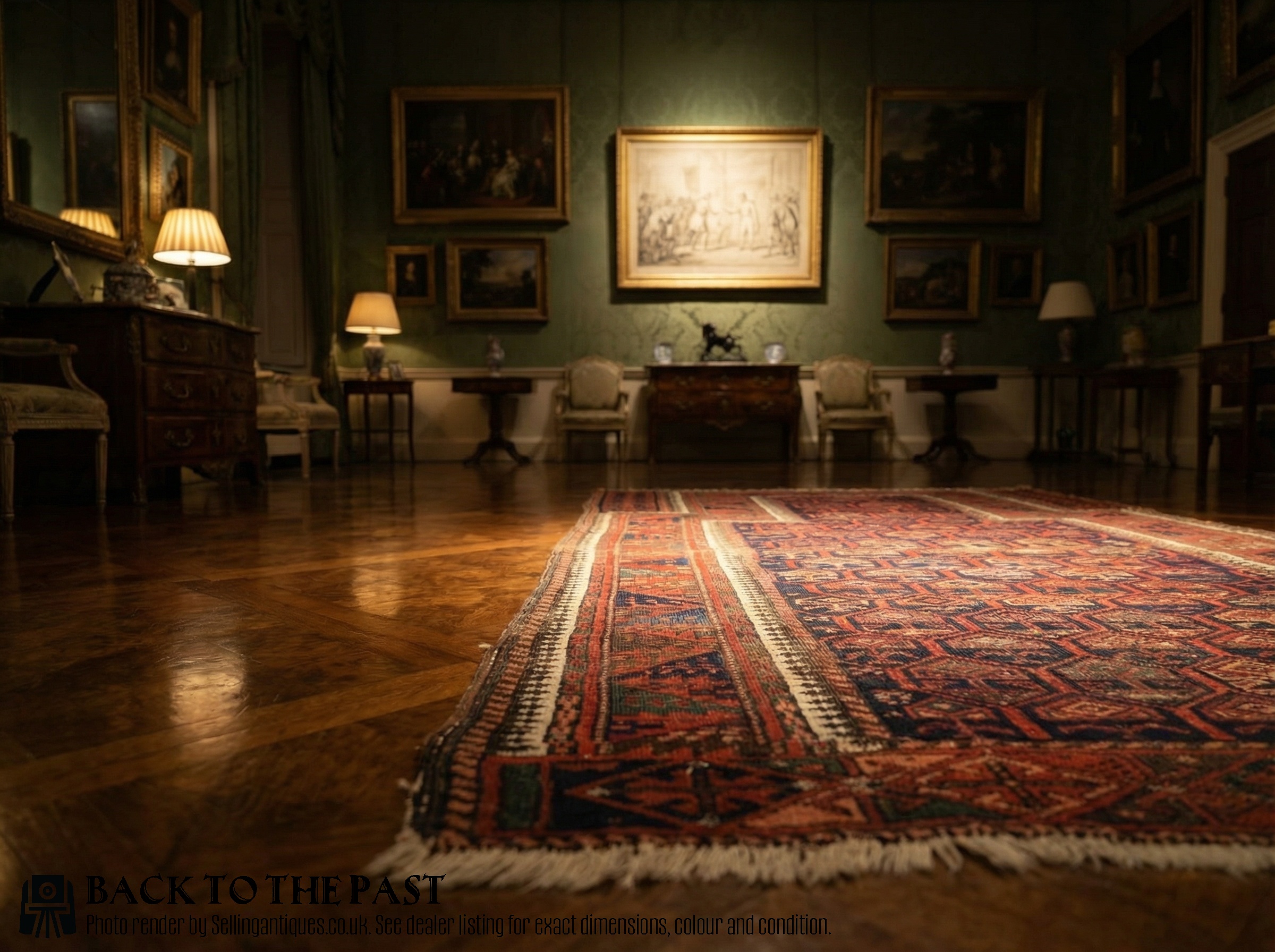
Navy Wool Prayer Mat
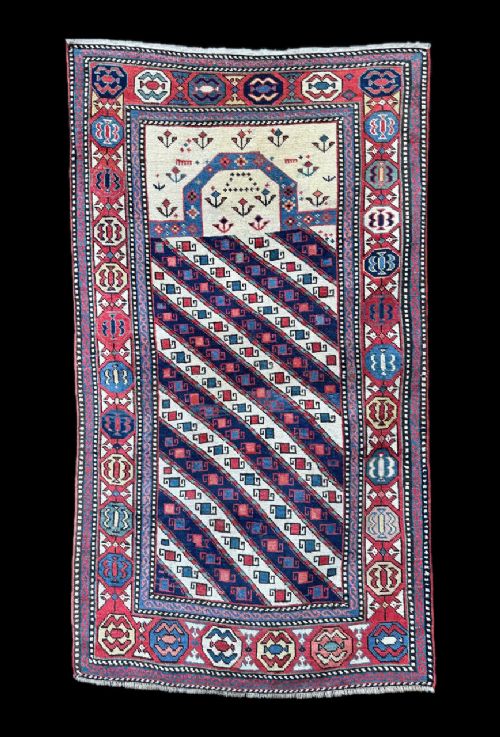
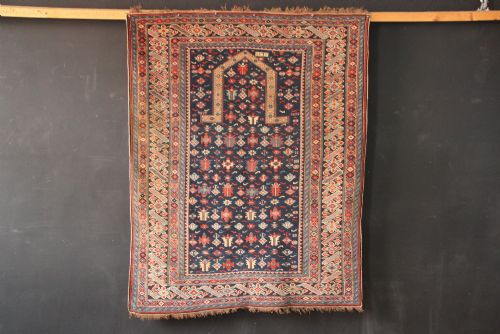
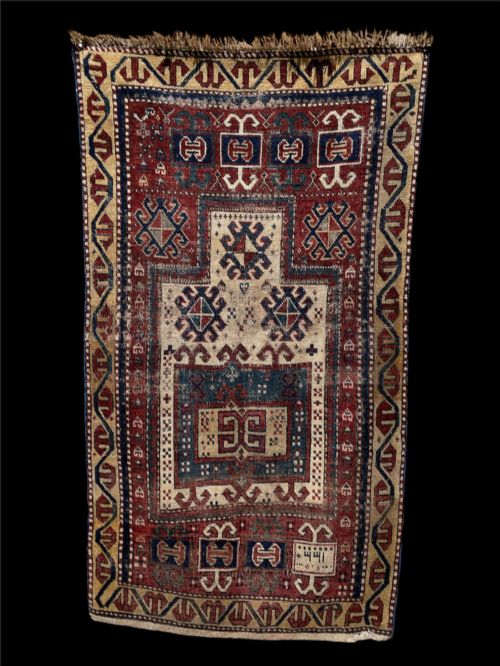
A navy wool prayer mat is a portable woven textile featuring distinct architectural niches or prayer arch designs, created across various village and nomadic traditions.
The pieces available span from the late nineteenth century into the early decades of the twentieth century, originating from Caucasian, Baluch, Afghan, Turkmen, and Persian workshops.
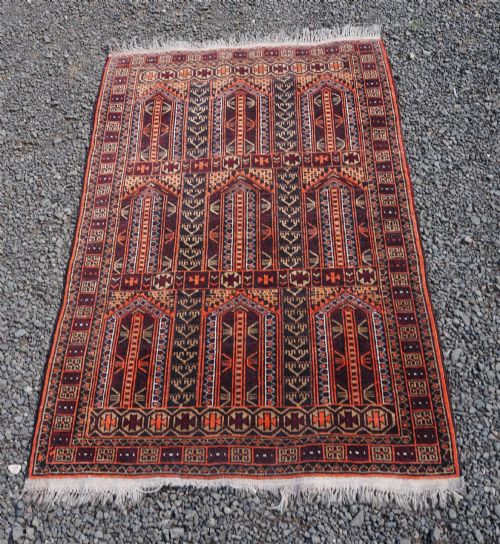
Common regional formats include single, double, and triple mihrab layouts, alongside floral vase motifs and repeating geometric small octagons.
Materials and construction
Makers utilised resilient wool for the pile and foundation structures, ensuring durability for daily devotional use or placement in high-traffic spaces.
Cotton foundations occasionally support the detailed wool knotting, providing structural stability to intricate nineteenth and twentieth-century regional designs.
Navy Wool Prayer Mat Retail Price Guide 2026
Typical asking prices for navy wool prayer mat among the pieces listed under this phrase on Sellingantiques today, from the lower quarter to the upper quarter. They describe what is for sale here now, not the wider market.
Current listings span from the eighteen-eighties to nineteen-thirty, focusing on Caucasian, Afghan, and Baluch village and tribal wool formats.
Assessing quality and character
Quality rests in the precision of the knotting and the crispness of regional motifs such as the mihrab arch, boteh patterns, or millefleur sprays.
The depth and saturation of the navy dye ground, alongside the harmonious balance of secondary colours, elevate certain village and tribal examples above standard production.
The Navy Wool Prayer Mat Glossary
- Mihrab
- The arched niche in a prayer rug designed to point toward Mecca during daily devotions. This architectural feature defines the primary visual focus of the textile.
- Baluch
- A nomadic or village weaving tradition associated with groups residing across the borders of Afghanistan, Iran, and Pakistan. These pieces frequently employ dark wool foundations.
- Boteh
- A stylised almond or pear-shaped floral motif symbolising life and eternity. It appears extensively across Caucasian and Persian regional designs.
- Millefleur
- A dense background pattern composed of countless tiny flowers. This French term describes intricate field designs seen on specific Qashqai and village carpets.
Navy Wool Prayer Mat: Frequently Asked Questions
How do I care for a wool prayer mat?
Vacuum gently without using a rotating beater brush to protect the vintage wool pile and foundation threads.
Keep the textile away from direct sunlight to preserve the depth of the navy dye over decades of domestic placement.
Where were these mats made?
Weavers produced these pieces across the Caucasus, Afghanistan, and Persia within village, nomadic, and tribal communities.
Each region developed distinct layouts, ranging from Caucasian geometric arches to intricate Afghan multi-mihrab formats.
What is a double mihrab design?
A double mihrab layout incorporates two arched prayer niches, often positioned at opposite ends of the central woven field.
This symmetrical format appears frequently in nineteenth-century Baluch and Caucasian village weaving traditions.
How do I date an antique rug?
Dating relies on assessing the natural dye palette, the handling of wool materials, and the characteristic structural quirks of the weave.
Comparative analysis with known nineteenth and early twentieth-century regional pieces helps narrow the decade of origin.