



Navy Runner
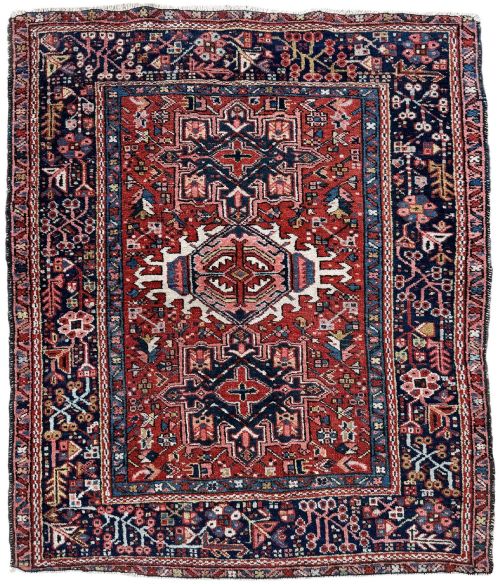
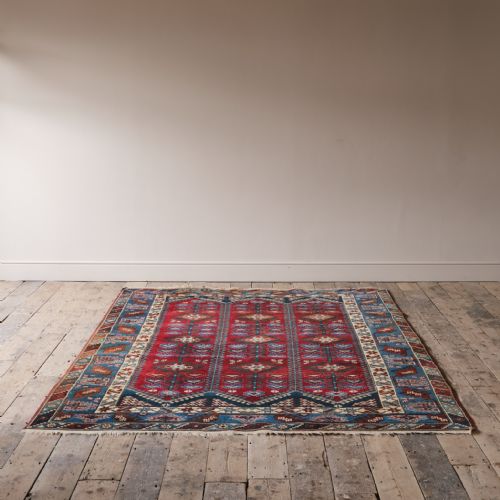
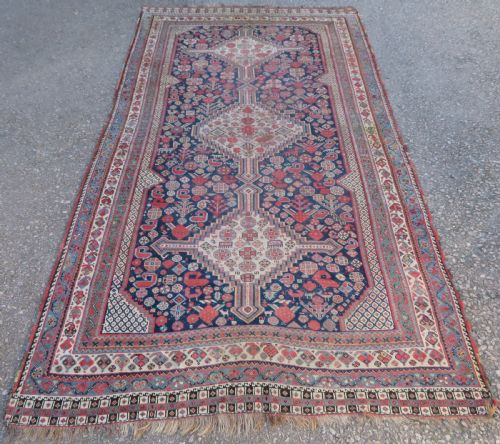
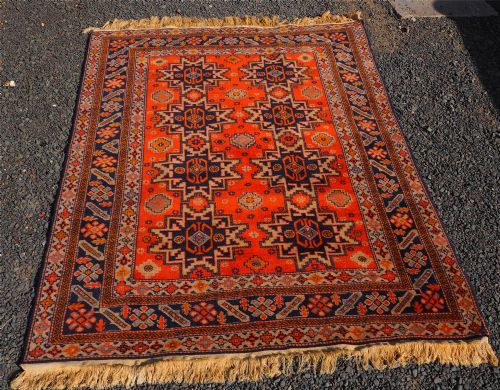
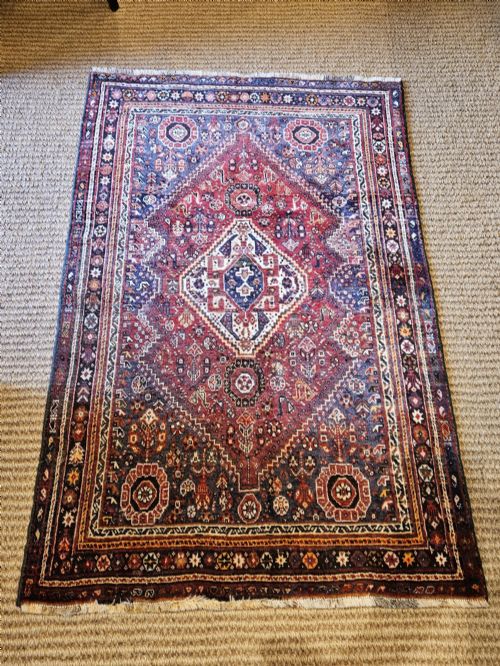
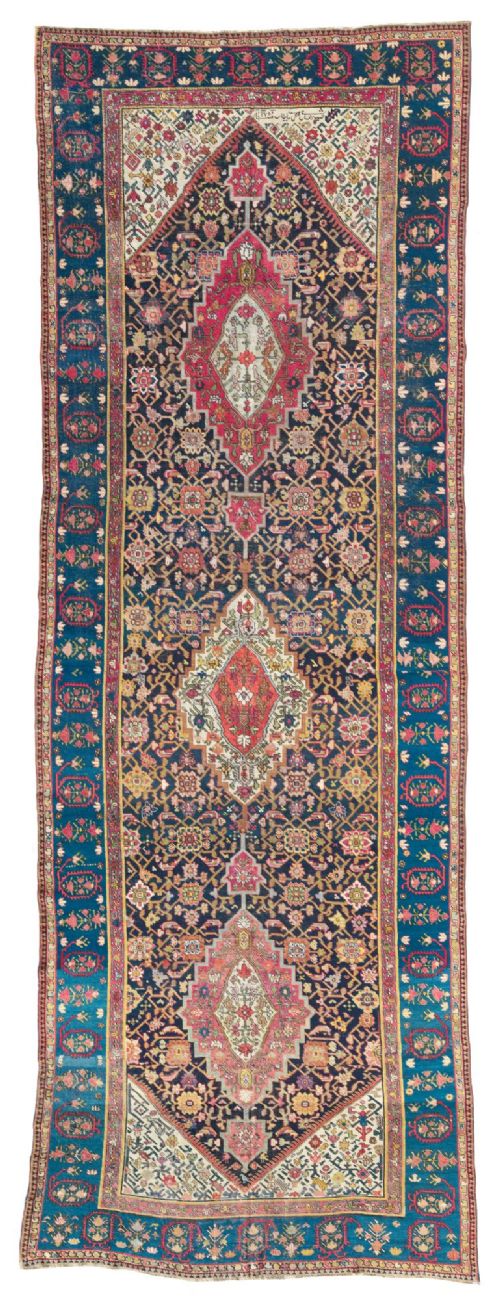
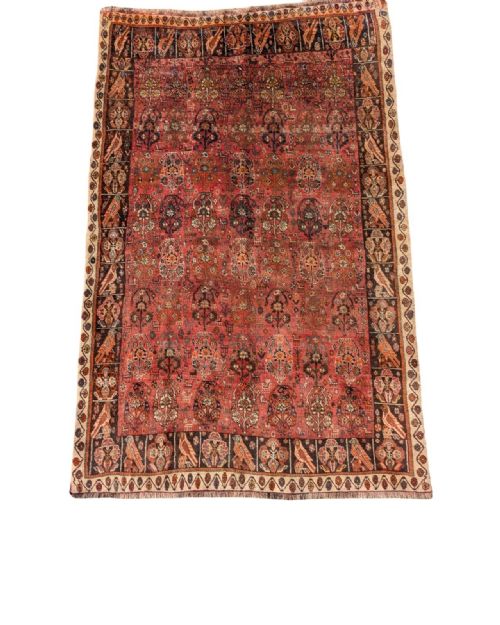
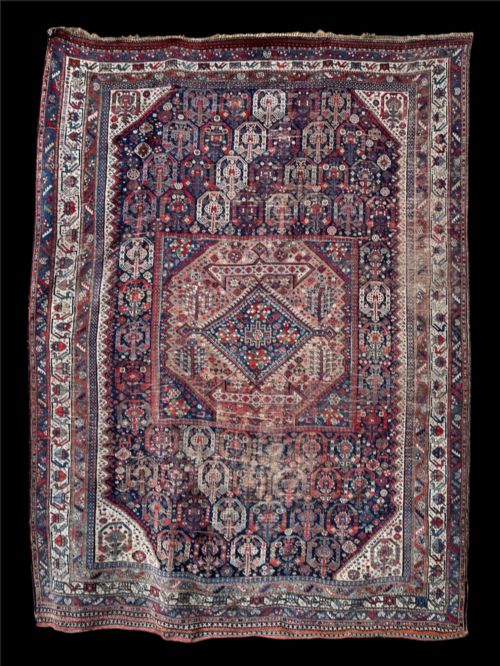
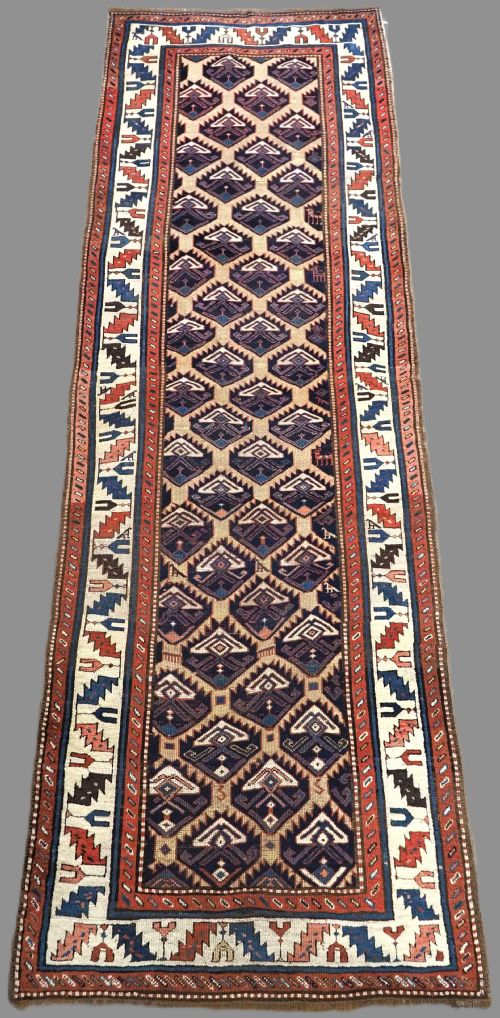
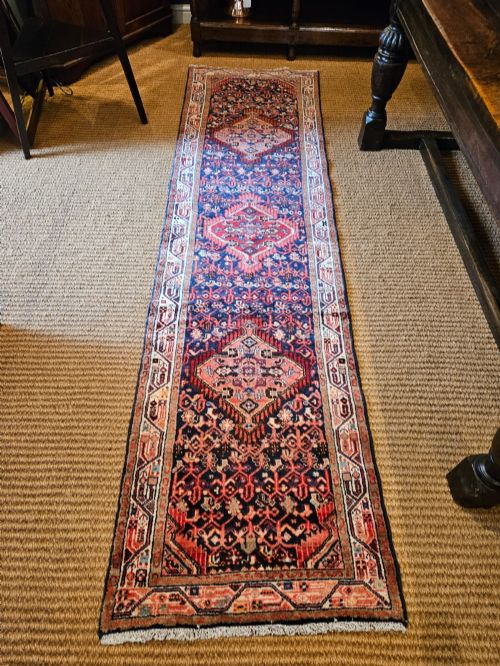
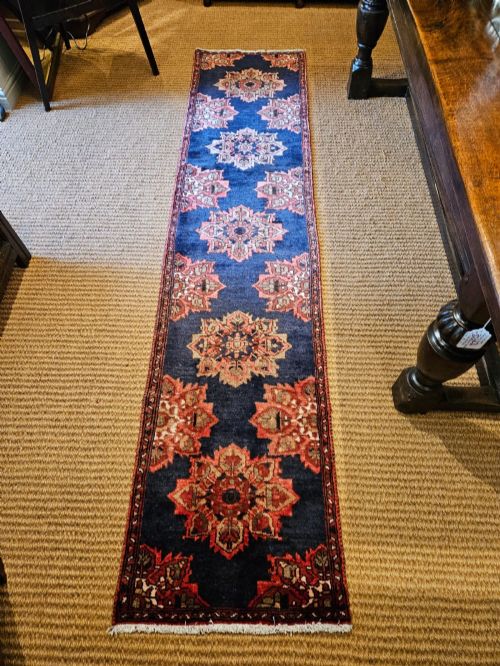
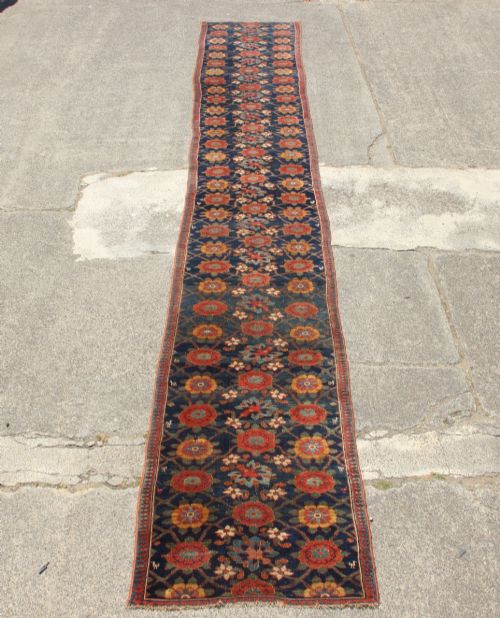
These navy antique runner selections offer durable floor coverings that bring deep indigo tones and traditional tribal patterns into long hallways.
Navy Runner
A navy antique runner is a long, narrow floor covering originating from Persian and Caucasian weaving traditions, designed primarily for corridors and hallways. When searching for this phrase, buyers encounter hand-knotted textiles spanning from the late nineteenth century into the early decades of the twentieth century.
The pieces available on this page typically take the form of hallway runners and long runner rugs, alongside related formats like kelleh carpets and narrow runners. Their origins trace to tribal and village workshops across regions such as Kurdistan, Hamadan, and the Caucasus.
Most examples rely on saturated dark blue or navy fields to anchor complex geometric, lattice, or floral motifs. These formats provide practical utility for high-traffic domestic spaces while retaining the character of older hand-spun wool weaving.
How they were made
Weavers constructed these runners using wool, hand-spun wool, and cotton foundations, employing traditional hand-knotting techniques across regional workshops. The pile wool provides resilience, while cotton or wool warps and wefts form the structural grid of each carpet.
Natural and early aniline dyes achieved the deep navy blue backgrounds and contrasting accent colours found in these runners. Artisans tied individual knots by hand, resulting in dense pile structures designed to withstand decades of foot traffic in hallways.
What varies in quality
Quality in these runners rests on the density of the hand-knotting and the precision of the tribal or floral design execution. Finer knot counts allow for sharper rendering of geometric lattice patterns and intricate boteh motifs.
The integrity of the wool and the depth of the dye work also divide standard village pieces from finer workshop productions. Better examples maintain structural stability and even pile wear across their long formats.
The Navy Runner Glossary
- Runner
- A long, narrow carpet format specifically proportioned for corridors, staircases, and hallways. These pieces direct movement through domestic spaces.
- Kelleh
- A large rectangular carpet format, longer than it is wide, bridging the proportion between standard rugs and full room-size carpets. They share similar tribal motifs with runners.
- Boteh
- A traditional almond-shaped or paisley motif representing a floral spray or cypress tree. This design appears frequently in Persian and Caucasian weaving.
- Mina Khani
- An all-over repeating pattern composed of stylized flowers connected by a lattice grid. It is commonly seen in Kurdish and Persian carpets.
- Hand-knotted
- A construction method where individual yarn lengths are tied manually to warp threads by the weaver. This process creates the durable pile characteristic of antique rugs.
Navy Runner: Frequently Asked Questions
Where should a runner go?
These narrow formats suit hallways, corridors, and long entryways where floor protection and visual warmth are required.
They function well in high-traffic transition spaces, anchoring narrow architectural layouts with traditional patterns.
How do I clean an antique runner?
Gentle surface cleaning and professional hand-washing preserve the wool pile and natural dyes of older rugs.
Avoid harsh chemical treatments and heavy mechanical agitation to protect the hand-spun fibres and cotton foundations.
What periods do these runners date from?
The inventory spans the late nineteenth century through the early decades of the twentieth century, including pieces from the 1850s to the 1930s.
Stylistic markers and construction methods help identify whether a piece originates from the Victorian era or the interwar period.
Are these runners made of pure wool?
Most examples utilise wool or hand-spun wool for the pile, often combined with cotton foundations for structural stability.
Natural animal fibres provide the durability necessary for longevity in domestic environments.