





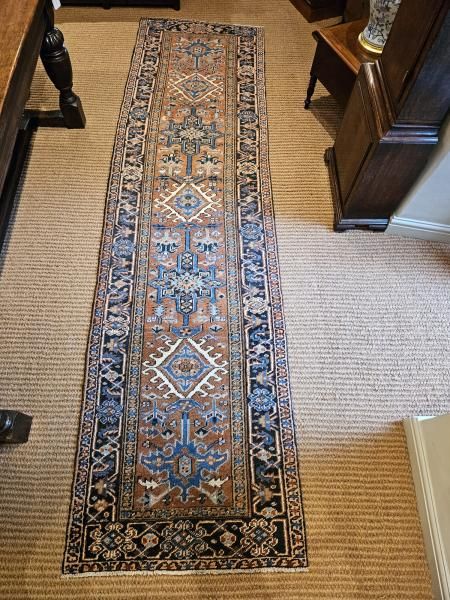
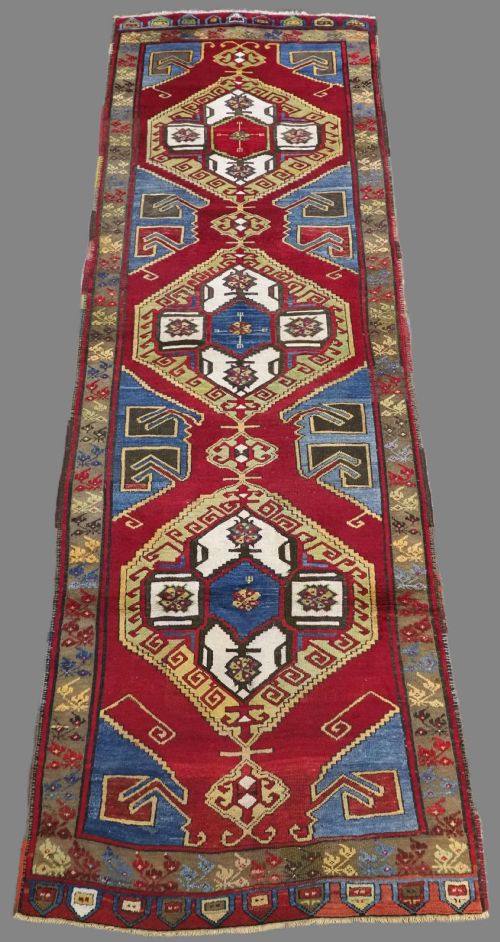
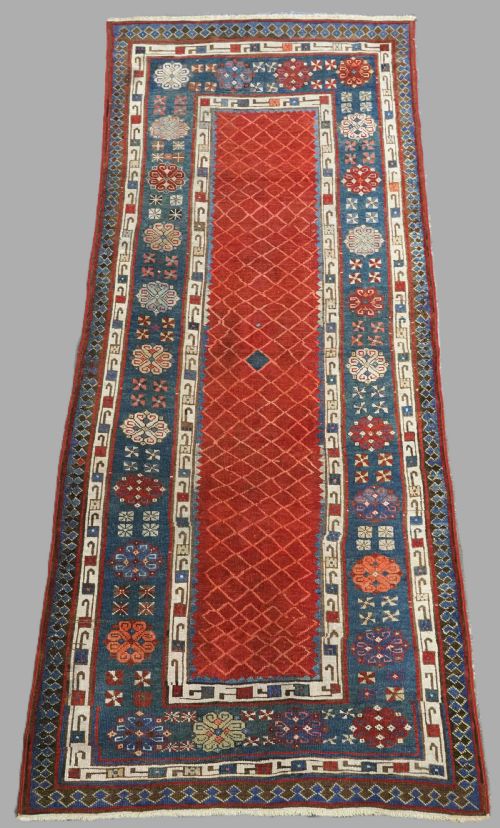
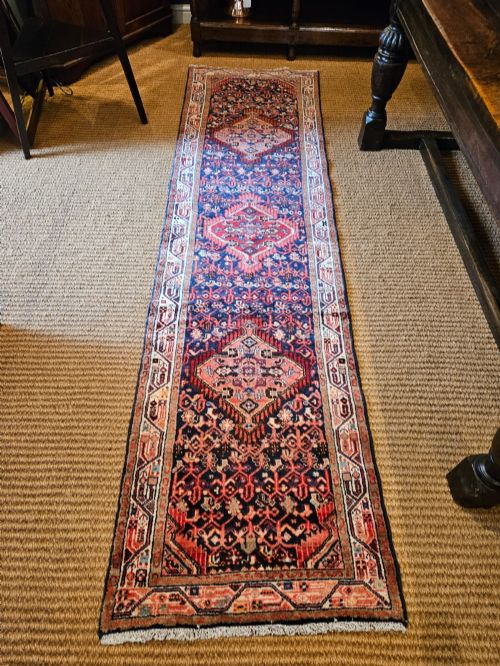
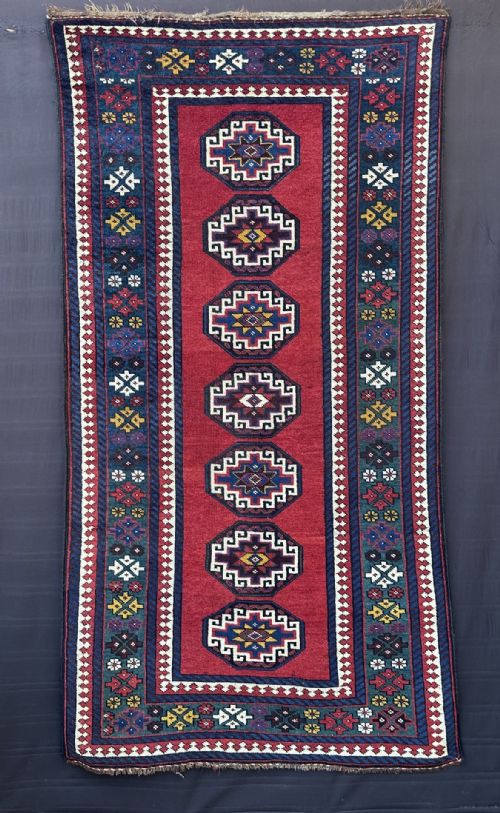
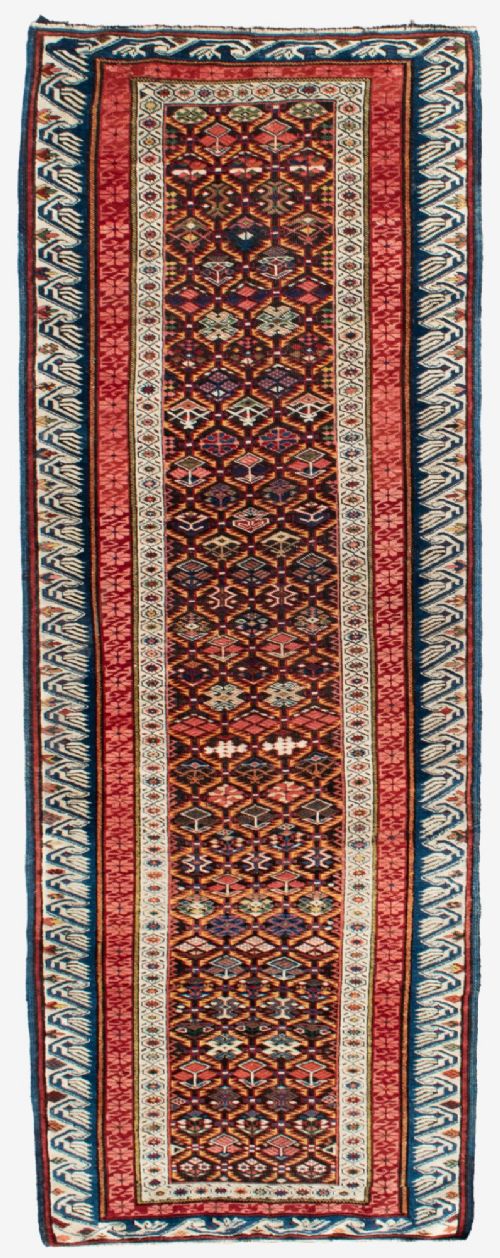

Geometric Hallway Rug
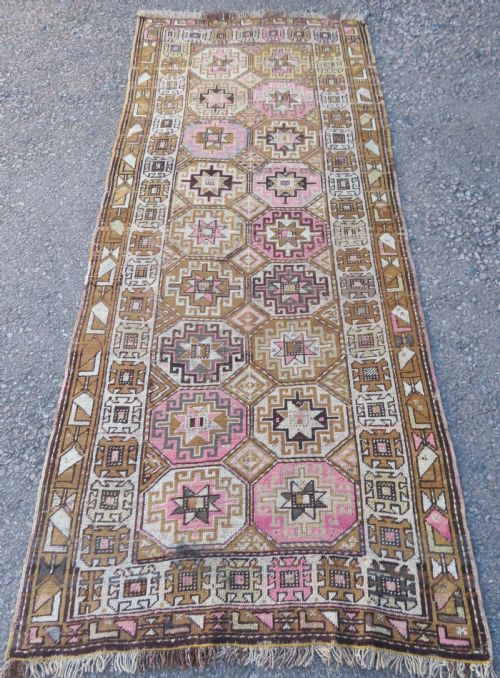
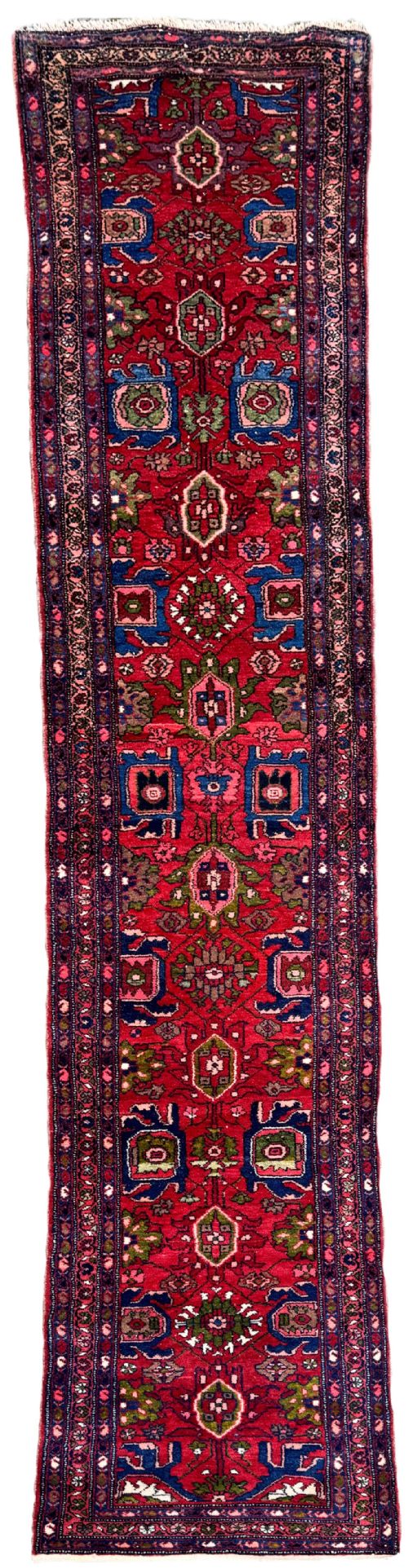
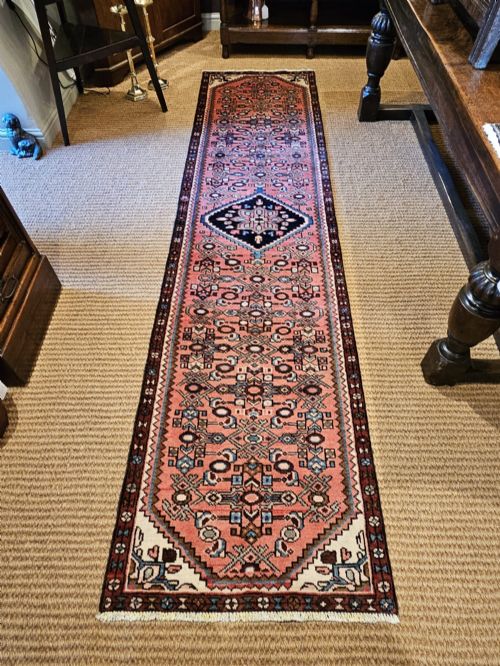
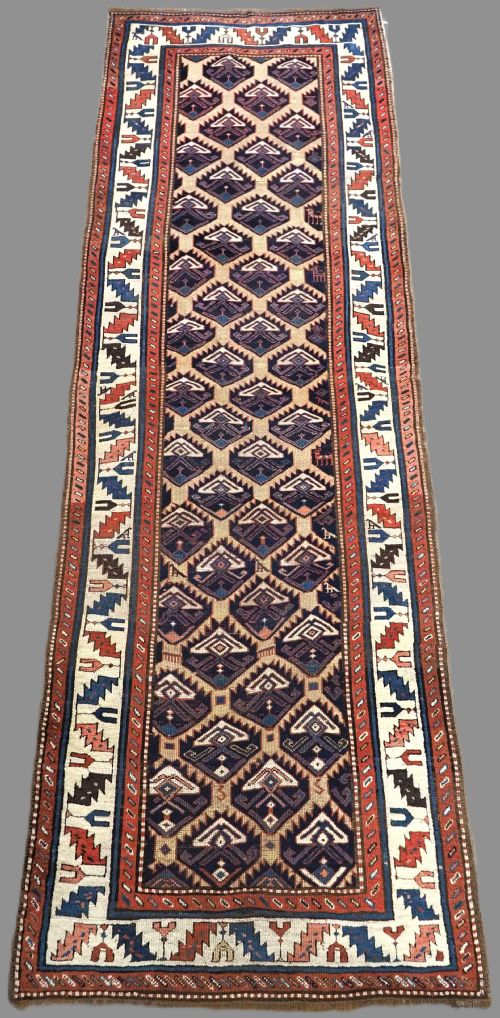
A geometric hallway rug brings linear patterns and warmth to a narrow passage, drawing the eye along the floor with tribal and traditional designs.
Geometric Hallway Rug
A geometric hallway rug spans styles such as Persian Tribal, Caucasian, Anatolian Tribal, and Traditional Persian, originating from the nineteenth and early twentieth centuries. These pieces appear as runner rugs, long rugs, and hallway runners designed specifically for narrow spaces.
The most common formats on this page are antique runners stretching over several metres with repeating lattice patterns and tribal motifs. Originating from regions including Persia, Turkey, and the Caucasus, these floor coverings utilise traditional weaving methods passed down through generations.
Materials and construction
These textiles rely on wool and cotton as primary materials, utilised for both the pile and the foundational warp and weft threads. Pure wool provides a durable surface capable of withstanding heavy foot traffic in a hallway.
Weavers knotted the wool onto cotton foundations by hand, creating dense piles and firm structures that maintain their shape over decades. Natural dyes derived from plants and minerals give the wool rich tones that soften gracefully with age.
Listings span periods from the 1870s to the 1930s, constructed entirely from wool and cotton in runner and long rug formats.
Distinctions in quality
Knot density and structural tightness separate finer examples from coarser village weaves, influencing how sharply the geometric lines and lattice designs are defined. Tighter packing of the wool pile ensures the rug resists compression and retains its integrity under foot.
The complexity of the tribal design and the balance of the composition also determine the standing of a piece. Well-drawn motifs with harmonious colour distribution reflect higher skill among the original weavers.
The Geometric Hallway Rug Glossary
- Runner
- A long, narrow carpet format specifically proportioned for corridors, hallways, and stairs.
- Lattice design
- A repeating grid pattern formed by intersecting diagonal lines or straps across the field of the rug.
- Pile
- The cut or uncut loop surface of the rug formed by the vertical yarn tied to the foundation.
- Warp
- The stationary longitudinal threads stretched on the loom that carry the tension of the weave.
- Weft
- The horizontal threads passed alternately over and under the warp threads to bind the knots in place.
Geometric Hallway Rug: Frequently Asked Questions
How do I measure for a hallway rug?
Measure the clear floor space of your corridor, leaving a consistent border of exposed floorboards or stone around the edges. Ensure doors swing freely over the thickness of the wool pile without catching.
Account for length carefully so the rug centres properly between walls or furniture without bunching at either end.
Are these rugs suitable for heavy traffic?
Wool and cotton construction provides natural resilience against the constant footfall typical of a hallway. Regular use gently settles the pile rather than wearing through the dense foundation.
Using a quality underlay beneath the textile prevents slipping and cushions the fibres against hard subfloors.
How do I clean an antique runner?
Vacuum gently across the surface using suction only, avoiding rotating brush bars that pull at the wool fibres. Lift the rug periodically to sweep and clean the floor underneath.
Professional specialist cleaning is recommended for deep washing to protect the natural dyes and historical structure.
How do I distinguish Caucasian from Persian runners?
Caucasian pieces typically display bolder, more angular geometric motifs with saturated primary colours and stark contrast. Persian examples often incorporate finer curvilinear elements alongside tribal geometric patterns.
Examining the weave structure and knotting style reveals specific regional traditions from the nineteenth and early twentieth centuries.