



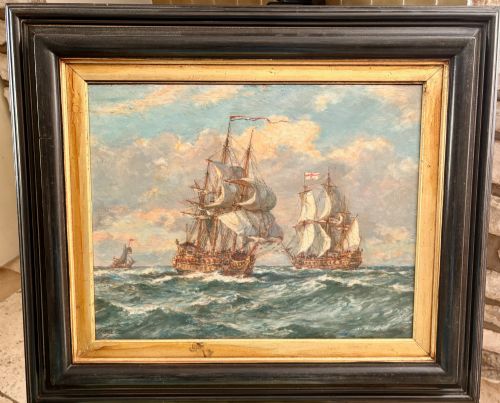
Nautical Oil Artwork
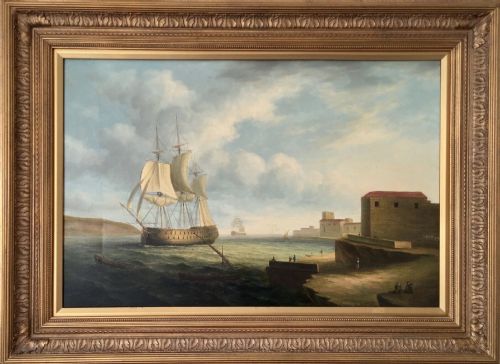
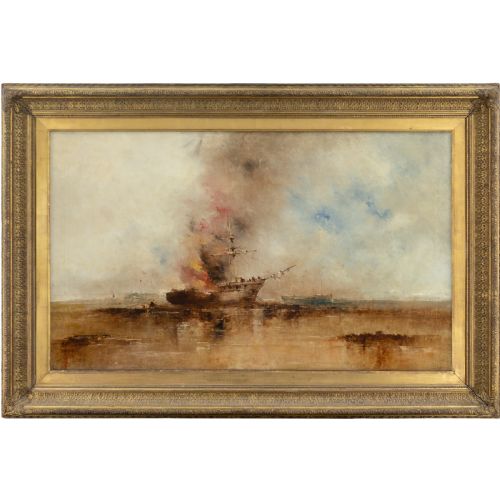
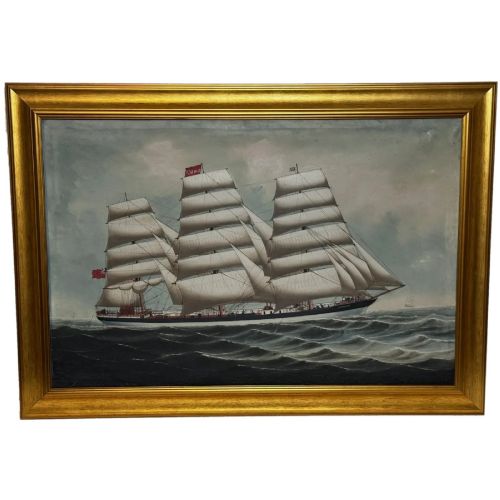
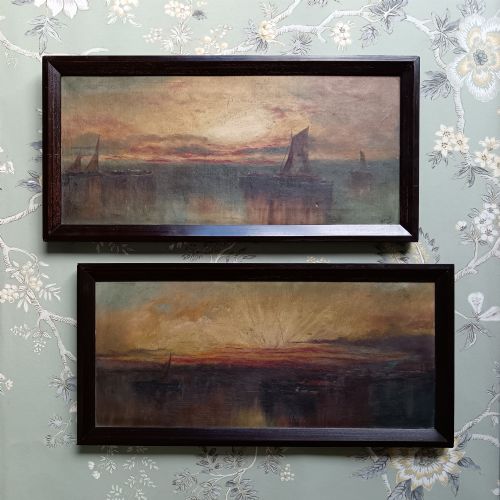
Nautical oil artwork captures maritime history, featuring sailing vessels and coastal harbours rendered in oil paint on canvas, panel, or board.
Nautical Oil Artwork
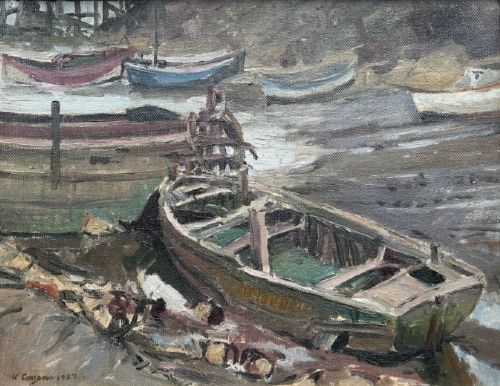
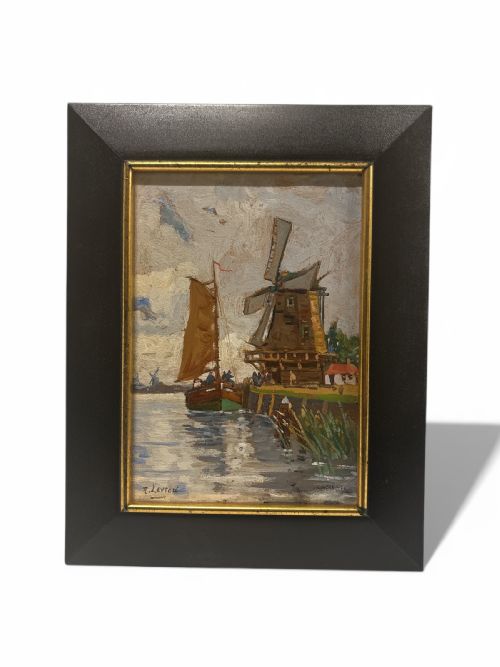
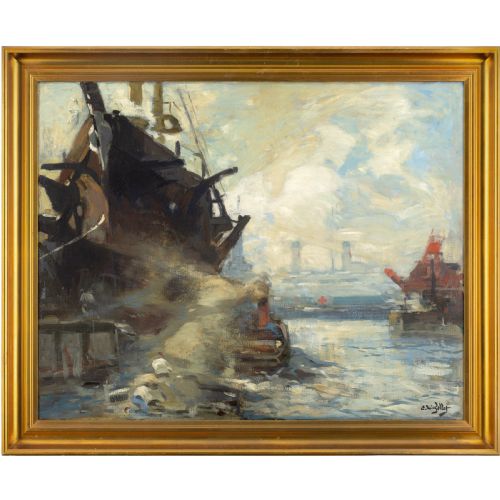
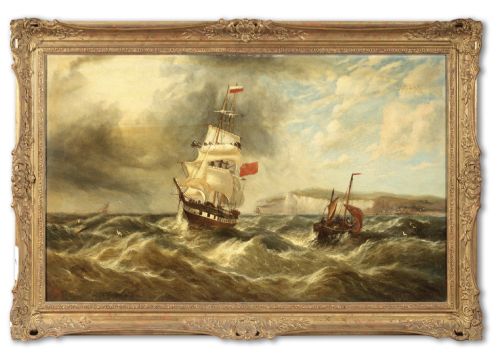
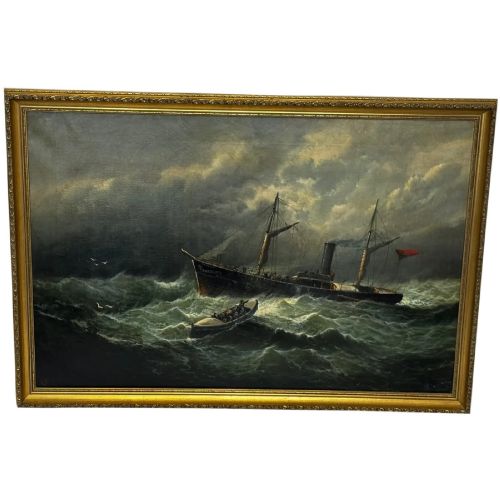
A nautical oil artwork depicts ships, rough seas, and harbour views through painted maritime scenes. Buyers seeking nautical oil artwork encounter nineteenth-century depictions of warships alongside twentieth-century coastal landscapes.
Most pieces on this page originate from the Victorian period through the mid-twentieth century. Works range from detailed historical sail portraits to impressionistic harbour studies on canvas or board.
Materials and Construction
Artists painted these maritime scenes using oil paint applied to stretched canvas, wooden panels, or rigid boards. Many works retain their original gilt wood frames, adding structural depth to the composition.
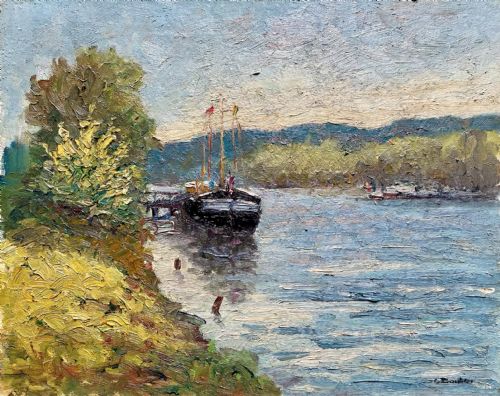
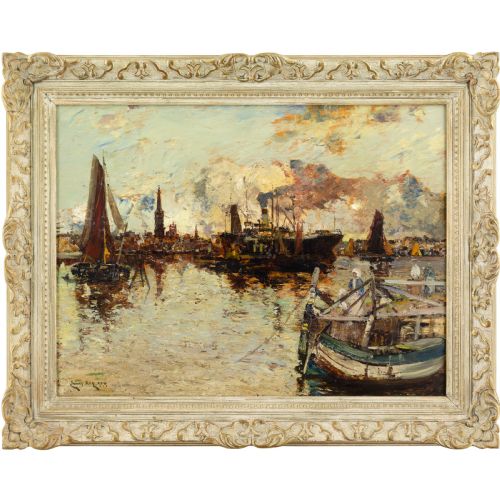
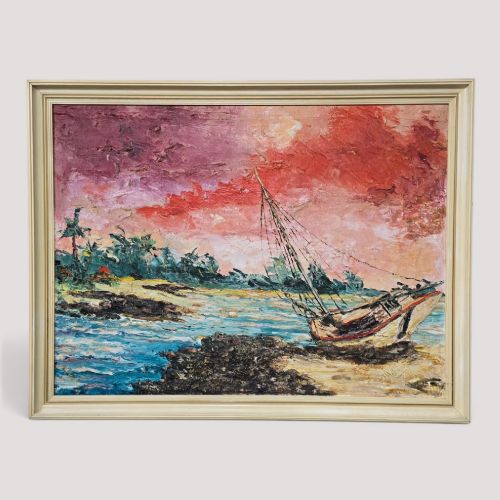
Techniques vary from tight, academic brushwork detailing rigging and hull construction to looser post-impressionist applications of pigment capturing light on water.
Listings feature oil paint on canvas, panel, and board, spanning the nineteenth century through the 1960s.
Assessing Quality and Execution
Quality rests in the handling of light, atmosphere, and maritime accuracy. Superior paintings demonstrate precise understanding of vessel architecture, wave motion, and coastal topography rather than formulaic repetition.
The integration of the painted surface with the framing also dictates standard, where period giltwood frames complement the spatial depth of the seascape.
Eugène-Louis Gillot·William McAlpine·John Rose Miles·James Kay RSW·John Wilson Carmichael·Bernard Benedict Hemy
The Nautical Oil Artwork Glossary
- Giltwood
- Wood carved and covered with a thin layer of gold leaf or gilt. These frames often accompany nineteenth-century marine paintings.
- Panel
- A flat piece of wood used as a rigid support for painting instead of stretched canvas. Panels appear frequently in earlier marine works.
- Seascape
- A work of art depicting the sea, ocean, or marine views. These form the primary subject matter of nautical paintings.
- Post-Impressionism
- An art style following impressionism that focuses on symbolic content and expressive use of paint. Examples on this page capture harbour scenes with distinct painterly marks.
Nautical Oil Artwork: Frequently Asked Questions
How do I identify the date of a nautical oil artwork?
Dates are often determined by the style of the vessels depicted, such as three-masted schooners or steamships, alongside the framing materials and canvas preparation.
Signatures, stretcher construction, and artist records further help narrow down the period of production.
What is the difference between marine art and a seascape?
Marine art specifically focuses on human interaction with the sea, featuring ships, naval battles, harbours, and fishing vessels. Seascapes concentrate primarily on the natural expanse of the water and coastline.
Many pieces on this page overlap by combining sailing vessels within a coastal landscape setting.
How should I care for an antique oil painting?
Keep paintings away from direct sunlight, high humidity, and rapid temperature fluctuations to prevent the oil paint and canvas from cracking. Dust the surface and frame gently with a dry, soft brush.
Avoid using water or chemical cleaners on either the canvas or the gilt wood frame.
Are these paintings usually signed by the artist?
Many works bear visible signatures or initials by the artist, while others remain attributed to specific schools or circles based on style. Unsigned pieces are often contextualised through subject matter, palette, and historical records.