
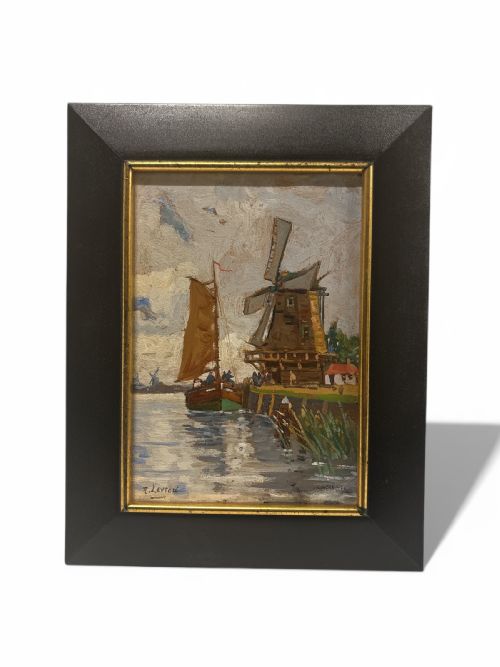
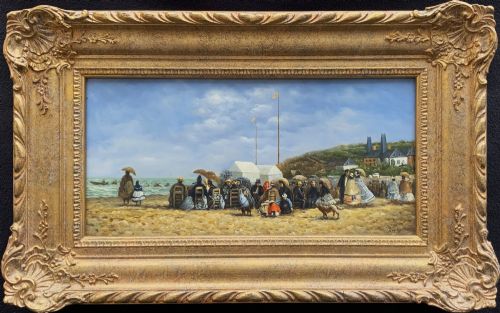

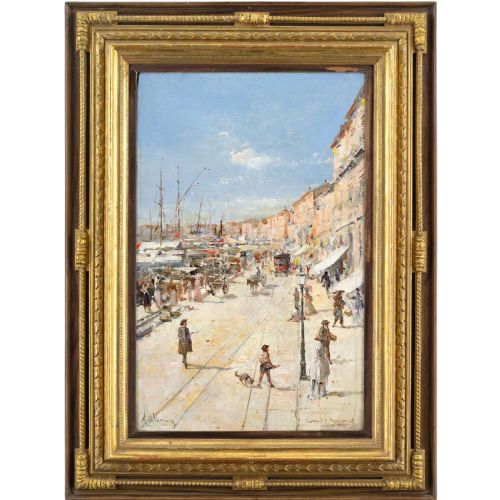
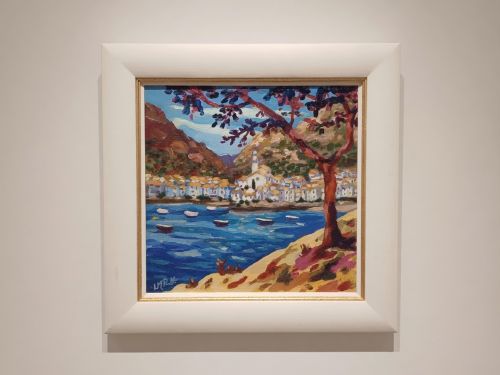
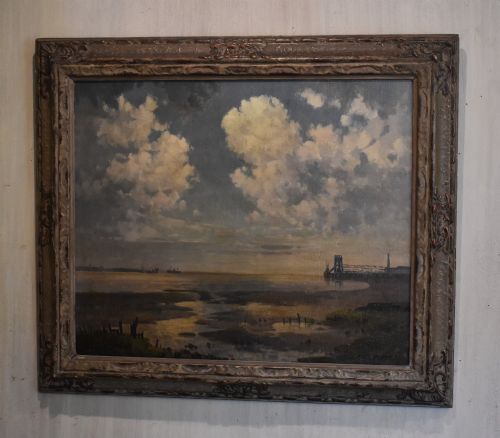
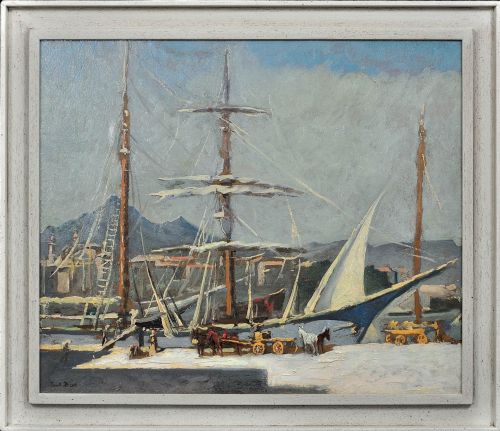
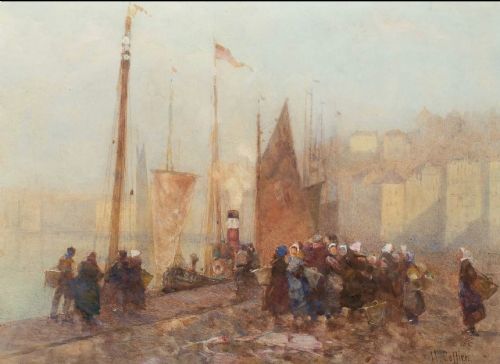
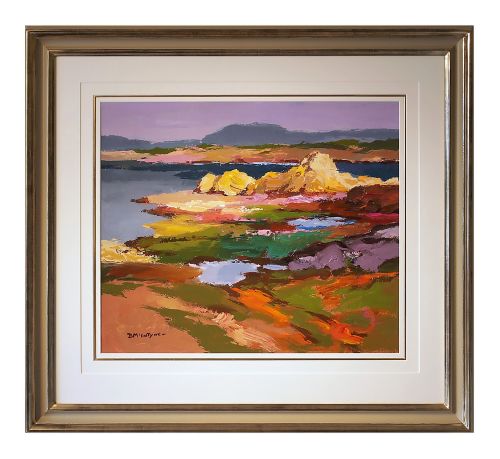
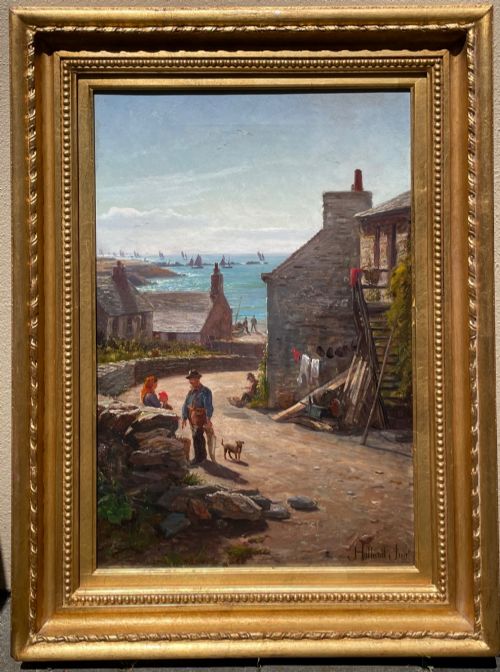
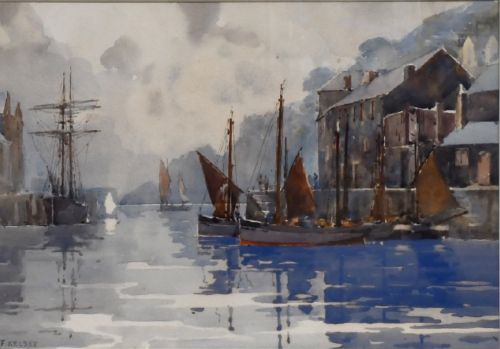


Impressionist Coastal Scene
Impressionist coastal scene works capture the shifting light of shorelines through loose brushwork and vivid oil paint.
Identifying impressionist coastal scene paintings
An impressionist coastal scene brings together maritime views and the loose brushwork characteristic of late nineteenth and early twentieth century painting. These works capture harbours, sailboats, and shores through the lens of British and continental movements.
The pieces on this page span the Edwardian era through to the nineteen forties, covering British Impressionism, Post-Impressionism, and Provencal Impressionism. Subjects range from Manx harbours and Scottish solway boathouses to French seaweed gatherers and Provencal olive trees by the mediterranean sea.
Canvas mounted in wood and gilt frames dominates the selection of wall art and fine art paintings available here. Buyers encounter both British coastal depictions and French regional landscapes rendered in oil paint.
Judging quality in coastal paintings
Quality rests upon the artist's handling of light and the surety of the brushwork in capturing movement within the marine subject. Superior examples demonstrate a confident control of tone that defines water, wind, and sky without heavy reliance on fine line.
The integration of the painting with its frame plays a role in the overall presentation, particularly where original gilt wood surrounds survive. Condition of the canvas surface and the stability of the oil paint layer further distinguish the finer pieces.
Retail Price Guide 2026
Typical UK retail prices for impressionist coastal scene, calculated from the Sellingantiques database of over a million retail prices indexed since 2003. This retail price guide relies exclusively on Sellingantiques data; no external sources or auction records are used, so the figures do not describe the wider market.
Listings feature works in oil paint on canvas spanning from nineteen hundred through the Edwardian period to nineteen forty.
R Leyton·Owen Bowen·James Watson
The Impressionist Coastal Scene Glossary
- Impressionism
- A style of painting that focuses on the visual impression of a moment, especially regarding the shifting effect of light and colour. It relies on small, thin yet visible brush strokes.
- Canvas
- A heavy woven fabric used as a surface for oil painting, stretched across a wooden frame before the artist begins work.
- Impasto
- The process of laying on paint thickly so that it stands out from the surface, giving texture to elements like waves or clouds.
- Gilt
- A thin layer of gold leaf or paint applied to wooden frames to give a gold finish.
- Post-Impressionism
- A predominantly French art movement that developed from impressionism, extending its limitations while retaining its use of vivid colours and thick paint.
Frequently Asked Questions
What subjects appear in these coastal paintings?
The works depict maritime views including sailboats, windmills, harbours, and boathouses across British and French shores. Scenes also feature seaweed gatherers and southern landscapes with olive trees by the sea.
Artists record specific locations ranging from the Isle of Man and Kirkcudbrightshire to Brittany and Provence.
Which periods do these artworks represent?
The selection spans the early twentieth century, including Edwardian examples alongside pieces dated from nineteen hundred, nineteen ten, nineteen thirty, and nineteen forty.
Styles shift from British Impressionism and Post-Impressionism to Provencal Impressionism across these decades.
How should I display an oil painting on canvas?
These works suit traditional wall art placement in dry rooms away from direct sunlight and severe temperature fluctuations. Proper hanging protects both the canvas and the accompanying wood or gilt frame.
Ensure the wall fixings match the weight of the framed picture to support it securely.
What materials are used in these paintings?
Artists utilise oil paint applied to stretched canvas surfaces to create marine and coastal views. The completed works are set within wood frames, often enhanced with gilt finishes.
This combination of materials characterises the fine art paintings from this period.