





Canvas Marine Oil Painting
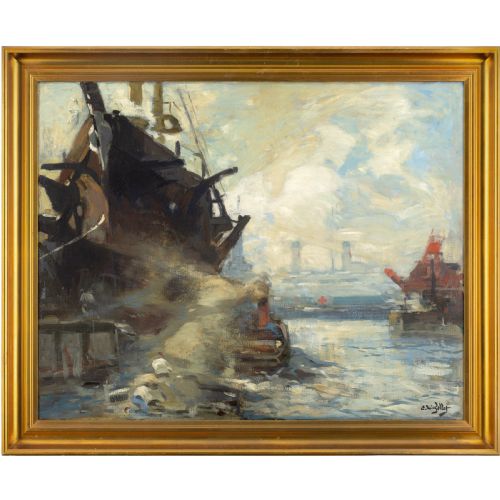
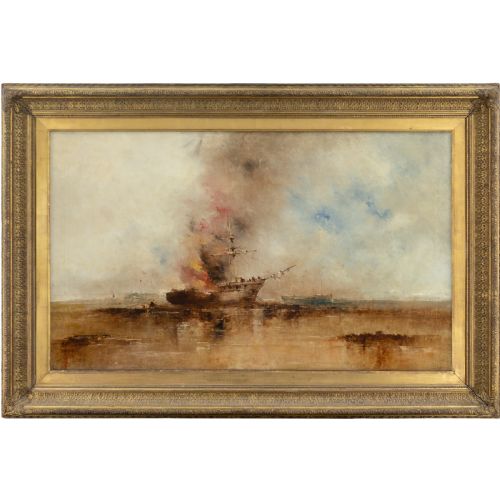
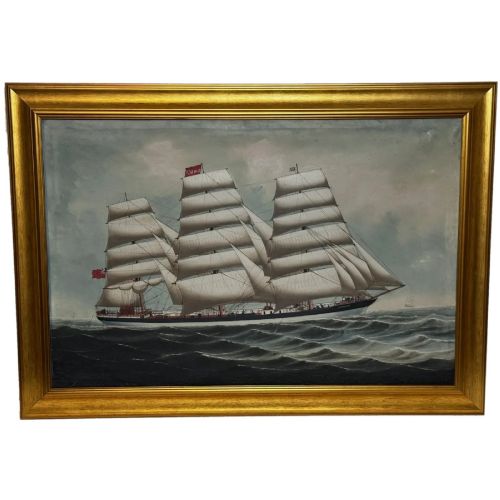
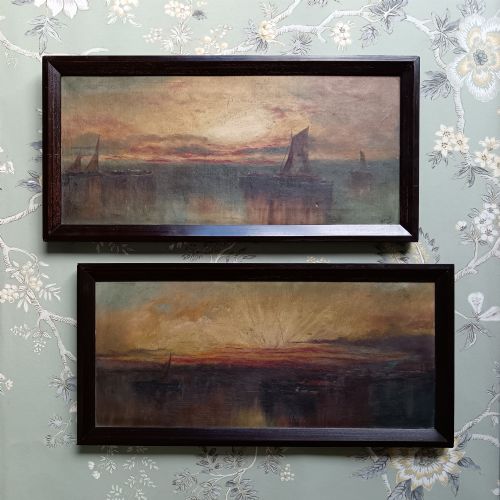
These canvas marine oil painting works capture rough seas and busy harbours, offering a window into maritime history.
What They Are
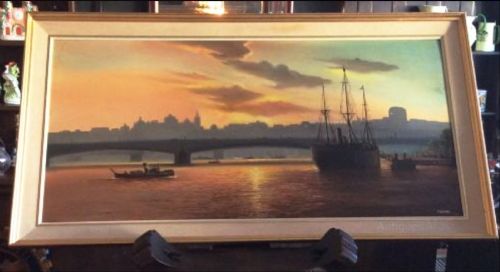
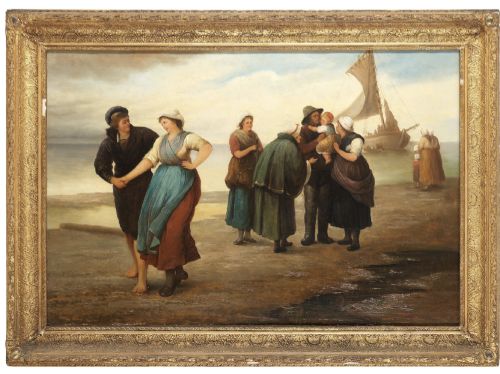
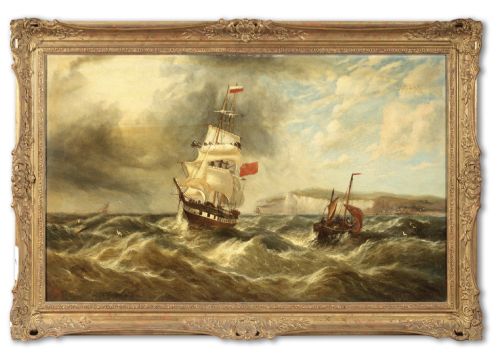
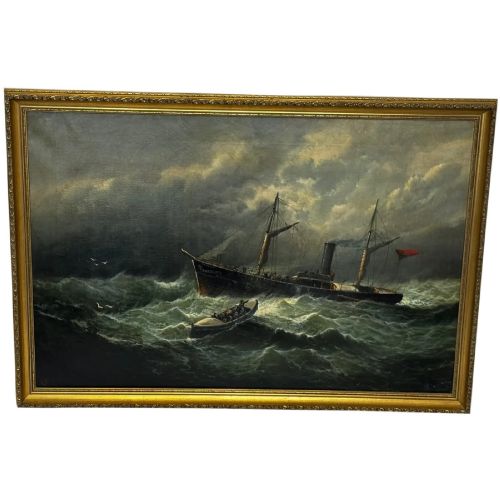
A canvas marine oil painting depicts ships, harbours and coastal waters across several eras. Buyers find works ranging from Victorian maritime scenes to mid-century marine realism.
The most common examples on this page date from the nineteenth century and the early twentieth century. These pieces record commercial shipping, lighthouses and coastal scenes on stretched canvas.
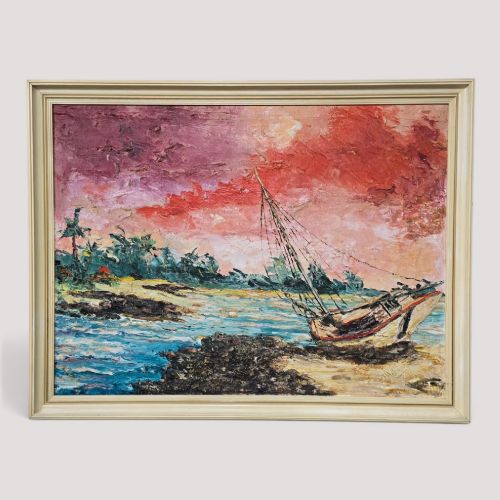
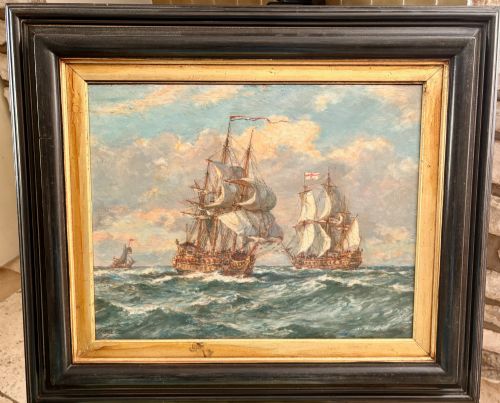
Subjects stretch from calm anchorages like the Isle of Man to dramatic sea battles and merchant ships in full sail. Artists utilise traditional oil paints to render water, sky and timber vessels with depth.
How They Were Made
Artists paint these maritime subjects using oil pigments applied directly onto woven canvas. The prepared fabric sits stretched within a wooden support before receiving layers of colour.
Many surviving examples retain their original timber frames, some finished in gilt wood or heavy moulding. The combination of oil paint and canvas allows for subtle blending of sea and sky tones.
Retail Price Guide 2026
Typical UK retail prices for canvas marine oil painting, calculated from the Sellingantiques database of over a million retail prices indexed since 2003. This retail price guide relies exclusively on Sellingantiques data; no external sources or auction records are used, so the figures do not describe the wider market.
Current listings and past archives feature works spanning the nineteenth century, 1900, 1940, and 1960.
What Varies in Quality
Quality rests upon the artist's ability to render the weight of water, atmospheric light and rigging accuracy. Finer works display confident brushwork that distinguishes choppy waves from calm reflections.
The choice of framing contributes to the overall presence of the piece, with period gilt wood enhancing the depth of the canvas. Condition of the pigment layer and stability of the canvas support further differentiate the works.
Dion Pears·John Callow·Owen Bowen·Samuel Bough·Frederick J Sang·George F Gregory
The Canvas Marine Oil Painting Glossary
- Canvas
- A heavy woven fabric used as the primary support surface for oil paintings. It stretches across a wooden frame to hold the pigment.
- Oil paint
- A slow-drying medium made by mixing pigments with oils such as linseed. This allows artists to blend colours smoothly on the canvas surface.
- Gilt wood
- Wood carved and coated with a thin layer of gold leaf or metallic gilt. It frequently borders nineteenth-century maritime paintings.
- Maritime art
- Works depicting ships, harbours, coastal views and naval engagements. This genre spans realist studies and impressionist interpretations.
Frequently Asked Questions
How do I date a marine oil painting?
Dating relies on the ship types, clothing styles of figures, and framing materials. Nineteenth-century works often show specific riggings and timber construction methods.
Signatures, stretcher construction, and canvas stamps offer further clues to the exact period of execution.
Where should I hang a canvas marine painting?
These works suit traditional studies, living rooms, and hallways with controlled light levels. Keep them away from direct sunlight and damp areas to protect the oil pigment.
Ensure the wall can support both the canvas weight and any heavy gilt wood frame.
How do I clean a canvas marine oil painting?
Dust the surface gently with a soft, dry brush to remove loose particles. Avoid using water or chemical cleaners on the paint layer.
Professional conservators should handle any deeper cleaning or removal of aged varnish.
What subjects appear in these marine paintings?
Paintings show merchant vessels, lighthouses, fishing boats, and naval battles. Scenes range from calm French beaches to turbulent northern seas.
Artists document both working coastal life and dramatic open-water encounters.