



Nautical Marine Artwork
Nautical marine artwork brings together centuries of maritime history through oil paintings, watercolours and etchings of ships, harbours and coastal scenes.
Nautical Marine Artwork
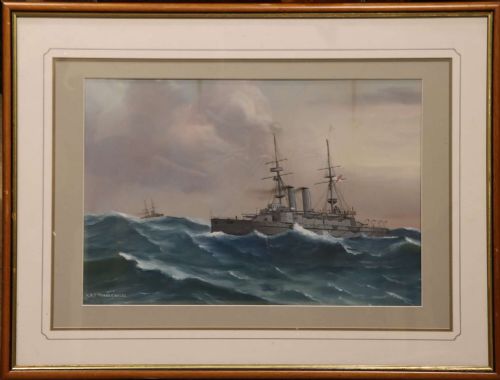
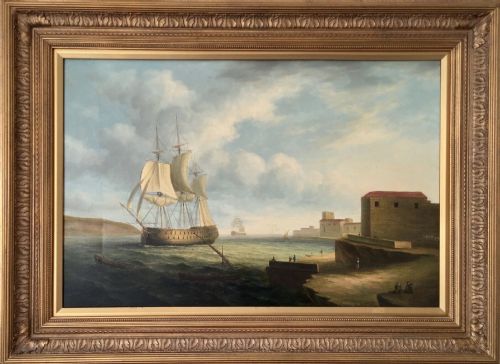
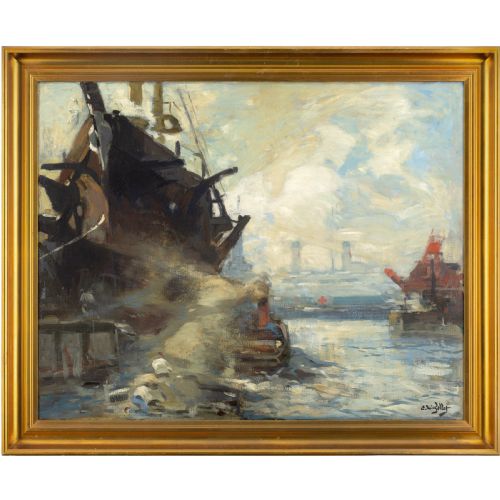
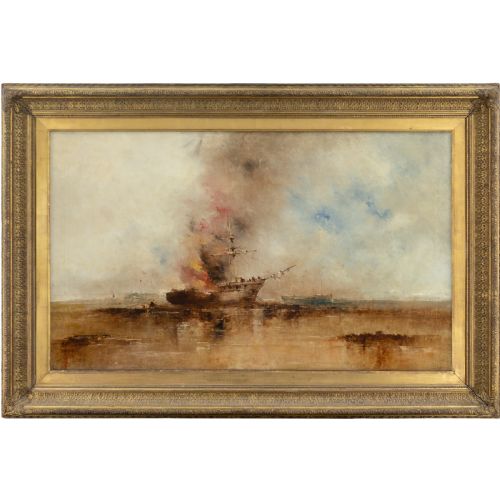
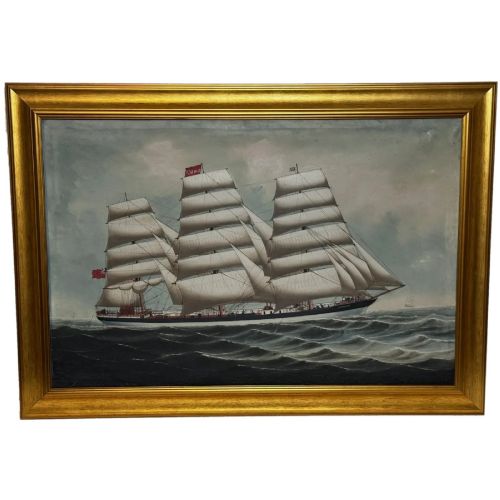
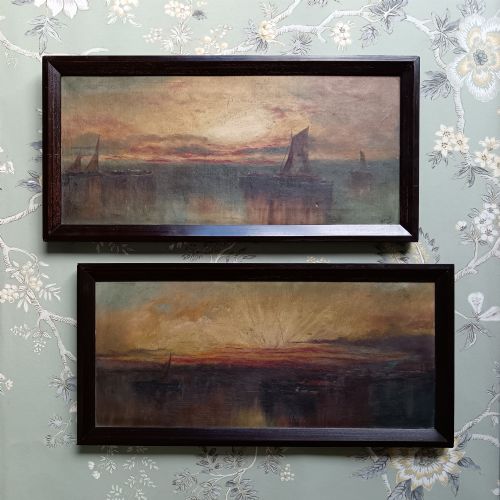
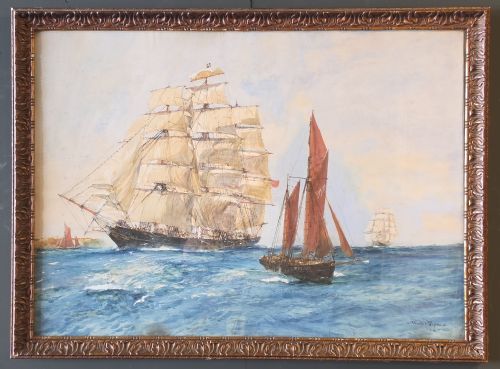
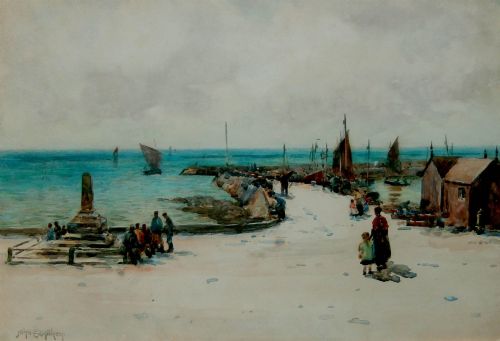
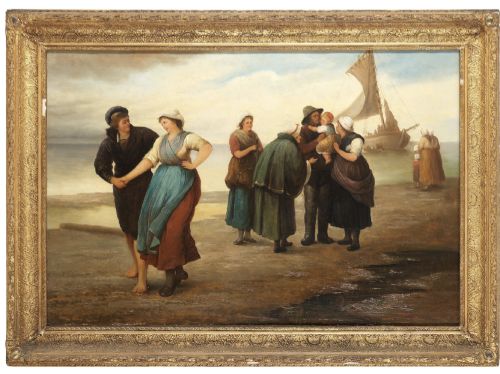
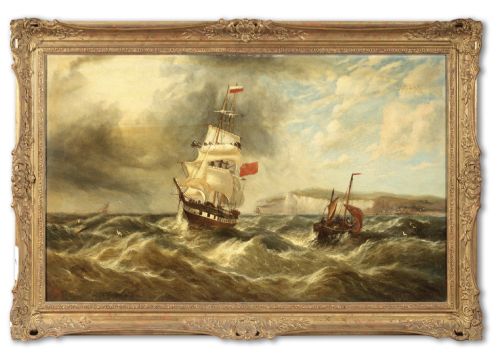
Buyers seeking nautical marine artwork encounter an array of historical depictions focusing on ships, maritime commerce, naval battles and coastal life. The pieces span from the nineteenth century into the mid twentieth century, capturing sailing vessels, steamships and bustling ports.
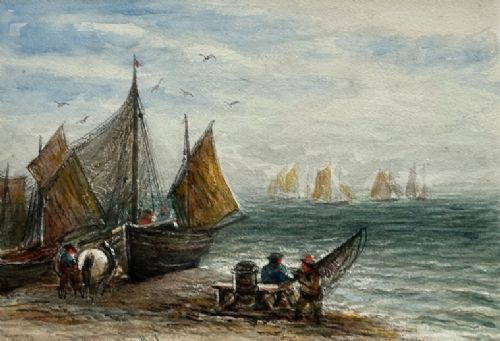
The selections available here range from detailed watercolours on paper to large oil paintings on canvas and panel, often housed within gilt frames. Subjects vary from specific named vessels and historical events to atmospheric seascapes and harbour views created by British, French, Dutch and Australian artists.
Materials and construction
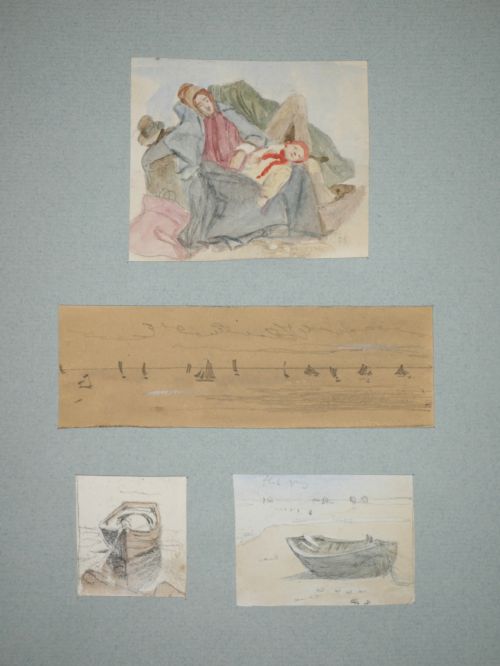
Artists working within this category relied primarily on oil paint applied to canvas, wood panel or board, alongside watercolours and gouache on paper. Many works incorporate preparatory pencil work, and some surviving examples include original signed etchings.
Framing forms an integral part of the presentation, with period gilt frames complementing the maritime subjects. The support materials range from heavy woven canvas stretched over wooden frames to sturdy wooden panels and delicate paper sheets.
Listings feature works spanning the nineteenth century, the Edwardian period, and the mid twentieth century, executed in oil, watercolour, and gouache.
Distinctions in quality
Quality within these maritime pieces rests upon the precision of the vessel rigging, the atmospheric handling of water and sky, and the documentary accuracy of the ship types depicted. Skilled hands capture the movement of waves and the specific architectural details of hulls and sails with conviction.
The reputation of the artist and the clarity of the provenance elevate certain examples above standard decorative pieces. Signed works by recognised marine painters demonstrate superior brushwork and compositional depth compared to anonymous or school pieces.
James Hardy·Kenneth Cozens·James Orrock·James Smetham·Eugène-Louis Gillot·William McAlpine·Reginald Arthur Borstel·B. Nash·Charles Edward Dixon·John E. Aitken·John Rose Miles·William Broome·Bernard Gribble·William Lionel Wyllie·Bonaventura Peeters·Frank William Scarbrough·F. Corpuz·Peter Brannan·Paul Bret·Willem Bos·TB Hardy·John Wilson Carmichael·Lai Fong·John Moore of Ipswich·Nicholas Condy
The Nautical Marine Artwork Glossary
- Seascape
- A work of art depicting the sea, ships or coastal views. These subjects range in mood from calm harbour reflections to violent gales.
- Gouache
- An opaque water-based paint used on paper or board to achieve solid areas of colour and bright highlights.
- Etching
- A printmaking technique where lines are bitten into a metal plate with acid before being inked and pressed onto paper.
- Provenance
- The documented history of ownership of an artwork, which helps verify authenticity and authorship over time.
- Panel
- A flat wooden support used as a painting surface instead of stretched canvas.
Nautical Marine Artwork: Frequently Asked Questions
What subjects do these maritime paintings show?
These works depict historical sailing ships, steamships, naval vessels, and busy commercial ports across various international locations. Scenes range from vessels caught in heavy gales to calm coastal harbours and fishing boats at rest.
Many pieces document specific historical events, named ships, or coastal landmarks such as lighthouses and breakwaters, providing a visual record of maritime heritage.
How should I care for antique marine watercolours?
Watercolours on paper require careful protection from direct sunlight to prevent the pigments and paper from fading over time. Keeping them in stable humidity conditions avoids moisture damage to the paper support and the surrounding mount.
Displaying them away from direct heat sources helps preserve both the integrity of the paper and the original frame.
How can I tell a nineteenth century painting from a later one?
Nineteenth-century pieces frequently feature wooden sailing ships, barques, and early steam vessels rendered in traditional oil or watercolour techniques. Artists of this era focused heavily on rigging accuracy and dramatic atmospheric lighting.
Twentieth-century works often introduce different vessel types, such as twentieth-century steamships and wartime hospital ships, alongside shifts in artistic style toward impressionism.
Are these artworks usually signed by the artist?
Many of the pieces feature artist signatures, initials, or contemporary attribution notes on the front or reverse of the canvas, board, or paper. Signed works often provide a direct link to known maritime painters of the period.
Unsigned pieces are frequently attributed to particular schools of art based on style, technique, and subject matter handled during specific eras.