

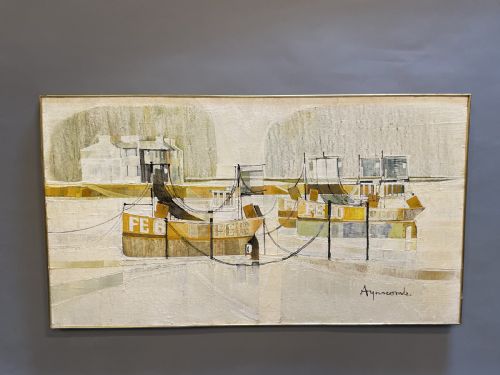


Coastal Harbour Oil Artwork
Coastal harbour oil artwork captures the movement of tides and the daily business of shipping across centuries of marine painting.
Coastal Harbour Oil Artwork
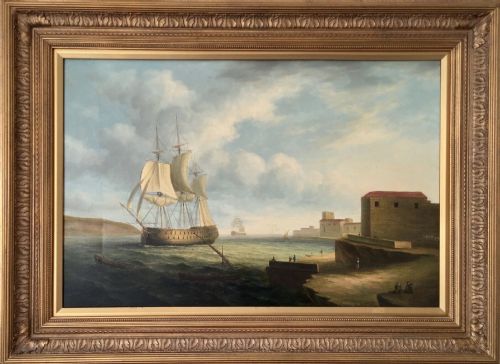
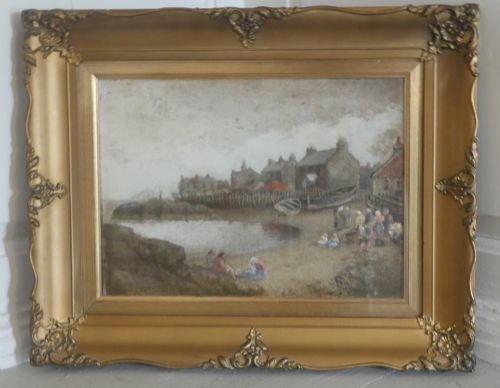
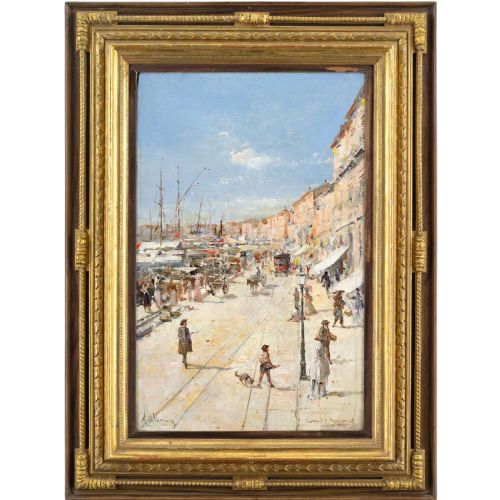
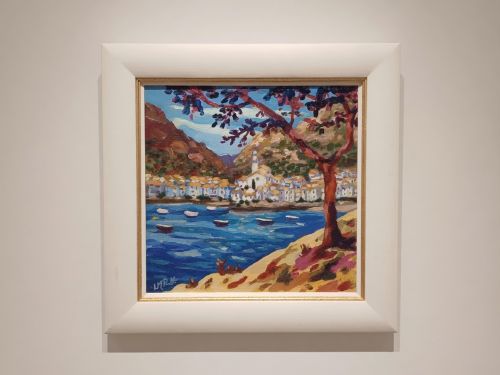
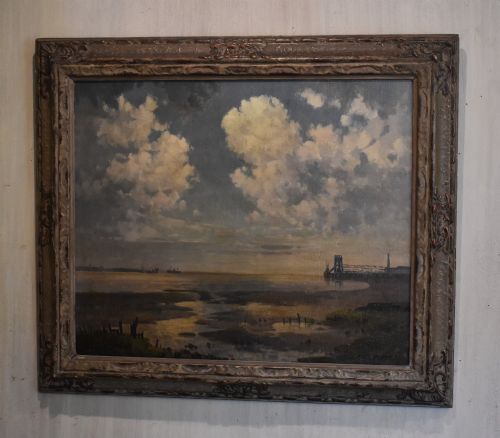
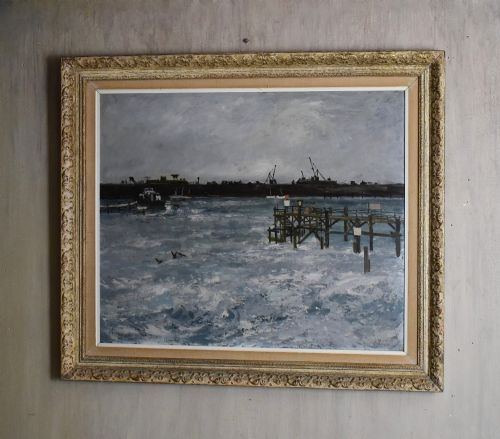
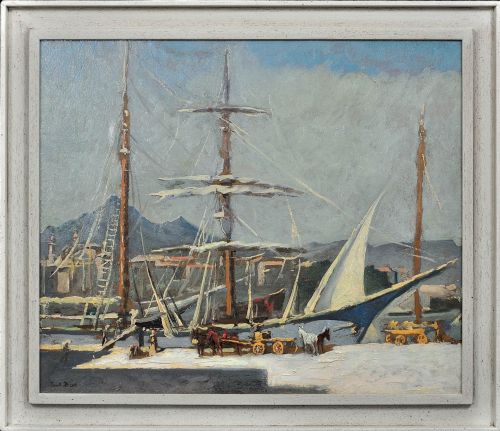
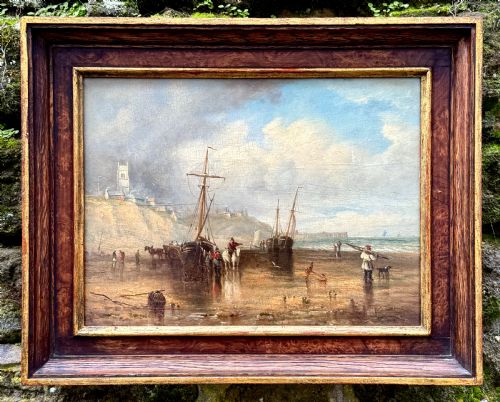
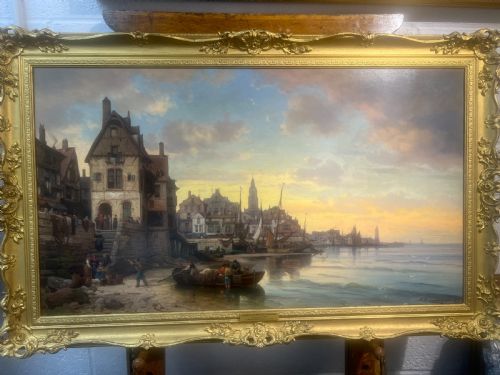
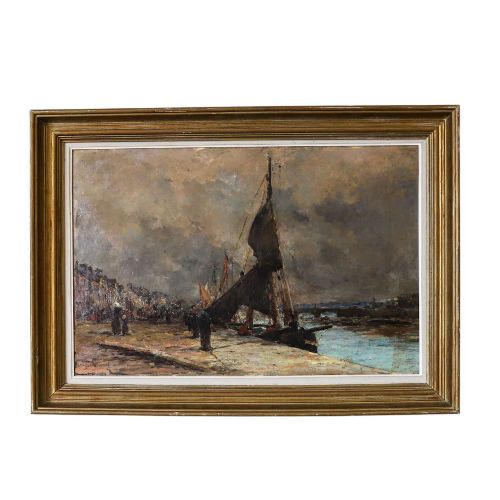
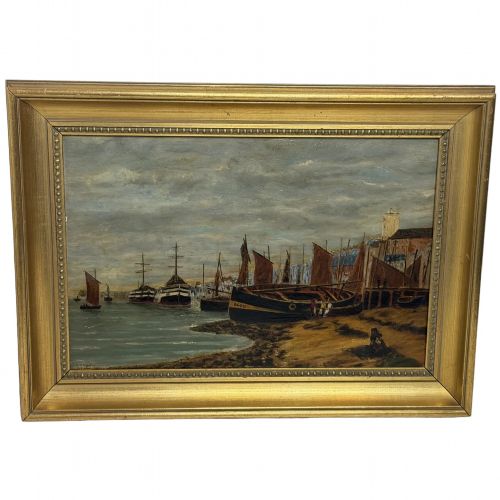
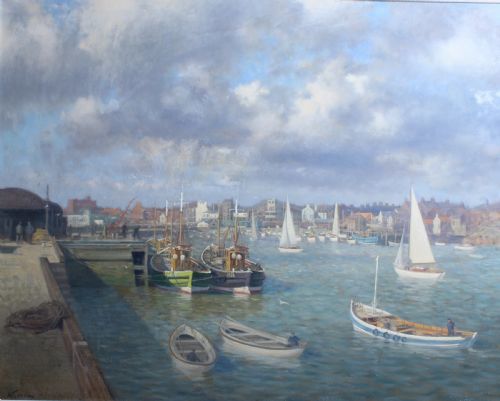
When searching for coastal harbour oil artwork, buyers encounter painted records of maritime life, fishing fleets, and coastal architecture. The selection spans periods from the eighteenth century through to the mid-twentieth century, capturing busy ports, quiet inlets, and bustling quaysides.
Most pieces on offer originate from British and European coastal locations, including Cornish fishing villages, Mediterranean harbours, and northern river ports. These works take the form of oil paintings on canvas, panel, or board, often retained in their period frames.
How they were made
These works rely on oil paint applied to prepared canvas, wooden panels, or rigid boards, allowing artists to build rich textures and subtle tonal shifts. Painters worked with brushes and palette knives, sometimes laying down heavy impasto to convey the churn of water or the rough timber of moored vessels.
Finished paintings were commonly housed in wooden frames finished with gilt or gilding, which protected the edges of the canvas and provided a traditional boundary for the scene.
Materials recorded across the selection feature oil paint applied to wood and canvas, housed in gilt wood frames.
What varies in quality
The distinction between standard works and finer examples lies in the artist's handling of light, atmosphere, and maritime detail. Superior paintings capture the specific weight of water and the play of weather on rigging, rather than relying on formulaic compositions.
Condition and originality also determine the standing of a piece. Works retaining their initial canvas support, stable paint layers, and period frames hold greater integrity than those with extensive later interventions.
James Hardy·Kenneth Cozens·Edward Mills·Augusto Alberici·Lucy Pratt·Clive Browne·Peter Brannan·Paul Bret·Thomas Creswick·Charles Euphraisie Kuasseg·Walter Goodin·William Edward Webb·Edward Matthew Elliott·Gyrth Russell·Jean-Baptiste Olive·Raymond Picque·James Fry·George Turland Goosey·James Kyd·Adrian Van Porten·Stanley Leader·Donald McIntyre·T.S. Wallis·James Webb·Owen Bowen
The Coastal Harbour Oil Artwork Glossary
- Impasto
- Paint applied thickly to a canvas or panel, standing out in relief from the surface. This technique allows the artist to capture the physical texture of water, clouds, or built structures.
- Marine painting
- Artwork that depicts ships, harbours, coastal views, and the open sea. It encompasses both commercial shipping records and romantic or impressionistic interpretations of the shore.
- Oil on canvas
- Pigment suspended in a drying oil medium and spread across a stretched fabric support. This combination provides flexibility and long-term durability for the painted layer.
- Gilt wood
- Timber framing finished with a thin layer of gold leaf or metallic gilding. These frames were designed to complement the tones within the painting and reflect ambient gallery light.
Coastal Harbour Oil Artwork: Frequently Asked Questions
How do I date an old marine painting?
Dating relies on stylistic evidence, artist signatures, and the physical materials of the support and frame. Historical details such as the rigging style of vessels or the cut of buildings can also narrow down the period.
Examination of the canvas weave, stretcher construction, and backboards provides further clues. Comparing a piece with documented works by the same hand secures a reliable timeframe.
Where were these harbour scenes usually painted?
Artists often set up their easels directly on quaysides, beaches, or cliff tops to capture real working ports. Popular locations included Cornish fishing stations, busy northern rivers, and Mediterranean harbours.
Some painters worked from preliminary sketches made on site, completing the final canvas back in the studio. This dual approach allowed them to balance immediate observational freshness with composed lighting.
How should I care for oil paintings at home?
Keep paintings away from direct sunlight, extreme temperature shifts, and high humidity to prevent the canvas from warping or the paint from cracking. Gentle dusting with a soft, dry brush is sufficient for routine maintenance.
Avoid using water, chemical cleaners, or abrasive cloths on the painted surface or the gilt frame. If the paint layer requires cleaning or stabilization, consult a professional conservator.
What frames are correct for these periods?
Victorian and Edwardian marine works typically feature heavy moulded wooden frames with elaborate plaster ornamentation and gilt finishes. Mid-century pieces often inhabit simpler, shallower wooden profiles that reflect modern design tastes.
Original frames add context and character to a painting, though many older works have been re-framed over time. Matching the period of the frame to the date of the canvas remains a key consideration for collectors.