




Mid Century Harbour Landscape
When you want a mid century harbour landscape, you seek maritime scenes captured across British and European coasts by mid-century painters.
Mid Century Harbour Landscape
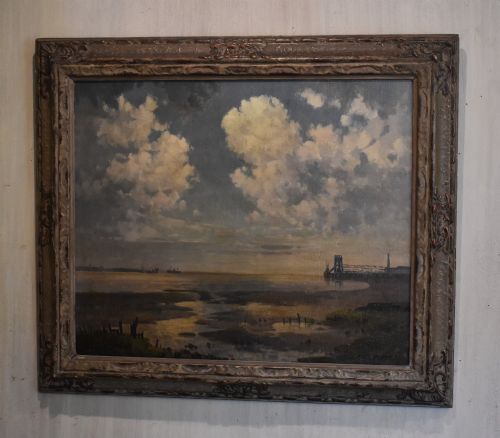
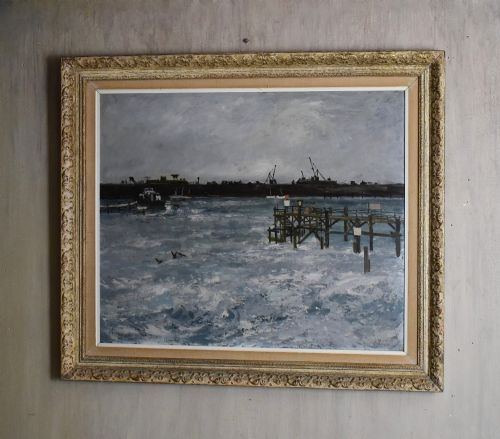
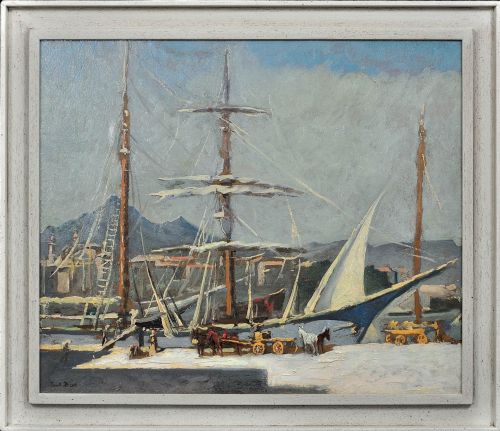
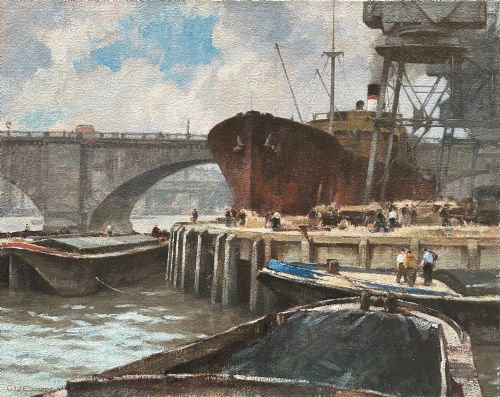
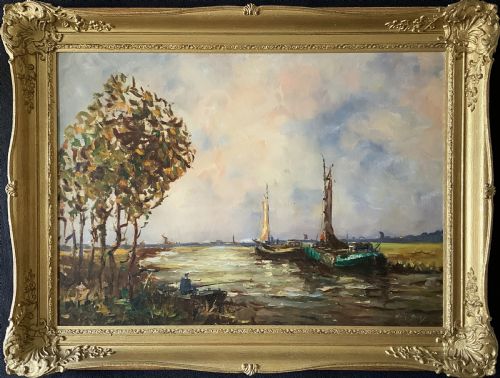
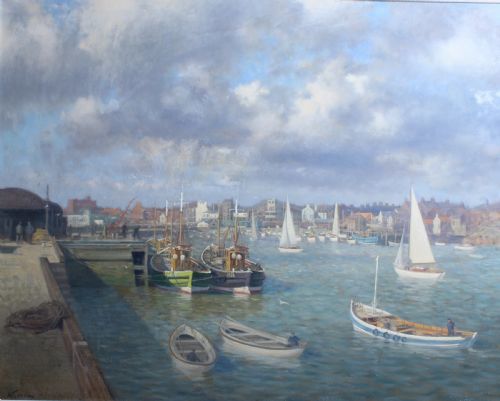
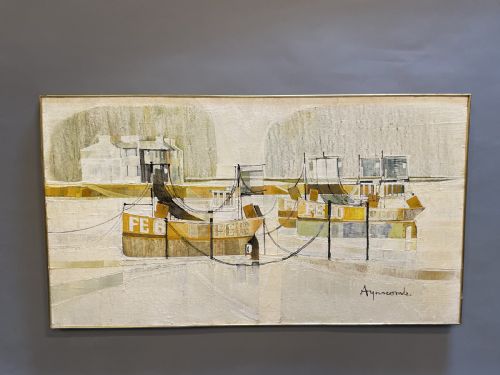
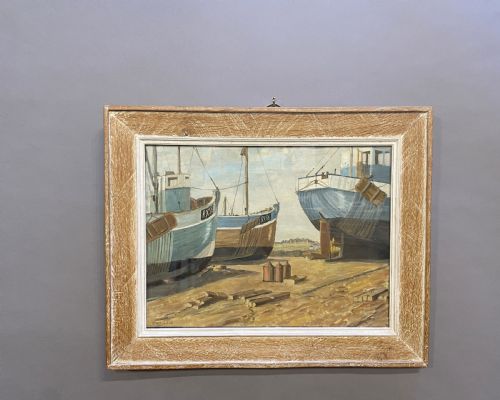
A mid century harbour landscape depicts maritime life, coastal quays, estuaries, and fishing ports through paintings and works on paper. These pieces span British Impressionism, Modern British, and continental schools, capturing specific locations from Cornwall to the Mediterranean.
The version most commonly met on this page is an oil painting on canvas or board dating from the nineteen-fifties or nineteen-sixties. Painters applied pigment to record moorings, boats, and promenades during an active period of mid-century artistic output.
How They Were Made
Artists utilised oil paint applied to canvas, wood board, or paper, often building textured surfaces with impasto techniques. Watercolour was also employed on paper for lighter coastal scenes and estuary views.
Support materials varied from stretched canvas to rigid board and paper sheets, frequently housed within framed artwork chosen to complement the maritime subject matter.
Geographic origins span British, French, Dutch, and Brazilian coastal locations.
What Varies In Quality
The strength of composition and brushwork separates dynamic impressionist interpretations from more static documentary records of ships and quays. Skilled handling of light and pigment transforms a simple coastal view into a compelling mid-century work.
Provenance and documentation also distinguish the selection, with signed works by identified regional and continental painters holding stronger records than anonymous pieces.
Kenneth Cozens·Clive Browne·Peter Brannan·Paul Bret·Cyril Walduck Edwards·Willem Bos·Walter Goodin·Paul-Jean Anderbouhr·Lokre·Gyrth Russell·Raymond Picque·James Fry·Fred Pailhes·Donald McIntyre·Doyly-John·Pauwels·Edward M Elliott·Jack R Mould·Antonio Godoy·S J Lamorna Birch·Yves Brayer·Maurice Sijs·Richard Henry Nibbs·Norman Carter·Ben Maile
The Mid Century Harbour Landscape Glossary
- Impasto
- Paint applied thickly to a canvas or board so that it stands out from the surface. This technique adds tactile dimension to water, sky, and architectural elements in coastal scenes.
- Post-Impressionism
- An art movement extending roughly from the late nineteenth century into the mid-twentieth century. Painters rejected naturalistic depiction in favour of expressive use of form and colour.
- Estuary
- The tidal mouth of a large river where the tide meets the stream. These settings provided artists with expansive water level perspectives and industrial shipping activity.
- Provenance
- The chronological history of the ownership of a piece of art. Clear attribution to named makers helps establish historical context.
Mid Century Harbour Landscape: Frequently Asked Questions
What periods do these paintings cover?
The works span multiple decades, concentrating heavily on the nineteen-thirties, nineteen-forties, nineteen-fifties, and nineteen-sixties. Occasional pieces reach back into the nineteenth and eighteenth centuries.
This broad chronological spread allows collectors to trace shifts in maritime painting styles across different European and British regions.
Where were these coastal scenes painted?
Locations range widely across British fishing ports in Cornwall and Devon, Scottish waters, and European harbours in France, Italy, and the Netherlands. Each region offered distinct architectural and maritime subject matter.
Artists frequently travelled to specific ports to record local vessels, quaysides, and tidal changes.
What materials are used in these works?
Paintings utilise oil paint on canvas or wooden board, alongside watercolours and pastels on paper. Glass frequently protects works executed on paper.
The choice of medium influences the texture and durability of each individual coastal artwork.
How do impressionist and modernist works differ?
Impressionist coastal scenes focus on light, atmosphere, and natural colour relationships across water and sky. Modernist pieces lean into abstracted forms and dynamic brushwork to interpret port activity.
Both approaches capture the essential character of mid-century maritime environments through distinct aesthetic lenses.