


Coastal Harbour Scene Painting
A coastal harbour scene painting captures the salt air, working boats and stone quays of maritime life across centuries of British and European art.
Coastal Harbour Scene Painting
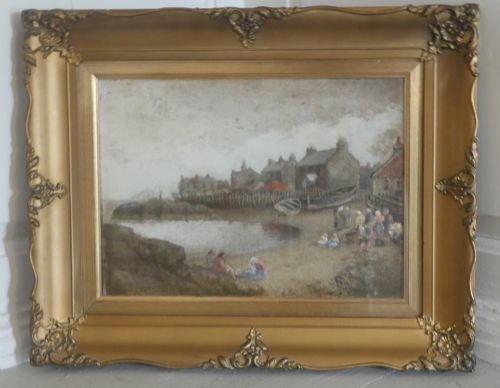
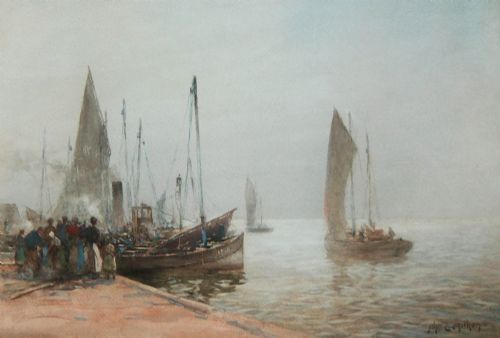
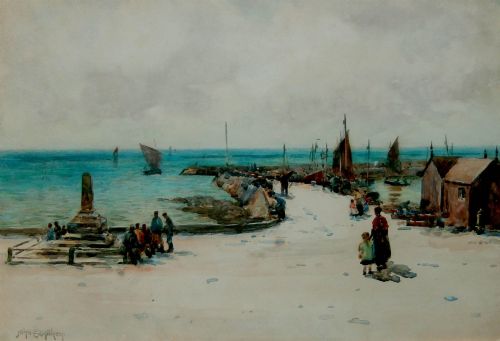
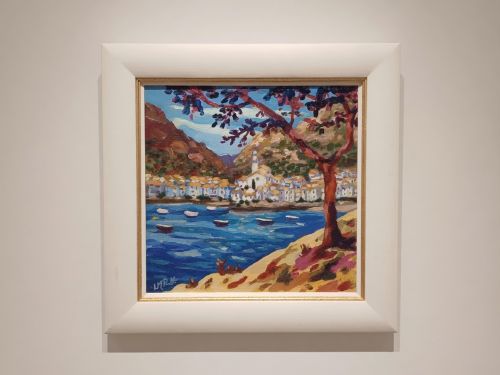
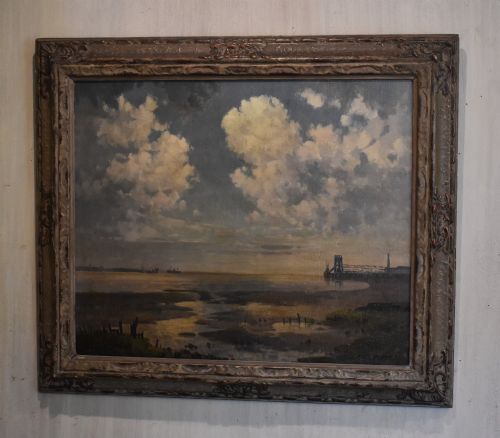
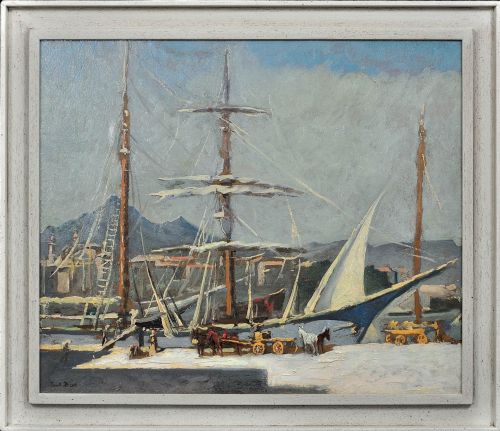
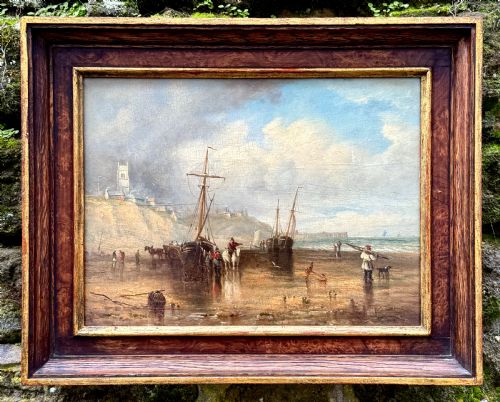
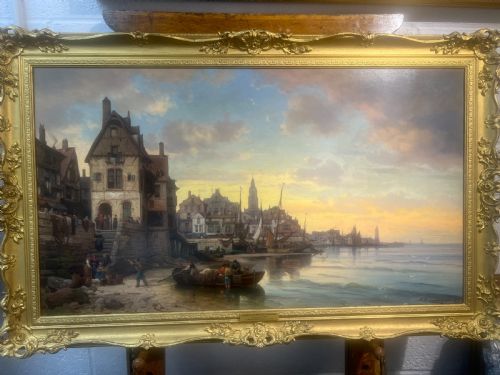
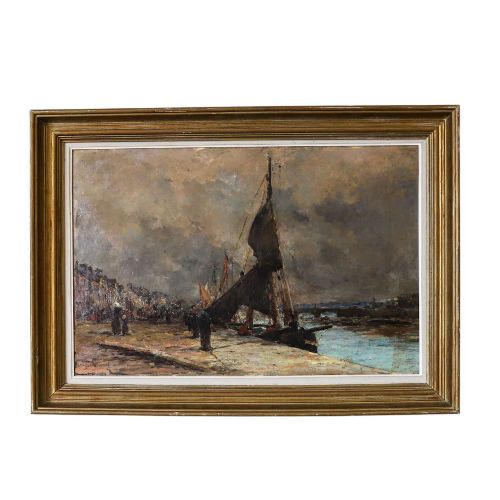
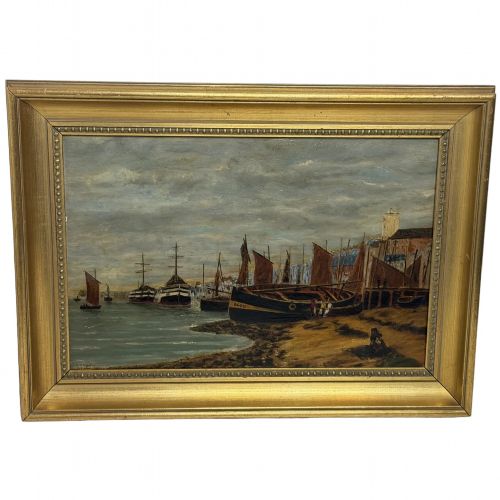
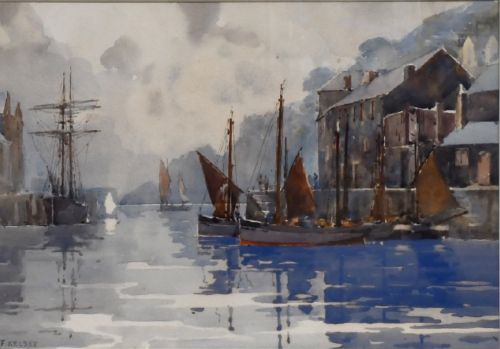
A coastal harbour scene painting depicts maritime activity, fishing vessels, and tidal waters around British and continental ports. These works record historic working docks, from Cornish fishing villages to northern industrial havens, during the nineteenth and twentieth centuries.
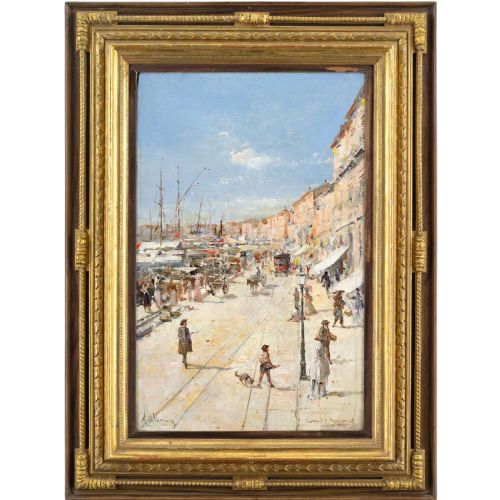
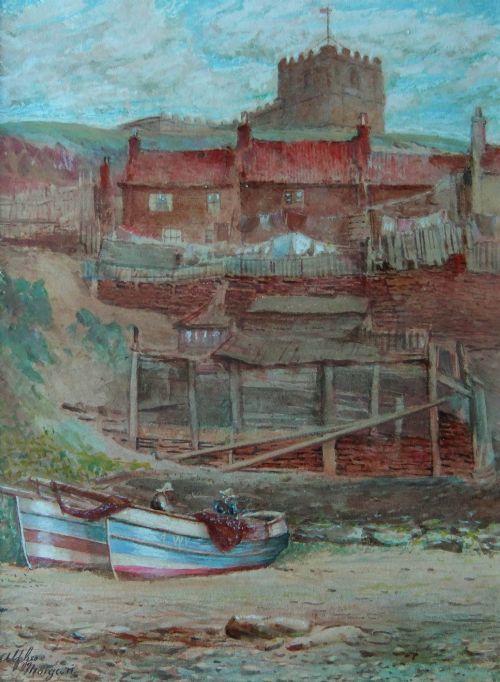
The most common examples on this page are watercolours on paper and oil paintings on canvas or board, originating from periods spanning the Georgian era through to mid-century modernism. Many capture specific named locations such as St Ives, Whitby, or continental harbours.
The subjects range from detailed Victorian topographical views to looser post-impressionist interpretations of light on water. Buyers encounter everything from small framed sketches of local luggers to larger oil canvases of bustling commercial ports.
How They Were Made
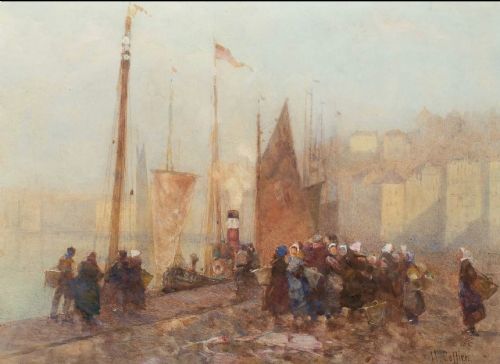
Artists painted these scenes using oil paint or watercolour applied to stretched canvas, wooden panels, or heavy paper. Watercolours rely on washes and pencil outlines to capture translucent light and atmospheric sea mists, while oils build heavier texture through layered brushwork.
Canvases and boards often sit within period wooden frames, sometimes finished in gilt wood to complement the maritime subject. Many works utilise glass for protection, particularly watercolours on paper from the Victorian and Edwardian periods.
Several artists captured the exact moment local fleets unloaded their daily catches in Cornish harbours.
What Varies in Quality
Quality rests in the artist's handling of light, shadow, and atmospheric movement across the water and sky. Stronger works demonstrate a confident command of proportion in rigging and architecture, whereas lesser pieces rely on formulaic repetition without observation.
The preservation of the medium defines the physical standard, with well-maintained surfaces showing stable paint layers and minimal foxing on paper. Original framing and clear signatures or documentation further elevate the standing of an individual piece.
Kenneth Cozens·Edward Mills·James E. Aitken·Augusto Alberici·Paul Bret·Hector Caffieri·Thomas Creswick·Alfred G. Morgan·Frank Kelsey·Paul Delvaux·William Edward Webb·Richard Harry Carter·Gyrth Russell·Raymond Picque·William Lee Hankey·James Kyd·Arthur Tucker·Adrian Van Porten·William Tuck·Donald McIntyre·T.S. Wallis·James Webb
The Coastal Harbour Scene Painting Glossary
- Watercolour
- A paint consisting of pigment suspended in a water-soluble vehicle, typically applied to paper to create luminous washes.
- Oil on Canvas
- A technique where slow-drying oil paints are applied to a woven fabric stretched across a wooden frame.
- Gilt Wood
- Wood that has been coated with a thin layer of gold leaf or metallic gilt paint, common in traditional picture framing.
- Lugger
- A traditional two-masted fishing vessel with lug sails, frequently seen depicted in nineteenth-century coastal art.
Coastal Harbour Scene Painting: Frequently Asked Questions
What periods do these paintings cover?
The selections span from the mid-eighteenth century through the Victorian and Edwardian eras up to mid-century modern works from the 1960s.
Most examples cluster around the late nineteenth and early twentieth centuries during the height of British and European plein-air painting.
How do I identify the location in a painting?
Many works bear contemporary handwritten inscriptions, signatures, or titles on the reverse of the canvas, frame, or margin.
Artists frequently recorded specific ports such as St Ives, Whitby, or Boulogne directly within the composition or exhibition labels.
Are these works original art?
The listings consist entirely of original hand-painted watercolours, oil paintings on canvas or board, and unique mixed-media works.
Artists painted each piece by hand from direct observation or studio sketches rather than producing mass-printed reproductions.
How should I frame and display them?
Historic works show best in their period wooden or gilt frames, which reflect the aesthetic of the painting's creation era.
Display watercolours away from direct sunlight behind protective glass to prevent fading of the delicate pigments on paper.