





Original Marine Wall Art
Original marine wall art brings the historic coast and open sea indoors through authentic period paintings, watercolours, and etchings.
Original Marine Wall Art
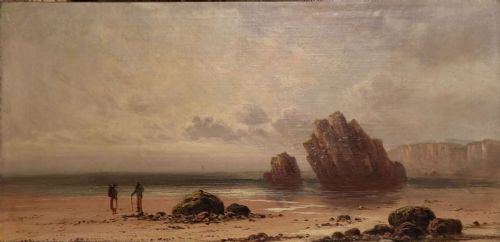
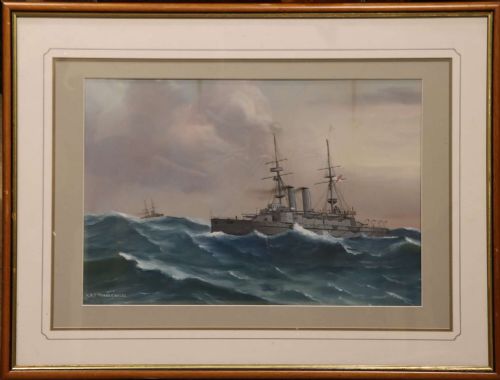
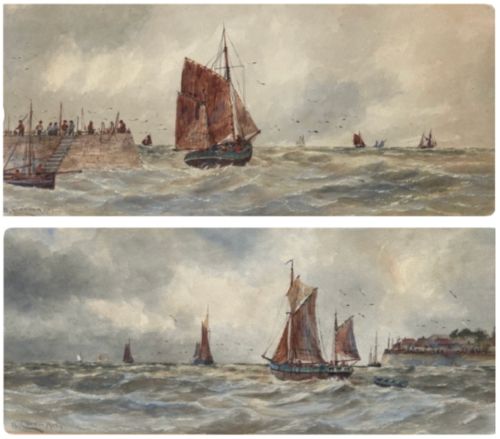
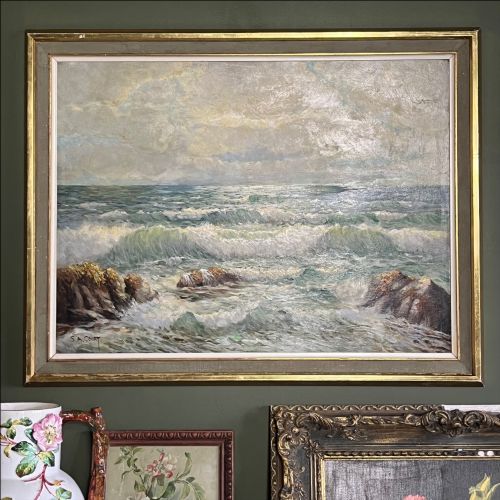
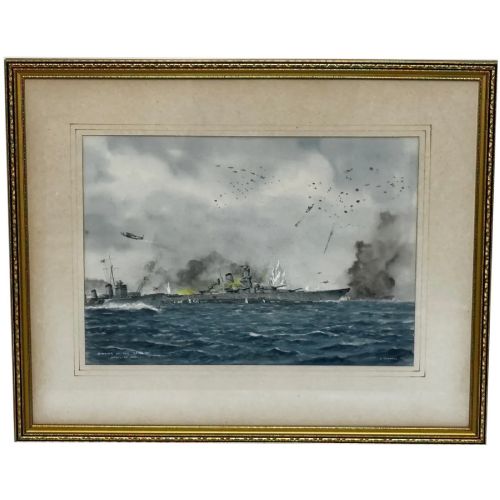
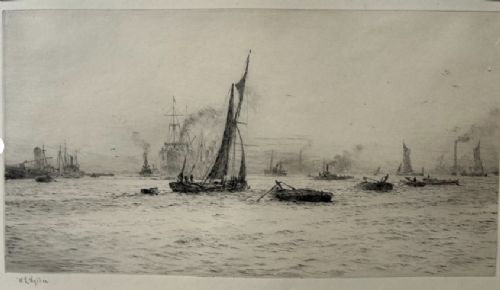
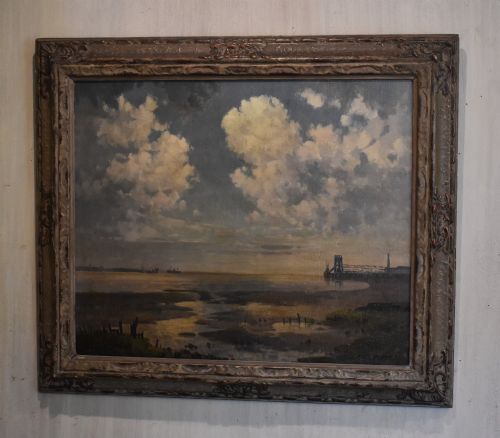
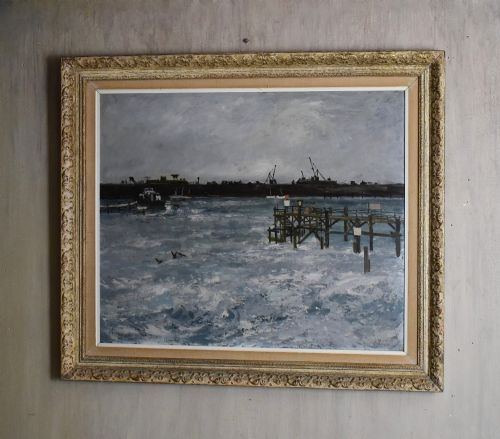
Original marine wall art captures coastal scenes, harbours, and naval vessels across several centuries of artistic production. Buyers investigating this category encounter framed watercolours, oil paintings on canvas or board, and pencil-signed etchings depicting ships at sea and fishing villages. These works range from late nineteenth-century Victorian seascapes to mid-twentieth-century British and French coastal views.
The subjects span calm harbour anchorages, dramatic rocky shores, and vessels navigating turbulent waters. Pieces frequently record specific locations such as Whitby, St Ives, the River Thames, and foreign ports like Honfleur or Sydney Harbour. Artists worked both en plein air and in studios, recording working vessels, racing yachts, and commercial shipping.
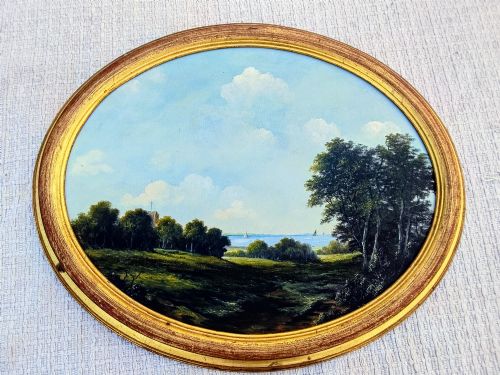
The physical form is typically a framed artwork ready for hanging, often retained within period wooden or gilt frames. Dating runs from the 1880s through the 1960s, encompassing styles from traditional Victorian maritime art to British Impressionism and mid-century modern interpretations. Works include both signed pieces by established painters and atmospheric works by unidentified or regional hands.
How They Were Made
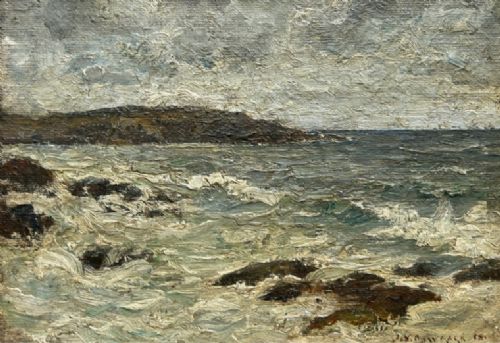
Painters utilised oil paint on stretched canvas or wooden board to build textured, durable coastal scenes. The oil medium allowed artists to layer pigments thickly, capturing the heavy weight of ocean swells and the play of light on wet sand. Watercolour applied to heavy paper offered a lighter, more fluid method for recording fast-changing atmospheric conditions along the shore.
Draftsmanship underpinned both mediums, visible in the precise rigging details of sailing ships and the accurate structural forms of historic hulls. Etchers used metal plates and ink on paper to produce sharp, linear maritime prints with deep tonal contrast. Works were enclosed in wood frames, frequently finished with gilt moulding to complement the interior display conventions of the period.
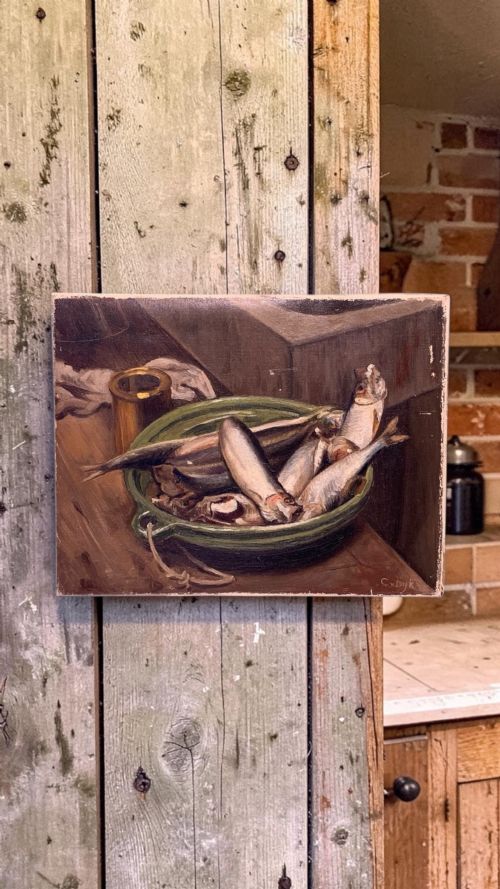
Listings feature works executed in oil, watercolour, and gouache on canvas, paper, board, and glass across the nineteenth and twentieth centuries.
What Varies in Quality
The capability of the artist to convey spatial depth and atmospheric movement dictates the strength of a composition. Weaker works rely on formulaic repetition of waves and ships, whereas superior examples demonstrate keen observation of light, weather, and water physics. Brushwork in finer paintings shows deliberate control, whether rendering the delicate transparency of a watercolour wash or the bold impasto of an oil seascape.
Condition and originality heavily influence the standing of any piece. Intact original framing, stable pigment adhesion, and minimal surface restoration preserve the historical integrity of the artwork. Works that retain clear signatures, exhibition labels, or documented provenance offer stronger historical context than unsigned or heavily restored alternatives.
Kenneth Cozens·James Orrock·William Cannon·Eugène-Louis Gillot·Sidney A. Court·John E. Aitken·Eric Tufnell·William Banks Fortescue·William Lionel Wyllie·Clive Browne·Peter Brannan·Robert Leslie Howey·Bernard Benedict Hemy·George Stanfield Walters·Walter Goodin·Abraham Hulk I·John Moxon·William Frederick Settle·Alfred George Morgan·Lionel Horsnell·Charles Napier Hemy·Richard Harry Carter·Louis Suire·William Lee Hankey·Norman Lloyd
The Original Marine Wall Art Glossary
- Impasto
- Paint applied thickly to a canvas or board, leaving visible brush or palette knife marks. This technique gives physical texture to elements like foaming sea spray or churning water.
- En plein air
- Painting outdoors in direct natural light to capture immediate atmospheric conditions. This method was widely adopted by nineteenth and twentieth-century coastal artists.
- Gouache
- An opaque watercolour paint mixed with a white pigment binder, producing a heavier, matte finish. It allows artists to add solid highlights to maritime watercolours.
- Etching
- A printmaking process where an artist uses acid to cut lines into a metal plate, which is then inked and pressed onto paper. It produces precise, fine-lined maritime prints.
- Lugger
- A small two or three-masted fishing vessel rigged with lug sails, commonly seen in British and European coastal art from the nineteenth and early twentieth centuries.
Original Marine Wall Art: Frequently Asked Questions
What is original marine wall art?
Original marine wall art comprises hand-painted and drawn works depicting seascapes, ships, and coastal towns. These pieces are one-off artistic creations rather than modern reproductions.
Created primarily between the late nineteenth and mid-twentieth centuries, they document historical maritime life, working vessels, and changing coastal environments using traditional mediums.
How do I identify the period of a maritime painting?
Dating relies on clothing styles of figures on the shore, the type of vessels depicted, and the framing materials. Sailing ships, paddle steamers, and early motor vessels each point to specific decades.
Signatures, artist dates, exhibition labels on the reverse, and the style of the paint application also help narrow down the execution date.
Where were these coastal scenes usually painted?
Artists worked across major fishing ports, naval bases, and dramatic shorelines throughout Britain and Europe. Popular locations included Yorkshire harbours, Cornish fishing villages, and the Thames estuary.
Many artists travelled to specific coastal communities to paint local fleets, working dockyards, and leisure sailing in real conditions.
How should I care for antique watercolours and oil paintings?
Watercolours require protection from direct sunlight to prevent fading of the paper and pigments. They should be framed behind glass with acid-free mounts to maintain stability.
Oil paintings on canvas need stable indoor humidity and temperatures to prevent cracking of the paint layer. Dusting should be done gently with a soft, dry brush without chemical cleaners.