
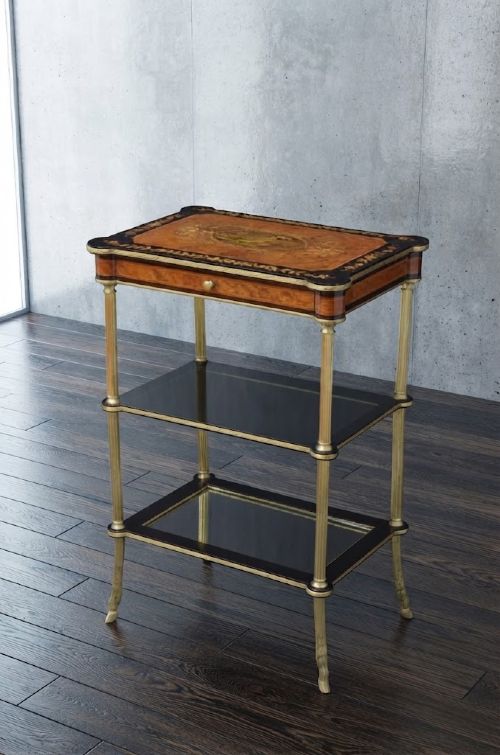
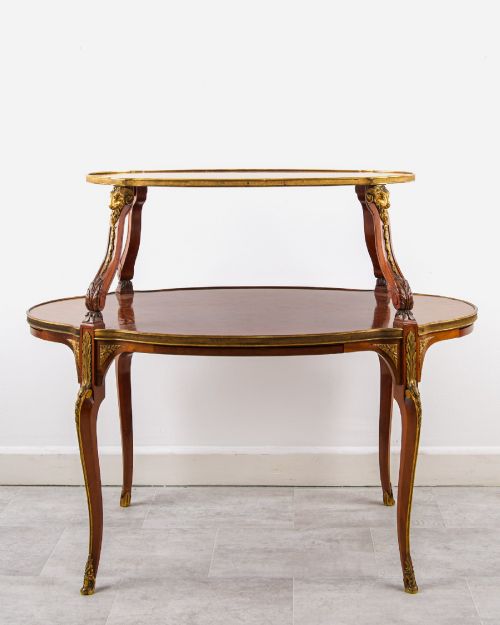


Napoleon III Occasional Table
A Napoleon III occasional table brings French nineteenth-century elegance into a room through rich marquetry, exotic timbers and fine ormolu mounts.
Napoleon III Occasional Table
When you search for a Napoleon III occasional table, you encounter a variety of small nineteenth-century French tables designed for display, sewing, writing or tea. These pieces date principally from the period between 1860 and 1900, spanning the Second Empire and the decades immediately following.
The most frequent examples on this page are side tables, centre tables and multi-tiered étagères. Formats range from round pedestal gueridons with marble tops to rectangular folding tables and nests of four.
Makers and workshops of the era drew heavily on earlier historical aesthetics, resulting in distinct revivals of Louis XV and Louis XVI styles alongside eclectic French Chinoiserie and faux bamboo. Such furniture served varied domestic functions, functioning as lamp tables, work tables and poudreuses in sophisticated nineteenth-century interiors.
How they were made
Cabinetmakers constructed these pieces using a foundation of solid timbers such as walnut, mahogany or ebonised wood, overlaid with decorative veneers. Exotic woods like rosewood, kingwood, amboyna and plum pudding mahogany provided striking grain patterns for elaborate marquetry and geometric parquetry designs.
Metalwork played a defining structural and decorative role, with cast brass and ormolu mounts framing table edges, legs and aprons. Inlaid brass and tortoiseshell in the Boulle technique frequently adorned the surfaces of grander centre and games tables.
Selected surfaces incorporate inset Sevres style porcelain plaques or polished marble slabs supported by gilt-bronze columns and decorative flower mouldings.
Listings demonstrate that walnut, rosewood and ebonised wood form the primary structural foundations for these nineteenth-century French tables.
What varies in quality
Quality in a Napoleon III occasional table is determined by the depth and precision of the craftsmanship evident in the timber work and metal mounts. Finely executed floral marquetry with subtle shading contrasts sharply with simpler, repetitive geometric inlay.
The weight, crispness of chisel work and integration of the ormolu or gilt-metal mounts separate standard production from exceptional pieces. Heavy, well-cast bronze mounts fitted flush to the timber indicate superior workshop output.
The choice of primary and secondary materials also dictates standing, with dense exotic hardwoods, genuine marble tops and inset porcelain plaques marking the upper tier of nineteenth-century French production.
Zwiener Jansen Sucesseur
The Napoleon III Occasional Table Glossary
- Ormolu
- Gilded bronze used for decorative mounts, feet and edgings on nineteenth-century French furniture. The technique involves applying a gold amalgam to cast bronze before heating.
- Marquetry
- Decorative veneer patterns assembled from thin slices of wood, shell or metal to form pictorial or floral designs. Artisans carefully cut and fitted these pieces into the table surface.
- Boulle
- A method of marquetry using contrasting pieces of tortoiseshell and engraved brass, named after the master cabinetmaker Pierre-Simon Boulle. It appeared frequently on nineteenth-century revival centre and games tables.
- Étagère
- An open tiered piece of furniture designed for display, commonly featuring two or three shelves supported by slender columns. These freestanding tables were used for ornaments and tea wares.
- Guéridon
- A small round occasional table supported on a central column or pillar, frequently topped with marble or onyx. The form originated in the seventeenth century and experienced a major revival during the Napoleon III era.
Napoleon III Occasional Table: Frequently Asked Questions
What is a Napoleon III occasional table?
A Napoleon III occasional table is a small nineteenth-century French furniture piece created during the Second Empire and subsequent decades. These tables encompass varied forms such as side tables, centre tables, tier-based étagères and sewing work tables.
Craftsmen built them using diverse timbers, decorative veneers and metal mounts, reflecting popular revivals of earlier French court styles.
How were these tables used originally?
These pieces served practical and decorative roles in nineteenth-century drawing rooms and boudoirs. Specific formats functioned as tea tables, sewing work tables, writing desks or display surfaces for porcelain and ornaments.
Freestanding centre tables stood in the middle of rooms, while smaller side tables and nests sat against walls or beside seating.
How do I style one at home?
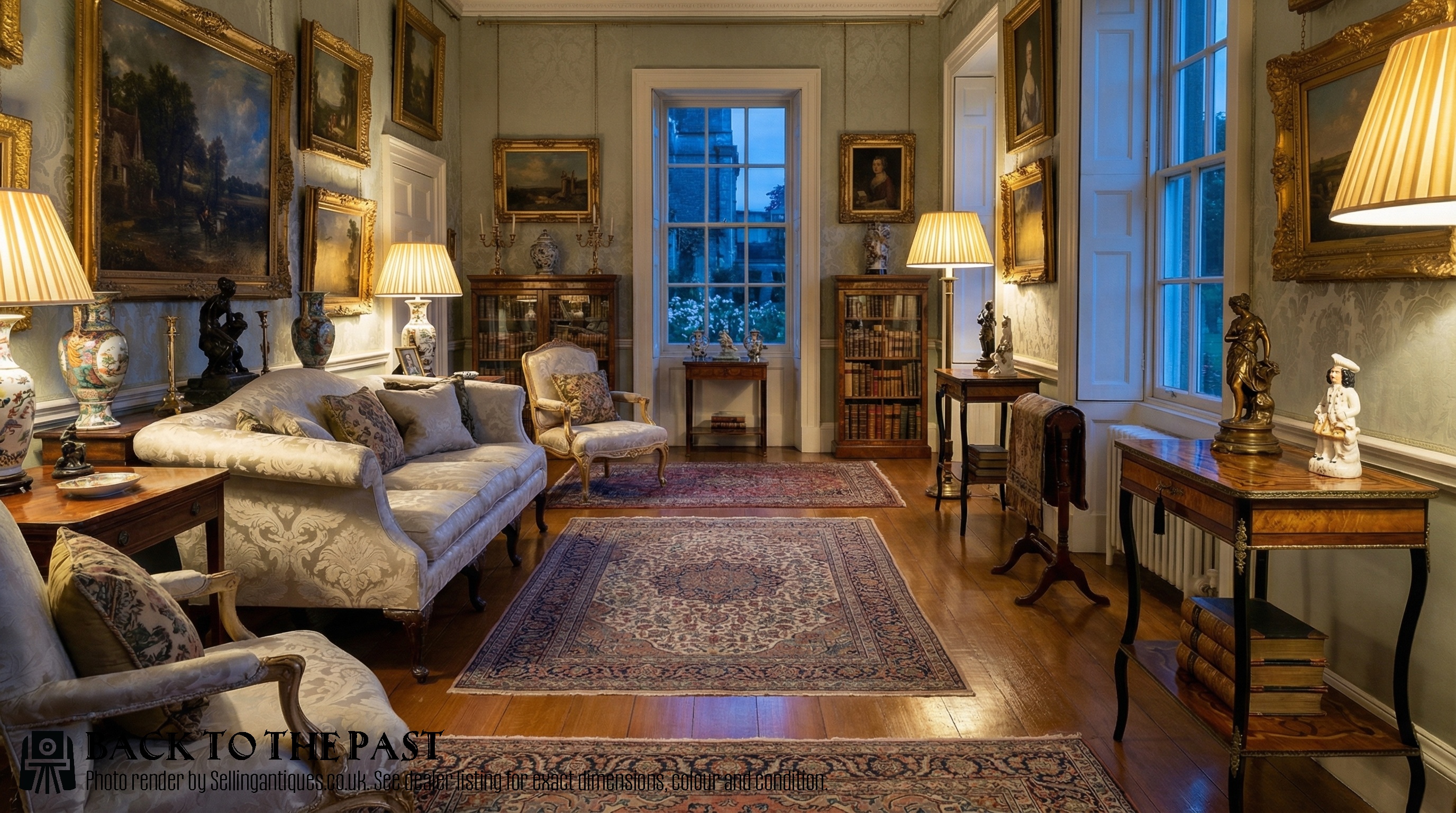
A Napoleon III occasional table fits easily into contemporary or traditional interiors as an accent piece next to a sofa or armchair. Their compact proportions make them suitable for use as lamp tables, bedside stands or display surfaces for collected objects.
Pairs of matching side tables work well flanking a fireplace or framing a doorway.
How do I identify a Napoleon III table?
Identification relies on observing characteristic materials, construction methods and stylistic revivals associated with late nineteenth-century France. Look for combinations of ebonised wood, exotic veneer marquetry, ormolu mounts and inset porcelain or marble.
Details like faux bamboo framing, Boulle work and multi-tiered structures point directly to this period.