
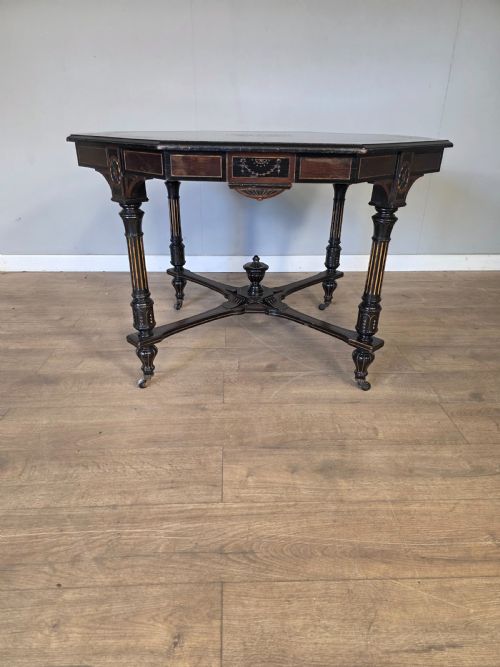
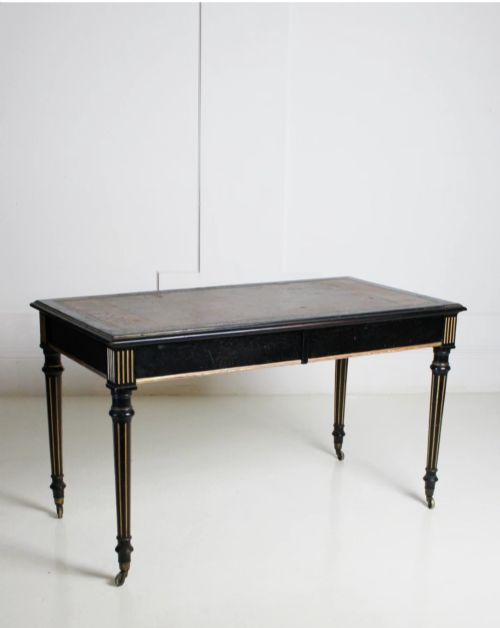
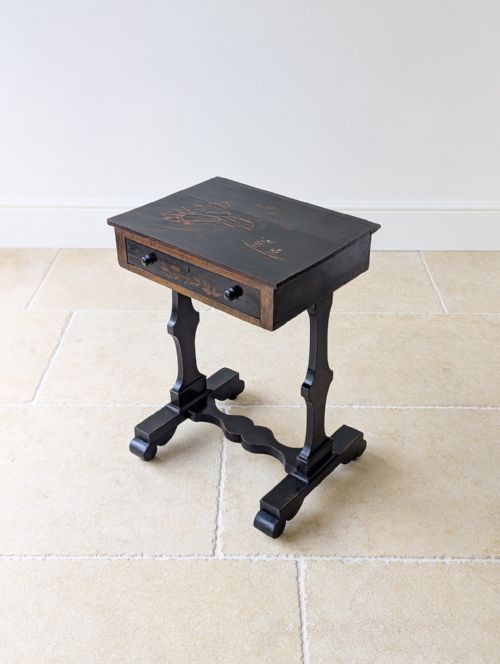
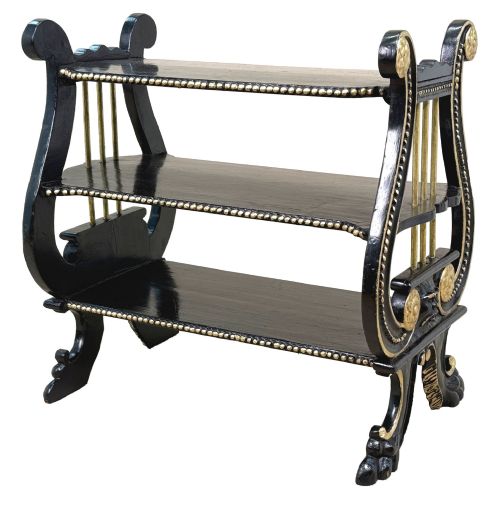
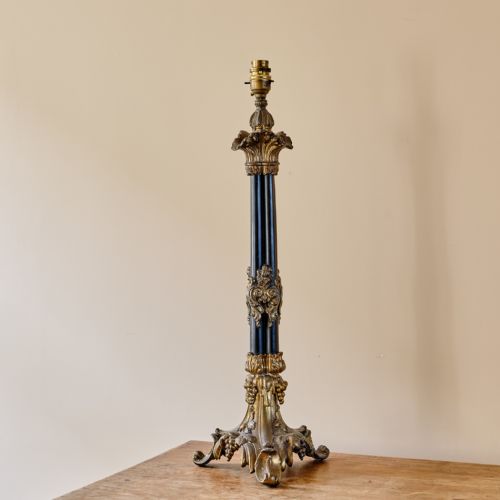
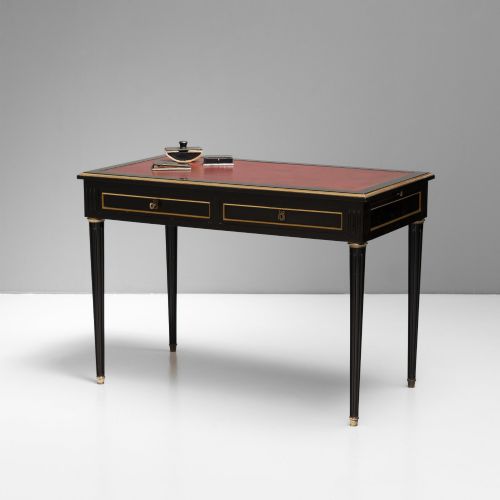
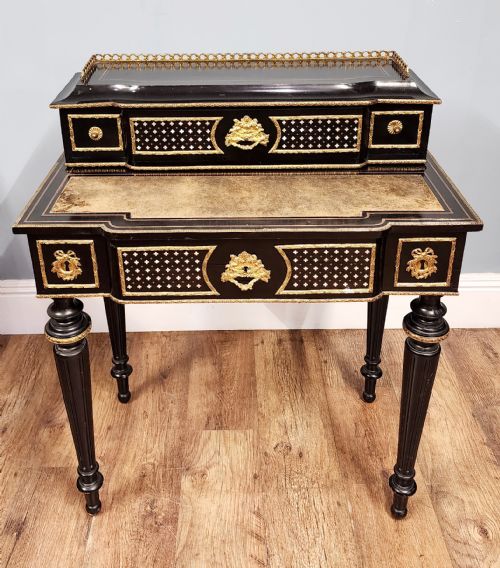
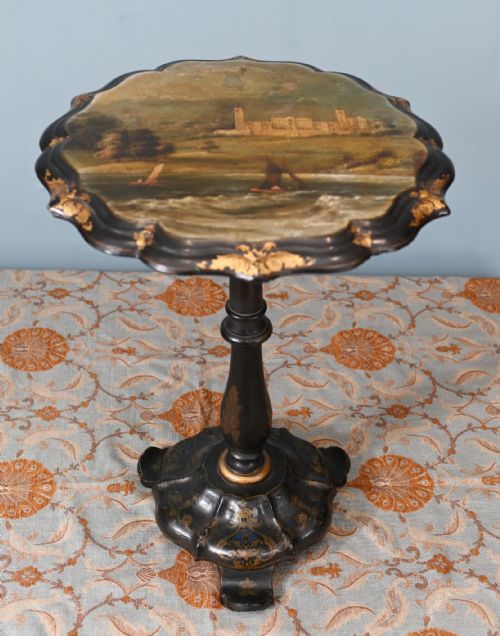
Ebonised and Gilt Table
When you search for an ebonised and gilt table, you enter a world of dark wood surfaces lifted by metallic highlights, spanning the nineteenth century and beyond.
Ebonised and Gilt Table
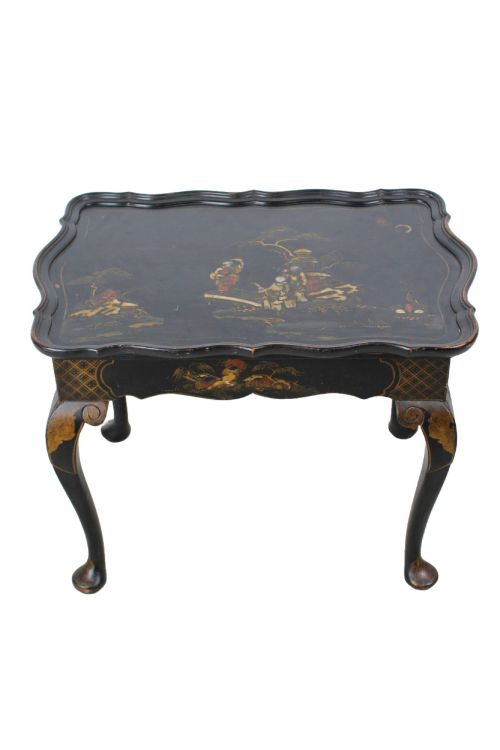
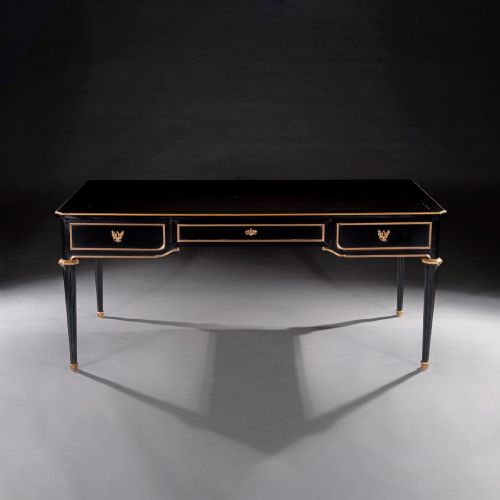
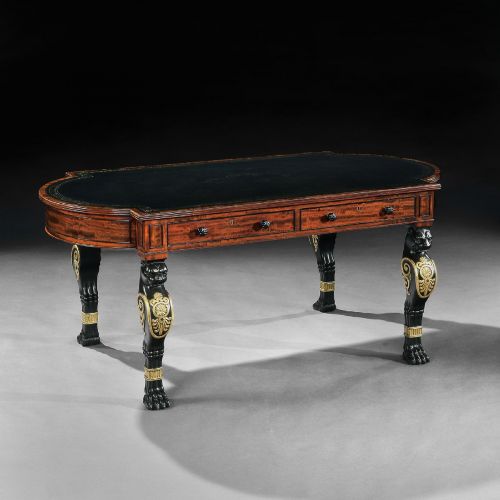
An ebonised and gilt table brings together a dark, heavily stained or blackened wooden surface finished with bright metallic highlights. These pieces range from compact occasional stands and folding card tables to large library and centre tables designed to anchor a formal room.
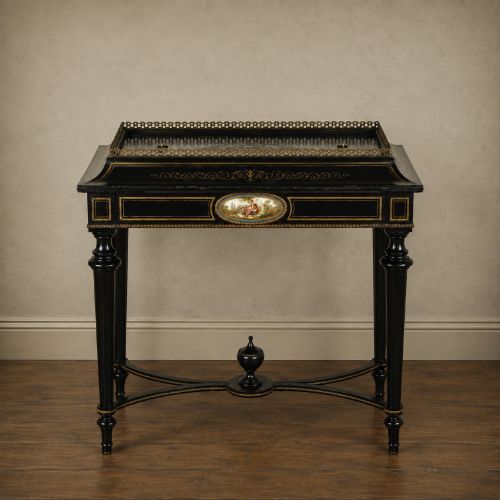
The aesthetic emerges strongly during the Victorian era and the Aesthetic Movement, drawing on earlier Regency and French models. Makers utilised this dark finish to create high contrast against gilded details, brass mounts, or painted porcelain plaques.
Buyers encounter diverse forms including two-tier étagères, tripod tables, and writing desks. Each variation reflects the period taste for dramatic silhouettes and decorative surfaces, whether executed in a simple domestic interior or a grand salon.
How They Were Made
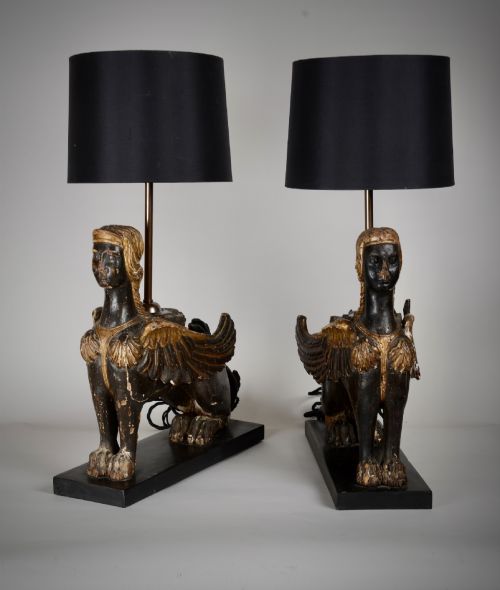
Craftsmen achieved the signature dark finish by treating fruitwood or mahogany with a chemical stain or black paint to imitate costly ebony. This ebonised surface provided a uniform dark ground that made subsequent decoration stand out sharply.
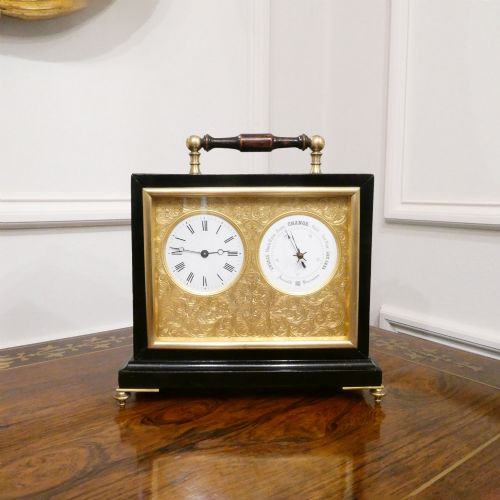
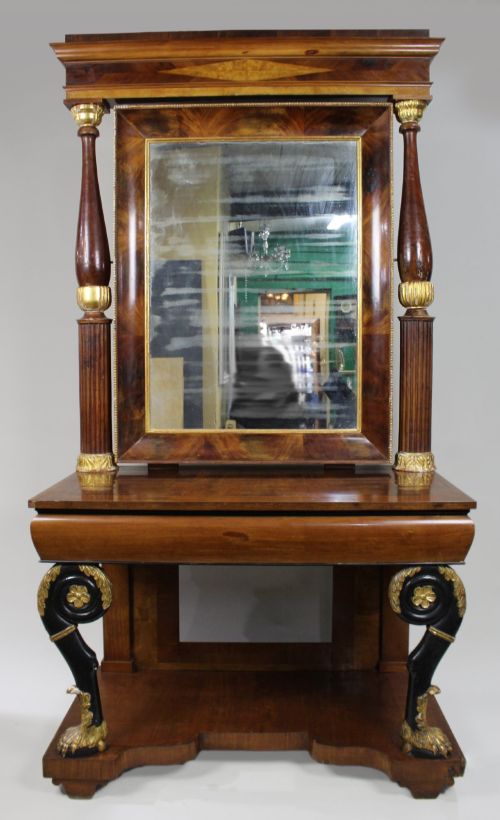
Gilt highlights, parcel gilt, or ormolu mounts were then applied to carved details, edges, and legs. Workshops frequently incorporated brass, glass, marble tops, or painted plaques to enhance the visual richness of the furniture.
Listings feature ebonised and gilt tables spanning the seventeenth to the twentieth century, with nineteenth-century Victorian and Aesthetic Movement examples predominating.
What Varies In Quality
The calibre of an ebonised and gilt table rests upon the precision of its construction and the depth of its decorative scheme. Superior examples display crisp carving beneath the black finish and meticulous application of gold leaf rather than plain metallic paint.
Design attribution and secondary materials also dictate standing within the market. Tables incorporating fine timbers like amboyna or bird's-eye maple beneath the ebonising, alongside heavy cast bronze mounts or micro-mosaic inserts, represent the highest tier of production.
E W Godwin·Marsh and Tatham·George Smith·Maison Millet
The Ebonised and Gilt Table Glossary
- Ebonised
- Wood treated with a black stain or finish to resemble ebony. This technique gained widespread popularity during the nineteenth century for furniture mimicking more expensive exotic materials.
- Parcel Gilt
- Wood or metal partially covered with gold leaf or gilt. It highlights specific carved details, mouldings, or turning against a contrasting background.
- Ormolu
- Cast bronze mounted with a finely chased gold-gilded finish. French cabinet makers utilised this technique extensively on decorative tables during the nineteenth century.
- Aesthetic Movement
- A late nineteenth-century design current promoting art for art's sake. Tables from this circle often feature clean ebonised lines with subtle parcel gilt decoration, sometimes following designs by figures like E. W. Godwin.
- Gueridon
- A small French round table supported by a central column or legs. These tables frequently appear with marble tops and gilt ormolu mounts.
Ebonised and Gilt Table: Frequently Asked Questions
What periods do these tables come from?
The selection spans principally from the nineteenth century, encompassing Regency, Victorian, and Aesthetic Movement pieces. Earlier eighteenth-century precursors and later Edwardian adaptations also appear.
Craftsmen across these periods utilised ebonised finishes to achieve dramatic contrasts, adapting the style from French Napoleonic designs to English artistic interiors.
How were these tables used originally?
They served multiple functions in the home, acting as centre tables for display, card tables for evening entertainment, or writing desks for correspondence. Smaller occasional and lamp tables were easily moved around reception rooms.
Their striking appearance made them statement pieces intended to catch the eye of visitors in drawing rooms and libraries.
Where should I place an ebonised table?
An ebonised and gilt table works well as a focal point in a neutral room where the dark finish can stand out against lighter walls. They function effectively as lamp tables, bedside stands, or small desk surfaces.
Care should be taken to keep them away from direct sunlight and excessive heat to protect the delicate gilt highlights and polished wooden surfaces.
How do I care for the ebonised finish?
Dusting the surface regularly with a soft, dry cloth prevents the accumulation of grit that can scratch the delicate black finish. Avoid harsh chemical cleaners or silicone polishes which can dull the surface over time.
Maintaining a stable room humidity prevents the timber beneath from expanding or contracting, which helps preserve the integrity of both the ebonising and any applied ormolu mounts.