

Ormolu Centre Table
When you search for an ormolu centre table, you enter a world of opulent freestanding focal pieces designed to anchor principal rooms.
Ormolu Centre Table
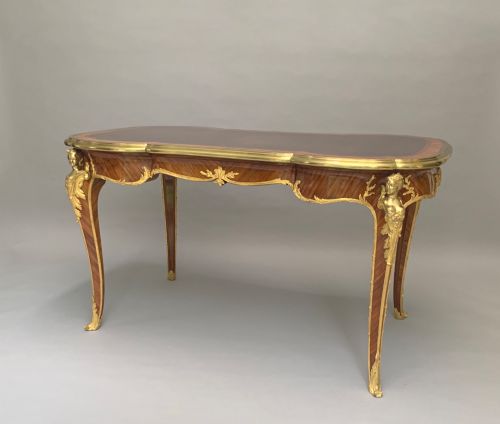
When you search for an ormolu centre table, you are looking at substantial freestanding tables designed to be viewed from all sides rather than pushed against a wall. The pieces you are most likely to meet on this page hail from the nineteenth century, reflecting Victorian and continental tastes for elaborate reception furniture.
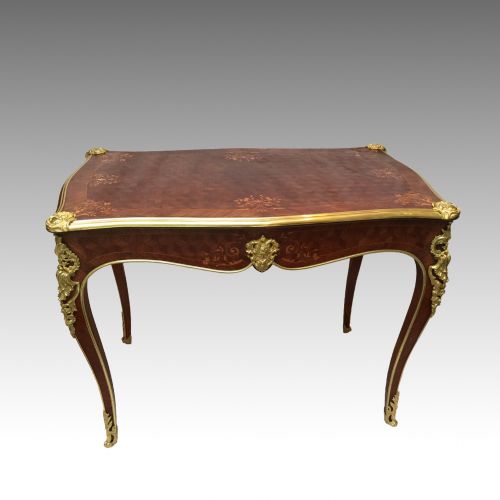
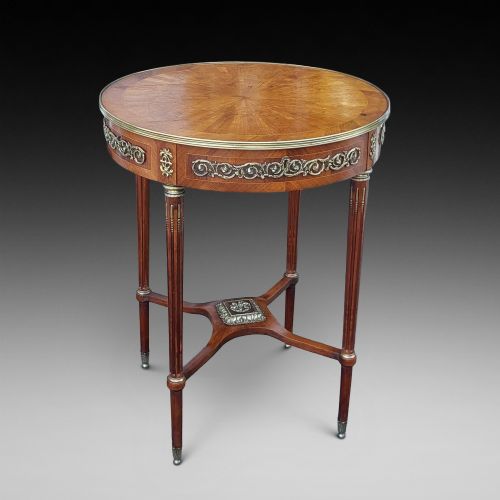
Makers and manufacturers utilised various formats, ranging from circular guéridons to serpentine writing desks and bureau plats. Many incorporate functional drawers or display tiers, showing that these items served practical daily uses in addition to decorative display.
The aesthetic leans heavily into French revivalism, with Louis XV and Louis XVI styles dominating the selections. Walnut, kingwood, and mahogany provide the foundational timber structures for these grand centrepieces.
Materials and Construction
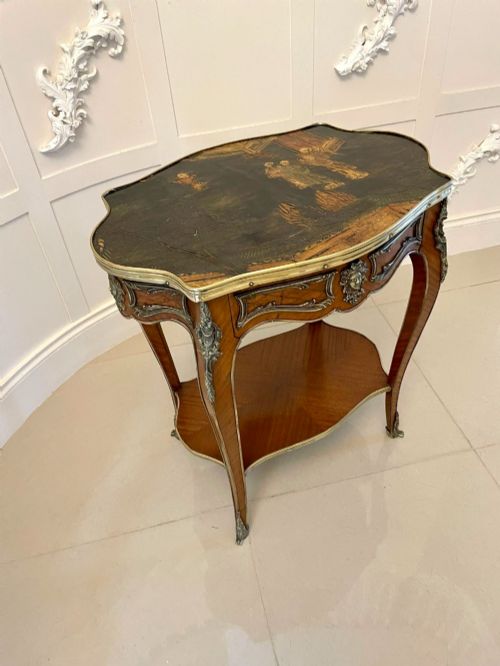
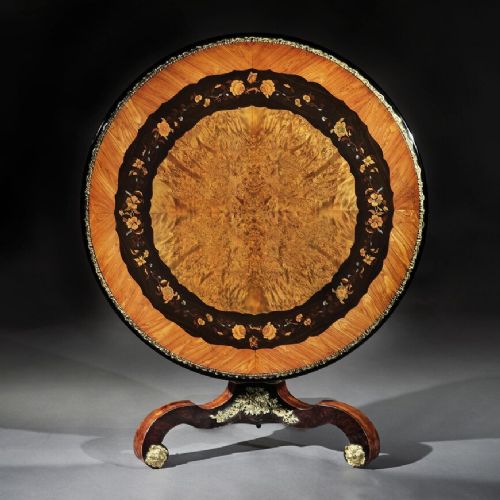
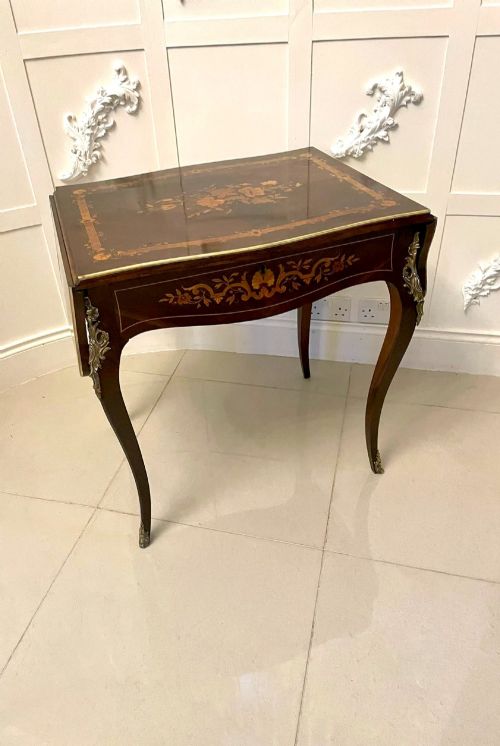
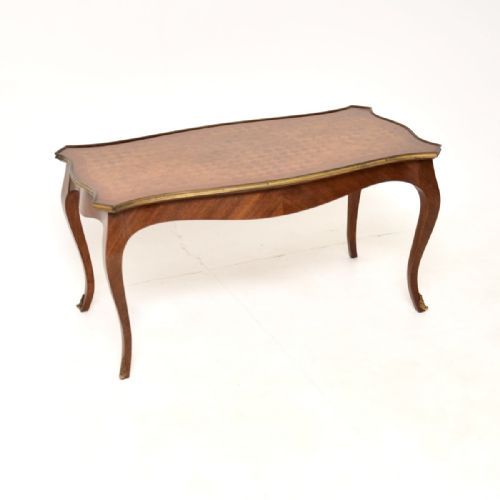
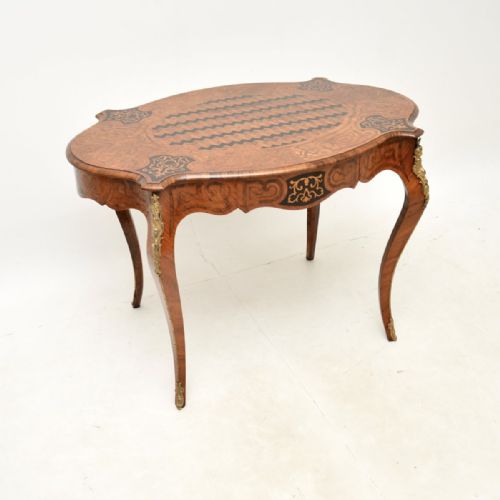
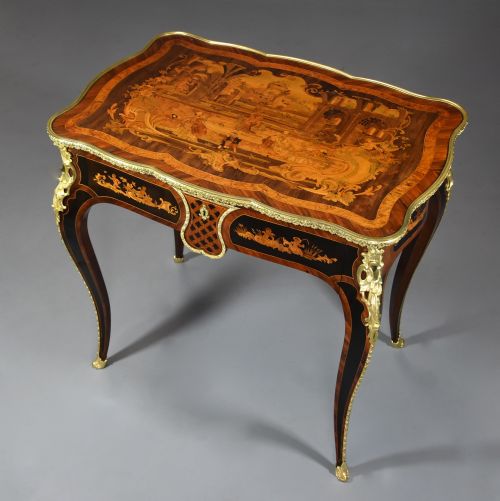
Makers built the structural carcases of these tables using dense hardwoods such as kingwood, walnut, rosewood, and mahogany. Skilled artisans then applied intricate parquetry and floral marquetry veneers to the surfaces in geometric or pictorial patterns.
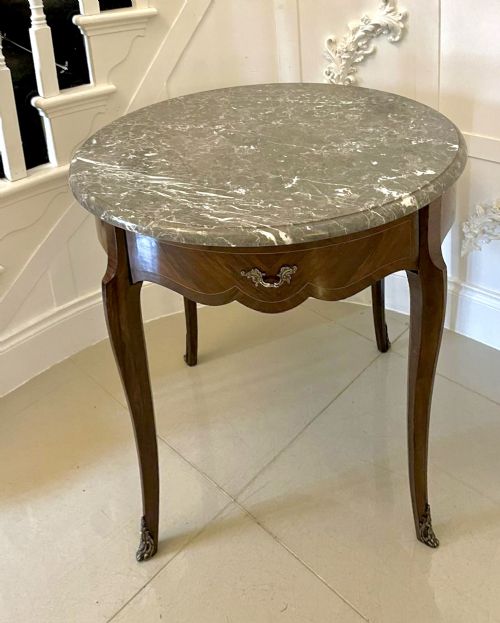
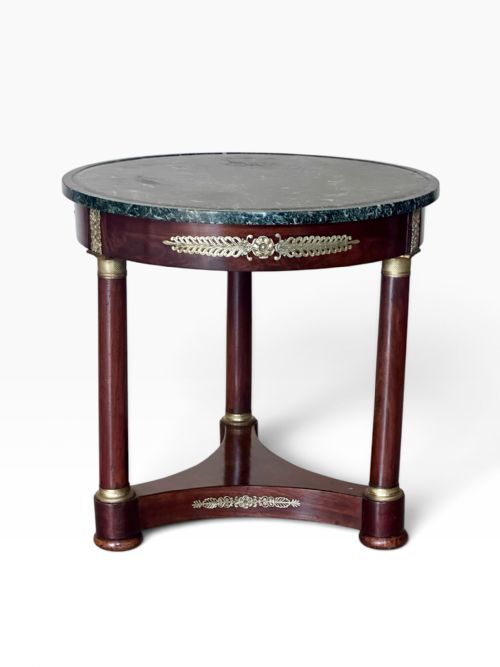
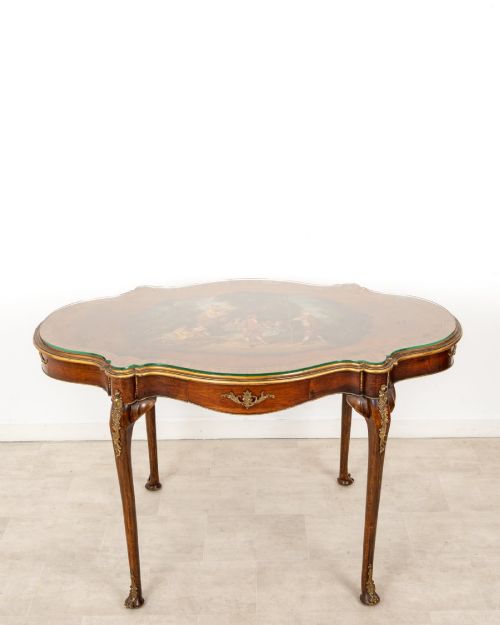
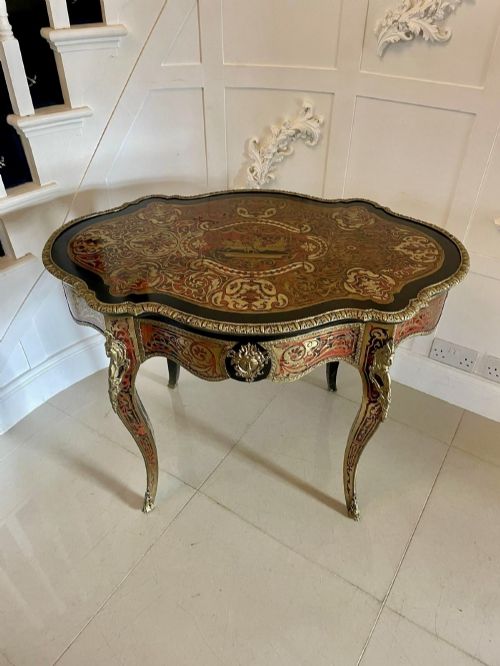
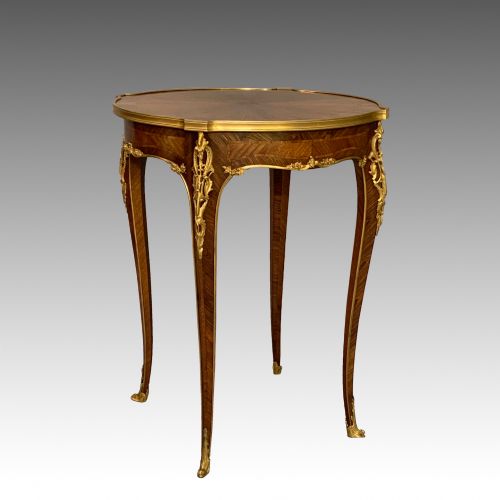
Cast gilt-bronze mounts, commonly known as ormolu, edge the tabletops, frame the drawers, and embellish the cabriole legs. Marble slabs frequently inset the tops of these tables, secured within heavy brass or ormolu galleries.
Surviving examples incorporate diverse forms, ranging from circular marble-topped guéridons to elaborate multi-tiered étagères and writing desks.
Markers of Distinction
The distinction between standard production and exhibition-grade pieces rests in the crispness of the gilt-bronze chasing and the complexity of the timber veneers. Master workshops employed heavier, finely detailed ormolu mounts that fit seamlessly against the contours of the wood.
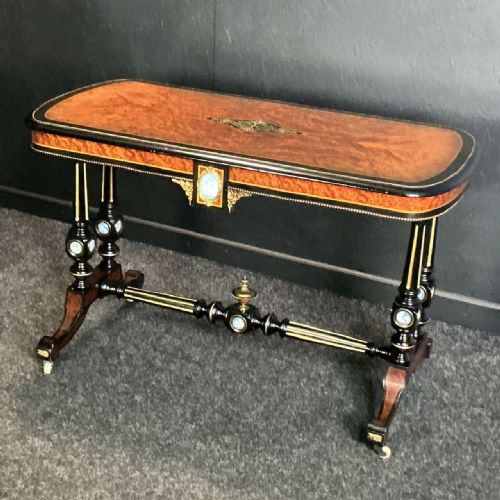
Makers known for exceptional standards, such as François Linke or Joseph-Emmanuel Zwiener, integrated superior marquetry and signed their bronze mounts. The presence of Sevres porcelain plaques or intricate multi-wood parquetry elevates a piece toward the upper echelon of the range.
Edward Holmes Baldock·Francois Linke·Joseph-Emmanuel Zwiener·Edward And Roberts·Maison Millet
The Ormolu Centre Table Glossary
- Ormolu
- Gilt-bronze ornamentation applied to furniture mounts. This technique involves coating a bronze base with a finely ground gold-mercury amalgam and heating it to bond the finish.
- Marquetry
- Decorative veneer work forming pictorial designs. Artisans cut thin pieces of various coloured woods, ivories, or metals and fit them together like a puzzle.
- Parquetry
- Geometric wood veneer patterns. Craftsmen arrange small rectangular or triangular blocks of contrasting timbers to create repetitive tiled motifs.
- Bureau Plat
- A flat-topped freestanding writing desk. These tables typically feature one or more drawers built into the frieze and stand on cabriole or tapered legs.
- Guéridon
- A small round table supported by one or more central columns or legs. Originally introduced in France, these pieces frequently serve as occasional or lamp tables.
Ormolu Centre Table: Frequently Asked Questions
Where do I place a centre table?
These pieces are designed to stand freely in the middle of a room rather than against a wall. They function well in large entrance halls, libraries, or drawing rooms where you can walk around them entirely.
Because they feature finished marquetry and ormolu mounts on all sides, positioning them centrally allows the decorative details to catch the light from multiple angles.
Can I use a centre table for writing?
Certain variations of the form, such as bureau plats and library tables, incorporate integrated drawers specifically intended for correspondence and storage. These provide a functional surface while maintaining a decorative presence in the room.
Other lighter occasional tables and guéridons are better suited for holding lamps, books, or decorative objects rather than heavy daily paperwork.
How do I care for marble top tables?
The inset marble slabs require gentle cleaning with a damp cloth and mild, pH-neutral soap to avoid dulling the polished stone finish. Acidic liquids like wine or citrus juice can etch the surface if left unattended.
The surrounding ormolu mounts should be dusted carefully with a soft brush to prevent moisture and dirt accumulation in the recessed chasings.
How do I identify French revival styles?
Louis XV revival pieces generally exhibit flowing serpentine lines, floral marquetry, and asymmetric cabriole legs. These forms emphasise organic curves and ornate gilt-bronze mounts.
Louis XVI revival pieces shift toward neoclassical symmetry, featuring straight fluted legs, parquetry squares, and crisply restrained ormolu details.