


Inlaid Wood Writing Table
An inlaid wood writing table brings warmth and precise craftsmanship to a room, offering a dedicated surface for correspondence.
Inlaid Wood Writing Table
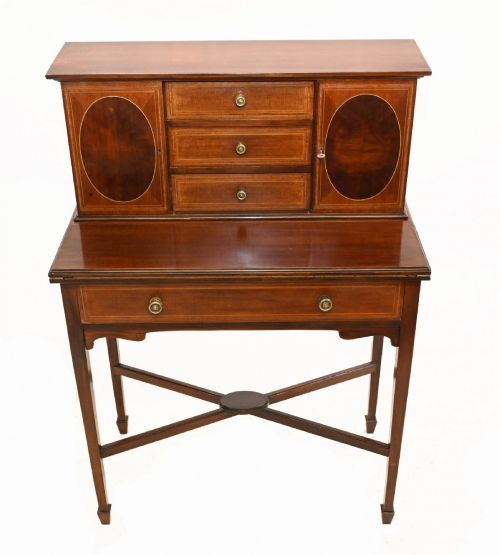
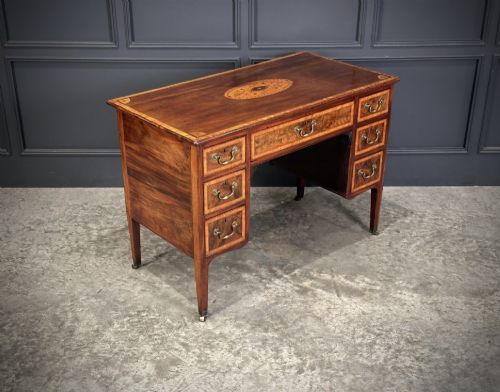
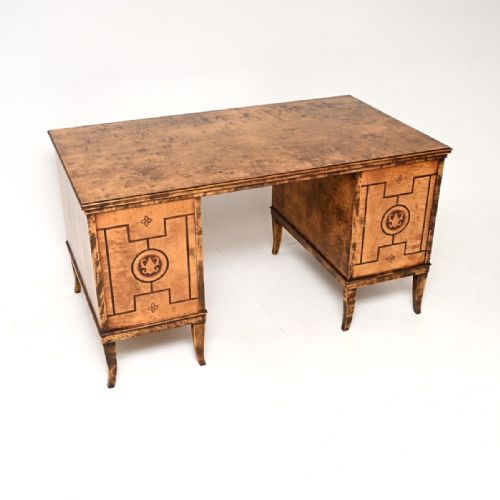
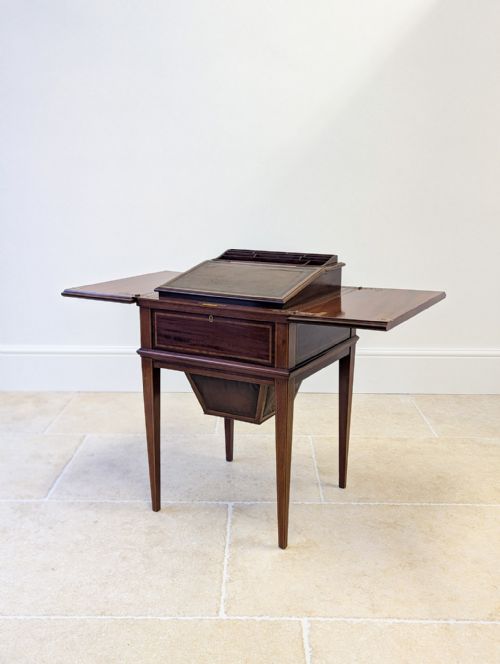
An inlaid wood writing table encompasses a variety of antique forms, from compact Edwardian ladies desks to grand Regency and Georgian library tables. Buyers encounter pieces spanning the eighteenth, nineteenth, and early twentieth centuries, reflecting changing domestic habits and writing customs.
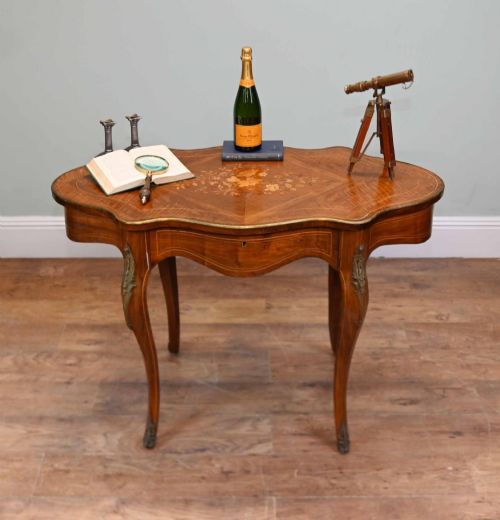
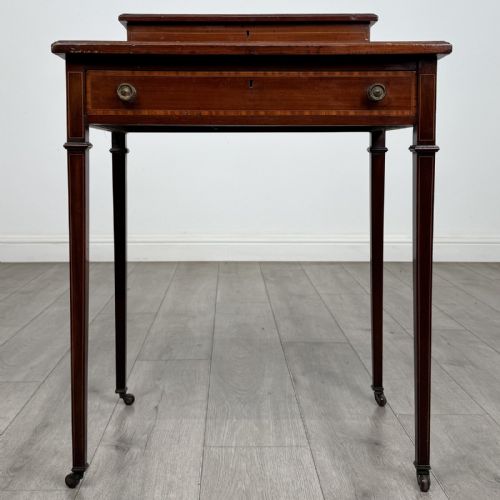
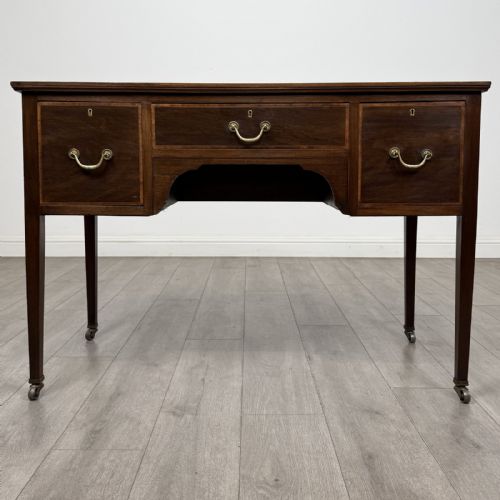
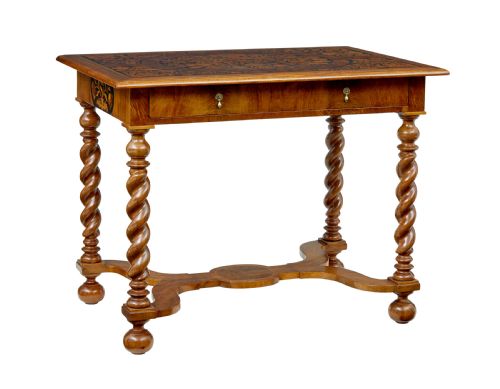
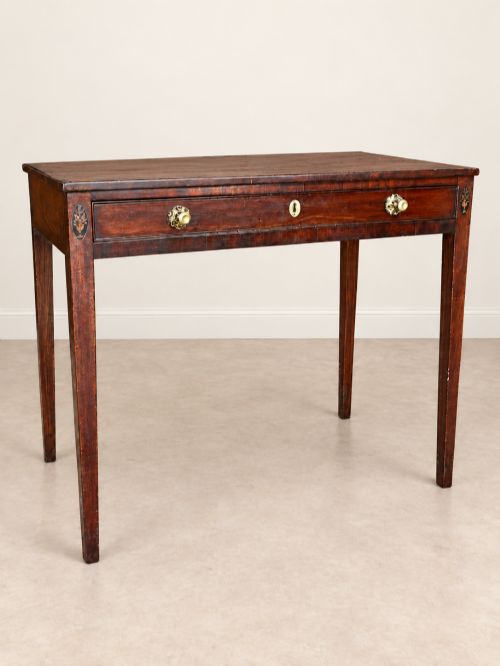
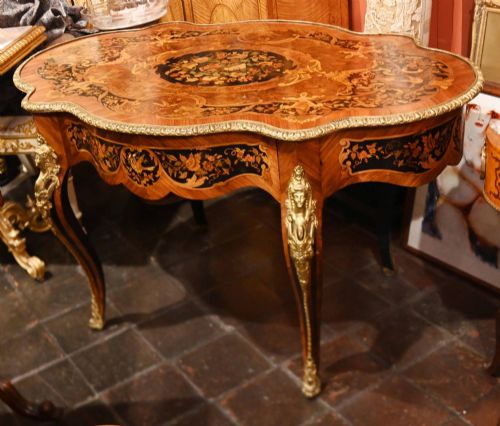
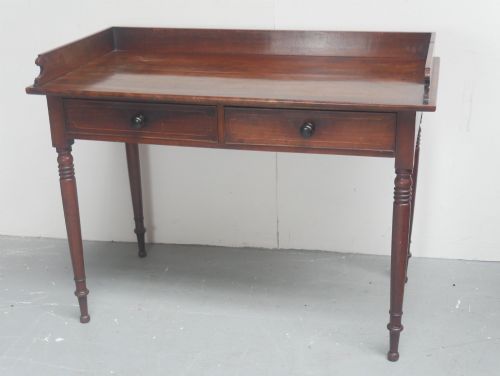
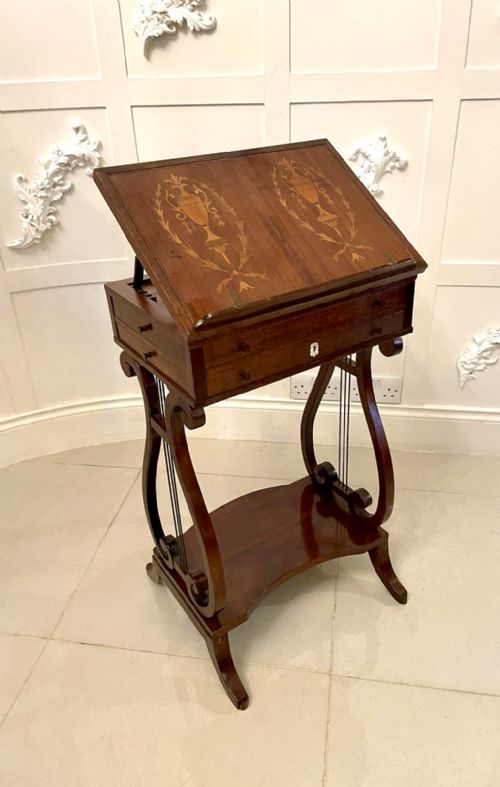
The versions most commonly met on this page include mahogany, satinwood, and walnut tables decorated with marquetry, floral motifs, or delicate string inlay. These pieces frequently double as side tables or centre tables, designed to be positioned away from walls to display grain and ornamentation on all sides.
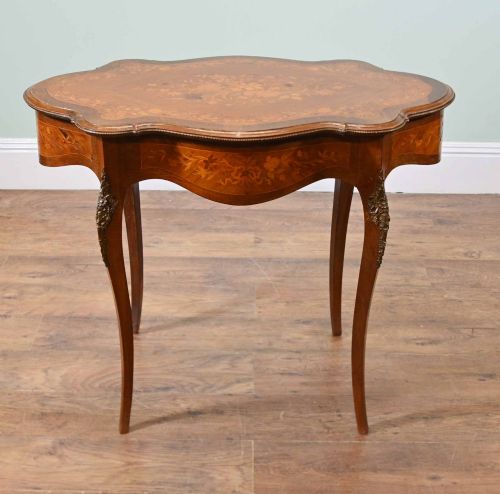
Originating across British, French, and Dutch workshops, the selection bridges formal Sheraton and Regency designs alongside elaborate Louis XV revival pieces. Each form balances utility with decorative ambition, providing a functional writing surface while serving as a focal point in domestic interiors.
Materials and construction
Cabinet makers utilised dense hardwoods such as mahogany, walnut, and rosewood as a foundation, applying contrasting veneers of satinwood, kingwood, and boxwood for decorative impact. Surfaces often incorporate detailed marquetry or string inlay to define borders and panels.
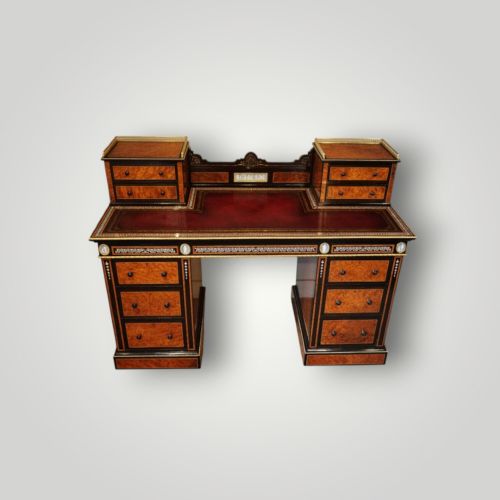
Fitted interiors frequently rely on tambour shutters, pigeonholes, and leather writing inserts, joined with traditional cabinet-making techniques. Metal mounts in brass or ormolu appear alongside ivory details on select Victorian and French examples.
Inlaid Wood Writing Table Retail Price Guide 2026
Typical asking prices for inlaid wood writing table among the pieces listed under this phrase on Sellingantiques today, from the lower quarter to the upper quarter. They describe what is for sale here now, not the wider market.
Listings feature mahogany, satinwood, and walnut across Georgian, Regency, and Edwardian periods.
Distinctions in craftsmanship
The separation between standard and superior pieces rests upon the precision of the veneer work and the crispness of any hand-carved or inlaid details. Finer tables maintain tight alignment where different timber species meet, ensuring patterns flow seamlessly across drawers and tops.
Makers who integrated secondary woods of high grade and fitted original brass hardware or leather inserts created pieces that retained their structural integrity over centuries. The architectural proportion and balance of the legs relative to the top dictate the visual harmony of the finished desk.
Jackson and Graham·Gill and Reigate
The Inlaid Wood Writing Table Glossary
- Marquetry
- Decorative veneer work arranged in pictorial or geometric patterns using various coloured woods. This technique requires meticulous cutting and fitting of thin wood slices into a background veneer.
- Tambour
- A sliding door or shutter made of narrow vertical strips of wood glued to a canvas backing. It allows access to enclosed compartments in cylinder desks and writing tables.
- String inlay
- A narrow, contrasting line of wood inlaid flush into the surface of furniture to outline panels or edges. It defines the geometric boundaries on Georgian and Sheraton pieces.
- Ormolu
- Gilt bronze mounts applied to furniture for decorative accent, common on French nineteenth-century pieces. The technique involves treating bronze with gold amalgam.
- Baton
- A rigid strip or moulding used structurally or decoratively, though in these contexts often associated with framing drawer fronts and table edges.
Inlaid Wood Writing Table: Frequently Asked Questions
How do I use a writing table today?
These tables function effectively as compact desks for laptops or as decorative console surfaces in living spaces.
Their historical role as correspondence desks translates easily into modern homes needing an elegant workspace.
What is the difference between a writing table and a Davenport desk?
A writing table provides an open, flat surface supported by legs, often featuring drawers beneath.
In contrast, a Davenport desk is a compact, boxy pedestal form with a sloping top and side drawers.
How do I care for antique wood surfaces?
Maintain timber by keeping pieces away from direct heat sources and sudden humidity changes to prevent veneer cracking.
Apply a microcrystalline wax periodically to nourish the polish without building up residue.
How can I tell a Georgian table from a Victorian one?
Georgian examples tend to display restrained classical proportions with linear string inlay and mahogany or satinwood construction.
Victorian pieces frequently embrace darker walnut, bolder burr veneers, and heavier ormolu or porcelain mounts.