
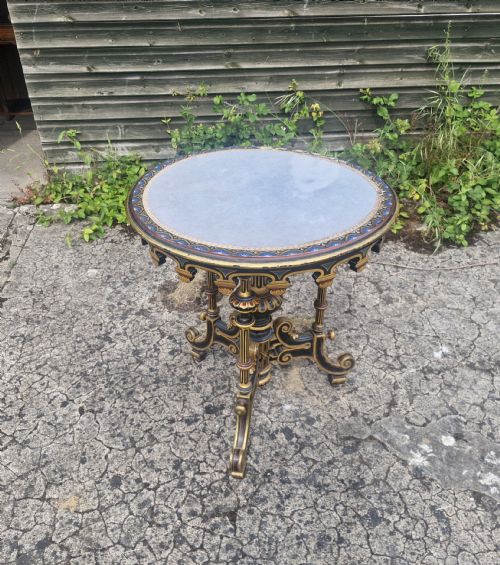




Antique Ebonised Parlor Table
These antique ebonised parlor table pieces bring dark, polished surfaces and striking form into a room.
Antique Ebonised Parlor Table
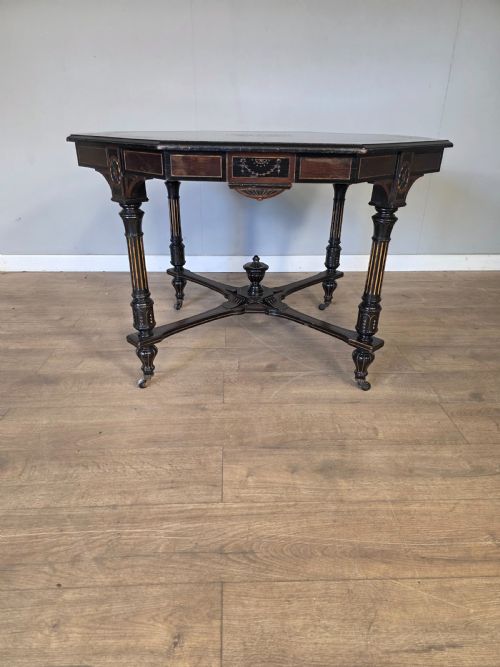
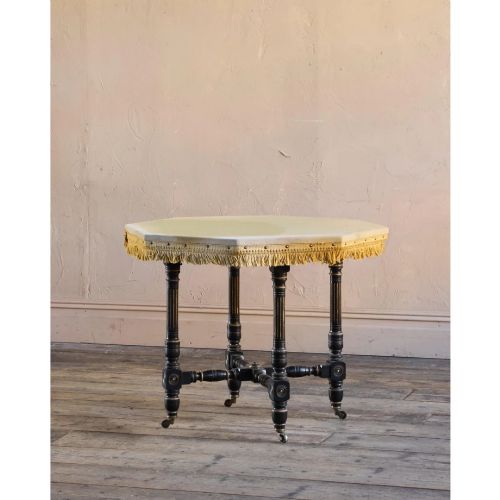
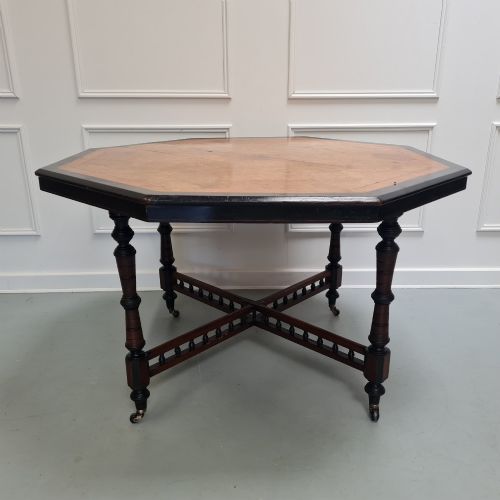
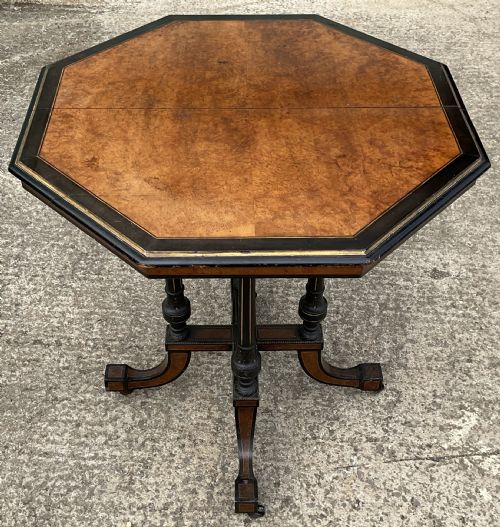
An antique ebonised parlor table stands as a dark-finished surface designed for the principal rooms of a home, drawing on Victorian, Aesthetic Movement, and French inspirations. These forms range from circular occasional tables to large centre pieces and octagonal designs.
The selections encountered here span the late nineteenth century, including pieces from the eighteen-eighties and eighteen-nineties alongside later revivals. Makers such as Hindley & Sons contribute to the pedigree of these dark wood furnishings.
How they were made
Constructed primarily from ebonised wood and hardwood, these tables achieve their dense black finish through specialised staining and polishing techniques. Artisans enhanced the dark surfaces with contrasting materials like gilt, ormolu mounts, and inlaid brass details.
Selected examples incorporate burl walnut and painted decorations, while structural forms utilise pedestal bases and intricate marquetry. The combination of black lacquer and metallic highlights defines the aesthetic of the period.
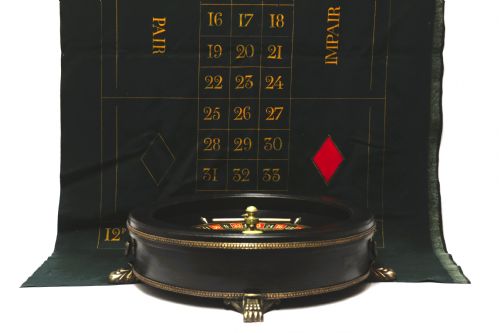
One unexpected parlor table doubles as a French roulette wheel from eighteen eighty, complete with its original felt cloth.
What varies in quality
Distinction across these tables lies in the depth of the ebonised finish and the precision of applied details like gilt and ormolu. Superior examples display refined proportions and intricate marquetry or painted decoration rather than plain surfaces.
The integrity of the underlying hardwood and the finesse of the pedestal or leg construction separate standard production from exceptional pieces. Details such as original felt or specialised woods like coromandel elevate the standing of a table.
Hindley & Sons
The Antique Ebonised Parlor Table Glossary
- Ebonised
- Wood treated to imitate ebony, giving a deep black finish. This technique was widely used in Victorian and Aesthetic Movement furniture.
- Centre table
- A freestanding piece designed to be viewed from all sides rather than pushed against a wall. These often served as the focal point of a parlor.
- Ormolu
- Gilded bronze ornamentation applied to furniture. It adds metallic contrast to dark ebonised surfaces.
- Marquetry
- The art of applying pieces of veneer to a structure to form decorative patterns. Craftsmen utilised different wood tones to create pictorial designs.
Antique Ebonised Parlor Table: Frequently Asked Questions
Where did these tables stand?
These tables traditionally stood in the centre of a parlor or drawing room. They served as display surfaces for decorative objects or as hubs for social activities.
Their freestanding nature meant craftsmanship was applied to every angle of the piece.
How do I identify the period?
Dating relies on stylistic clues such as the geometric lines of the Aesthetic Movement or the ornate curves of French revival designs. Materials like ormolu and specific wood veneers also point to nineteenth-century manufacturing.
Construction methods underneath the top provide further confirmation of age.
What is an occasional table?
An occasional table is a smaller, movable piece used for specific tasks or in various rooms as needed. They appeared alongside larger centre tables in Victorian interiors.
Their lighter scale allowed for easy repositioning within the parlor.
How do I care for ebonised wood?
Maintenance involves dusting with a soft cloth and avoiding direct sunlight to protect the dark finish. Moisture should be kept away from the polished surface.
Gentle cleaning preserves the depth of the black stain and any applied gilt.