
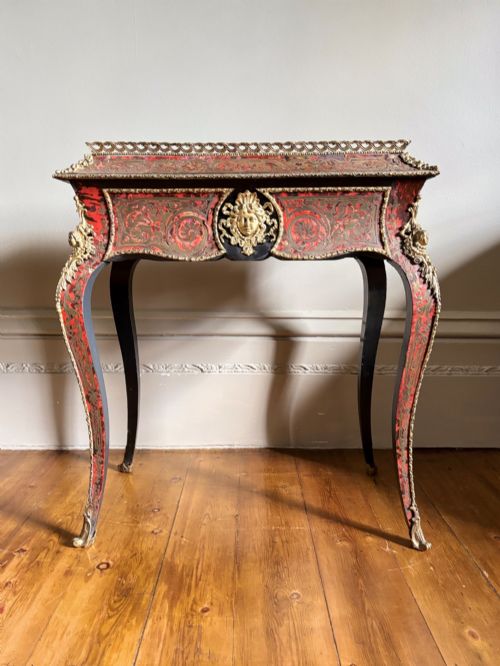
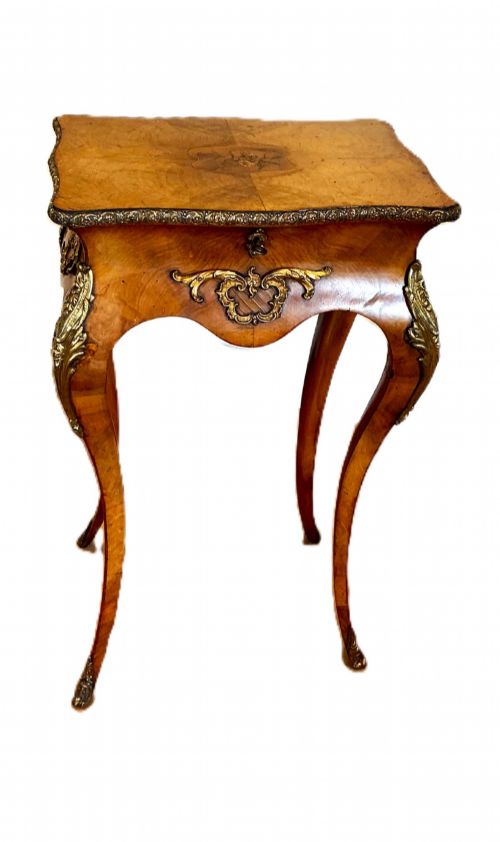
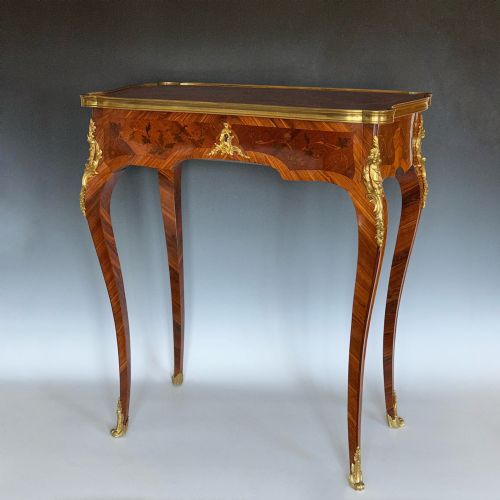


Ormolu Mounted Work Table
An ormolu mounted work table combines intricate marquetry and gilt mounts to house sewing gear and letters.
Ormolu Mounted Work Table
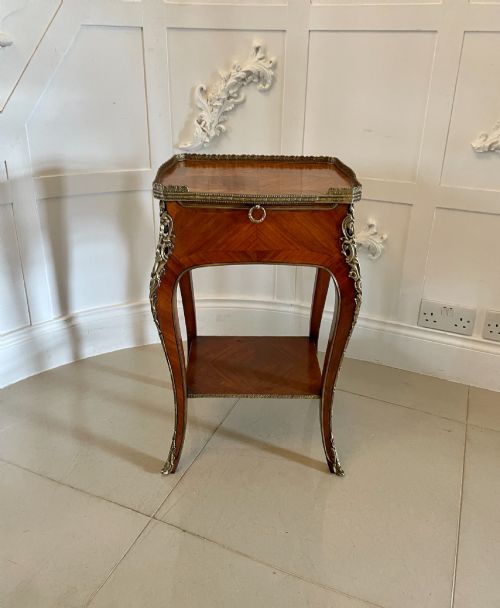
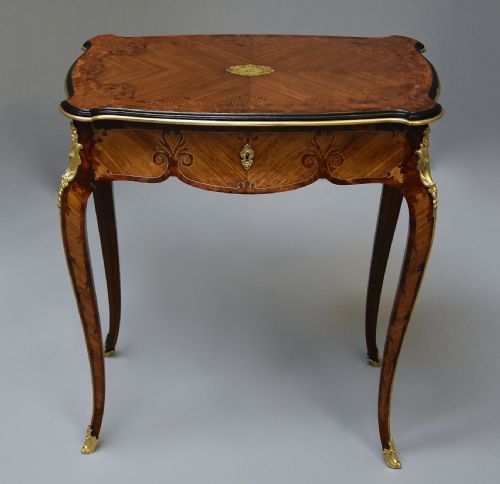
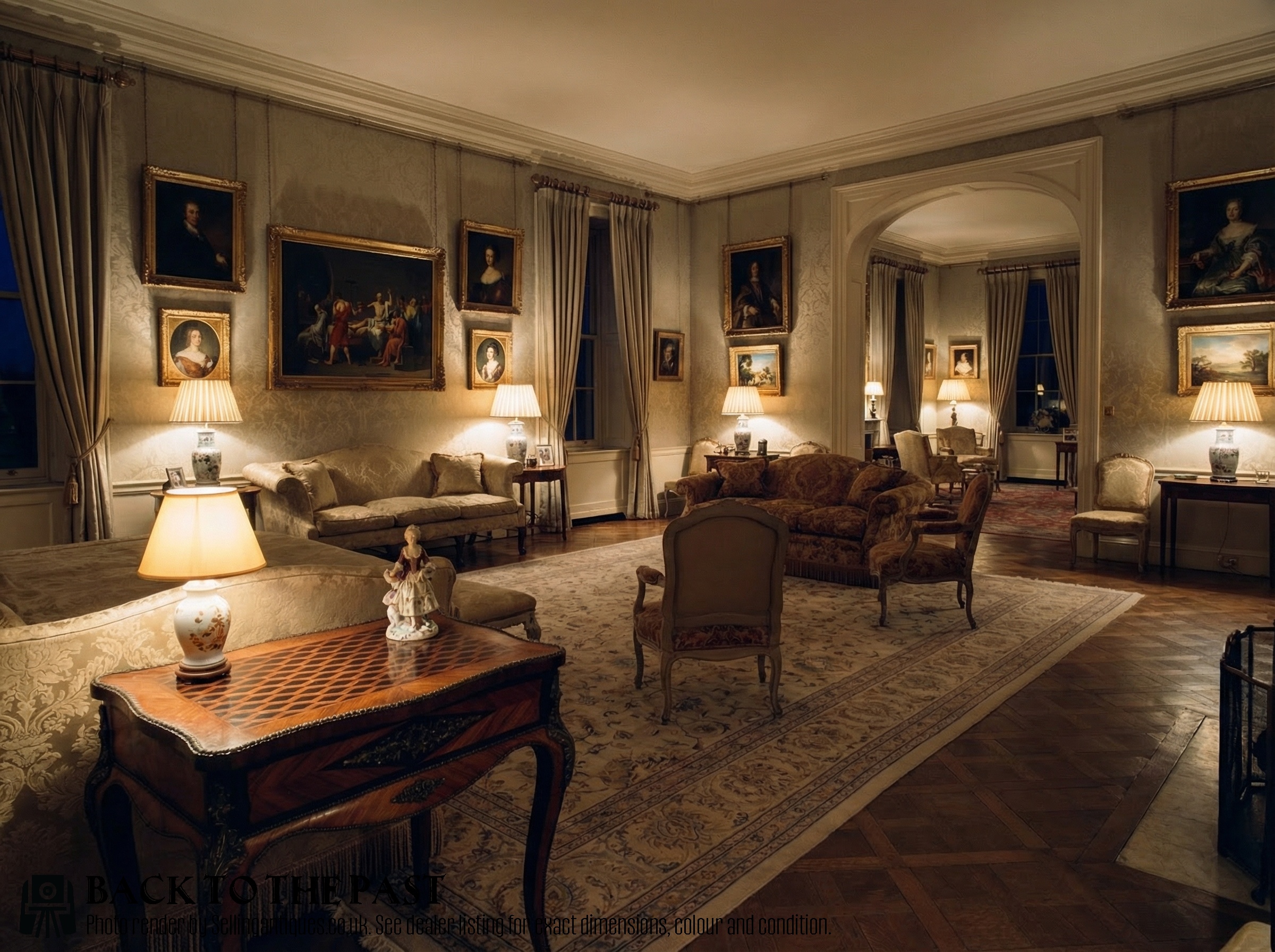
An ormolu mounted work table is a piece of nineteenth-century furniture designed for sewing, writing, and holding small accessories. Buyers encounter Victorian and Napoleon III examples reflecting French revival styles such as Louis XV and Louis XVI. These tables frequently appear alongside side tables, occasional tables, and centre tables on this page.
Most pieces date from the nineteenth century, spanning decades from eighteen-hundred to nineteen-ten. They often incorporate internal compartments, drawers, and fitted tops functioning as dressing tables or work boxes. The form balances decorative impact with practical utility for a nineteenth-century interior.
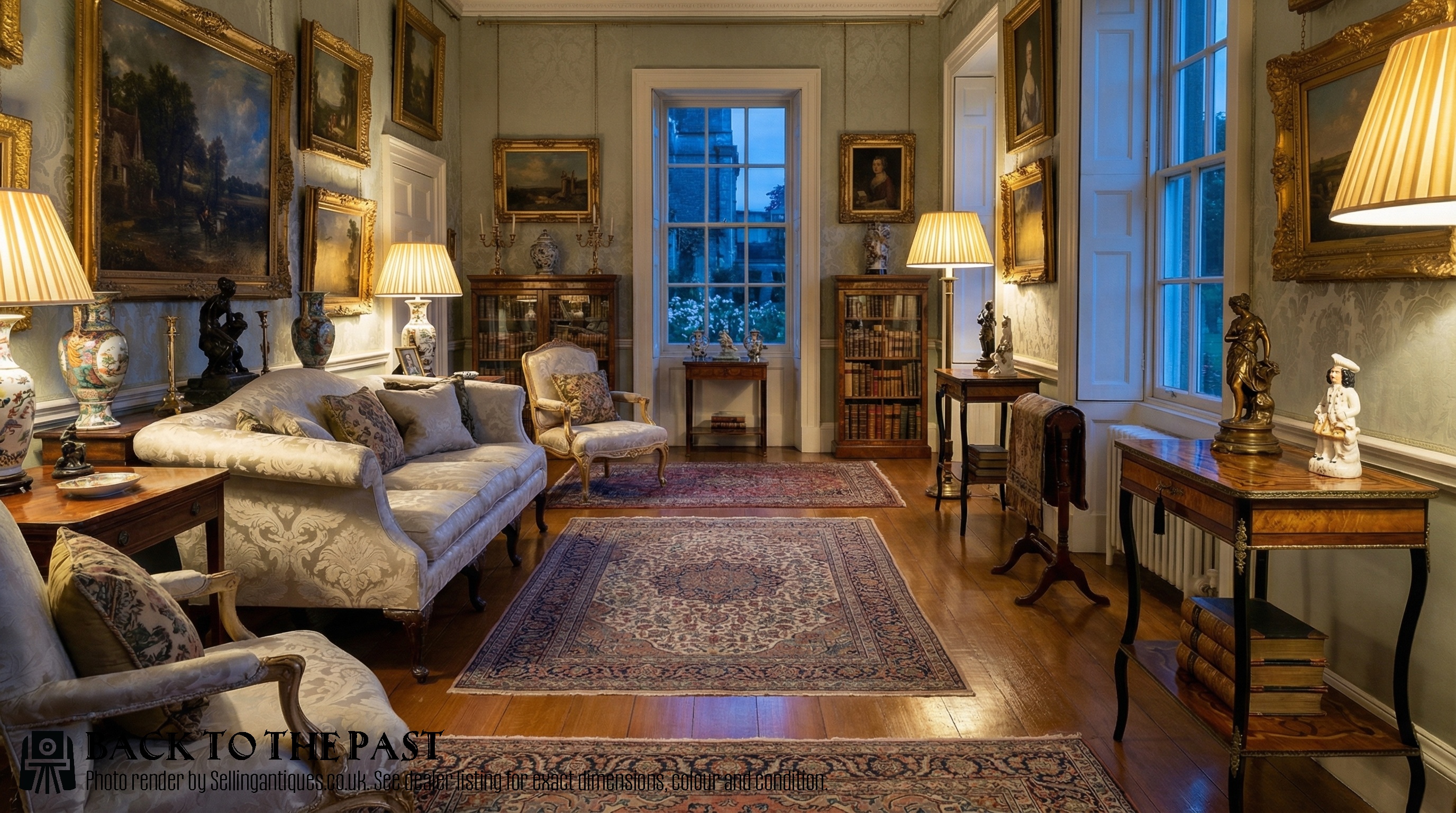
How They Were Made
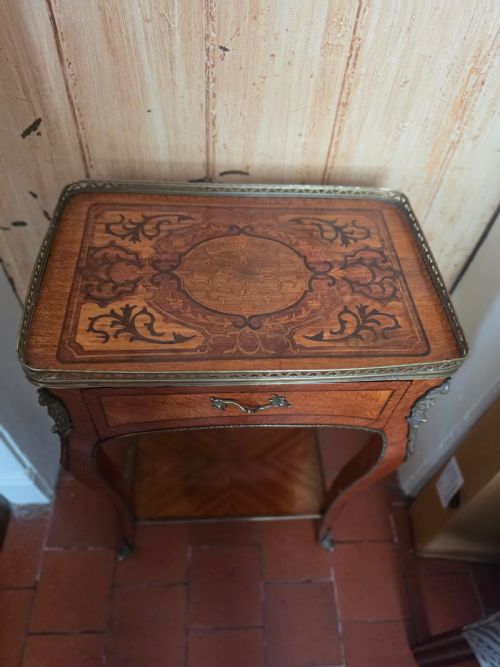
Cabinet makers built these tables using foundational timbers like walnut, rosewood, and kingwood, overlaid with detailed parquetry and marquetry inlays. Ebonised wood and tortoiseshell also appear in Boulle work variants. This groundwork provides the stable surface necessary for intricate wood veneers.
Casting and chasing ormolu and brass mounts define the decoration, applied along edges, legs, and aprons. Gilt bronze accents highlight the curves of French revival forms. These metal fittings require precise alignment with the wooden carcase.
Ormolu Mounted Work Table Retail Price Guide 2026
Typical asking prices for ormolu mounted work table among the pieces listed under this phrase on Sellingantiques today, from the lower quarter to the upper quarter. They describe what is for sale here now, not the wider market.
Some work tables hide intricate compartments designed to hold thimbles, spools, and secrets out of sight.
What Varies in Quality
The refinement of the ormolu mounts separates standard production from exhibition pieces. Sharply chased bronze work with deep relief indicates superior workshop output. Simpler castings lack this crispness of detail along the edges and corners.
The complexity of the marquetry and the choice of timbers also drive distinction. Finer examples utilise varied veneers arranged in geometric parquetry or floral marquetry. The execution of internal mechanisms for drawers and work bags further distinguishes the grade.
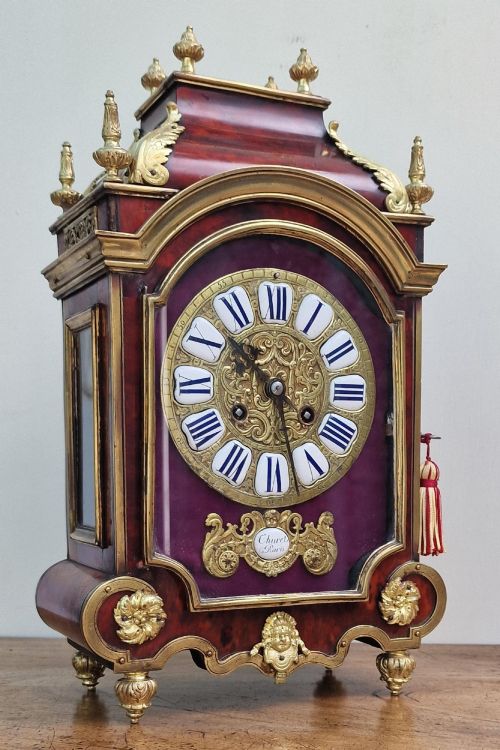
Thuret Paris·Maison Millet·Payne London
The Ormolu Mounted Work Table Glossary
- Ormolu
- Gilded bronze used for decorative mounts on furniture and clocks. This technique involves applying a gold amalgam to a bronze base and firing it.
- Marquetry
- Decorative patterns formed by fitting together small pieces of wood veneer. Craftsmen use diverse coloured timbers to create floral or pictorial designs.
- Parquetry
- Geometric wood inlay forming patterns such as cubes or chequers. It differs from marquetry by relying on repeating angles rather than pictorial motifs.
- Boulle
- Inlay technique combining tortoiseshell and brass. Developed in France, it creates contrasting dark and metallic patterns across the surface.
- Poudreuse
- A combination dressing and writing table. These pieces often feature folding tops that conceal mirrors and compartments.
Ormolu Mounted Work Table: Frequently Asked Questions
What is an ormolu mounted work table used for?
These tables served nineteenth-century women for sewing, needlework, and holding letters or cosmetics. Many included fitted interiors with compartments and silk work bags suspended beneath.
Over time, their decorative presence shifted their role toward display in principal rooms as occasional or lamp tables.
How do I identify a Napoleon III work table?
Napoleon III pieces often feature rich kingwood veneers, elaborate marquetry, and prominent ormolu mounts reflecting earlier French royal styles. They date from the mid to late nineteenth century during the Second Empire.
Look for serpentine forms, shaped tops, and combination functions like dressing and writing surfaces.
What woods were used in these tables?
Cabinet makers relied primarily on kingwood, walnut, and rosewood for the main carcase and outer veneers. Satinwood and Karelian birch also appear on specific regional examples.
Inlays frequently incorporate contrasting timbers, ebonised wood, and occasionally tortoiseshell for Boulle work decoration.
Are these tables French or English?
The majority of pieces following this design vocabulary originate from France or reflect French revival styles popular during the Victorian era. English makers also produced similar work tables adopting French aesthetics.
Maker labels or specific brass lock stamps occasionally confirm the exact workshop origin.