
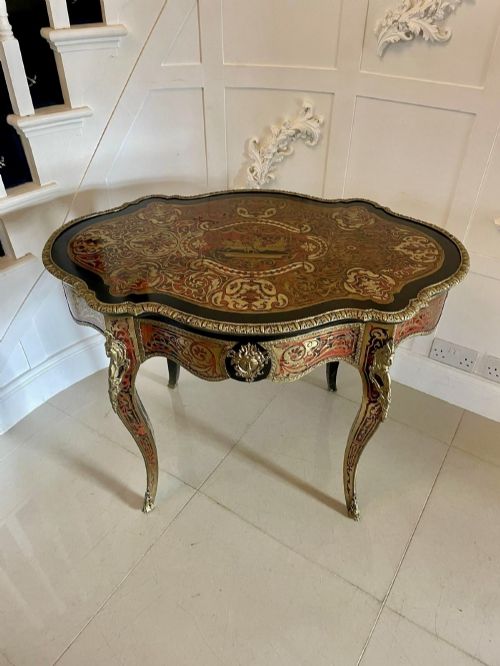
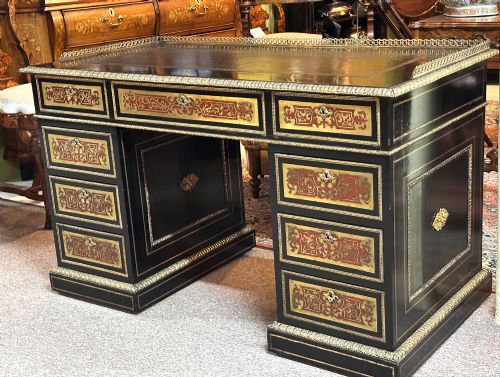
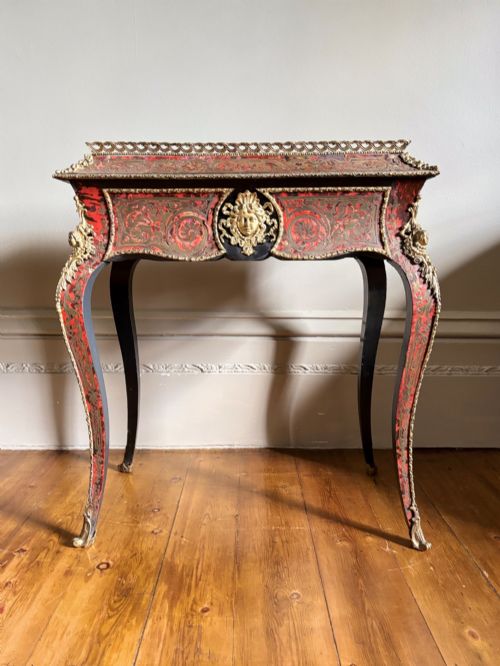


Napoleon III Work Table
These nineteenth-century French pieces combine utility and display, offering a refined surface for sewing, writing or dressing alongside elaborate decorative craft.
Napoleon III Work Table
A napoleon iii work table is typically a multi-functional piece intended for a boudoir or salon, often doubling as a dressing table or writing desk. The most common form on this page pairs a hinged lid with internal compartments for sewing implements, documents or cosmetics.
The evidence shows these tables emerging primarily from the nineteenth century, bearing stylistic revivals such as Louis XV, Louis XVI and French Rococo. Many examples integrate marquetry or boulle-work into centre tables, side tables and smaller occasional tables.
Makers and workshops of the period produced variations that range from simple kingwood or walnut frames to elaborate tortoiseshell and brass inlays. Buyers encounter these versatile items functioning as jardiniere stands, writing cabinets and poudreuses.
How they were made
Cabinet makers utilised dense hardwoods such as kingwood, rosewood, walnut and ebonised wood as the structural base for these tables. Surfaces were then decorated with intricate veneers or marquetry patterns arranged in symmetrical designs.
Boulle-work forms a significant portion of the construction evidence, incorporating shaped brass and red tortoiseshell inlaid into dark grounds. Ormolu mounts cast in bronze and gilded were applied to corners, legs and framing edges to accentuate the curves.
Many tables hide their sewing compartments beneath folding lids, keeping small spools and thimbles tucked discreetly away from polite company.
What varies in quality
The refinement of the ormolu mounts separates standard production from finer pieces, as crisp hand-chasing reveals greater definition in the bronze. Heavy, cast brass details that lack sharp finishing indicate a lower grade of workshop output.
The precision of the marquetry and boulle-work dictates the overall standard of the piece, with tighter joints and seamless integration of tortoiseshell and brass marking superior execution. Lesser examples display wider grout lines and simple veneer patterns with minimal hand engraving.
Maison Millet
The Napoleon III Work Table Glossary
- Boulle-work
- A method of marquetry using brass and tortoiseshell inlaid together, named after the Parisian cabinet maker André-Charles Boulle. This technique creates a contrasting pattern where metal and shell form reciprocal designs.
- Ormolu
- Gilded bronze used for decorative mounts and furniture feet. The process involves applying a gold amalgam to cast bronze before heating.
- Poudreuse
- A French dressing table fitted with a mirror and compartments for cosmetics. These often share the dual-purpose form found in sewing work tables.
- Marquetry
- The art of applying small pieces of veneer to a structure to form decorative patterns. Artisans cut various woods, metals and shells to create pictorial scenes or geometric designs.
- Kingwood
- A dense, richly figured Brazilian timber used extensively in nineteenth-century French cabinet making. Its dark violet-brown tones feature contrasting golden streaks.
Napoleon III Work Table: Frequently Asked Questions
What is a napoleon iii work table?
It is a nineteenth-century French multi-purpose table designed for domestic tasks like sewing or dressing, typically featuring a compartmented interior beneath a lidded top.
These pieces often incorporate decorative veneers, boulle-work or ormolu mounts that reflect the revival styles popular during the Second French Empire.
How were they used originally?
Wealthy women utilised them in private salons and boudoirs for needlework, letter writing and applying cosmetics before social engagements.
The internal trays and compartments kept small tools and personal items organised while providing a stable surface for detailed handwork.
What materials are typical?
Common timbers include kingwood, rosewood, walnut and ebonised wood, often serving as a dark backdrop for intricate marquetry and tortoiseshell inlay.
Ormolu mounts and cast brass details frequently accent the corners, legs and rims to highlight the curved silhouettes.
How to tell periods apart?
Earlier nineteenth-century pieces often favor heavy mahogany or straightforward neoclassical proportions, whereas later examples lean into elaborate boulle-work and eclectic revival motifs.
Stylistic cues draw from Louis XV curves or Louis XVI symmetry, guiding the transition from simpler walnut forms to ornate tortoiseshell surfaces.
How to live with them?
Their modest proportions allow these tables to function effectively as bedside surfaces, hall accents or compact desks in modern living spaces.
Protecting the polished timber and delicate inlays from direct sunlight and excessive humidity preserves the contrasting materials over time.