
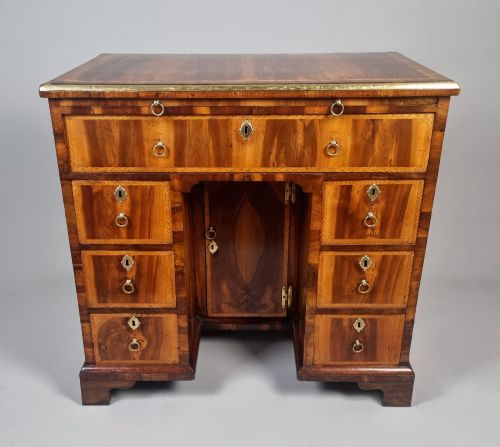
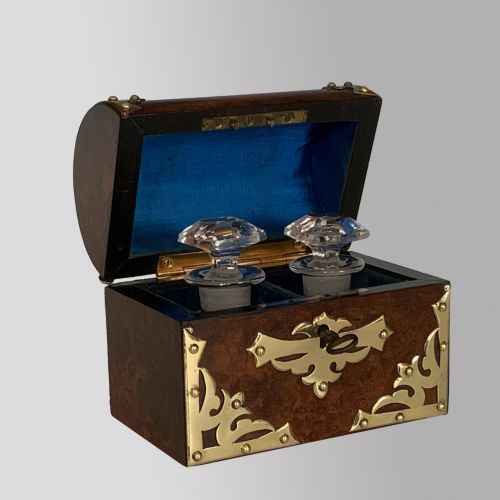


Brass Mounted Dressing Table
These brass mounted dressing table examples combine fine timbers with metal work to organise daily preparation.
Brass Mounted Dressing Table
A brass mounted dressing table brings together period craftsmanship and functional storage for personal items. Buyers searching this phrase encounter vanity cases, writing surfaces, and dressing chests alongside traditional tables.
The pieces on this page span from the eighteenth century through the Victorian era into the twentieth century. Walnut, mahogany, and burr walnut dominate the forms, accented by brass mounts and fitted interiors.
Smaller tabletop boxes and caskets frequently share space with full-sized desks and poudreuse tables. Each piece serves a specific role in personal grooming and storage.
Materials and construction
Cabinetmakers selected dense hardwoods such as mahogany, walnut, and rosewood to provide stable foundations for decorative veneers. Burr walnut and yew wood supplied distinctive grain patterns for important surfaces.
Brass mountings, handles, and banding provided structural reinforcement and visual contrast against the dark timbers. Glass, leather, and velvet linings added texture to internal compartments and writing surfaces.
Brass Mounted Dressing Table Retail Price Guide 2026
Typical asking prices for brass mounted dressing table among the pieces listed under this phrase on Sellingantiques today, from the lower quarter to the upper quarter. They describe what is for sale here now, not the wider market.
Listings feature walnut, mahogany, rosewood, and coromandel timbers combined with brass mounts across Victorian and Georgian periods.
Assessing quality
The division between standard and superior pieces rests on the selection of timber veneers and the precision of the brass work. Finely figured grain and tight joints indicate careful workshop production.
Original hardware and complete internal fittings elevate a piece significantly. Superior examples retain their fitted mirrors, glass bottles, and working locks.
Rowley Gallery
The Brass Mounted Dressing Table Glossary
- Ormolu
- Gilt-bronze or brass applied as a decorative mount on furniture and boxes. It provides a bright metallic accent against dark wood.
- Poudreuse
- A French dressing table fitted with folding lids and mirrors for powdering and cosmetics. These pieces often feature multiple compartments.
- Bonheur du jour
- A light lady's writing desk featuring a small cabinet or set of drawers on the upper surface. This form gained popularity during the nineteenth century.
- Campaign chest
- Portable furniture built in sections with recessed brass handles for military transport. They are constructed for durability during travel.
- Parquetry
- Geometric wood inlay forming patterned surfaces on tabletops and box lids. It displays the skill of the marquetry cutter.
Brass Mounted Dressing Table: Frequently Asked Questions
What is a brass mounted dressing table?
It is a piece of furniture or portable box featuring metal mounts and fittings designed for personal grooming. These items range from compact travel cases to full dressing tables.
Cabinetmakers utilised brass to reinforce corners and frame decorative wood panels. The combination creates a functional object intended for daily use.
How were these tables used originally?
Owners stored cosmetics, jewellery, and writing materials within fitted compartments and drawers. Many items served multiple purposes for travellers or residents.
Smaller boxes travelled with their owners, while larger tables remained fixed in bedrooms. Interior trays lifted out to reveal deeper storage spaces below.
How do I care for wood and brass?
Keep wooden surfaces away from direct sunlight and sudden temperature changes to protect the finish. Natural wax helps maintain the lustre of mahogany and walnut.
Clean brass components gently without abrasive cleaners that might remove the aged patina. Velvet and leather linings require careful dusting with a soft brush.
How can I tell the period?
Construction methods, timber choices, and hardware styles provide clues to the decade of manufacture. Georgian pieces display different proportions compared to Victorian equivalents.
Examine the drawer linings, screw types, and locking mechanisms for manufacturing traits. Surviving labels or stamps occasionally confirm the exact workshop origin.