
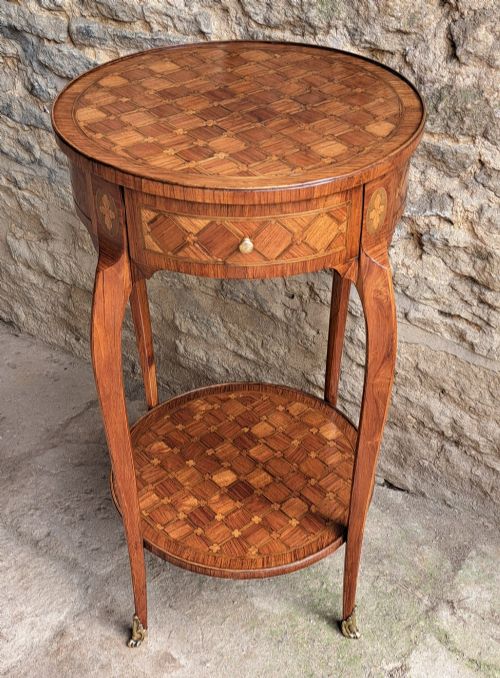


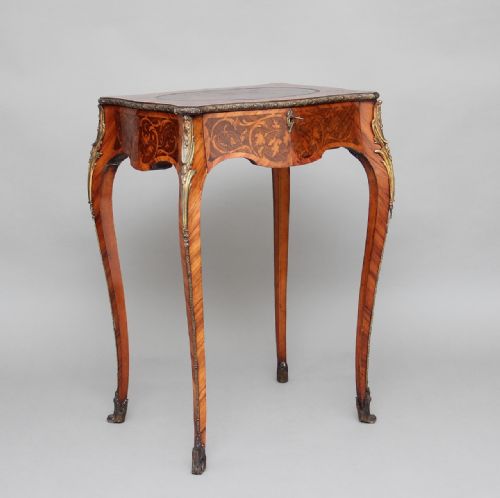


French Kingwood Work Table
A French kingwood work table is a refined nineteenth-century piece designed for needlework and small tasks, combining exotic timber with polished metal mounts.
French Kingwood Work Table
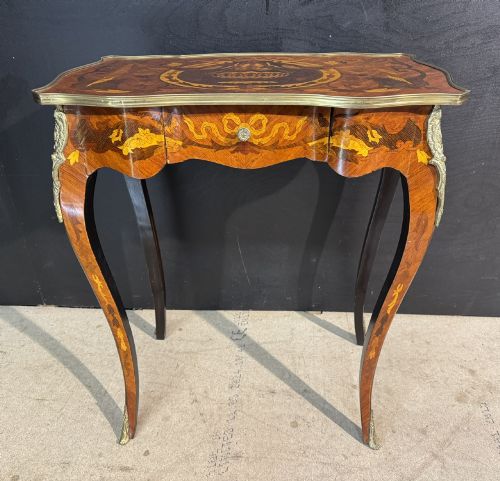
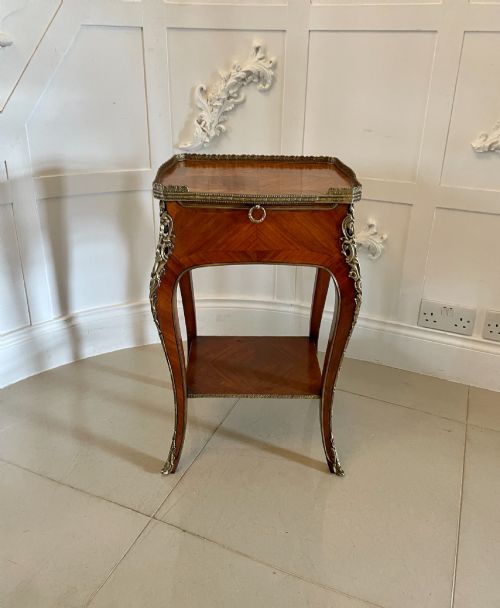
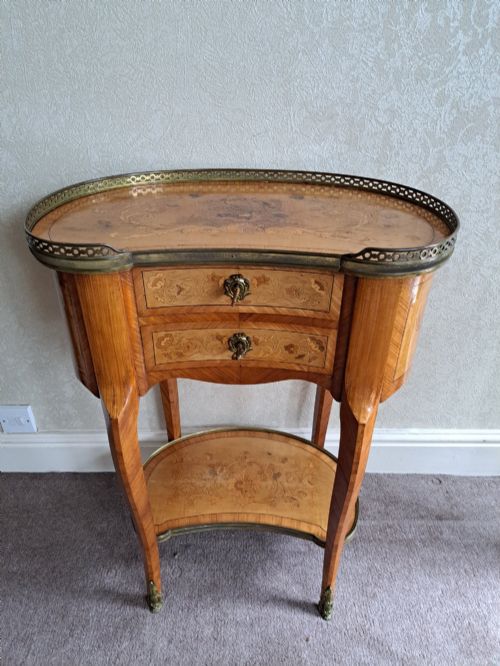
When you search for a french kingwood work table, you encounter nineteenth-century occasional tables, side tables, and sewing boxes created in France across the 1850s to the early 1900s. The most frequent form on this page is the freestanding occasional or side table, often fitted with drawers, compartments, or a sophisticated mechanism for holding sewing materials.
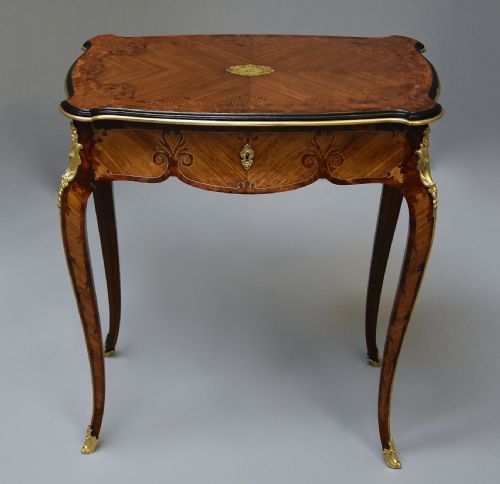
These items emerge predominantly in revival styles such as Louis XV, Louis XVI, and French Rococo. Makers utilised marquetry, parquetry, and mixed wood designs to catch the eye, frequently mounting the timber with ormolu, gilt-metal, or brass.
Some examples incorporate porcelain plaques or leather inserts into their tops, blurring the line between a dedicated work box and a decorative salon table. You will find pieces attributed to specific makers like Millet alongside unmarked nineteenth-century workshop productions.
How they were made
Cabinet makers built these tables using kingwood as the primary veneer, often paired with rosewood and mixed wood marquetry or geometric parquetry patterns. The dense, figured grain of the kingwood was sliced and laid onto carcase timbers to create symmetrical floral motifs or crisp geometric designs.
Ormolu and gilt-metal mounts were cast, chased, and secured to the corners, legs, and apron edges to highlight the curved contours of the Louis XV and Louis XVI revival styles. Brass stringing and inlay work frequently bordered the panels and tabletops to add further linear definition.
Internal compartments, sliding trays, and work bags were integrated into the wooden framework with small brass hinges and complex mechanical slides. Leather was sometimes inset into the upper writing or working surface, bordered by gold tooling.
Listings span the nineteenth century, featuring pieces dated from eighteen-fifty through to nineteen-ten, predominantly reflecting Louis XV and Louis XVI revival styles.
What varies in quality
The sophistication of the timber work dictates the standing of a piece, separating simple geometric parquetry from elaborate pictorial marquetry involving multiple contrasting woods. Tables featuring signed maker labels or documented exhibition standards display superior hand-chased ormolu mounts with sharper detail.
Internal complexity also divides the range, distinguishing basic single-drawer occasional tables from pieces containing intricate lifting lids, fitted sewing compartments, and hidden mechanisms. The crispness of the gilt-metal or ormolu mounts and the thickness of the kingwood veneer reflect the original investment in the piece's creation.
Millet
The French Kingwood Work Table Glossary
- Kingwood
- A dense, richly grained tropical timber from the Dalbergia family, utilised extensively in seventeenth- and eighteenth-century French cabinet making and revived in the nineteenth century. It provides the characteristic dark, mottled surface seen on these tables.
- Ormolu
- Gilded bronze mounts applied to furniture to accent corners, legs, and borders. The best examples are hand-chased after casting to refine the metal details.
- Marquetry
- Inlay technique using thin veneers of various coloured woods to form pictorial patterns, flowers, or landscapes on tabletops.
- Parquetry
- Geometric wood inlay forming repeating patterns such as cubes, lozenges, or squares across the surface of the furniture.
- Table en chiffonnière
- A small French occasional table or sewing table, typically featuring multiple drawers or compartments for domestic needlework and small items.
French Kingwood Work Table: Frequently Asked Questions
What is a french kingwood work table used for?
These tables were originally designed for upper-class women to store needlework, threads, and small personal items while socialising or reading in the salon. They functioned as both practical workstations and decorative furniture.
Today, they serve well as occasional tables beside seating or as bedside surfaces where their drawers and compartments hold small modern items.
How do I tell Louis XV and Louis XVI styles apart?
Louis XV style pieces, often called Rococo revival, feature asymmetrical curves, serpentine lines, and exuberant ormolu mounts shaped like foliage and scrolls.
Louis XVI style pieces move towards classical symmetry, showing straight tapered legs, fluted columns, and rectangular or circular tops with restrained bronze mounts.
Are kingwood and rosewood the same timber?
No, although both belong to the broader rosewood family and share dense, oily properties with rich colouration. Kingwood typically exhibits a lighter golden-brown background with dark violet-brown streaks and mottling.
Cabinet makers often combined kingwood with rosewood and other exotic timbers to create contrasting borders and marquetry panels.
How should I care for a nineteenth-century kingwood table?
Keep the timber away from direct sunlight and strong heat sources to prevent the kingwood veneer from drying out or splitting. Dust gently with a dry, soft cloth and avoid chemical polishes that can damage the French polish surface.
Protect the ormolu mounts by keeping the room humidity stable, as damp environments can tarnish or corrode the gilt metal.