
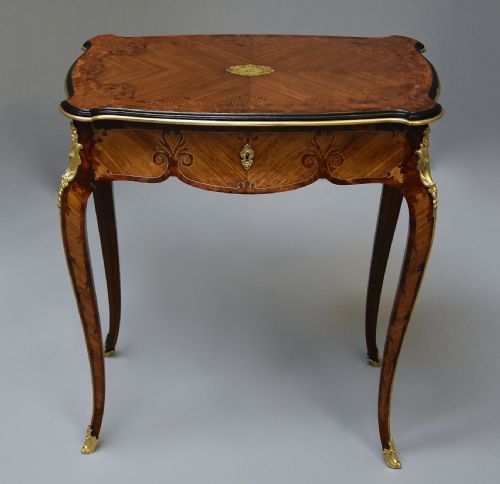


Parquetry Sewing Table
A parquetry sewing table brings geometric wood veneers and ingenious compartments together in a functional piece for the parlour.
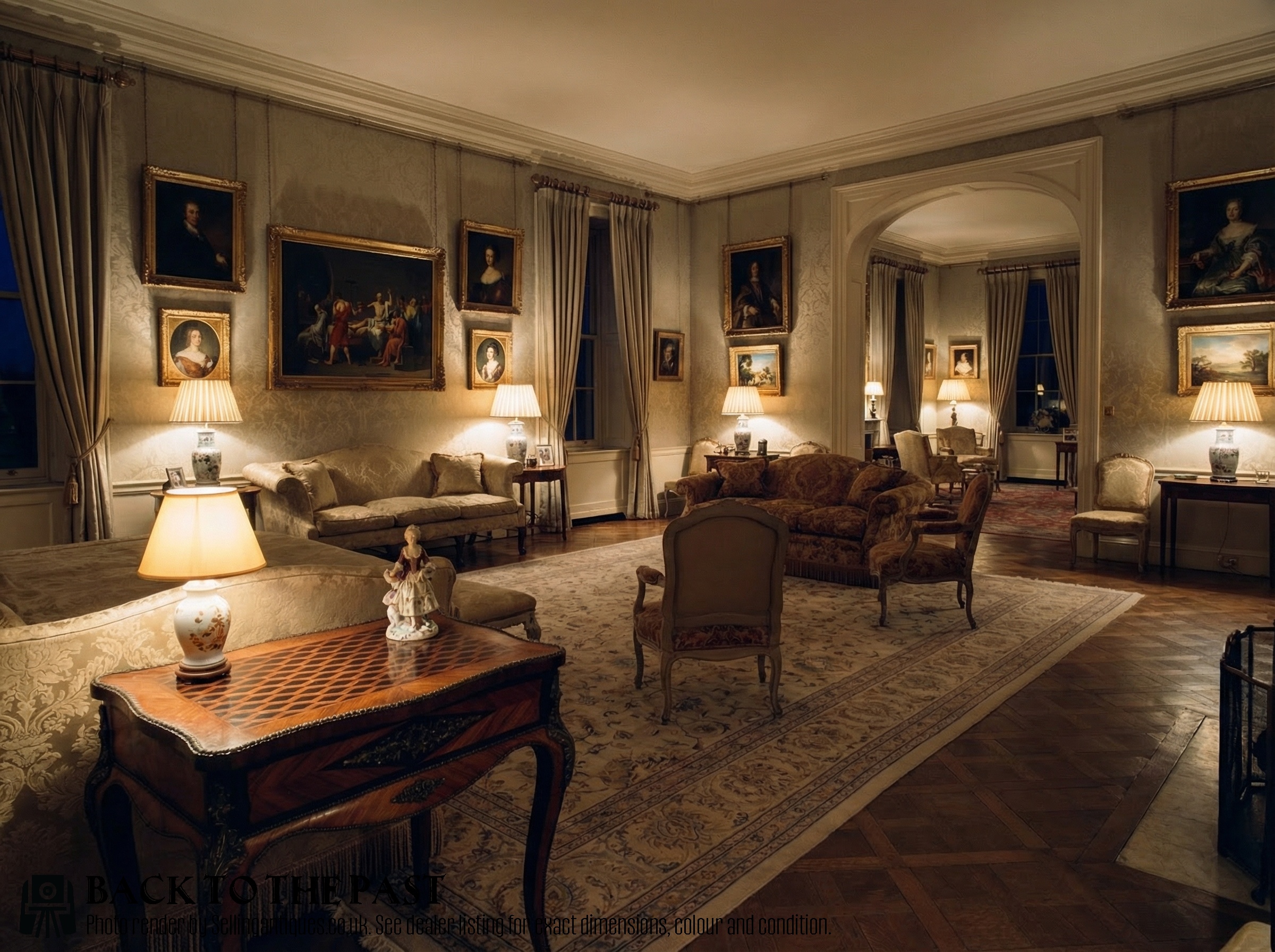
Parquetry Sewing Table
A parquetry sewing table combines decorative veneering in geometric patterns with a specialised interior designed for needlework and small crafts. When you search for a parquetry sewing table, you are looking at small tables from the nineteenth century, including Victorian and Napoleon III periods, that double as work tables or dressing tables.
The pieces on this page span the 1850s to the 1880s, alongside earlier Regency examples from around 1800. Forms range from freestanding occasional tables to games tables and side tables fitted with interior compartments.
French makers and English workshops produced these pieces in styles such as Louis XV Revival, French Rococo Revival, and Grand Regency. You will frequently encounter freestanding designs featuring mixed wood inlay and hinged lids that reveal fitted compartments for thread and bobbins.
How they were made
Cabinet makers built these tables using foundational timbers like walnut, satinwood, and rosewood, overlaid with decorative veneers of kingwood and boxwood. The geometric parquetry patterns required precise cutting of individual wood pieces to form interlocking designs across the top and sides.
Metal mounts in ormolu, brass, and gilt bronze accentuate the corners, legs, and key escutcheons, following the tastes of the French Rococo Revival and Victorian periods. Some examples incorporate porcelain plaques mounted into the woodwork alongside sophisticated interior mechanisms for storing sewing tools.
Some nineteenth-century work tables double as chess boards, proving that needlework occasionally required a tactical diversion.
What varies in quality
The sophistication of the internal mechanism and the complexity of the wood inlay distinguish superior examples from standard workshop production. Tables that integrate multiple functions, such as combining a work surface with a chess board or dressing mirror, demand greater skill from the cabinet maker.
The choice of secondary woods and the quality of the ormolu mounts set the highest tier apart from simpler nineteenth-century pieces. Precision in the geometric parquetry and the retention of original fitted interiors carry significant weight in assessing a table.
The Parquetry Sewing Table Glossary
- Parquetry
- A geometric mosaic of wood veneers used to cover floors or furniture surfaces. It creates angular patterns such as cubes, triangles, and squares.
- Kingwood
- A dense, richly grained tropical timber favoured by elite cabinet makers in the eighteenth and nineteenth centuries. Its dark violet-brown tones feature striking lighter figuring.
- Ormolu
- Gilt bronze ornamentation applied to the mounts, feet, and borders of fine furniture. The technique involves coating bronze with a finely ground mercury and gold amalgam.
- Work Table
- A nineteenth-century piece of furniture designed for ladies' needlework and crafts, typically featuring an internal tray and a suspended fabric bag.
- Specimen Wood
- Small pieces of various native and exotic timbers selected for their contrasting colours and grain patterns. Makers used them to showcase technical skill in marquetry and parquetry.
Parquetry Sewing Table: Frequently Asked Questions
How were these tables used?
Upper-class women used them in the parlour or withdrawing room for needlework, embroidery, and small crafts. The hinged lids and pull-out drawers kept sewing supplies organised and out of sight.
Many examples also incorporated fold-over tops for playing chess or cards, or included mirrors and compartments for use as a dressing table.
How do I date a sewing table?
Dating relies on the combination of styles, materials, and internal mechanics. Regency examples from around 1800 typically display simpler classical lines in rosewood, whereas later Victorian and Napoleon III pieces often feature elaborate kingwood parquetry and ormolu mounts.
The presence of specific Revival styles, such as Louis XV or French Rococo, points towards the mid-to-late nineteenth century.
Can I use one as a bedside table?
Their compact proportions and enclosed storage make them well-suited for use as bedside tables or side tables in a modern interior. The internal compartments provide convenient storage for small contemporary items.
Care should be taken to protect delicate wood veneers and ormolu mounts from moisture and heavy daily wear.