



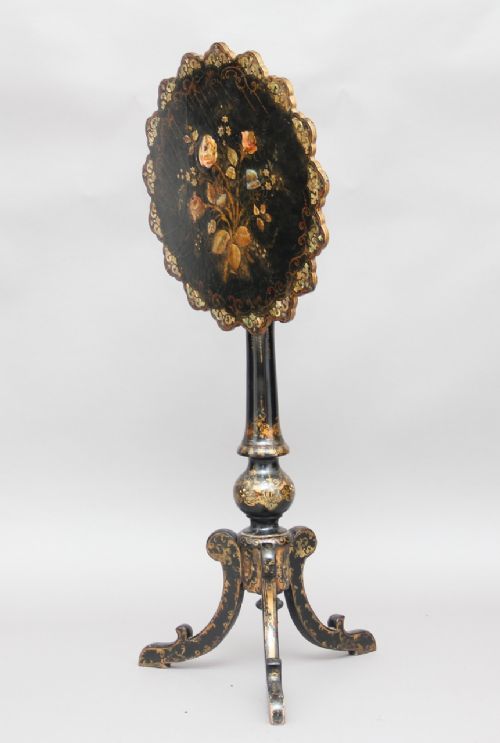
Mother of Pearl Stand
When you search for a mother of pearl stand, you seek decorative small furniture and desk accessories inlaid with shimmering marine shell.
Mother of Pearl Stand
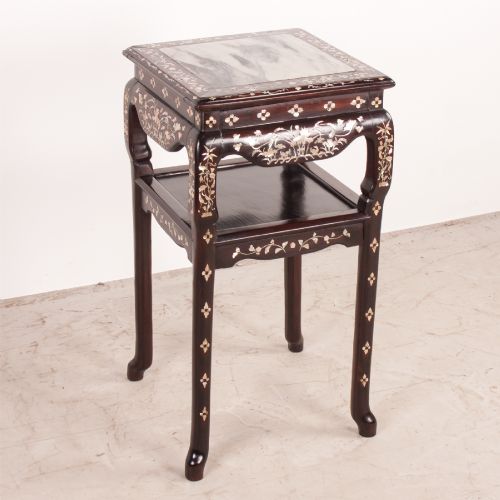
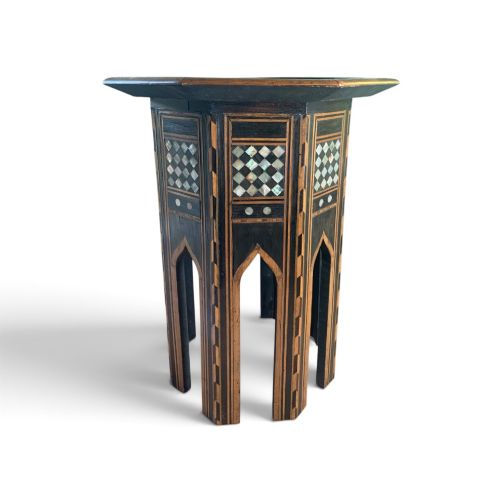
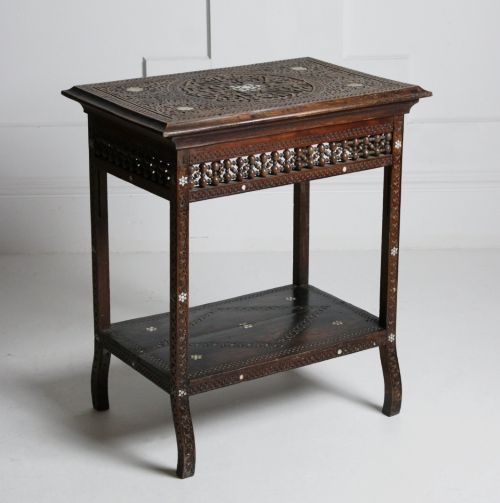
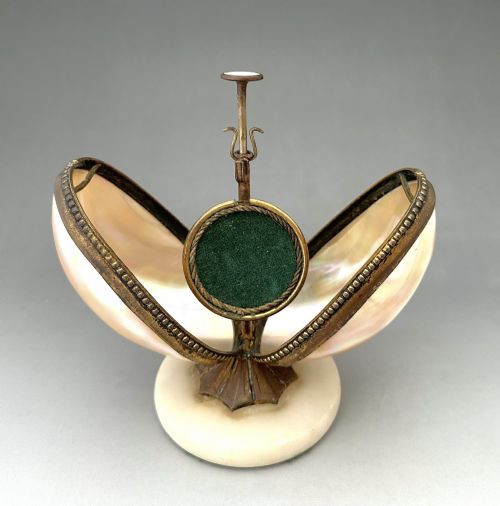
A mother of pearl stand encompasses occasional tables, plant stands, desk accessories, and inkstands originating from the nineteenth and early twentieth centuries. These decorative items frequently display influences from Chinese Export, Syrian and Moorish Revival, Victorian, and Regency design traditions.
The most common examples encountered on this page include octagonal side tables, hardwood plant stands, and writing desk sets. Makers across varied regions utilised marine shell alongside timbers such as rosewood, walnut, coromandel, and hongmu to create intricate geometric and floral patterns.
Materials and construction
Artisans constructed these pieces using dense hardwoods and exotic timbers like rosewood, walnut, coromandel, and hongmu as the foundational structure. Mother-of-pearl shell was meticulously cut into delicate geometric tessellations, floral motifs, or figurative scenes before being embedded into recesses carved directly into the timber.
Additional decorative elements such as bone, brass, tortoise-shell, glass inkwells, and marble tops frequently accompanied the pearl inlay. Lacquer work and intricate carving further defined the surfaces of Chinese export pieces and Syrian occasional tables alike.
Mother of Pearl Stand Retail Price Guide 2026
Typical asking prices for mother of pearl stand among the pieces listed under this phrase on Sellingantiques today, from the lower quarter to the upper quarter. They describe what is for sale here now, not the wider market.
Assessing craftsmanship and execution
Quality rests heavily upon the precision of the shell inlay and the complexity of the surrounding woodwork. Finer examples display tightly fitted pearl tessellations with minimal filler, where every individual piece of shell sits flush within deeply carved channels in the hardwood.
The choice of secondary materials also dictates the grade of the piece, distinguishing standard utility items from exhibition-quality works incorporating solid coromandel, heavy marble inserts, or elaborate brass and bone embellishments.
Liberty & Co
The Mother of Pearl Stand Glossary
- Mother-of-Pearl
- An iridescent internal layer of shells produced by pearl oysters and freshwater mussels. It is harvested and cut into thin plates for decorative inlay.
- Hongmu
- A traditional Chinese term denoting dense, dark hardwood species utilised for fine furniture and plant stands. These heavy timbers provide a stable dark contrast to shimmering shell inlay.
- Boulle
- A form of marquetry utilising brass and tortoiseshell, occasionally incorporating mother-of-pearl. It appears on nineteenth-century English and French writing boxes.
Mother of Pearl Stand: Frequently Asked Questions
What is a mother of pearl stand used for?
These stands serve as decorative occasional furniture for holding small lamps, display items, or plants in domestic interiors. Smaller desk versions organise writing equipment and correspondence.
Their decorative surfaces bring reflective texture and regional artistry into traditional or eclectic rooms.
How do I identify a Moorish revival stand?
Moorish revival pieces typically feature octagonal tops, intricate geometric bone and mother-of-pearl inlay, and heavily carved wooden lattice structures. They reflect nineteenth-century European fascination with Middle Eastern design.
These tables often utilise walnut or softwoods as a base for dense, patterned mosaic surfaces.
Are Chinese plant stands antique?
Many Chinese hardwood plant stands date from the nineteenth century, constructed from dense timbers like hongmu and often inlaid with gold-lip shell. They frequently feature carved aprons and marble or panelled tops.
Such pieces were exported for Western Victorian drawing rooms and conservatories.
How should I care for shell inlay?
Keep mother-of-pearl stands away from direct sunlight and extreme humidity fluctuations to prevent the wood from warping and loosening the inlay. Dust gently with a dry, soft cloth.
Avoid liquid furniture polishes that can seep beneath the shell tessellations and weaken the historical adhesives.