



Moorish Octagonal Table
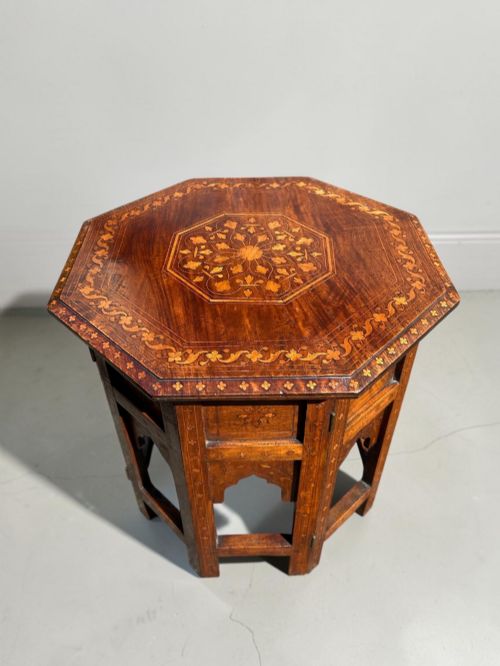
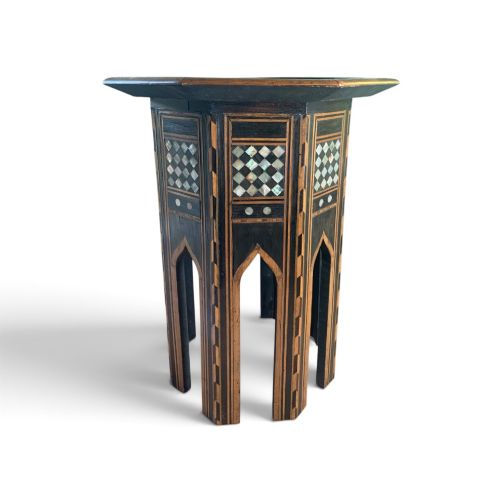
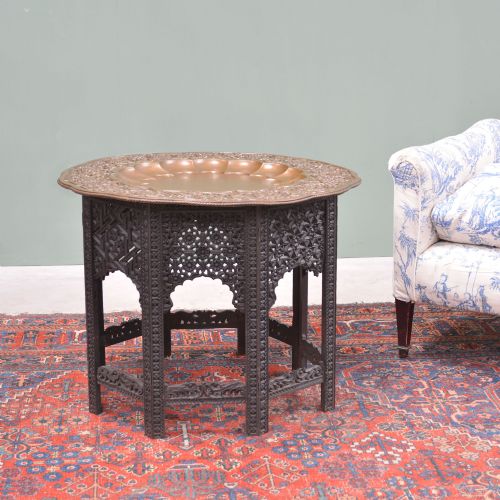
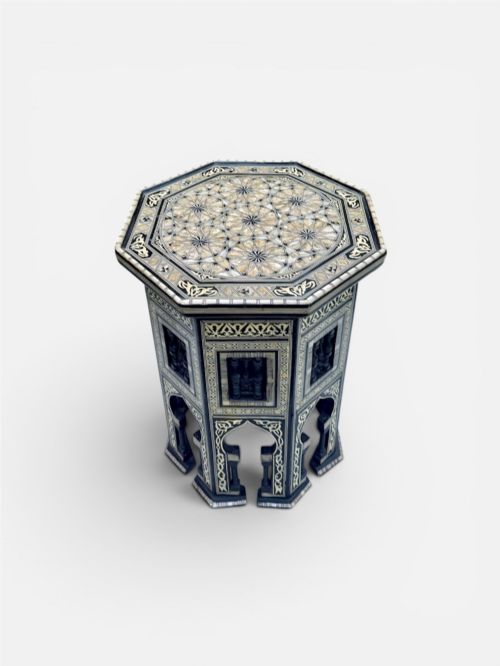
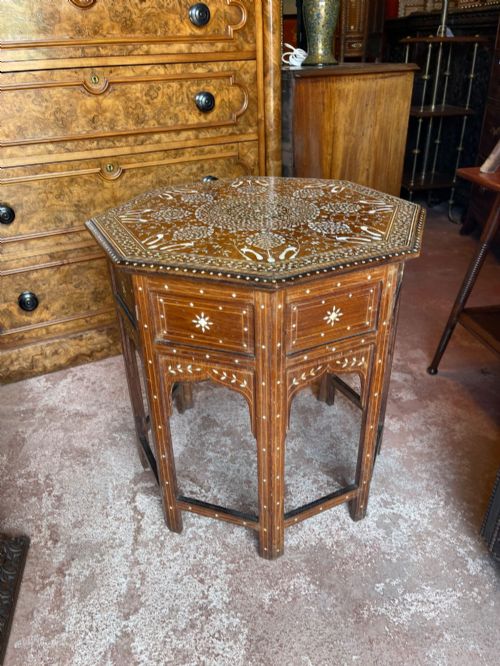
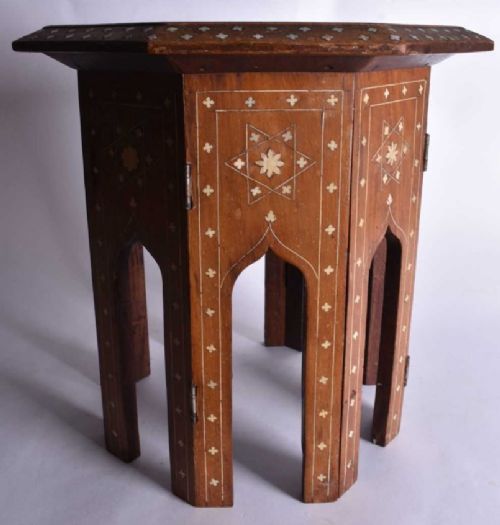
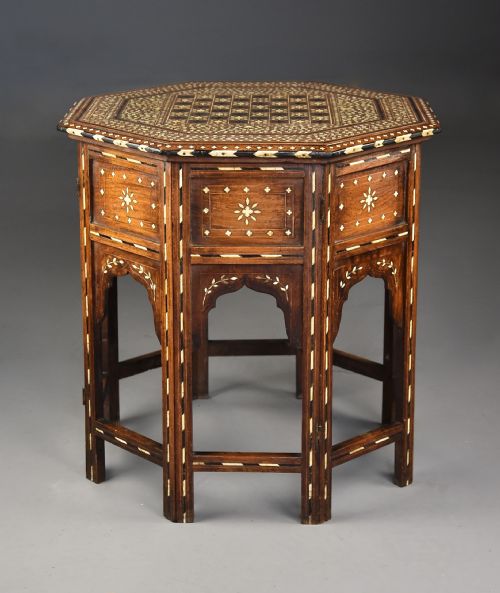
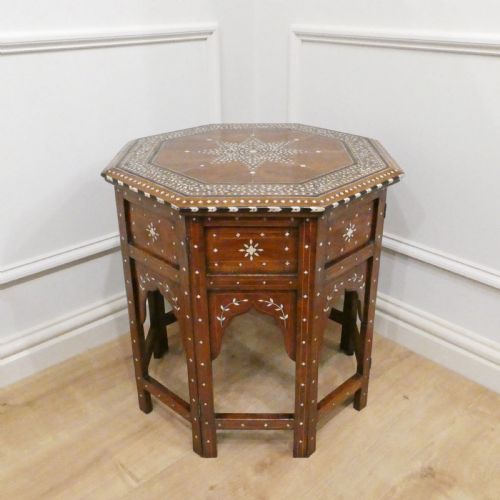
A moorish octagonal table brings intricate geometry and geometric inlay into a room, serving as a striking focal point for a study or drawing room.
Moorish Octagonal Table
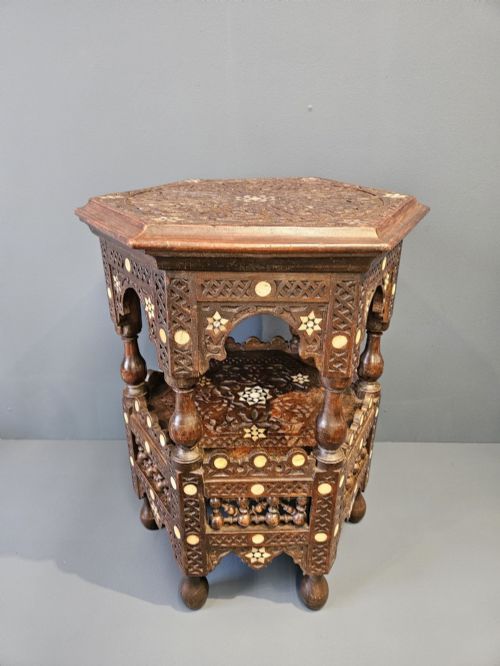
A moorish octagonal table typically functions as a side table, occasional table, coffee table, or lamp table within domestic interiors. These pieces draw upon Anglo-Indian, Ottoman, Syrian, and Moorish Revival design traditions spanning the nineteenth and early twentieth centuries.
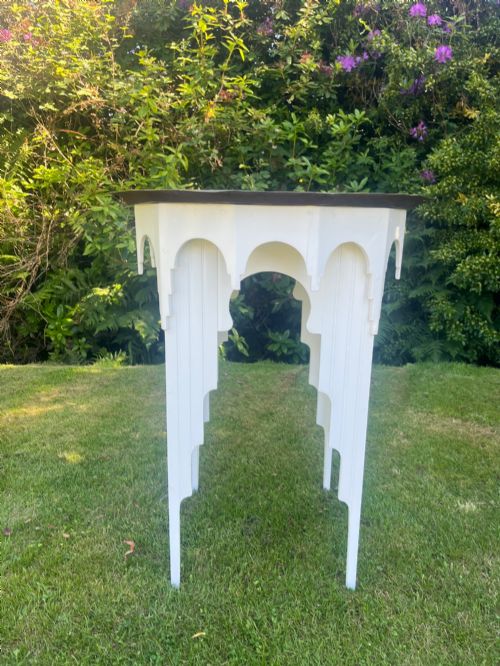
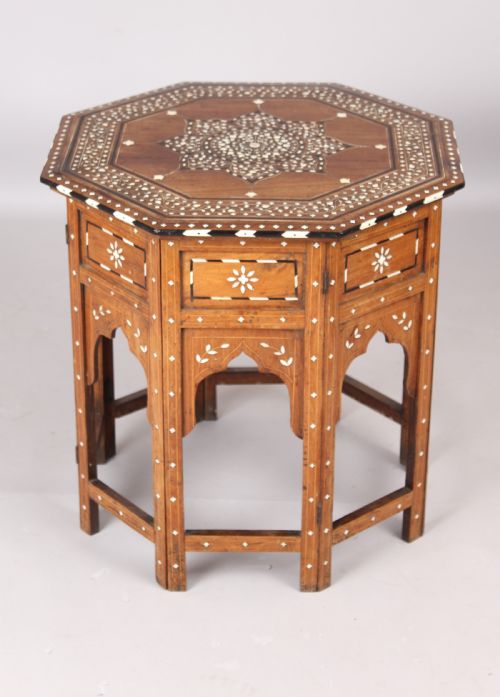
The format relies on an eight-sided top paired with folding or rigid stands, often associated with workshops in Hoshiarpur or retailers such as Liberty and Co. Buyers frequently encounter variants featuring intricate geometric frames and distinct regional decorative schemes.
Evaluating Execution
Quality rests in the precision of the geometric woodwork and the density of the inlay across the octagonal top. Finer examples display tightly fitted bone or mother-of-pearl components with minimal gaps within the timber channels.
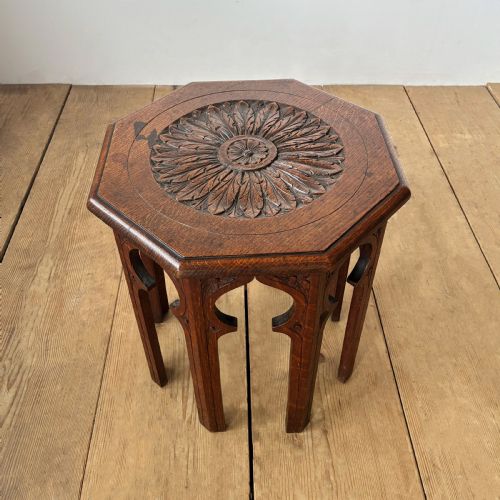
The depth and crispness of the hand-carved relief work distinguish superior items from simpler production pieces. The stability of the folding mechanism and the selection of cabinet timbers further separate ordinary items from exceptional ones.
Periods represented span the Victorian era, the nineteenth century, and the early decades of the twentieth century.
Liberty and Co
The Moorish Octagonal Table Glossary
- Hoshiarpur
- A North Indian centre renowned for intricate woodwork and inlay production. Items from this origin typically incorporate dense bone and marquetry patterns.
- Moorish Revival
- An architectural and decorative style popular during the nineteenth century. This aesthetic adapts traditional Islamic and North African design motifs for Western domestic interiors.
- Marquetry
- The art of applying pieces of veneer to a structure to form decorative patterns. Artisans utilise contrasting woods and organic materials to achieve geometric designs.
- Mother-of-pearl
- An iridescent inner layer of shells utilised for decorative inlay. Craftsmen cut this material into fine geometric segments for surface ornamentation.
Moorish Octagonal Table: Frequently Asked Questions
Where should I place a moorish octagonal table?
These pieces suit placement beside a sofa or armchair as an occasional or lamp table.
Their distinct octagonal shape also allows them to function effectively as standalone centre tables in smaller rooms.
Are these tables sturdy enough for daily use?
Many examples feature folding stands designed for easy relocation and storage when not in use.
While structurally sound for holding lamps and small objects, consideration should be given to their historic inlaid surfaces during everyday handling.
How do I identify a piece from Hoshiarpur?
Hoshiarpur pieces are characterised by dense overall inlay work utilising bone or light-coloured wooden elements.
They frequently employ intricate carved botanical or geometric motifs across both the top and the folding base.
What materials were commonly used in construction?
Substantial hardwood frames provide the primary structure, utilising timbers such as teak, walnut, and rosewood.
Surfaces are then enriched with contrasting insertions of bone, mother-of-pearl, and brass wire.