








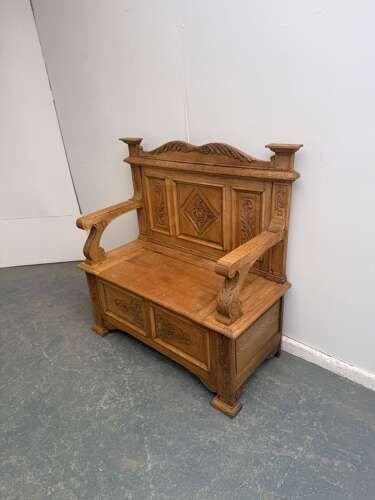
Monks Bench Storage
Monks bench storage pieces combine heavy timber seating with concealed compartments, offering traditional utility and robust presence for hallways.
Monks Bench Storage
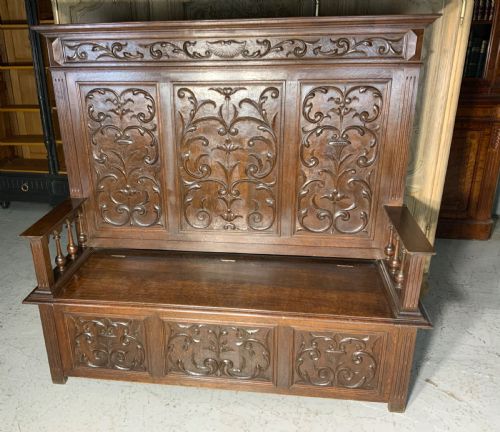
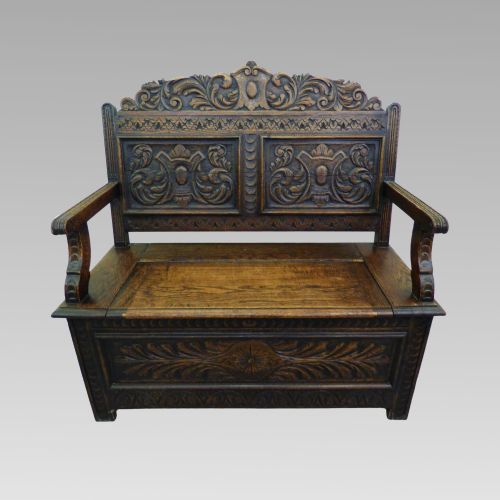
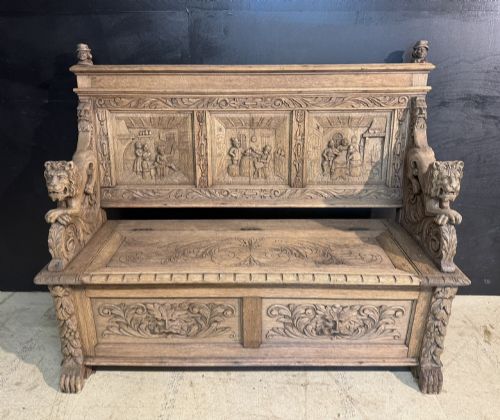
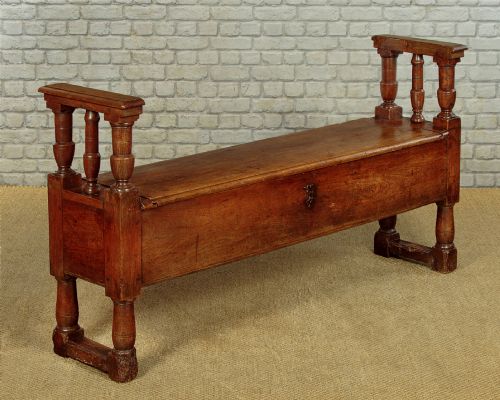
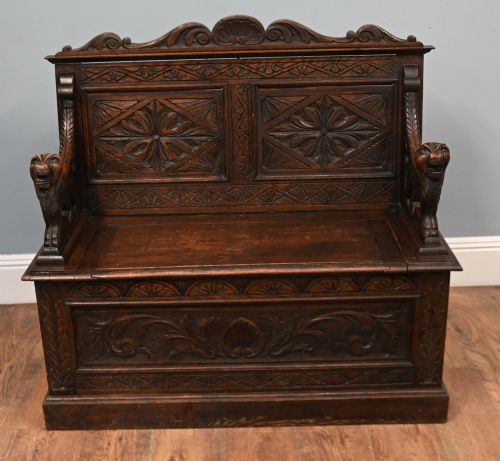
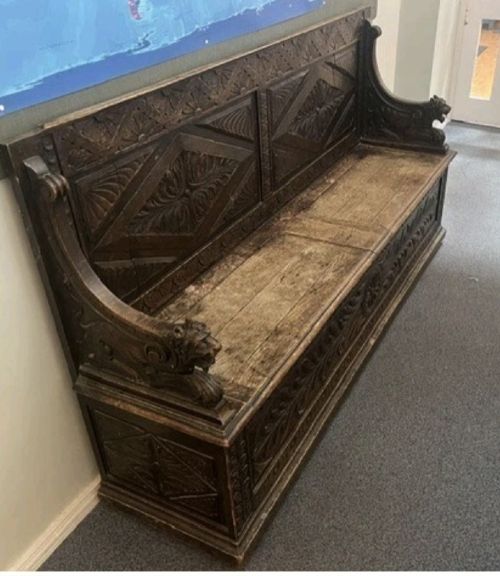
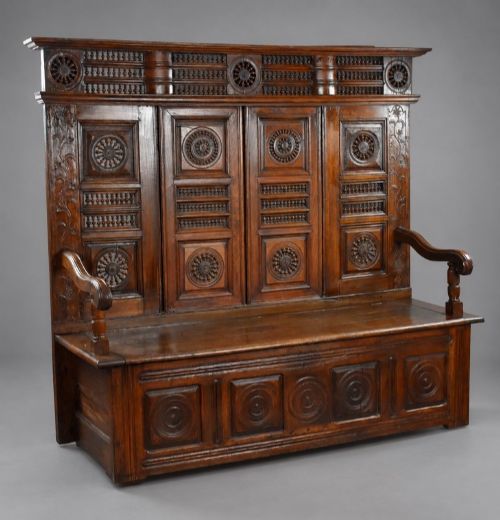
Monks bench storage items appear primarily as box settles, hall benches, and hall seats originating across the seventeenth, eighteenth, nineteenth, and early twentieth centuries. These forms reflect diverse regional traditions, including English country, Welsh, and Hungarian workshops, constructed to serve as seating while containing storage beneath the lift-up seat or fold-over top.
The selection ranges from early high-back oak panels to later pine examples, encompassing styles such as Jacobean Revival, Gothic Revival, and Arts and Crafts. Buyers encounter both substantial country house settles and smaller scaled hall benches designed for compact spaces.
Materials and Technique
Makers relied predominantly on solid oak and pine, occasionally incorporating ash, elm, iron, and brass fittings. Surfaces reveal varied treatments from waxed natural finishes to original painted schemes in black, grey, cream, and blue.
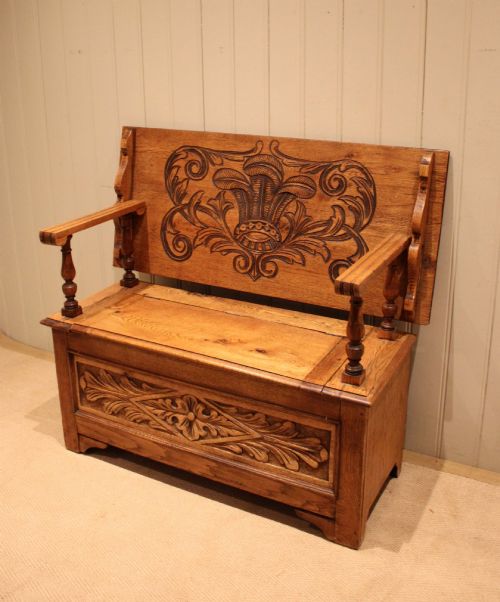
Construction techniques involve panelled backs, lift-up storage boxes, and fold-over tops that transform the backrest into a table surface. Joinery relies on traditional pegged joints and solid timber construction designed to endure heavy daily use.
Monks Bench Storage Retail Price Guide 2026
Typical asking prices for monks bench storage among the pieces listed under this phrase on Sellingantiques today, from the lower quarter to the upper quarter. They describe what is for sale here now, not the wider market.
Listings feature oak and pine predominantly, spanning the seventeenth century through to the 1920s with styles ranging from plain rustic country to carved Gothic Revival.
Craftsmanship and Proportion
Quality rests in the integrity of the timber, the crispness of any carved detailing, and the preservation of original surfaces. Pieces retain higher standing when they maintain their original hinges, uncompromised storage boxes, and unaltered proportions.
The distinction between standard utility items and finer examples lies in the depth of the carving, the selection of figured solid oak or clean pine boards, and the retention of early paint or rich waxed patination.
The Monks Bench Storage Glossary
- Box settle
- A high-backed wooden bench featuring an enclosed storage compartment beneath the seat. This form protected sitters from drafts while keeping household items stored securely.
- Fold-over top
- A dual-purpose backrest design that pivots forward to create a flat table surface. It is a defining mechanism of convertible monks benches.
- Panelled back
- Construction method using vertical stiles and rails enclosing flat or carved wooden panels. This technique provided structural rigidity to large oak settles.
- Patina
- The surface sheen and colour developed through decades of handling, polishing, and natural ageing. It indicates an authentic uncompromised antique finish.
- Jacobean Revival
- A nineteenth-century design style emulating seventeenth-century motifs. Pieces exhibit heavy geometric mouldings and deep relief carving.
Monks Bench Storage: Frequently Asked Questions
How do I use a monks bench in a modern hallway?
Place the bench against a main wall to provide immediate seating for putting on shoes while utilising the internal box compartment for hats, scarves, and bags.
The fold-over top variants also serve as a convenient surface for dropping post or keys upon entering the home.
How do I care for the wood finish?
Maintain waxed surfaces by applying a traditional beeswax polish sparingly and buffing with a soft cloth to preserve the natural lustre.
Keep timber furniture away from direct heat sources and sudden temperature shifts to prevent wood splitting.
Are these benches heavy to move?
Solid oak examples possess considerable weight due to the dense timber construction and large panelled backs. Pine versions tend to be lighter and easier to reposition within a room.
Enlist assistance when relocating larger period box settles to avoid damaging joints or flooring.