

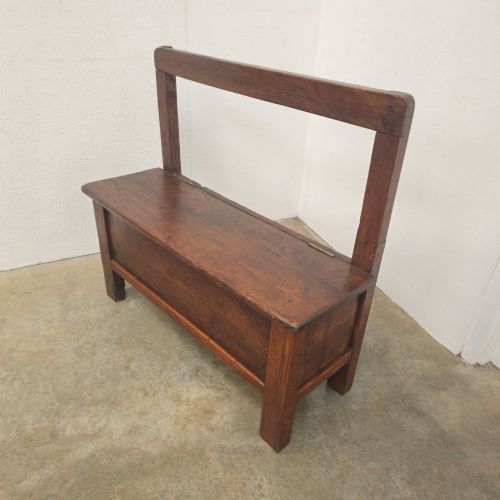
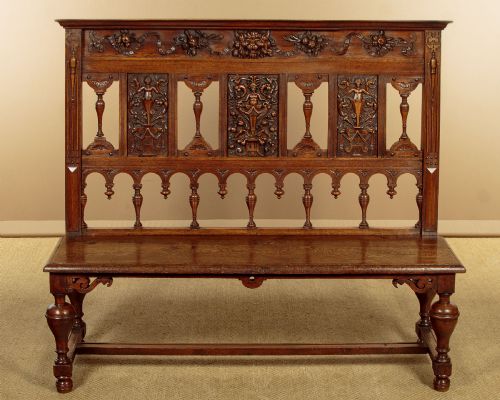
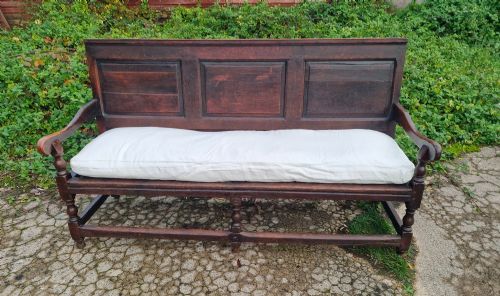
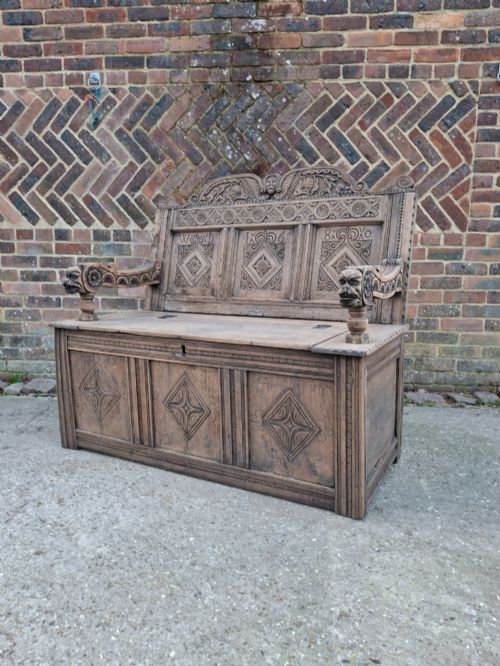



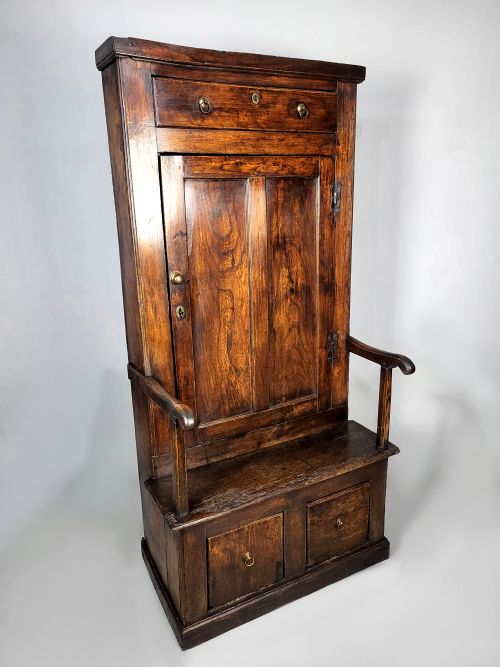
Monk Bench Seat
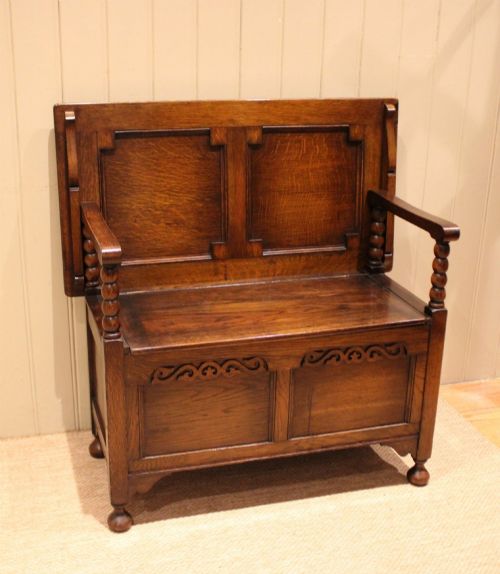
A monk bench seat is a dual-purpose hall piece with a hinged top that converts into a table, combining practicality with robust vernacular presence.
Monk Bench Seat
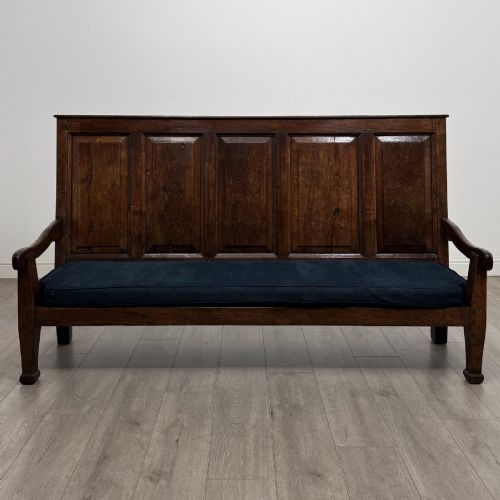
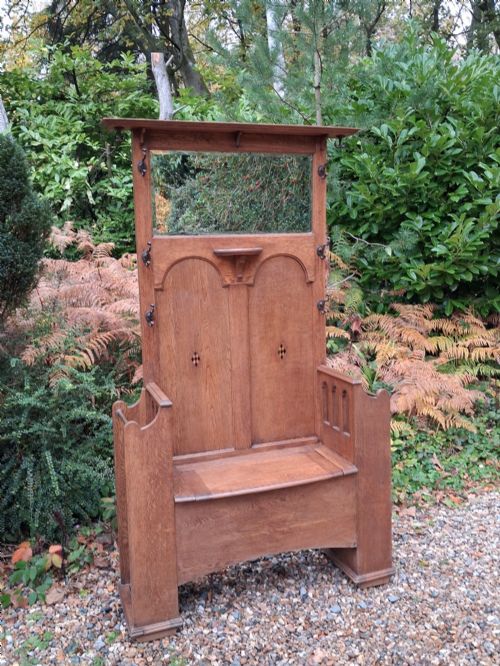
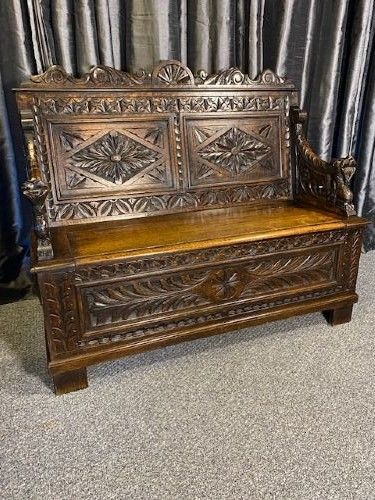
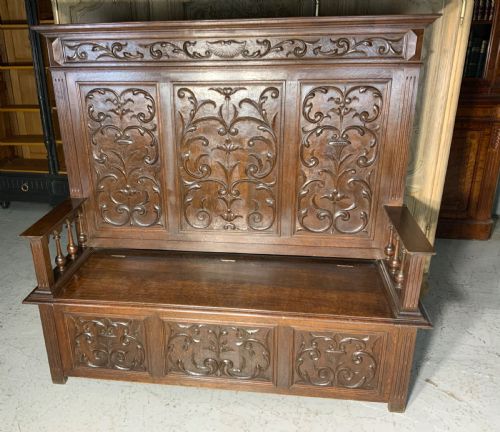
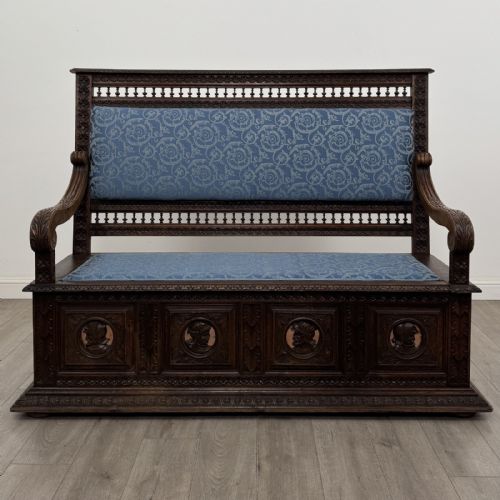
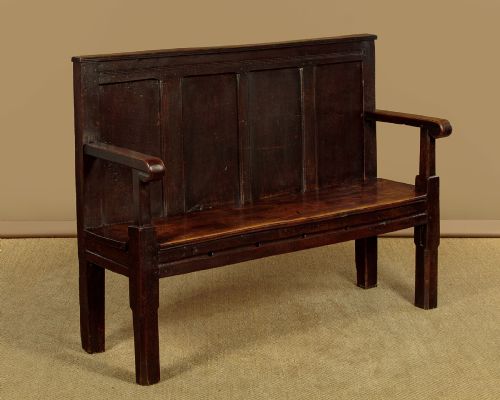
A monk bench seat is primarily encountered as a heavy timber hall bench or box settle featuring a pivoting or fold-over backrest mechanism. The form spans several centuries, appearing in Georgian vernacular styles as well as heavily carved Victorian and Edwardian revivals.
Most examples found on this page are constructed from oak, pine, or elm, often incorporating integrated box storage beneath the lift-up seat. These pieces serve equally as functional seating and enclosed storage for hallways, boot rooms, and large living spaces.
Materials and Construction
These pieces are constructed predominantly from solid hardwoods and softwoods such as oak, elm, pine, and ash, joined using traditional pegged mortise and tenon methods. Surfaces are typically finished with wax, polish, or historic paint layers that highlight the natural grain and age of the timber.
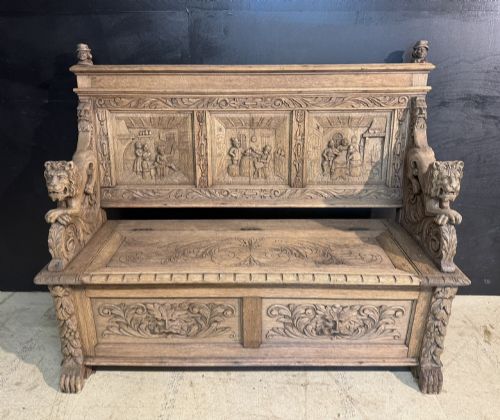
Decorative embellishments on revival and vernacular examples include panelled backs, geometric mouldings, and intricate hand-carved motifs depicting tavern scenes or floral patterns. Hinges and locking mechanisms are fashioned from iron or brass to support the heavy folding backrests and lift-up lids.
Monk Bench Seat Retail Price Guide 2026
Typical asking prices for monk bench seat among the pieces listed under this phrase on Sellingantiques today, from the lower quarter to the upper quarter. They describe what is for sale here now, not the wider market.
Listings feature oak, pine, elm, and ash across periods spanning from the seventeenth century through to the Edwardian era.
Assessing Quality and Authenticity
Quality in a monk bench seat is determined by the integrity of the timber, the originality of the mechanical conversion mechanism, and the crispness of any hand-carved decoration. Pieces retaining their original hardware, unreduced proportions, and genuine patina command greater appreciation than later married assemblies.
The sophistication of the joinery and panel construction separates standard workshop production from finer country house or commissioned pieces. Early examples display subtle hand-planed tool marks and structural ageing that contrast with machine-cut components found in later revival items.
Liberty
The Monk Bench Seat Glossary
- Box settle
- A high-backed wooden bench featuring an enclosed compartment beneath the seat for storage. This form kept draughts away from inhabitants in older properties.
- Vernacular
- Everyday domestic architecture and furniture made by local craftsmen using regional materials. These objects prioritise utility and local tradition over high-style academic design.
- Jacobean Revival
- A nineteenth-century design movement mimicking the heavy geometric panelling and dark finishes of the early seventeenth century. Pieces from this era often feature deep relief carving.
- Mortise and tenon
- A traditional woodworking joint where a protruding tongue fits tightly into a matching cavity to lock two pieces of timber at a right angle.
Monk Bench Seat: Frequently Asked Questions
What is a monk bench seat used for?
A monk bench seat provides dual functionality as an enclosed storage box with a seat and a converted table surface. The hinged back folds forward to rest upon the arms, creating an impromptu resting place for reading or dining.
Historically placed in hallways or draughty living quarters, these pieces maximised utility in compact spaces. Today they function practically as boot storage and decorative hallway furniture.
How do I date a wooden settle?
Dating relies upon examining the timber species, construction tool marks, and style of joinery used throughout the carcass. Early pieces often utilise hand-riven boards and pegged joints without modern metal fasteners.
Revival pieces from the Victorian and Edwardian periods adopt older styles but display machine-sawn timber elements and standardised hardware. Comparing the patination and wear patterns helps distinguish genuine age from later imitations.
Where should I place a hall bench?
These benches suit entrance halls, boot rooms, and wide corridors where their storage capacity can be utilised daily. Positioning them against a sturdy wall allows the heavy backrest to fold over safely without obstruction.
Ensure the room maintains stable humidity levels to prevent the solid oak or pine panels from splitting or warping over time. Keep the piece away from direct heat sources such as radiators.
Are these seats comfortable to sit on?
Traditional wooden benches offer firm, upright seating supported by high wooden backrests designed to block cold draughts. Many owners add loose squab cushions or fabric pads to improve comfort during extended seating.
The absence of upholstery in original examples means the physical experience depends entirely on the ergonomic rake of the back panel and the addition of textiles.