

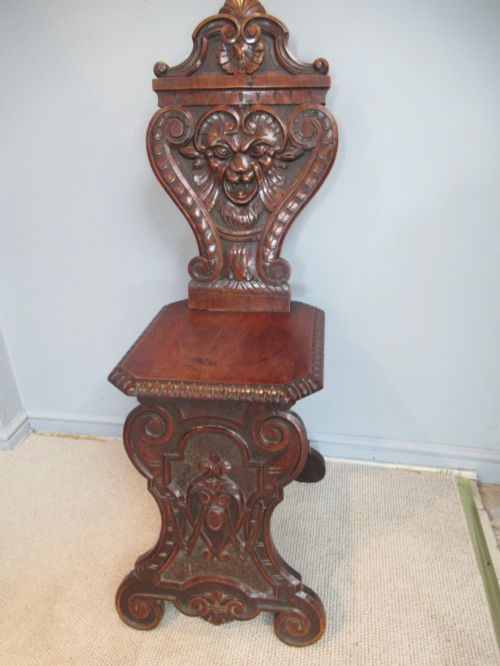


Lion Carved Bench
A lion carved bench brings heavy timber and classical theatre into a hallway, meeting your eye through carved masks and sturdy frames.
Lion Carved Bench
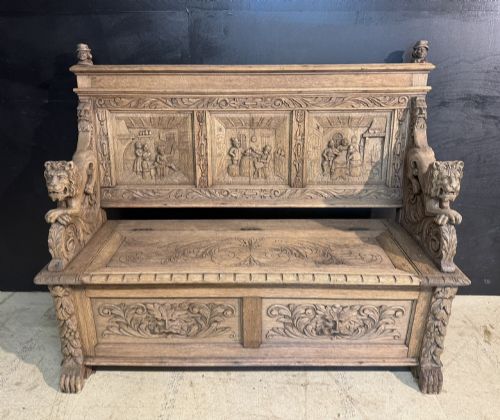
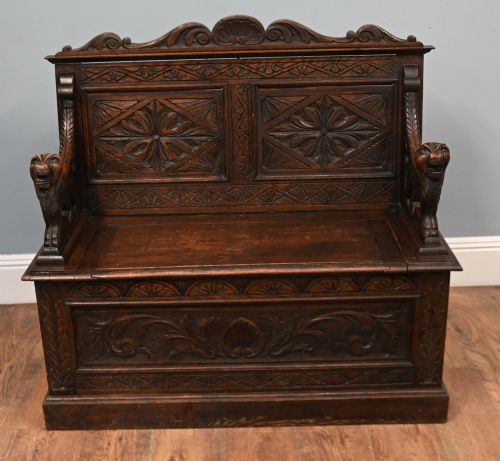
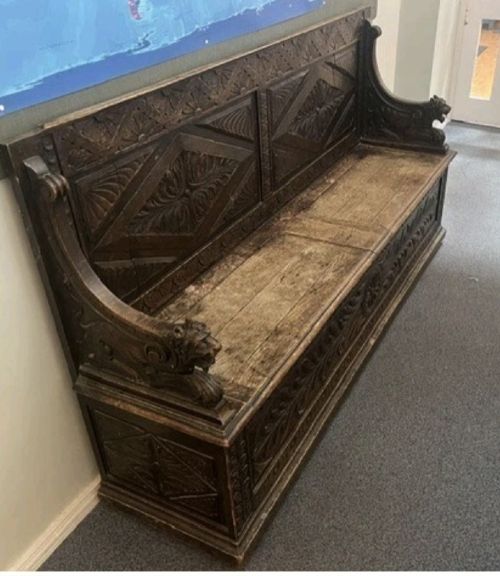
A lion carved bench draws its character from heavy oak and walnut frames, appearing across Victorian, Edwardian, and earlier revival periods. These pieces serve primarily as hall seats, monks benches, and low stools where carved woodwork meets functional seating.
You will frequently encounter sturdy oak examples alongside gilded neoclassical forms, spanning styles from Jacobean Revival to Arts and Crafts. The selection ranges from panelled storage benches to open X-framed stools resting on carved paw feet.
Materials and construction
Carpenters shaped these forms predominantly from solid oak and walnut, utilising traditional joinery for panels and frames. Giltwood and gesso appear on more theatrical continental pieces, providing a smooth surface for intricate neoclassical carving.
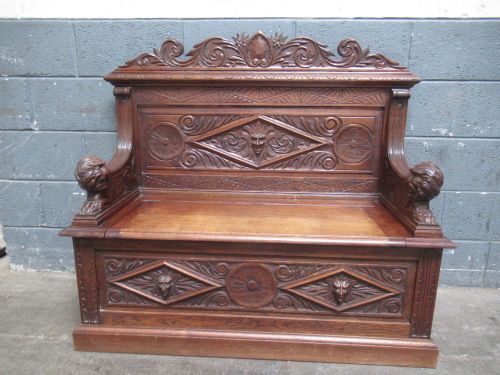
Carvers worked directly into the timber to create deep relief panels, green man motifs, and prominent lion masks. Leather and upholstery fabric complete the seating surfaces on larger settees and window seats.
Lion Carved Bench Retail Price Guide 2026
Typical asking prices for lion carved bench among the pieces listed under this phrase on Sellingantiques today, from the lower quarter to the upper quarter. They describe what is for sale here now, not the wider market.
Watch closely for leafy green men hiding their faces within the carved oak scrolls.
Assessing quality and workmanship
Quality rests in the depth and crispness of the hand carving, where sharp undercutting distinguishes master work from routine production. The weight of the timber and the integration of structural joints dictate the longevity of heavier oak forms.
Surface finish and patination reveal the handling of the wood over generations, separating honest older timber from later alterations. Proportion in the limbs and paws shows the carver's command of anatomical form.
Giles Grendey·Wylie Lockhead Manufacturers
The Lion Carved Bench Glossary
- Monks bench
- A convertible form with a hinged back that folds down to create a table top above a storage box. This dual-purpose design is common in twentieth-century dark oak interpretations.
- Curule stool
- An ancient Roman magistrate's chair shape featuring crossed concave legs. Nineteenth-century revival examples frequently incorporate giltwood and gesso.
- Giltwood
- Timber coated with fine gold leaf applied over a prepared gesso ground. This finish defines neoclassical and baroque seating.
- Green man
- A sculptural face carved from foliage or emerging out of leaves. It frequently peers from the woodwork of baronial and revival benches.
Lion Carved Bench: Frequently Asked Questions
Where should I place a lion carved bench?
These sturdy pieces suit entrance halls and reception rooms where their heavy timber frames create a strong focal point. They provide practical seating for removing boots or welcoming guests.
Smaller stools and curule seats work well beneath windows or at the foot of a bed, adding sculptural interest without overwhelming the floor space.
How do I care for antique oak furniture?
Feed dry timber occasionally with a quality beeswax to maintain the natural lustre of the grain. Avoid placing pieces near direct heat sources that cause wood to split.
Keep upholstery protected from prolonged direct sunlight to preserve the integrity of older fabrics and leather.
What is a monks bench used for?
The hinged back panel pivots downward to rest on the armrests, converting the seat into a table surface. This ingenious design originally served small spaces by combining dining and seating functions.
Lift the seat to access the enclosed storage compartment beneath, which traditionally held household linens or dry goods.
How can I tell the period of the carving?
Examine the tool marks and the depth of the relief work to understand the hand of the carver. Earlier eighteenth-century pieces display crisp, deep sculptural definition while later revivals often mimic historical styles with machine assistance.
Check the uniformity of the timber boards and the construction methods underneath to confirm the age of the frame.