





French Oak Bench
These heavy timbers carry generations of hard use, making a french oak bench the most honest seat in the house.
French Oak Bench
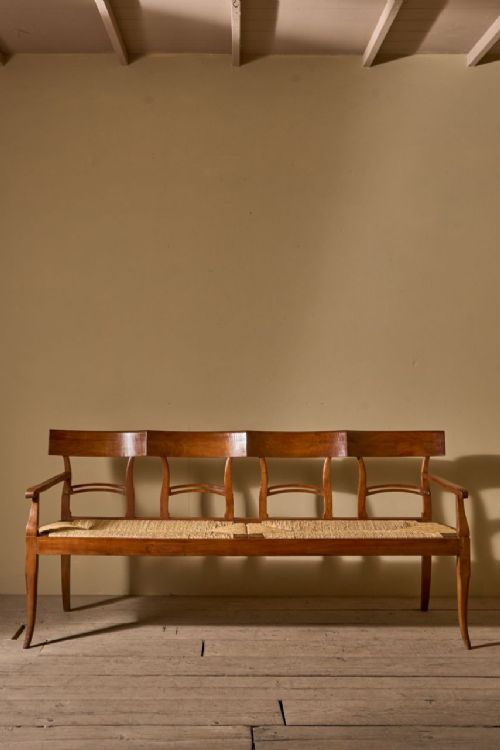
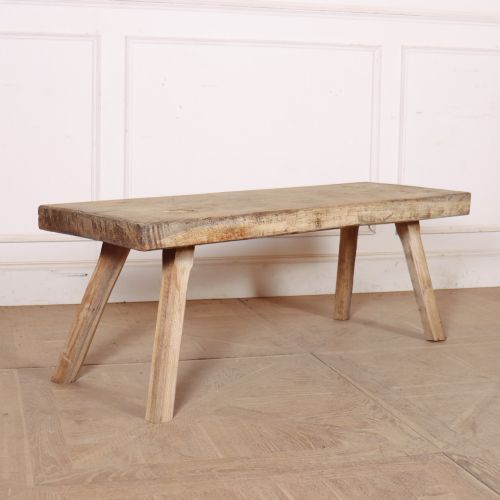
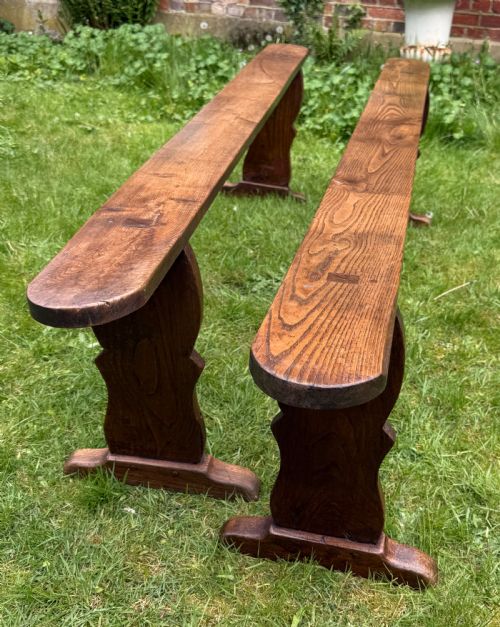
A french oak bench brings utilitarian purpose and centuries of domestic history straight into a modern hallway or dining space. Buyers searching this phrase encounter everything from narrow hall seats and long dining forms to heavy carpenters' workbenches adapted for domestic life.
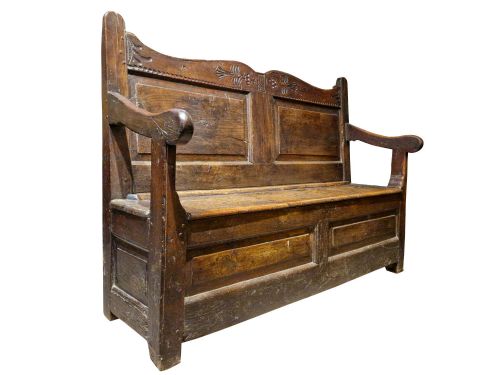
The pieces on this page span several distinct eras, stretching from eighteenth-century box-seated settles to nineteenth-century provincial seating and later rustic country variations. Solid timber construction dominates the selection, often shaped by regional French traditions like provincial framing or Gothic revival details.
Most examples originate from rural workshops or village houses, bearing the scars of daily labour and decades of polishing by hand. Whether you need a low coffee table conversion or a monumental dining bench, the selection leans heavily into robust, honest carpentry.
Materials and construction
Makers relied primarily on native oak, complemented occasionally by beech, sycamore, or cherrywood for internal framing and smaller components. Joinery was built to endure, utilising mortise and tenon joints secured with wooden pegs rather than modern metal fasteners.
Iron and brass hardware, from bench vices to strap hinges, provided functional reinforcement on working pieces while adding industrial contrast to domestic seating. Surface finishes developed organically through wax, scrubbing, and centuries of handling, though some nineteenth-century examples show deliberate bleaching.
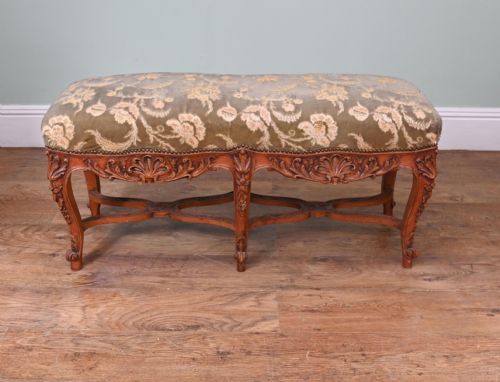
Textiles appear selectively, with occasional upholstery in velvet or designer fabrics adding softness to window seats and day beds. The underlying framework, however, remains resolutely structural, relying on substantial timber thickness for stability.
Listings feature eighteenth-century box-seated settles alongside nineteenth-century craft benches and bleached oak dining forms.
Assessing quality and character
The grade of a french oak bench depends heavily on the integrity of its timber and the honesty of its proportions. Superior examples retain their original boards without excessive shrinkage, dramatic warping, or unsympathetic modern timber replacements.
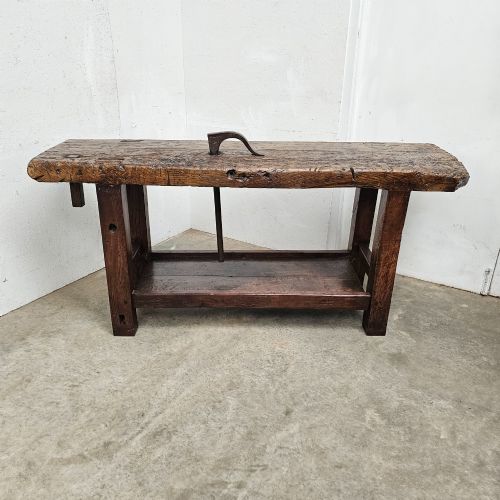
Original working mechanisms, such as wooden bench screws, iron vices, and integrated clamping bars, elevate utilitarian pieces like workbenches above standard conversions. Conversely, surface patination tells a story; untouched, scrubbed finishes achieved through decades of use outrank heavy modern stripping that strips the timber of its history.
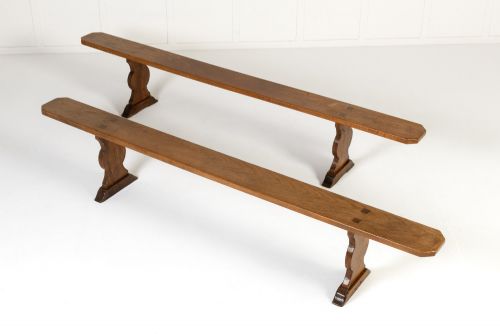
Proportion and scale dictate the success of longer dining benches, where uniform thickness across the seat and stable trestle supports ensure practical everyday seating. Evidence of hand-shaping by regional artisans provides a tactile depth that mass-produced rustic reproductions simply cannot replicate.
Trussant & Cie
The French Oak Bench Glossary
- Settle
- A wooden bench with high arms and a high solid back designed to block draughts in older farmhouses. Many include a box seat lifting up for storage.
- Trestle
- A structural support consisting of a horizontal beam fixed to two splayed legs, commonly found beneath long dining benches and heavy work tables.
- Box seat
- A compartmentalised bench base enclosed on all sides with a hinged lid forming the seat itself, traditionally used for household storage.
- Bobbin turned
- A style of decorative furniture leg or stretcher shaped by a lathe into a series of rounded, spool-like spheres resembling bobbins of thread.
- Workbench
- A heavy-duty wooden table fitted with vices and clamping bars, originally used by craftsmen and artisans but frequently repurposed as a sideboard or console.
French Oak Bench: Frequently Asked Questions
How do I use a workbench as furniture?
A french oak bench designed for trade use makes a striking kitchen island, console, or hallway table.
Retained vices and clamping bars add industrial character while lower shelves offer practical storage for baskets or books.
Are these benches comfortable for dining?
Historical seating was built for utility rather than modern ergonomic lounging, so most lack backrests.
Adding loose cushions or sheepskins easily softens long wooden seats for extended dinner parties.
How should I clean bleached oak?
Bleached and scrubbed surfaces require gentle dry dusting or wiping with a barely damp cloth.
Avoid harsh chemical cleaners that strip the pale, natural patina achieved through decades of exposure.
How do I date an oak bench?
Construction marks provide the clearest timeline, with hand-cut peg joints and wide board widths pointing toward earlier centuries.
Turned legs, iron hardware styles, and general wear patterns further distinguish eighteenth-century settles from later nineteenth-century country pieces.