
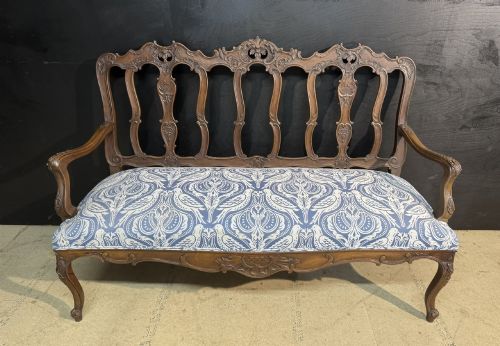
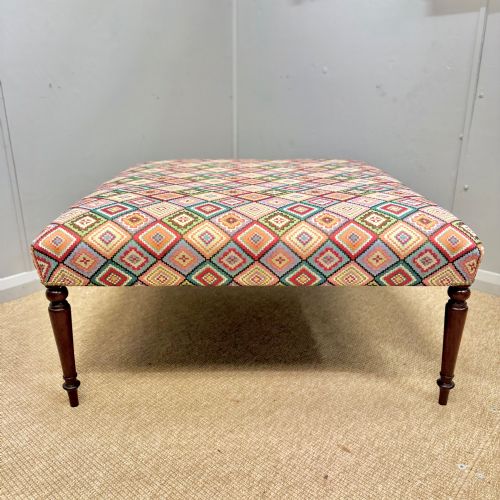


Patterned Fabric Bench
Patterned fabric bench selections bring together tactile upholstery and sturdy timber frames to anchor a room.
Patterned Fabric Bench
A patterned fabric bench offers a versatile seating or resting place, often combining traditional woodwork with decorative textile coverings. Buyers browsing this selection encounter various forms, including settees, ottomans, footstools, and benches.
The pieces span multiple eras and design movements, reaching from the eighteenth century through the Victorian period and into the early twentieth century. Common stylistic influences include English Country House, Rococo Revival, Queen Anne, and William IV.
Wooden frames underpin these items, utilising materials such as mahogany, walnut, oak, and general timber. Upholstery fabrics range from geometric designs and Kilim coverings to specialist textiles like Vaas by Emma Grant.
Construction and materials
Makers shaped structural frames from solid hardwoods like mahogany, walnut, and oak, often employing traditional joinery to ensure lasting stability. Brass components sometimes appear as decorative or functional hardware.
Upholstery techniques involve securing textile coverings over padding, utilising cotton, linen, and patterned fabrics. Button-backed detailing and box seats demonstrate specialised upholstery methods applied to couches, canapes, and ottomans.
Footstools dressed in antique Kilim rugs bring nomadic geometry straight to nineteenth-century hearths.
Assessing quality in construction and upholstery
The refinement of the timber frame sets finer examples apart, showing sophisticated carving or period-specific silhouettes such as Queen Anne or Rococo Revival lines. Heavier construction and superior hardwood selection indicate higher craftsmanship.
The choice and execution of the textile upholstery dictate visual distinction, with specific designer fabrics and intricate woven patterns elevating the overall execution. Button tufting and precise upholstery alignment reflect greater artisanal skill.
The Patterned Fabric Bench Glossary
- Ottoman
- A low, upholstered seat or footstool with no back or arms, frequently designed with internal storage or used as a central footrest.
- Kilim
- A flatwoven textile originating from the Middle East or Southeastern Europe, often utilised as a durable and decorative upholstery covering for footstools.
- Canape
- A decorative French-style settee featuring an exposed wooden frame and an upholstered back and seat.
- Queen Anne
- An English stylistic period spanning the early eighteenth century, characterised by graceful curved lines, pad feet, and walnut framing.
- William IV
- A nineteenth-century British design era that adapted classical motifs with robust proportions and rich mahogany timbers.
Patterned Fabric Bench: Frequently Asked Questions
What is a patterned fabric bench used for?
These pieces serve multiple functions in a home, acting as extra seating in a hallway, a resting place at the foot of a bed, or a central footstool in a living room. Their upholstered surfaces provide comfort while the decorative fabrics add texture and colour to an interior.
Larger variations such as settees and couches function as primary seating furniture, whereas smaller ottomans and footstools offer flexible placement options. Many designs incorporate box seats or interior compartments, combining decorative appeal with practical storage.
How do I identify the period of a bench?
Dating relies heavily on examining the timber frame, stylistic motifs, and construction techniques employed by the maker. Characteristics such as Queen Anne cabriole legs, William IV mahogany proportions, or Victorian button backing provide strong chronological indicators.
Upholstery style and fabric types can also offer clues, though many older pieces have been recovered over time. Comparing the structural woodwork against documented historical styles remains the most reliable method for determining age.
Are these benches suitable for daily use?
Most pieces are built with solid hardwood frames made from oak, walnut, or mahogany, ensuring robust structural integrity for regular sitting and resting. Quality joinery allows these items to withstand everyday household activity.
When utilised in high-traffic areas, the lifespan of the textile upholstery depends on the durability of the chosen fabric. Selecting natural materials like cotton or wool blends helps maintain both appearance and longevity over years of use.
What styles of frames are available?
Frames encompass a broad spectrum of historical English and French designs, ranging from formal eighteenth-century settees to relaxed country house ottomans. Stylistic markers include Rococo Revival curves, classical William IV proportions, and simple early twentieth-century wooden structures.
Exposed woodwork varies significantly in finish and grain, utilising dark walnut, rich mahogany, or lighter oak. These timber frames often dictate the formal or casual character of the piece within a room.