

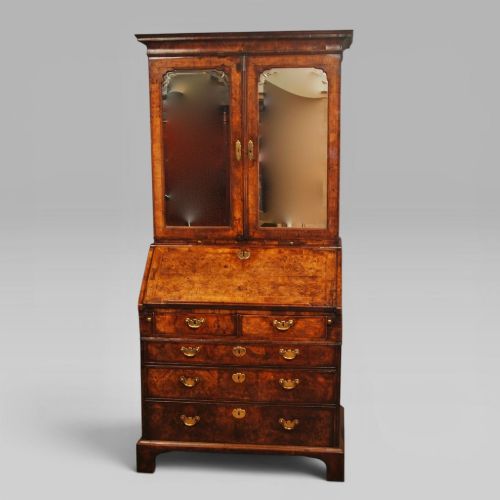
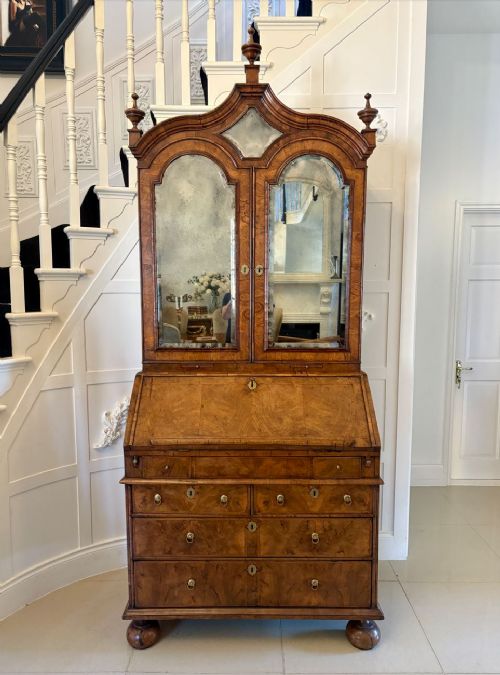
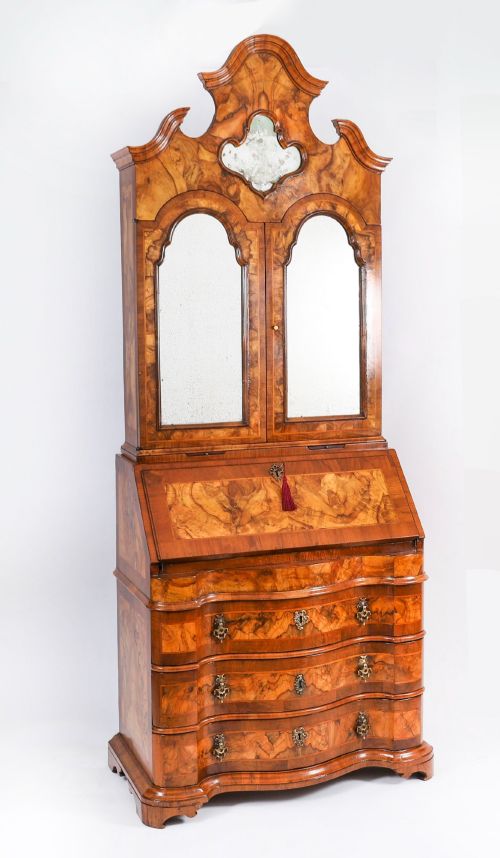
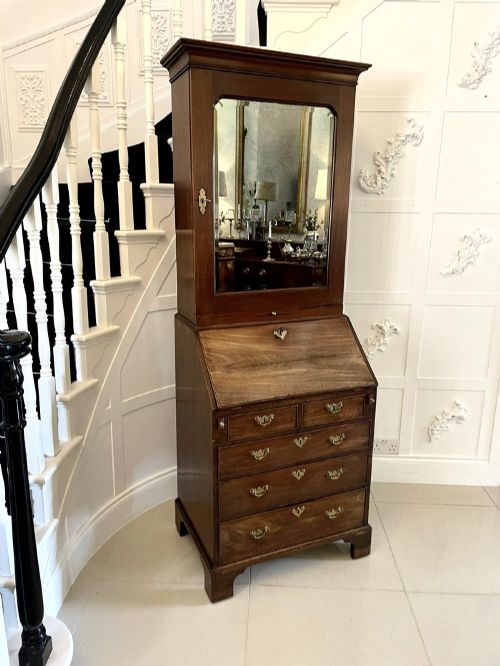
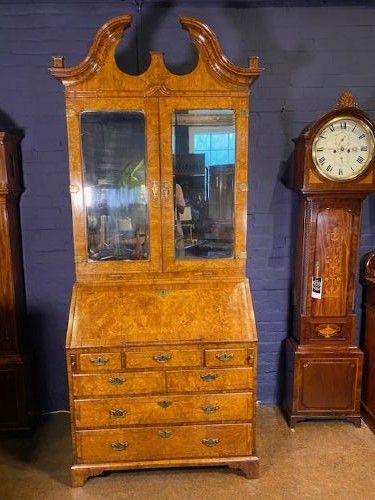
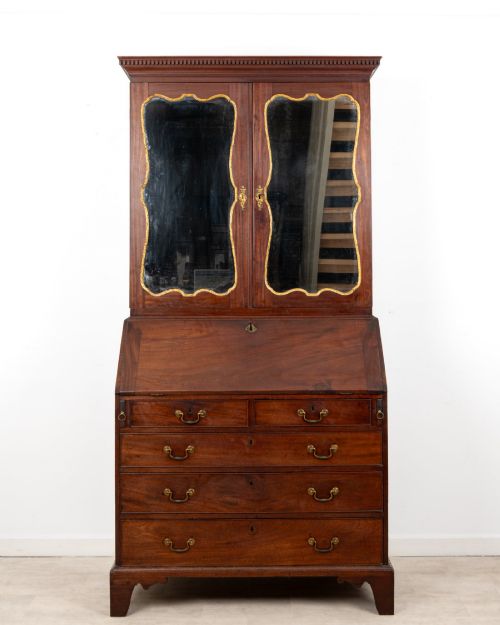
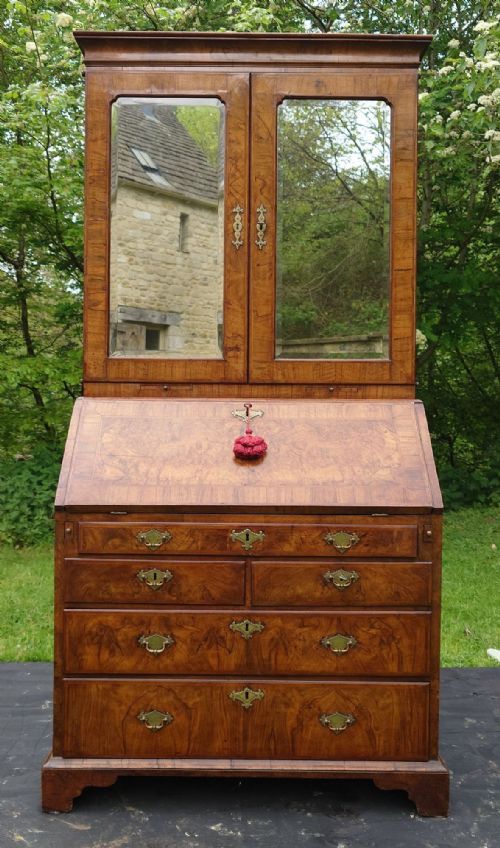

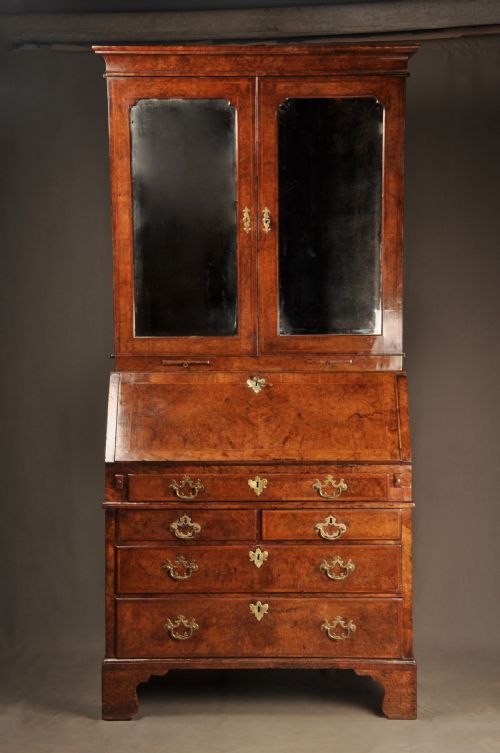
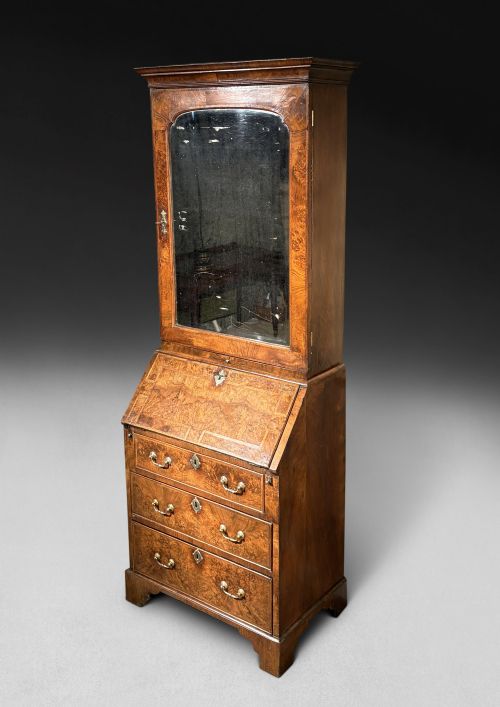


Mirrored Bureau Bookcase
A mirrored bureau bookcase combines a writing slope and shelving behind reflective glass, offering both secret storage and architectural presence.

Mirrored Bureau Bookcase
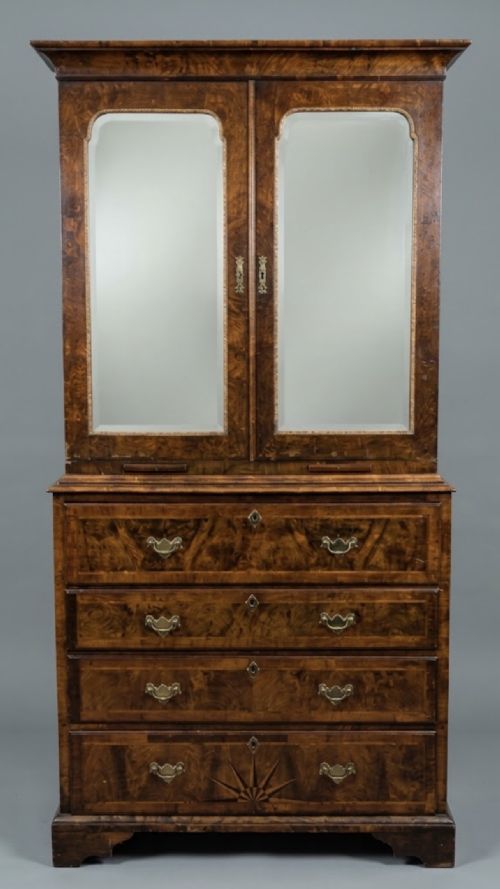
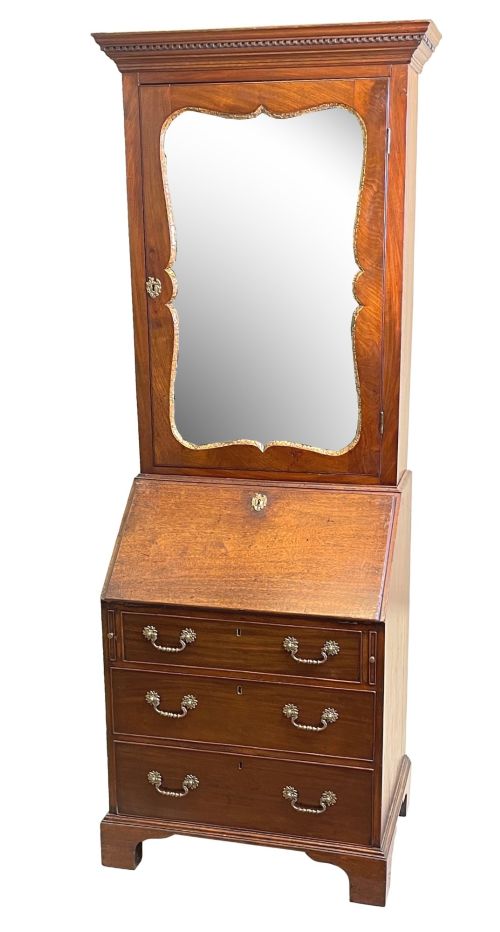
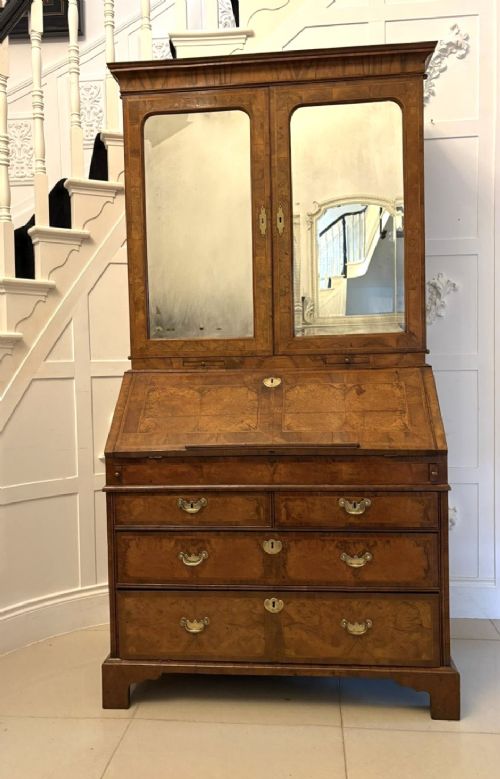
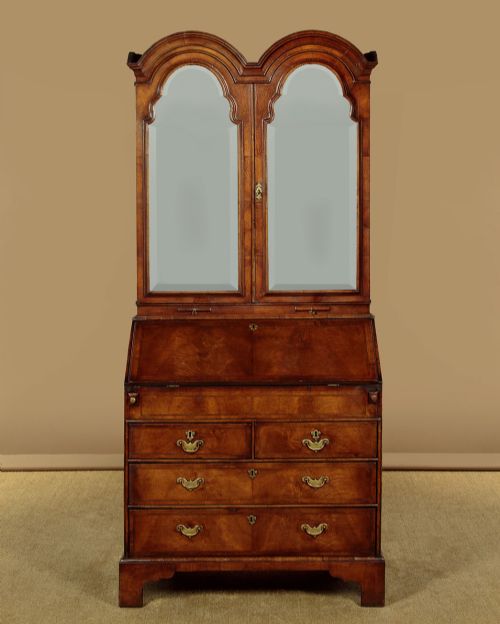
A mirrored bureau bookcase brings together a fitted writing compartment and an upper cabinet enclosed by reflective glass doors, creating a double-duty piece for workspace and display. These items span periods from the seventeenth century through the Georgian era, with later revivals appearing from the nineteenth and twentieth centuries.
Walnut, burr walnut, and mahogany dominate the selection, often built as bureau cabinets or secretaire cabinets with fall-front desks. Pieces frequently arrive in forms such as double-dome tops or smaller proportions suited to domestic rooms.
The integration of mirror glass in the upper doors defines the aesthetic, catching natural light in a room before electricity became common. Examples stretch across English workshops and Venetian studios, displaying regional preferences in timber and decorative finish.
Distinctions in Execution and Age
Superior examples demonstrate careful selection of figured timber veneers that match symmetrically across drawer fronts and fall-front desks. The crispness of internal pigeonholes, secret drawers, and dovetail joinery indicates the hand of a skilled cabinetmaker.
The retention of original mirror glass plates and period brass hardware elevates an example above those altered or re-fitted during later centuries. Proportions also dictate desirability, with smaller-scale pieces commanding greater attention for domestic placement.
Mirrored Bureau Bookcase Retail Price Guide 2026
Typical asking prices for mirrored bureau bookcase among the pieces listed under this phrase on Sellingantiques today, from the lower quarter to the upper quarter. They describe what is for sale here now, not the wider market.
Listings feature walnut and mahogany predominantly, alongside rarer variations in red lacquer and rosewood across Georgian and earlier centuries.
The Mirrored Bureau Bookcase Glossary
- Bureau bookcase
- A hybrid furniture form featuring a sloping desk compartment below an upright shelving cabinet with doors. This dual function served both secret correspondence and library storage.
- Fall-front
- A hinged writing flap that pulls down to reveal a fitted interior of small drawers and pigeonholes. It provides a stable horizontal surface for writing when open.
- Burr walnut
- Timber sliced from walnut tree growths, producing a turbulent, swirling grain pattern prized for cabinet doors and drawer fronts. It was extensively utilised during the early eighteenth century.
- Featherbanding
- Delicate decorative inlay work using contrasting veneers cut across the grain to form a herringbone pattern around panel edges. This technique frames drawer fronts and cabinet doors.
- Secretaire cabinet
- An enclosed piece of furniture containing a dedicated writing drawer or fold-down writing surface. It often conceals specialised compartments for papers and valuables.
Mirrored Bureau Bookcase: Frequently Asked Questions
Where were mirrored bureau bookcases placed?
These imposing items traditionally stood in libraries, withdrawing rooms, or private parlours where owners managed correspondence and stored bound volumes.
The reflective glass doors served to brighten darker chambers by bouncing candlelight and daylight around the interior space.
How do I spot an original mirrored door?
Early glass plates often display slight distortions, minor surface bubbles, and hand-bevelled edges following the contours of the wooden frame.
Replacements generally look too uniform and lack the subtle imperfections found in historical float or cylinder glass.
How do I care for walnut veneer?
Keep these items away from direct sunlight and sudden humidity shifts to prevent the historical veneers from lifting or cracking.
Apply a microcrystalline wax sparingly to nourish the timber surface without building up excessive residue.