


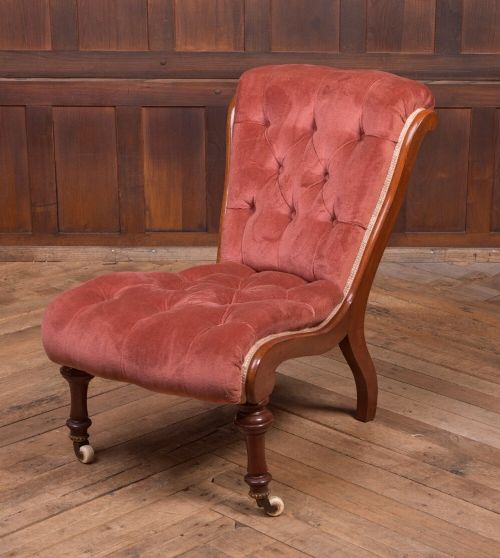


Mid Victorian Slipper Chair
A mid victorian slipper chair brings low seating and buttoned upholstery straight into the bedroom or drawing room.
Mid Victorian Slipper Chair
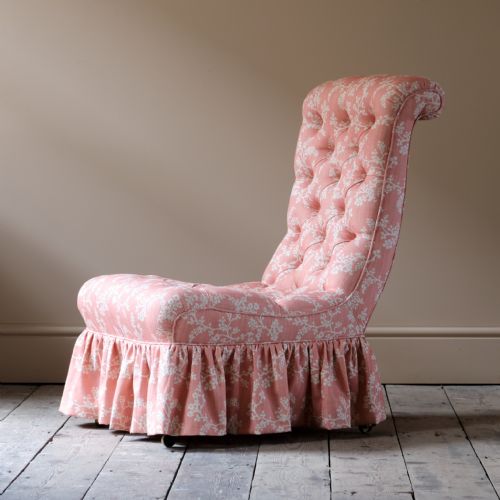
A mid victorian slipper chair sits low to the floor, designed originally for ladies to put on shoes or tend to dress in the bedroom. You will encounter these pieces listed under various overlapping terms such as nursing chairs, bedroom chairs, and salon chairs.
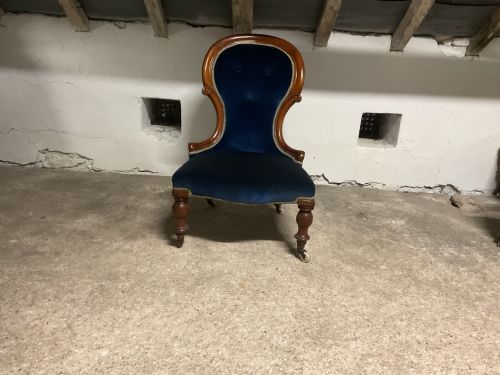
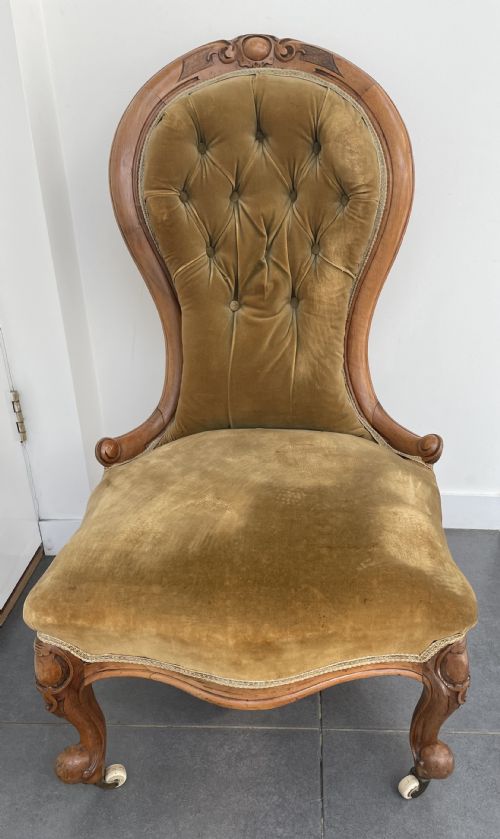
The selection on this page centres on mid nineteenth century examples, with dates clustering around eighteen sixty and eighteen seventy. Walnut and mahogany form the primary timber frames, often paired with buttoned fabric upholstery and brass castors.
What varies in quality
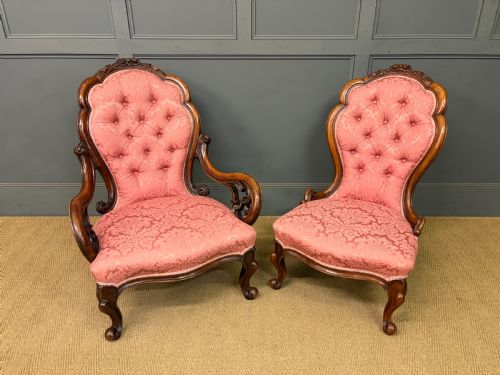
Quality rests upon the crispness of the timber carving and the elegance of the frame proportions. A well-proportioned walnut frame with refined carving separates finer pieces from simpler bedroom seating.
The choice of upholstery and the execution of buttoned backs further define the standing of each piece. Intricate fretwork or superior woodwork indicates a workshop of higher ambition.
Listings feature walnut and mahogany predominantly, with occasional examples in iron and lacquered papier-mâché.
Gillows·Jennens and Bettridge
The Mid Victorian Slipper Chair Glossary
- Spoon back
- A padded chair back shaped like the bowl of a spoon to fit the human form. This ergonomic curve became popular during the nineteenth century for drawing room and bedroom seating.
- Button back
- An upholstery technique where indentations are pulled deep into the padding with buttons. This secures the stuffing and creates a textured geometric pattern across the fabric.
- Nursing chair
- A low seat designed for comfort while feeding or tending to infants. These pieces share a similar low stature with slipper chairs.
- Castor
- A small wheel fixed to the base of a chair leg for mobility. Many nineteenth-century examples use brass mounts for these wheels.
- Rococo Revival
- A nineteenth-century design movement drawing on seventeenth-century curved motifs. It manifests in these chairs through exuberant carved woodwork and flowing lines.
Mid Victorian Slipper Chair: Frequently Asked Questions
What is a mid victorian slipper chair?
A mid victorian slipper chair is a low-slung, upholstered seat built during the middle decades of the nineteenth century. These pieces were traditionally kept in bedrooms or dressing rooms for comfort while changing attire.
They are characterised by short legs and generous padded upholstery, often featuring buttoned backs and carved walnut or mahogany frames.
How were these chairs used?
These seats served primarily private spaces like bedrooms, boudoirs, and dressing rooms where women attended to their shoes, garments, and hair. Their low height made them practical for sitting close to the floor or fireplace.
Over time, homeowners moved them into drawing rooms and salons as decorative accent seating due to their ornate carved frames and plush upholstery.
How do I live with a slipper chair?
A slipper chair works well in modern bedrooms, dressing areas, or corners of living rooms where space is at a premium. Their compact footprint allows them to fit easily without overwhelming a room.
Pair them with low dressing tables or use them as occasional accent seating where comfort and period character matter equally.
How do I tell the periods apart?
Chairs from the eighteen fifties often show simpler forms or early Victorian lines, while pieces from eighteen sixty and eighteen seventy frequently feature elaborate walnut frames and spoon backs. Stylistic details like Rococo Revival carving help anchor pieces to the mid nineteenth century.
Material choices also guide dating, with rich walnut and refined buttoning dominating the later decades of this period.