




Mid Century Maritime Art
Mid century maritime art captures coastal scenes, bustling harbours and naval vessels through the lens of twentieth-century painting.
Mid Century Maritime Art
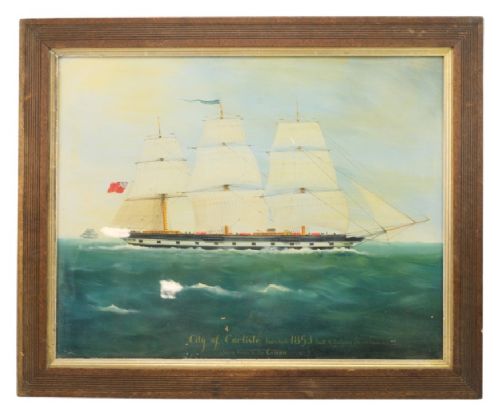
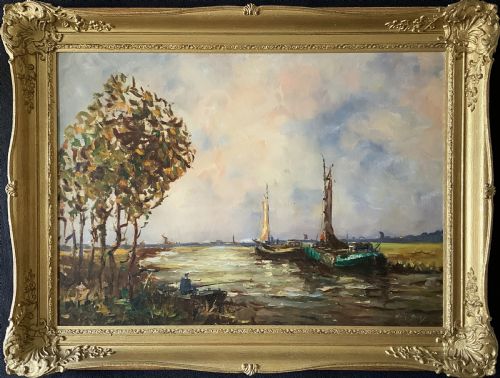
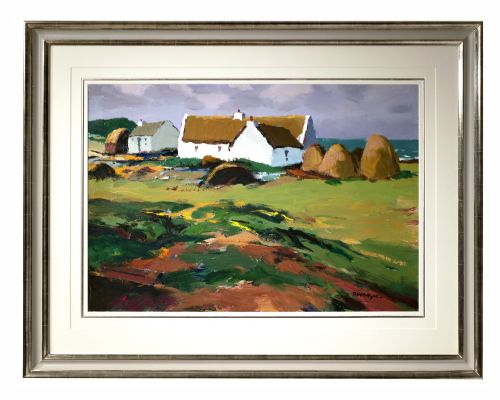
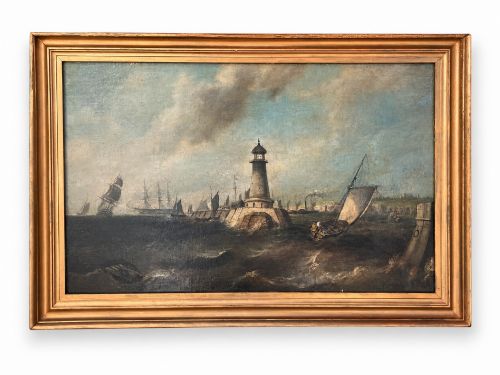
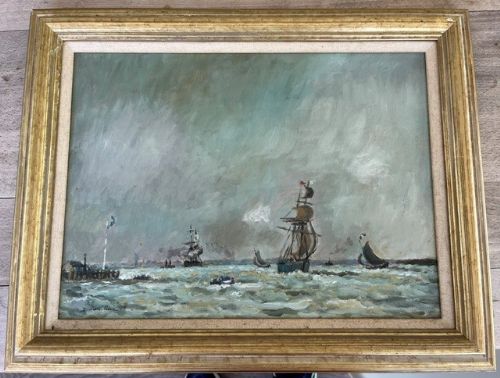
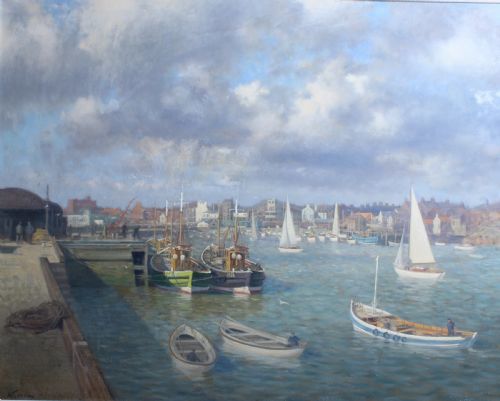
Mid century maritime art encompasses oil paintings, watercolours and wall art depicting coastal landscapes, harbour scenes and vessels upon the water. Buyers searching this phrase encounter works ranging from mid-century impressionism and modern British styles to earlier nineteenth-century Victorian maritime traditions.
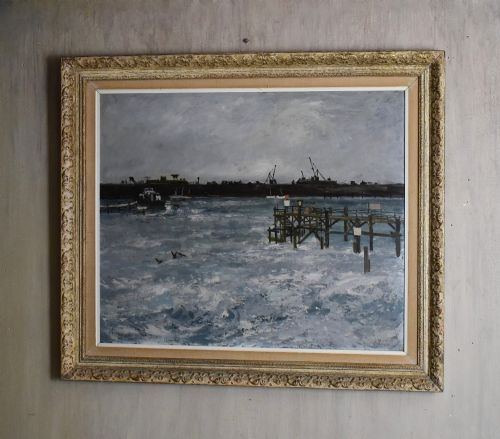
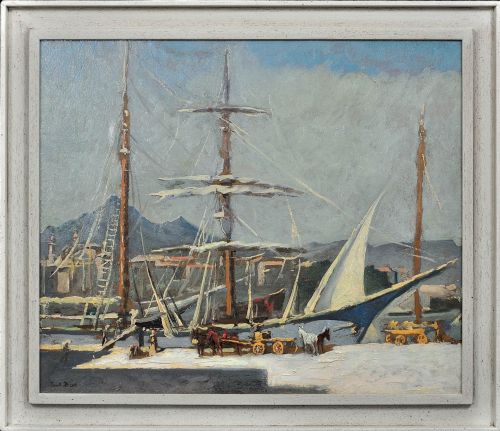
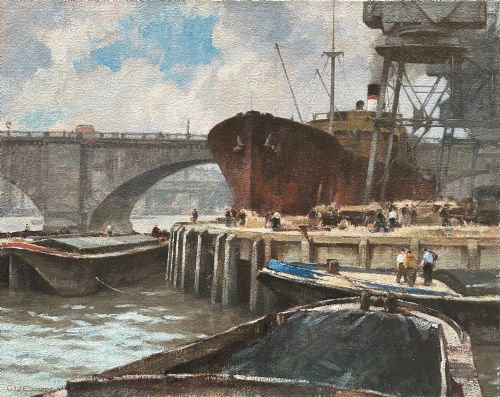
The selections span depictions of commercial barges, fishing boats in Cornish ports, and international harbour views from France, Italy and the Netherlands. Works on this page bridge traditional marine subjects with the expressive brushwork of the twentieth century.
Framed artwork and panel paintings dominate the offerings, capturing maritime life across diverse decades from the 1930s through to the 1960s.
How they were made
Artists utilised oil paint applied to canvas, wood panels and board, frequently building texture through impasto techniques. Watercolour on paper also appears alongside pastel drawings, offering lighter studies of estuaries and coastal light.
Canvases and boards are typically housed within period frames that complement the painting style, whether executed in a loose post-impressionist manner or through detailed topographical draughtsmanship.
From smoky liner smoking rooms to quiet Cornish fishing boats, these canvases smell faintly of salt air and ambition.
What varies in quality
Quality rests upon the artist's handling of light, atmosphere and spatial composition within the maritime setting. Works by recognised painters exhibit confident brushwork and acute observation of maritime architecture and movement.
Condition of the canvas, panel or paper, alongside the preservation of the original paint layer, distinguishes superior examples from lesser decorative works.
Kenneth Cozens·Peter Brannan·Paul Bret·Cyril Walduck Edwards·Willem Bos·Donald McIntyre·Nicholas Condy·Walter Goodin·Eric Tufnell·Lokre·Gyrth Russell·Raymond Picque·James Fry·Fred Pailhes·Edward Seago·Fernando Del Basso·William Tuck·George Shaw·Pauwels·Dion Pears·Stanley Orchart·Henry Barlow Carter·Sam Bough·Edward M Elliott·Antonio Godoy
The Mid Century Maritime Art Glossary
- Impasto
- Paint applied thickly to a canvas or board so that it stands proud of the surface. This technique creates tangible texture that catches the light and adds physical depth to water and skies.
- Estuary
- The tidal mouth of a large river where the tide meets the stream. These locations provided artists with varied compositions combining shipping, mudflats and shifting coastal light.
- Post-Impressionism
- An art movement extending beyond impressionist confines towards more personal expression and structure. In maritime subjects, this shows through simplified forms and expressive use of colour.
- Board
- A rigid flat support used instead of canvas for painting. Artists frequently utilised wood panels or boards for smaller outdoor studies and plein air coastal works.
Mid Century Maritime Art: Frequently Asked Questions
What subjects appear in mid century maritime art?
These works feature commercial shipping, fishing trawlers, bustling European harbours and quiet estuaries. Scenes range from British coastal inlets to Mediterranean ports.
Artists recorded both working vessels and leisure craft against changing coastal weather and tidal conditions.
How do I date a maritime painting?
Dating relies upon stylistic markers, artist biographical records, and framing materials. Mid-century works often display looser impressionistic brushwork distinct from Victorian precision.
Subject matter such as modern liners or specific naval vessels also assists in establishing accurate creation periods.
Are these paintings original works?
The selection comprises original oil paintings, watercolours and pastels created by named artists and regional schools. Each piece represents a distinct hand rather than a mass-produced print.
Signatures, artist boards and period framing provide further indication of individual authorship.
How should I display maritime art at home?
Maritime paintings suit various interiors, benefiting from wall spaces with balanced natural light that enhances oil textures and watercolour washes. Matching the frame to your room's aesthetic helps integrate the piece.
Keeping works away from direct heat sources ensures the continued stability of canvas and wood panel supports.