




Signed Fishing Boat Painting
A signed fishing boat painting brings the salt air and rhythmic motion of the coast directly into a room.
Signed Fishing Boat Painting
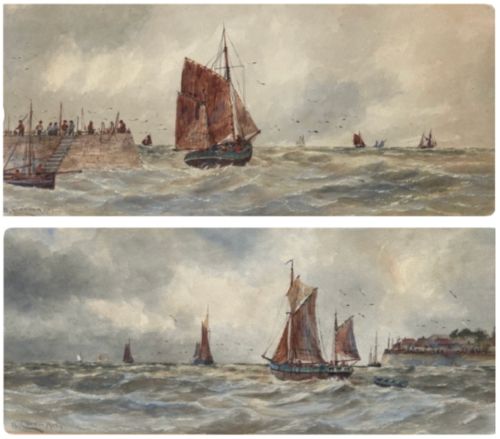
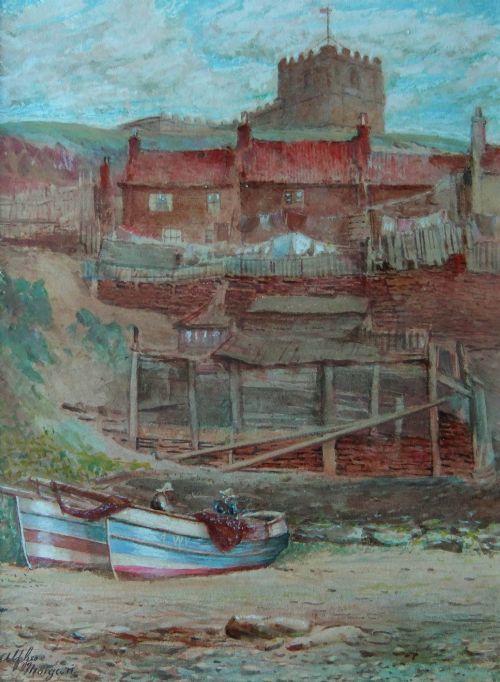
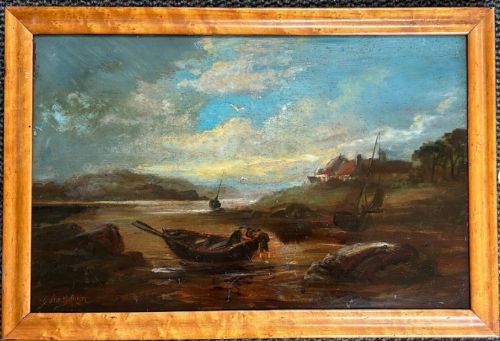
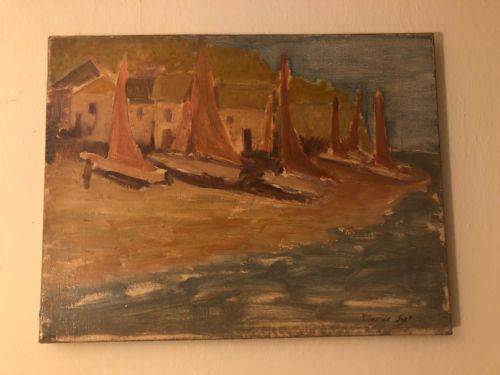
A signed fishing boat painting captures coastal life, harbours and coastal waters across the nineteenth and twentieth centuries. These works range from late Victorian watercolours of Brighton and Whitby to mid-century oil paintings on board depicting northern docks and estuaries.
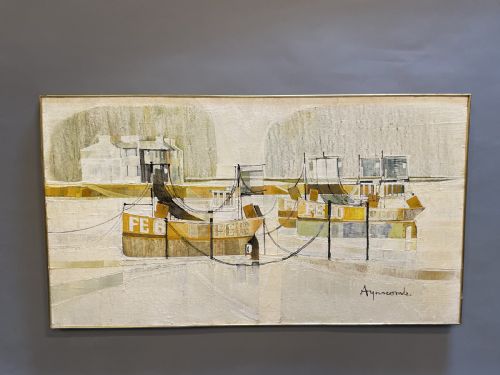
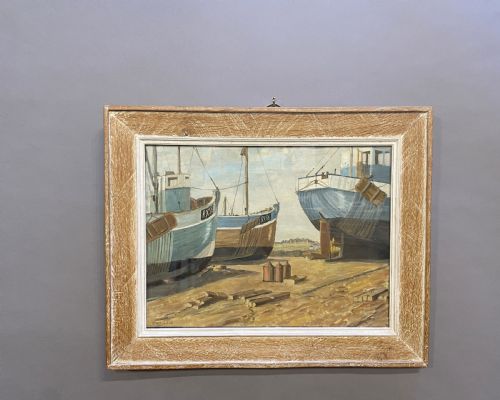
The compositions focus on working vessels, from small cobles on the shoreline to larger barges and steam boats. Maritime scenes record specific coastal locations in Britain and occasionally European shores, signed by the hand that painted them.
Materials and methods
Artists worked primarily with oil paint or watercolour pigment, applying their medium to paper, card, wood panels or canvas stretched over frames. Oil on board and watercolour on paper appear frequently across the periods.
Makers utilised traditional brushwork to render water, sky and timber vessels, sometimes finishing works with protective frames and glazes for watercolours.
Several artists clearly painted with salt spray on their spectacles, yet the rigging still stands true against the northern gales.
Judging quality in maritime art
Quality rests in the handling of light on water and the accurate rendering of maritime architecture and rigging. Stronger examples demonstrate confident brushwork that conveys movement in choppy seas rather than stiff depiction.
The clarity of the artist's signature and the preservation of the pigment, whether oil or watercolour, influence the overall standing of a piece.
James Orrock·William Cannon·Tom Clough·Sam Bough·Maurice Sijs·E K Redmore·Louis Van Staaten·Walter Linsley Meegan·Thomas Mortimer·William Daniel Penny
The Signed Fishing Boat Painting Glossary
- Coble
- An open traditional fishing boat with a flat bottom, common on the northeast coast of England.
- Watercolour pigment
- Finely ground colour mixed with a water-soluble binder, applied to paper to create transparent washes.
- Oil on board
- A painting technique where oil paint is applied directly to a rigid wooden or cardboard support.
- Maritime landscape
- A genre of art depicting ships, harbours, coastal scenery and the open sea.
Signed Fishing Boat Painting: Frequently Asked Questions
How do I date a signed fishing boat painting?
Examine the visible date alongside the signature, the style of clothing worn by figures, and the type of vessels shown. Maritime technology evolved from traditional sail to steam power across the nineteenth and twentieth centuries.
Support materials also offer clues, as card and panel mounting changed over the decades. Compare the handwriting of the signature with known examples from the same period.
Where should I hang a marine painting?
Choose a wall with indirect light to protect watercolours from fading and oil paintings from excessive glare. These coastal scenes suit spaces with natural wood or traditional interior palettes.
Keep pieces away from direct heat sources and damp areas such as unventilated kitchens or bathrooms. Proper framing with conservation glass helps preserve paper supports.
What is the difference between oil and watercolour marine works?
Oil paintings use thick pigments on canvas, board or wood, offering rich texture and deep colour saturation. Watercolours employ translucent washes on paper, creating a lighter and more luminous atmospheric effect.
Watercolours require protective glass framing, whereas many oil paintings on canvas or panel remain open or simply framed.
How do I recognise a coastal location in a painting?
Look for specific architectural landmarks such as abbey ruins, piers, lighthouses or distinctive cliff formations noted in titles or visible in the background. Artists often recorded named harbours like Whitby, Folkestone or Brighton.
Local boat designs, such as northeast cobles or Dutch vessels, also indicate the intended region of the coastal scene.