




Blue Boat Oil Painting
A blue boat oil painting captures maritime movement and coastal light through pigment on canvas or wood.
Blue Boat Oil Painting
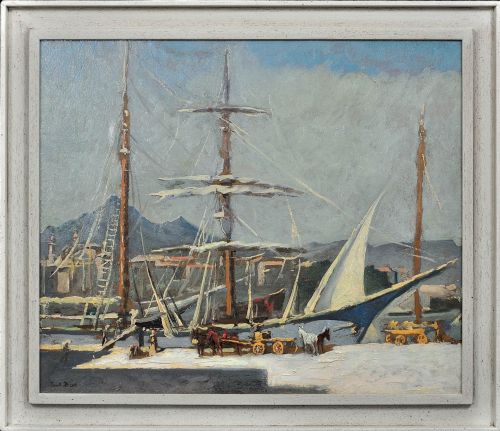
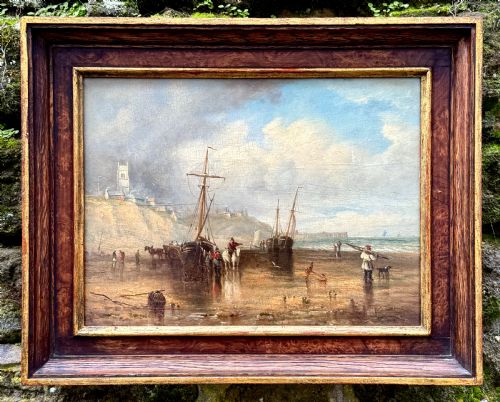
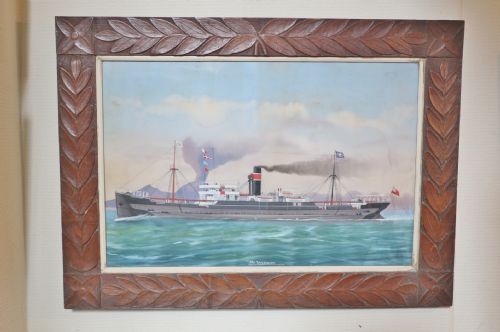
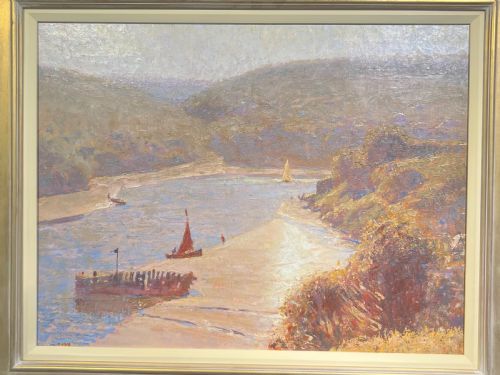
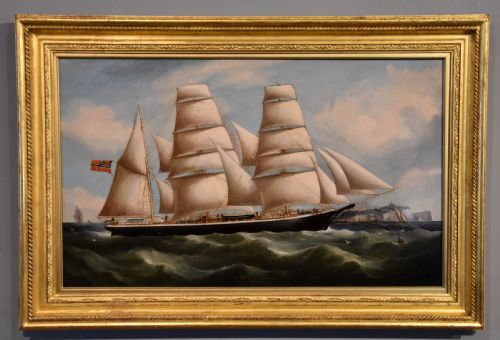
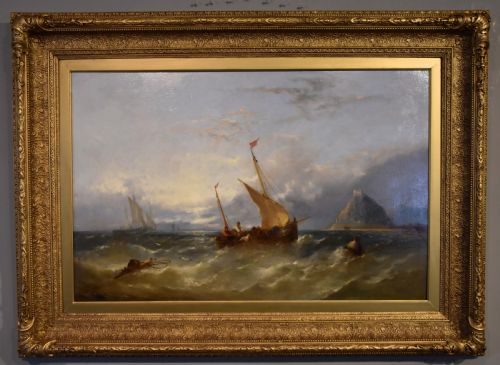
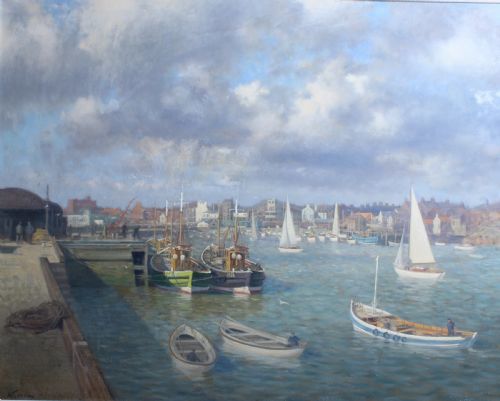
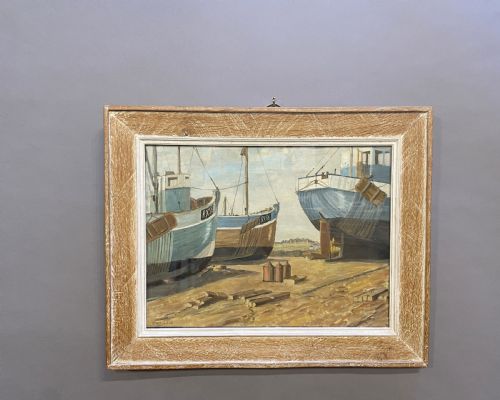
A blue boat oil painting represents maritime scenes, harbours, and coastal vessels rendered across the nineteenth and twentieth centuries. These works range from Victorian academic canvases to mid-century impressionist waterborne studies.
The selections on this page span British and continental schools, featuring Cornish harbours, Mediterranean ports, and river estuaries. Buyers encounter works attributed to named artists alongside pieces from regional schools.
Most examples depict fishing vessels, steamships, or sailing yachts captured in working ports or open seas. The focus centres firmly on the interplay between hulls, water, and shifting skies.
Materials and Construction
Artists painted primarily with oil paint upon stretched canvas, wood panels, or card supports. These grounds provided the varied textures necessary for depicting restless seas and reflective harbour water.
Framing often incorporates gold leaf and gilt moulding, which complements the marine palettes. Certain twentieth-century examples utilise impasto technique, applying thick paint to build tactile waves and vessel structures.
Several artists clearly preferred salt spray over dry land, painting bustling harbour walls while dodging seagulls and incoming tides.
Distinctions in Quality
Quality rests upon the artist's command of maritime atmosphere, spatial depth, and light reflection on water. Superior compositions demonstrate confident brushwork that conveys the weight of hulls and the movement of tides without stiffness.
The preservation of the original paint layer and canvas tension dictates the visual integrity of the piece. Works retaining their period gilt frames and clear provenance command greater appreciation among collectors.
Thomas Creswick·Richard B Spencer·William Henry Williamson·Charles Napier Hemy·Jean Baptiste Olive·Sam Bough·Edward Seago
The Blue Boat Oil Painting Glossary
- Impasto
- Paint applied thickly to a surface, standing out in relief from the canvas. This technique adds physical texture to representations of crashing waves and wooden hulls.
- Gilt
- A thin layer of gold or gold-like material applied to wood moulding. Period frames often utilise this finish to enhance marine subjects.
- Seascape
- A work of art depicting the sea, ships, or coastal views. It forms the primary genre for the maritime paintings gathered here.
- Canvas
- Closely woven fabric stretched across a wooden frame to serve as a painting surface. It remains the standard support for oil-based marine works.
Blue Boat Oil Painting: Frequently Asked Questions
How do I date an oil painting of boats?
Dating relies upon examining the style of the vessel, the costume of any figures, and the preparation of the canvas or panel. Nineteenth-century works often show tighter academic detail, while twentieth-century examples lean towards impressionistic brushwork.
Signatures, framing materials, and artist biography records provide additional confirmation for the period of creation.
Where should I hang a marine oil painting?
Position these works away from direct sunlight and damp environments to protect the oil pigments and wooden canvas stretchers. Natural ambient light enhances the varied blues and greens of the sea.
Ensure the wall space supports the weight of the piece, particularly if it retains a heavy period gilt frame.
What is the difference between canvas and wood panel supports?
Canvas offers slight give and flexibility under the brush, allowing for large-scale compositions with textured woven grounds. Wood panels provide a rigid, stable surface favoured for smaller, detailed coastal studies.
Both materials support oil media effectively when properly primed and sealed by the artist.
How do regional schools influence marine art?
Regional schools reflect the specific coastal topography, light qualities, and maritime industries familiar to the painters living there. Cornish colonies capture Atlantic swells, while Mediterranean schools focus on bright harbours and clear skies.
Recognising these origins helps collectors understand the specific palette and subject matter chosen by the artist.