




Mid Century Floral Painting
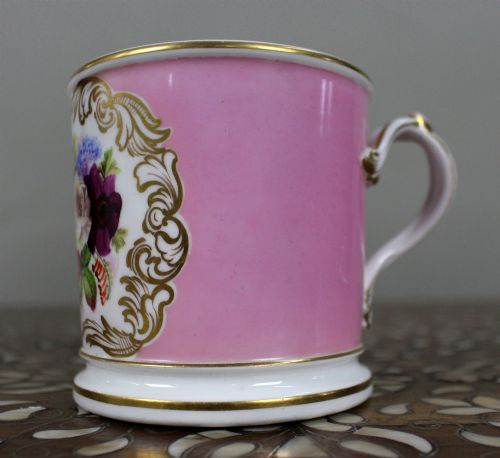
A mid century floral painting brings botanical energy and period palette into a room, capturing the lively brushwork of the decades after the war.
Mid Century Floral Painting
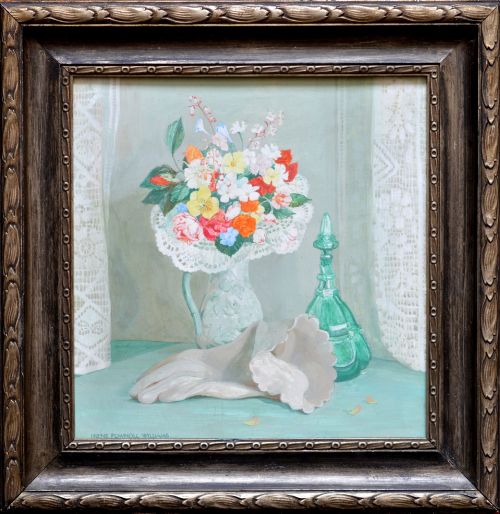
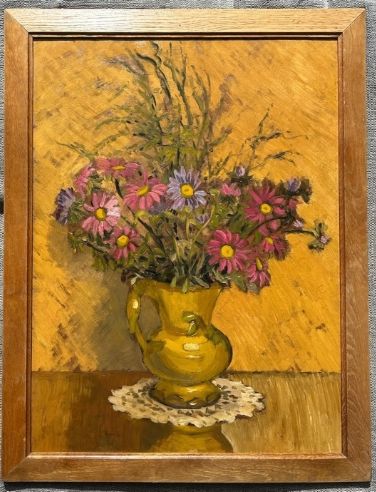
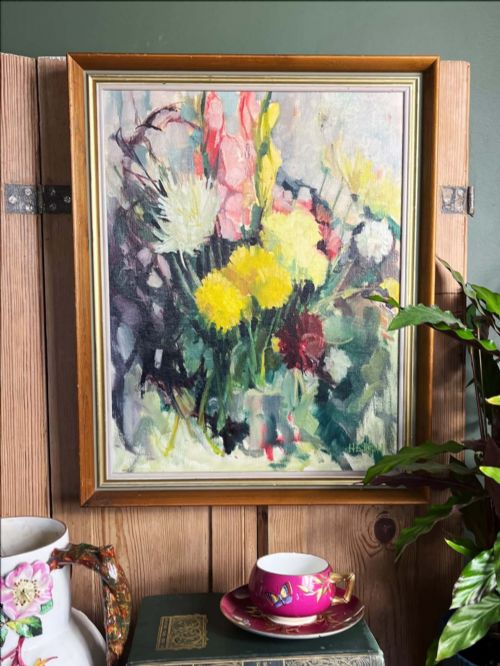
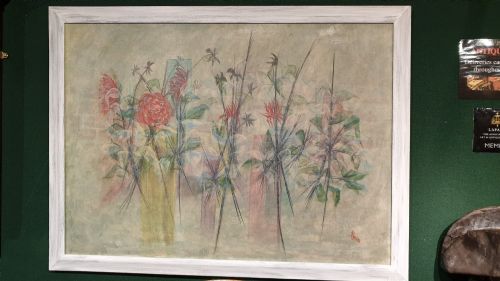
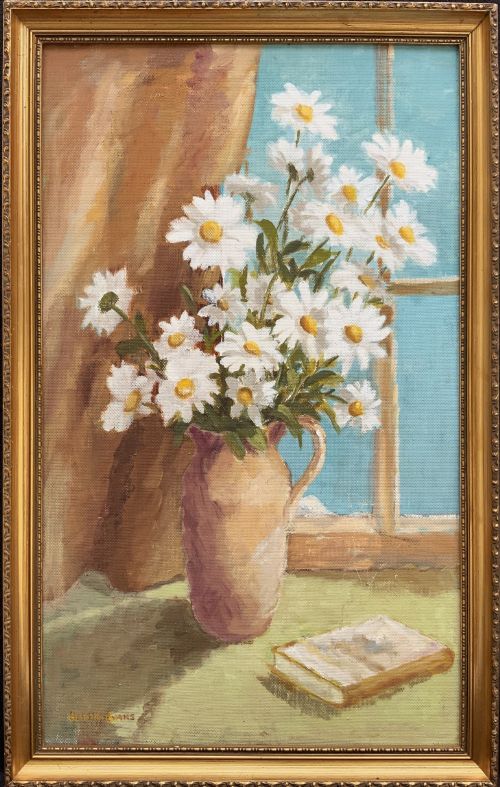
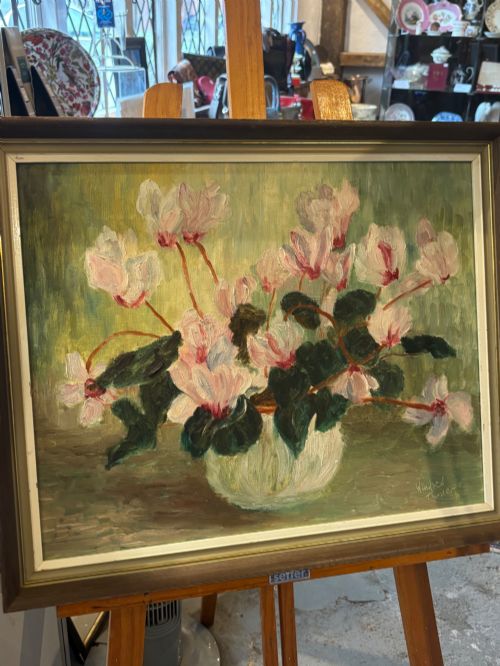
When you search for a mid century floral painting, you encounter works stretching primarily from the 1930s through the 1960s, capturing botanical subjects in oil, tempera, watercolour and pastel. These compositions frequently place vases, jugs, or bowls of blooms against muted interiors or textured backgrounds.
The version most commonly met on this page is the mid-century still life executed in oil paint on canvas or board, often reflecting impressionist or modernist tendencies from British, French, and continental European hands.
Materials and methods
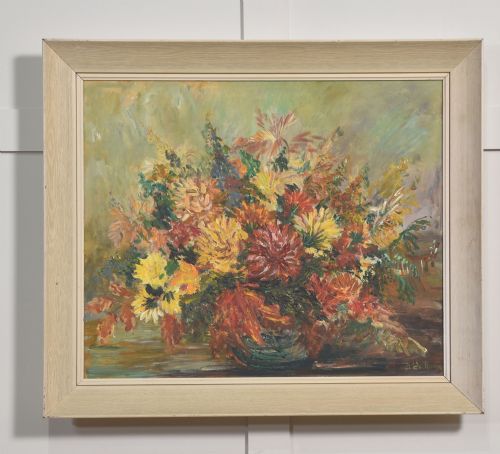
Artists of this period relied heavily on oil paint applied to stretched canvas, wooden panels, or prepared boards, sometimes building thick impasto layers to give physical depth to the petals and foliage.
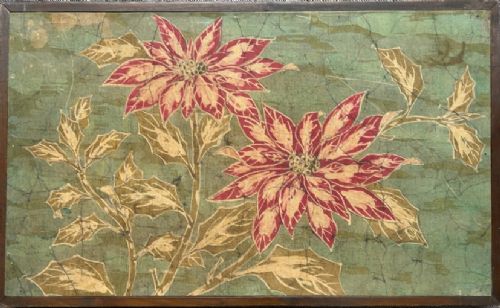
Watercolour and tempera on paper or panel appear alongside mixed media and batik textile art, demonstrating the era's willingness to explore diverse surfaces for floral expression.
Mid Century Floral Painting Retail Price Guide 2026
Typical asking prices for mid century floral painting among the pieces listed under this phrase on Sellingantiques today, from the lower quarter to the upper quarter. They describe what is for sale here now, not the wider market.
Listings feature works executed in oil, watercolour, tempera, and pastel across canvas, board, and paper.
Distinguishing quality
The distinction between ordinary and exceptional works rests on the confidence of the brushwork and the harmony of the colour palette, where skilled handling brings movement and light directly into the petals and leaves.
Compositional balance and the integration of the vase or container with its surrounding space separate student exercises or hurried decorative pieces from confident modernist and impressionist studies.
Irene Christobelle Pownoll Williams·Kenneth Cozens·James Tower·Winifred Turner·Amile Coppieters·A. Nikolokov·Sir Matthew Smith·Bela Balogh·Terence Loudon·Robin MacKertich·Stuart Armfield·Margaret Laing·Phyllis I Hibbert·Lena M Alexander·Moritz Calisch
The Mid Century Floral Painting Glossary
- Impasto
- Paint applied thickly to a canvas or board, standing out in relief from the surface so that the physical trace of the brush or palette knife remains visible. This technique adds tactile dimension to floral studies.
- Tempera
- A permanent, fast-drying painting medium consisting of coloured pigment mixed with a water-soluble binder such as egg yolk. It produces a flat, matte surface with notable longevity.
- Board
- A rigid substrate used instead of stretched canvas, commonly masonite or heavy cardboard. Artists frequently utilised board for quicker oil sketches.
- Gilt
- A thin layer of gold leaf or gold paint applied to frame surfaces. Many period frames carry this decorative finish to complement the artwork within.
Mid Century Floral Painting: Frequently Asked Questions
What periods do these paintings cover?
The selection spans primarily from the 1930s through the 1960s, reflecting mid-century modern, impressionist, and modernist movements alongside occasional Victorian antecedents.
Most surviving examples date from the immediate post-war decades when floral still life enjoyed a significant revival among European artists.
How were these floral paintings displayed?
Most works were framed at the time of creation, frequently in wooden frames finished with gilt or neutral tones designed to complement the domestic interiors of the mid-twentieth century.
Original framing helps maintain the historical integrity of the piece and provides clues to its period of origin.
Are these paintings signed by the artists?
Many examples feature signatures or attributions to listed painters and regional artists working across Britain and continental Europe.
Unsigned works still offer stylistic evidence through their handling of pigment, canvas preparation, and overall compositional approach.
What subjects accompany the flowers?
Compositions frequently incorporate everyday vessels such as ceramic jugs, glass vases, or bowls filled with seasonal blooms like roses, dahlias, and chrysanthemums.
Some arrangements add fruit or subtle interior backgrounds to anchor the botanical forms within a domestic space.