
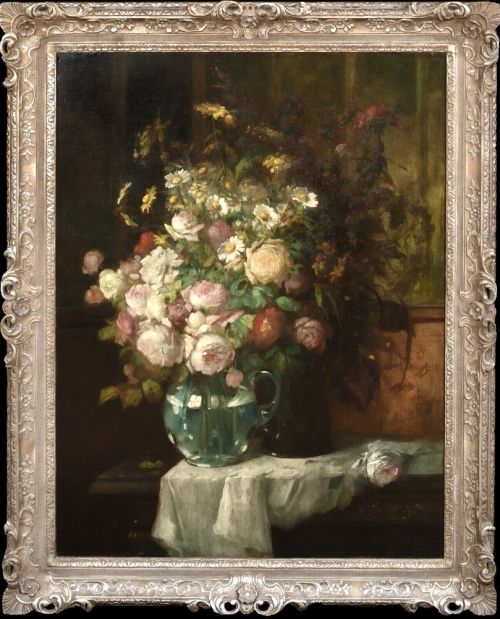
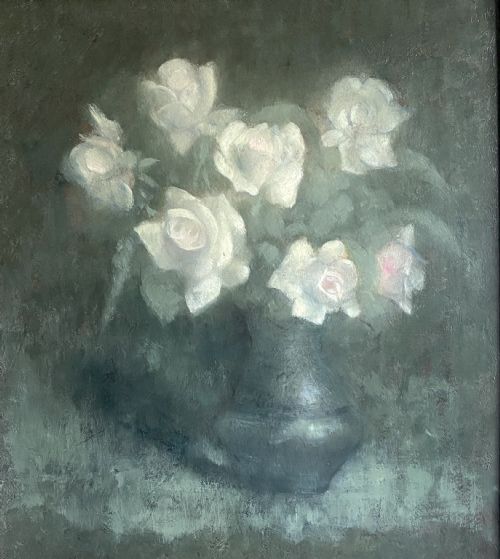
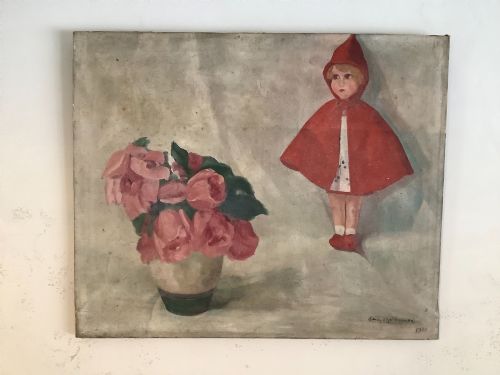
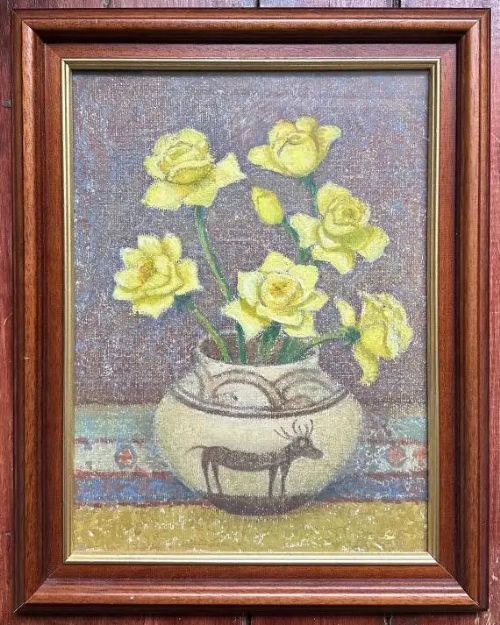
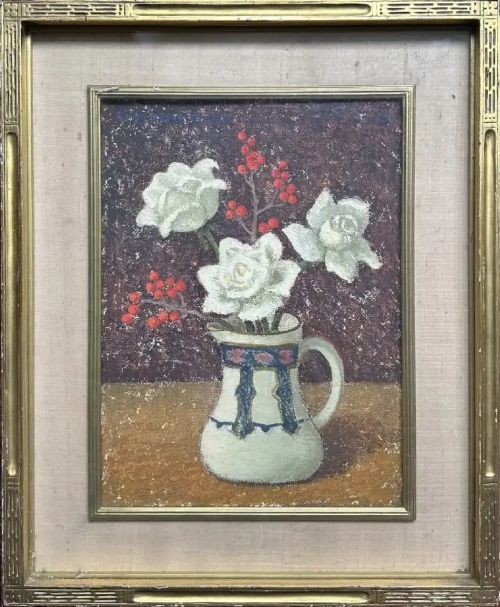
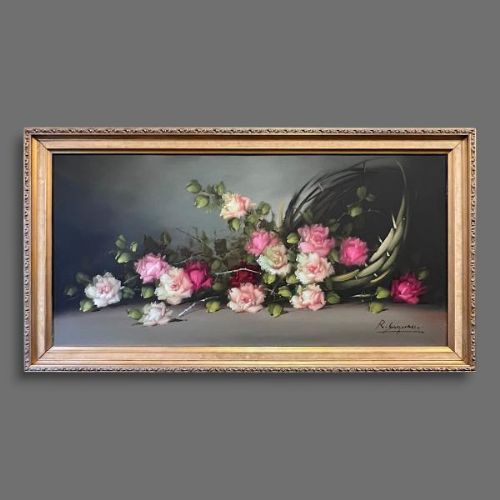
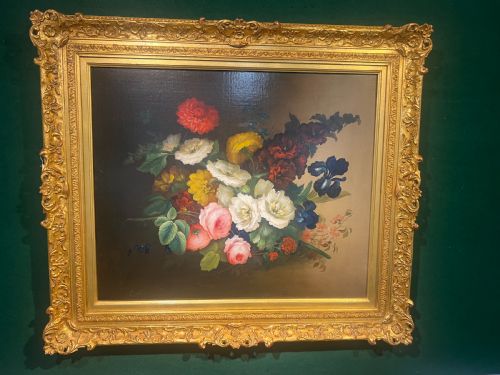
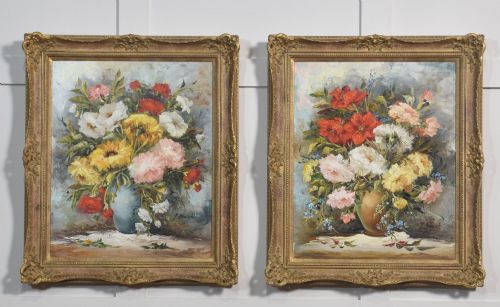
Vintage Floral Oil Painting
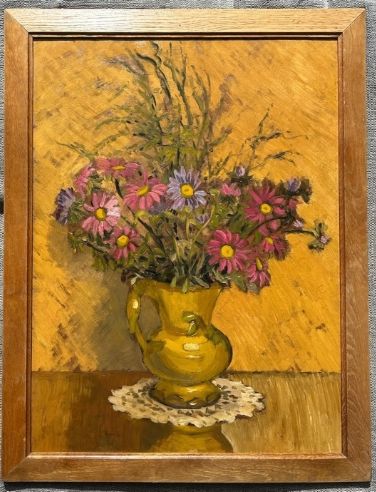
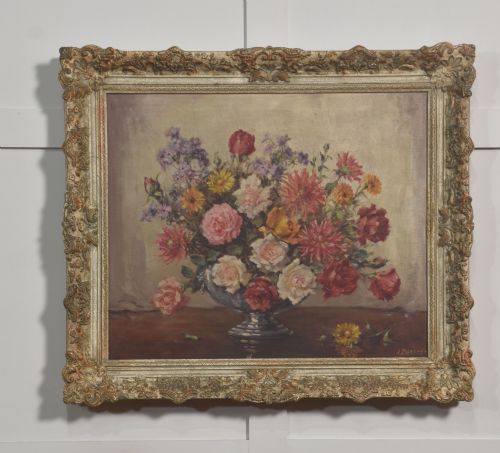
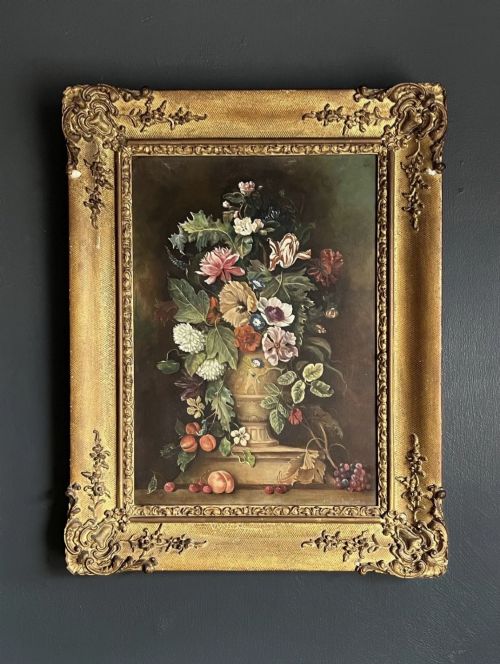
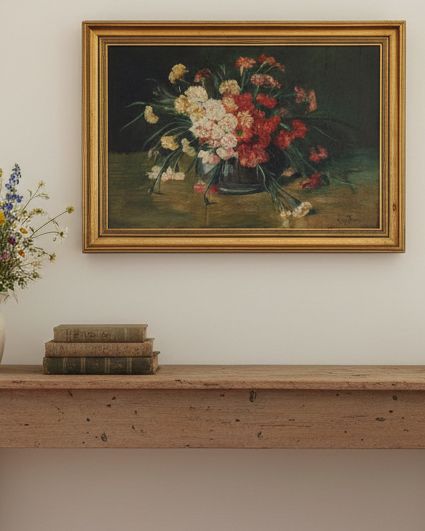
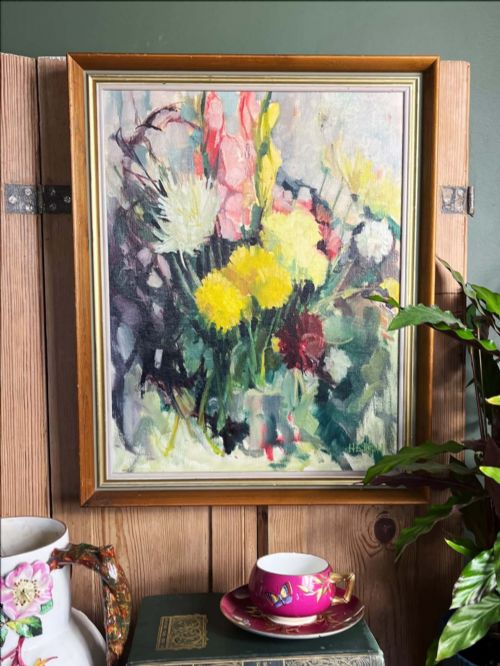
A vintage floral oil painting brings texture and colour to a wall through layered brushwork and pigment.
Understanding the vintage floral oil painting
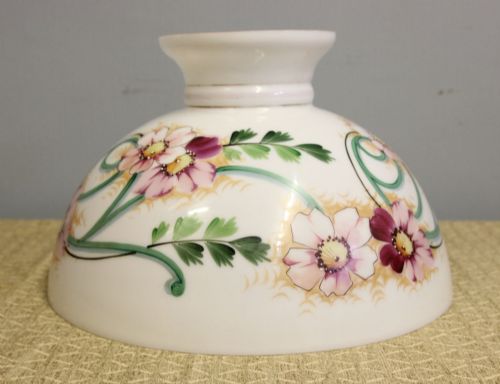
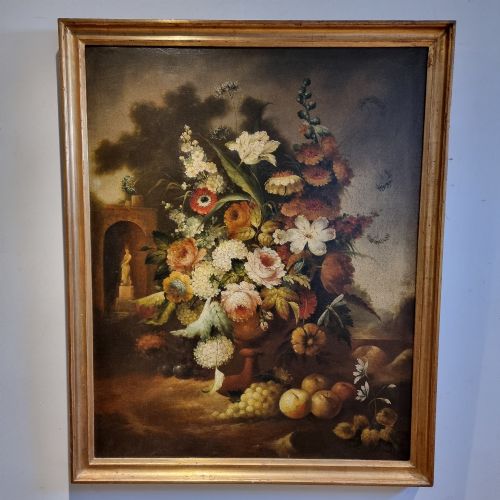
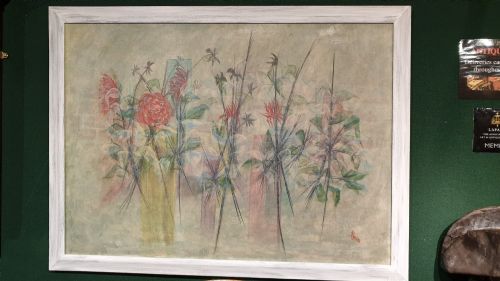
A vintage floral oil painting captures botanical subjects in oil paint across periods from nineteen hundred to nineteen sixty. These works appear as framed pictures, wall art, and fine art studies.
The pieces on this page include mid-century modern, American impressionism, Edwardian, post-war traditional, and British impressionism styles. Buyers encounter both still life arrangements and landscape compositions featuring floral elements.
Makers and artists range from named painters such as Emma Fordyce MacRae and Thomas Bromley Blacklock to anonymous hands working in traditional and mid-century idioms.
Materials and construction
Artists paint using oil paint applied to canvas, board, and canvas supports. The physical ground receives pigmented oil media, sometimes built up in thick impasto layers to create tactile flower petals and leaves.
Finished works sit within wooden frames, frequently finished in gilt wood or simpler mouldings to complement the painted canvas or board.
Retail Price Guide 2026
Typical UK retail prices for vintage floral oil painting, calculated from the Sellingantiques database of over a million retail prices indexed since 2003. This retail price guide relies exclusively on Sellingantiques data; no external sources or auction records are used, so the figures do not describe the wider market.
Listings feature works created across five decades from nineteen hundred to nineteen sixty, utilising canvas, board, oil paint, and gilt wood.
Factors that distinguish the work
Quality rests in the handling of paint and the confidence of the brushwork, where expressive impasto and deft colour mixing elevate a still life study. The strength of the composition and the sensitivity of the tonal balance separate ambitious works from routine decorative pictures.
The integration between the painted surface and the framing also marks the standard of the piece, as period gilt wood surrounds enhance the visual weight of the canvas.
Emma Fordyce MacRae·Thomas Bromley Blacklock·Robin MacKertich·Katherine Bourne·Owen Bowen·Albert E Jackson
The Vintage Floral Oil Painting Glossary
- Impasto
- Paint laid thickly on a surface, so that it stands out from the canvas. This technique gives physical depth and texture to floral petals.
- Still life
- A work depicting inanimate subject matter, typically commonplace objects or natural items such as flowers in a vase. These arrangements allow artists to focus on colour harmony.
- Oil on board
- A painting executed on a rigid wooden or composite board rather than stretched woven fabric. This support provides a firm ground for the pigmented paint.
- Gilt wood
- Wood coated with gold leaf or a gold-coloured finish. Frames built this way often accompany traditional and impressionist paintings.
Frequently Asked Questions
How do I date a floral oil painting?
Dating relies on the style of the brushwork, the stretcher construction, and the framing materials used in the piece. Mid-century works often show distinct post-war palettes compared to earlier Edwardian examples.
Signatures, artist registry records, and the type of backing board or canvas weave also provide clues to the exact decade of creation.
What is impasto in these paintings?
Impasto refers to thick applications of oil paint that retain the marks of the brush or palette knife. Artists use this technique to make flower petals appear three-dimensional.
This physical relief catches the light and adds tangible texture to the surface of the canvas.
How should I hang a canvas painting?
Canvas paintings require stable wall fixings suited to the weight of the wooden frame and the support. Use picture wire or D-rings attached securely to the frame backing.
Keep the painting away from direct sunlight and damp walls to protect the oil paint and canvas over time.
Are these paintings signed by the artists?
Some pieces feature visible artist signatures or inscriptions on the front or reverse of the canvas and board. Other works remain unsigned by the maker.
Both signed and unsigned examples appear across traditional and mid-century styles.