
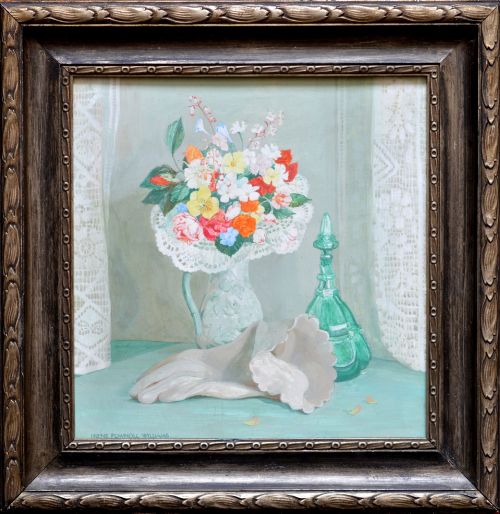
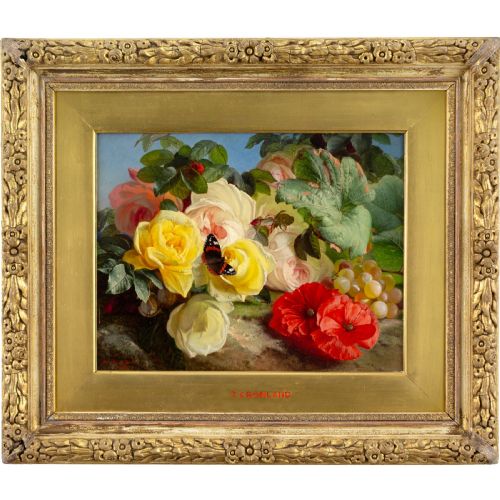
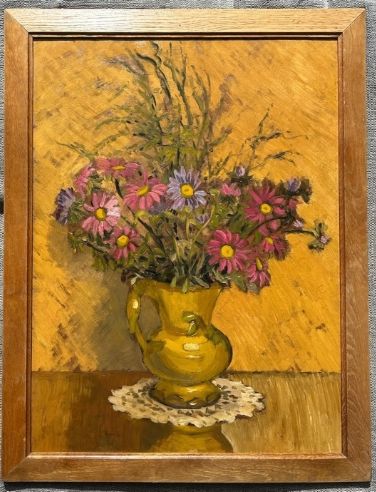
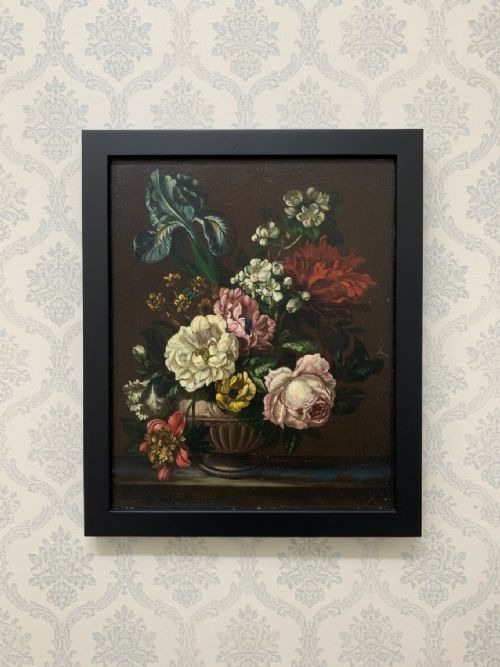
Framed Floral Still Life
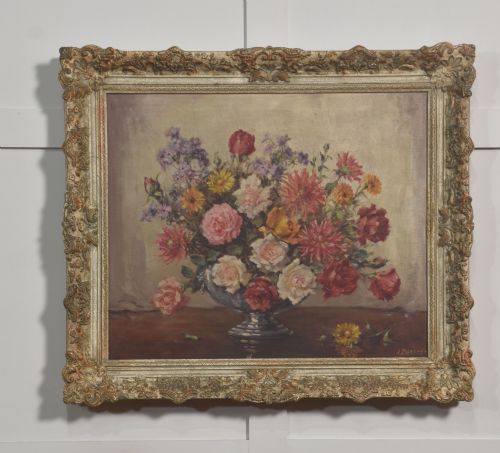
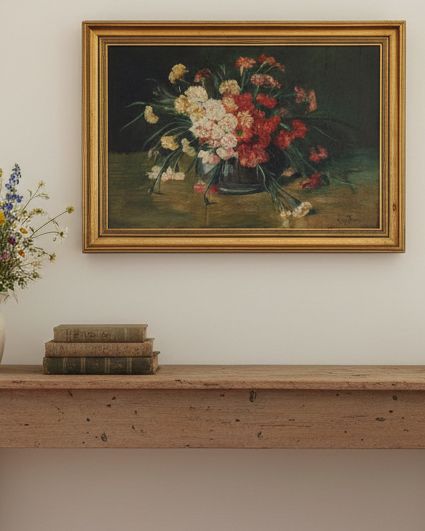
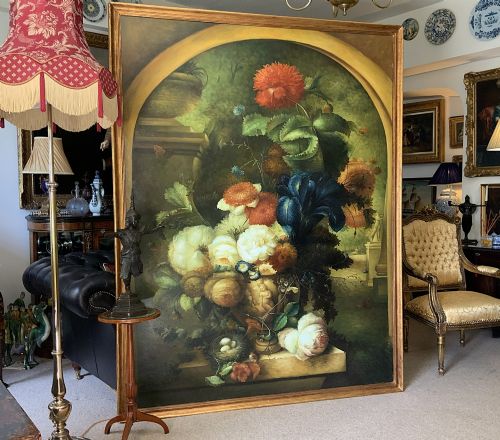
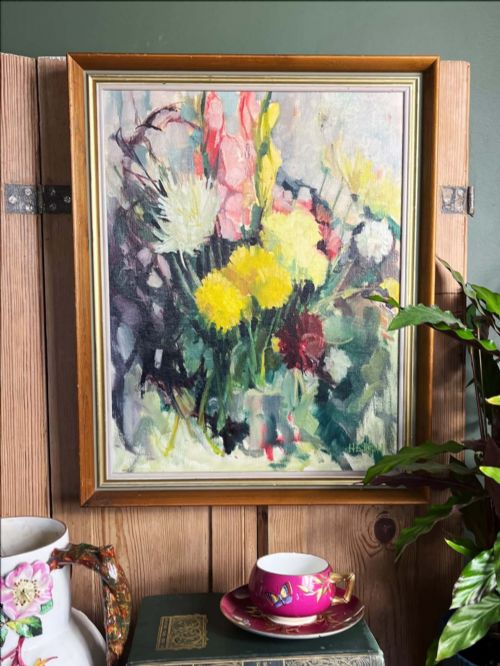
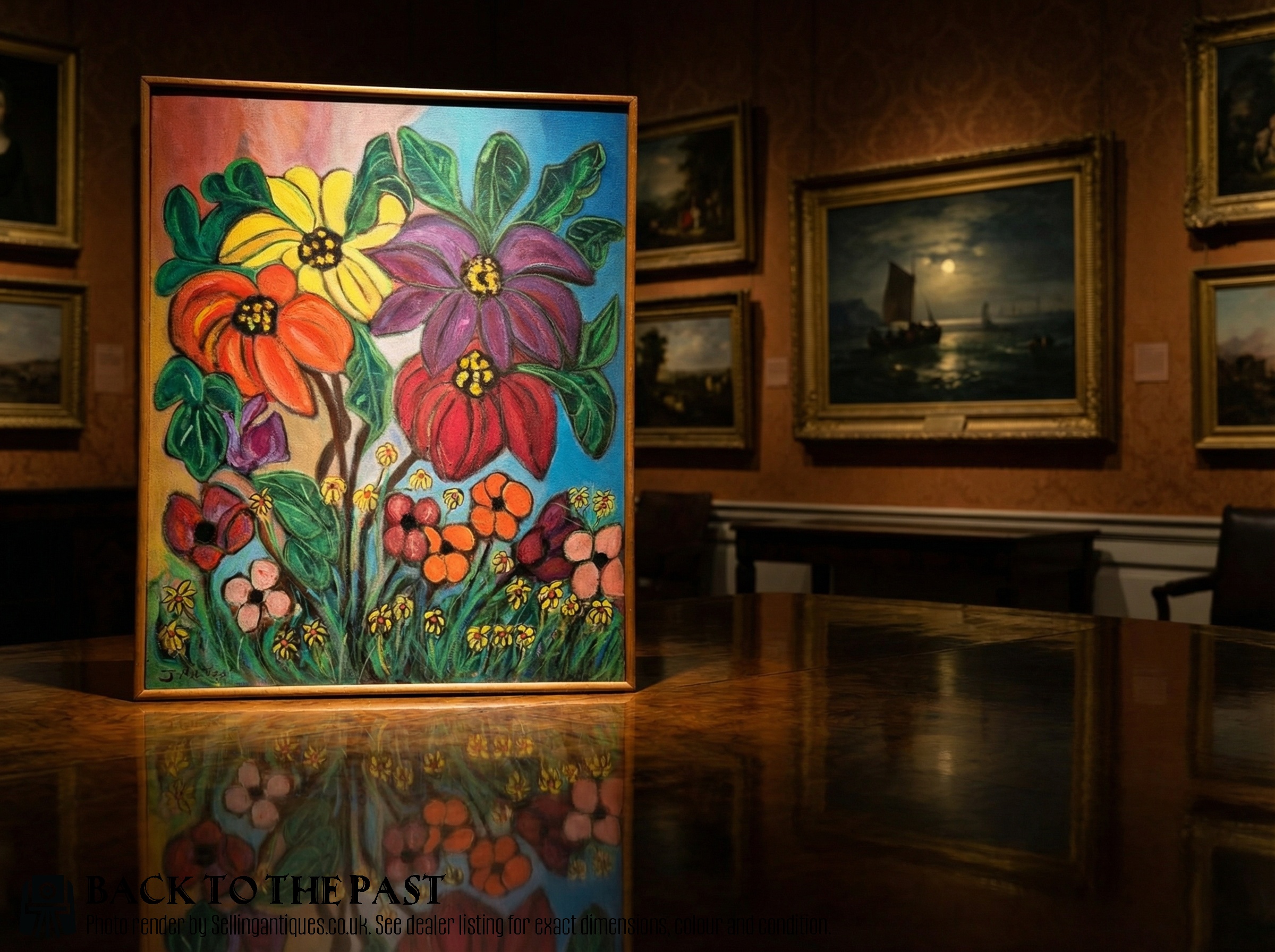
A framed floral still life brings a rich composition of cut blooms and foliage directly to the wall within a protective period border.
Framed Floral Still Life
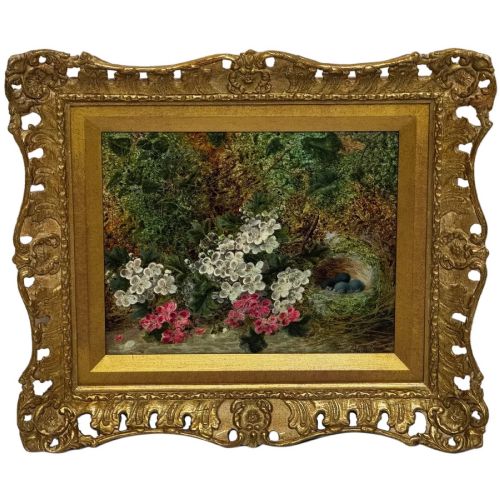
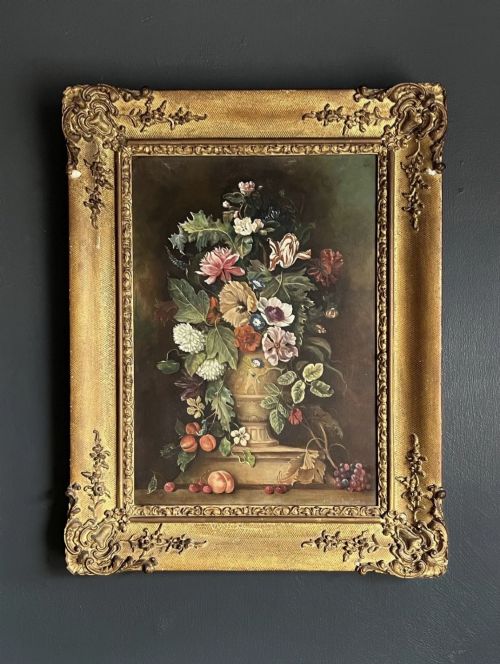
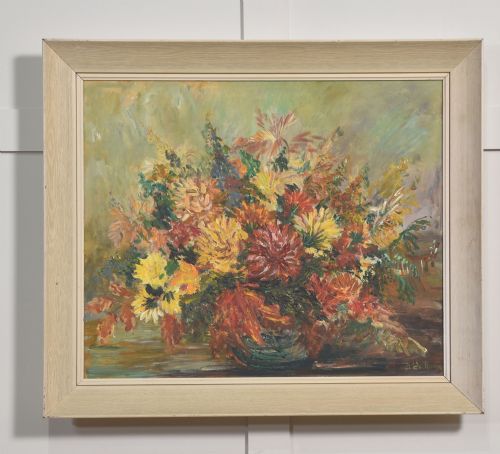
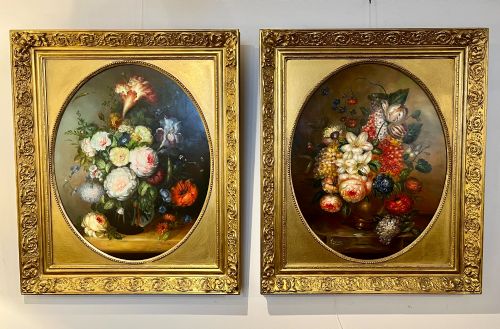
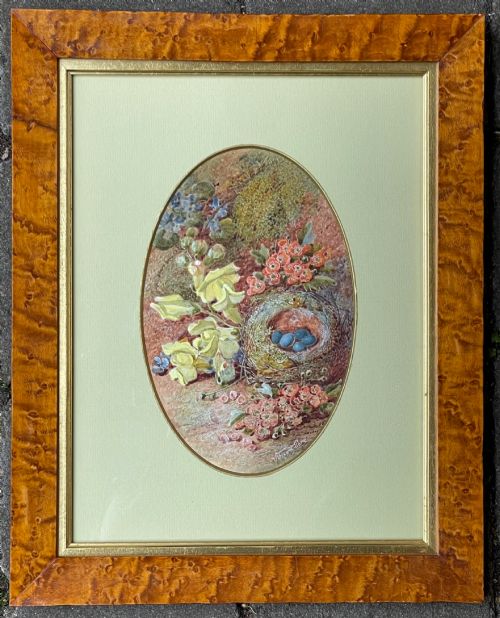
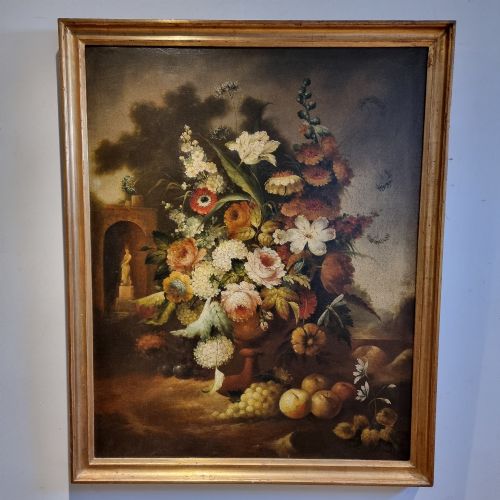
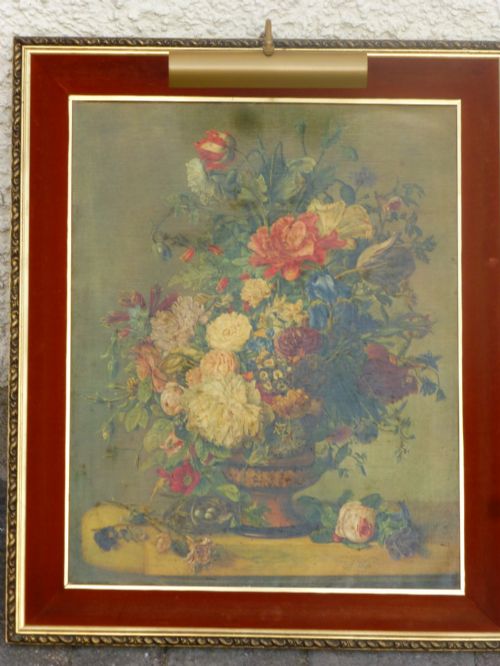
A framed floral still life encompasses painted and drawn studies of flowers, often arranged in vases, baskets, or bowls alongside fruit and birds' nests. The selection on this page spans centuries of artistic interpretation, from seventeenth-century Dutch school compositions to twentieth-century mid-century modern and impressionist works.
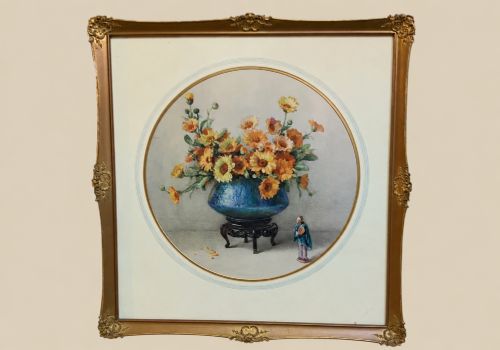
Buyers will encounter oil paintings on canvas and panel as the predominant forms, alongside watercolours, gouache, pastels, and printed oleographs. These artworks range from intimate cabinet pieces to monumental decorative canvases designed for substantial interiors.
Origins stretch across British, Dutch, Flemish, Austrian, and American hands, reflecting diverse regional approaches to botanical arrangement and light. Works appear housed in their original gilt gesso frames or later complementary mouldings.
How they were made
Makers built these pieces using traditional painting supports such as stretched canvas, wooden panels, and heavy paper boards. Artists applied oil paint, tempera, or water-based media like gouache and watercolour to build up the vibrant petals and dark backgrounds characteristic of the genre.
Framing played an integral role in presentation, utilising carved wood finished with gold leaf or gilt gesso to complement the warmth and colour of the painted flora within.
Framed Floral Still Life Retail Price Guide 2026
Typical asking prices for framed floral still life among the pieces listed under this phrase on Sellingantiques today, from the lower quarter to the upper quarter. They describe what is for sale here now, not the wider market.
Several arrangements cleverly hide delicate birds' nests filled with tiny eggs right beside the roses.
What varies in quality
The sophistication of the botanical arrangement and the handling of light and shadow set the artistic merit apart. Master painters achieved depth through layered brushwork and naturalistic rendering of translucent petals, whereas lesser works rely on rigid symmetry or flat colour application.
The integrity of the frame matters equally, with period gilt gesso mouldings adding considerable historical cohesion compared to later, mismatched replacements.
Irene Christobelle Pownoll Williams·Kenneth Cozens·Oliver Clare·Konstantin Stoitzner·Edward Ladell·Emma Fordyce MacRae·Gaspar Peeter Verbruggen·Harold Clayton·Edwin Steele·Manuela Bonati·William Thomas Wood·Owen Bowen·Victor Simonin·James Tower
The Framed Floral Still Life Glossary
- Gesso
- A plaster-like mixture applied to wood or canvas as a base for paint or gold leaf. It provides a smooth surface for intricate frame mouldings.
- Gilt
- Covered thinly with gold leaf or gold paint. This finish enhances the decorative impact of the surrounding frame.
- Oleograph
- A mechanical colour print textured to imitate an oil painting. These pieces replicate the look of genuine canvases through a specialised lithographic process.
- Tempera
- A permanent, fast-drying painting medium consisting of coloured pigment mixed with a water-binder such as egg yolk. It produces a durable matte finish on panel supports.
Framed Floral Still Life: Frequently Asked Questions
What is a framed floral still life?
A framed floral still life is a painted or drawn artwork depicting stationary botanical subjects such as flowers in vases or baskets, presented within a protective wall frame.
These works focus on natural arrangements, often incorporating complementary elements like fruit or foliage to study light, colour, and texture.
How were these paintings displayed?
Historical interiors utilised these artworks as focal points in reception rooms, parlours, and dining spaces where botanical themes complemented domestic life.
The inclusion of ornate gilt frames allowed the pieces to project authority and decorative elegance against panelled or papered walls.
How do I identify the period?
Dating relies on stylistic clues within the brushwork, the choice of pigments, and the construction techniques of the supporting panel or canvas.
Examining the rabbet and mitres of the accompanying frame alongside any artist signatures or archive notes further clarifies the era of creation.
Are all pieces oil paintings?
While oil on canvas or panel forms the majority of the selection, the medium encompasses watercolours, gouache, pastels, and vintage print reproductions.
Each technique offers a distinct surface texture, ranging from the impasto buildup of oils to the delicate transparency of watercolours on paper.