


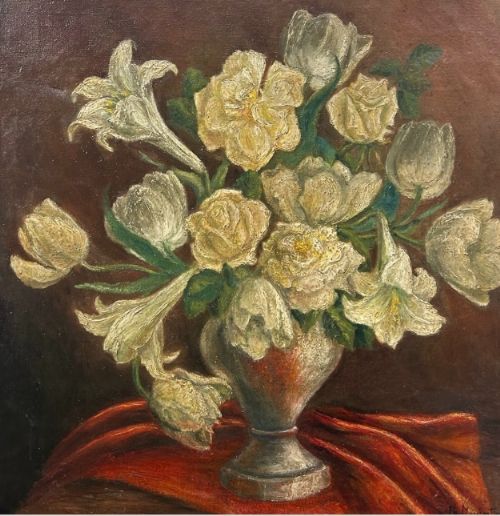


Yellow Floral Oil Painting
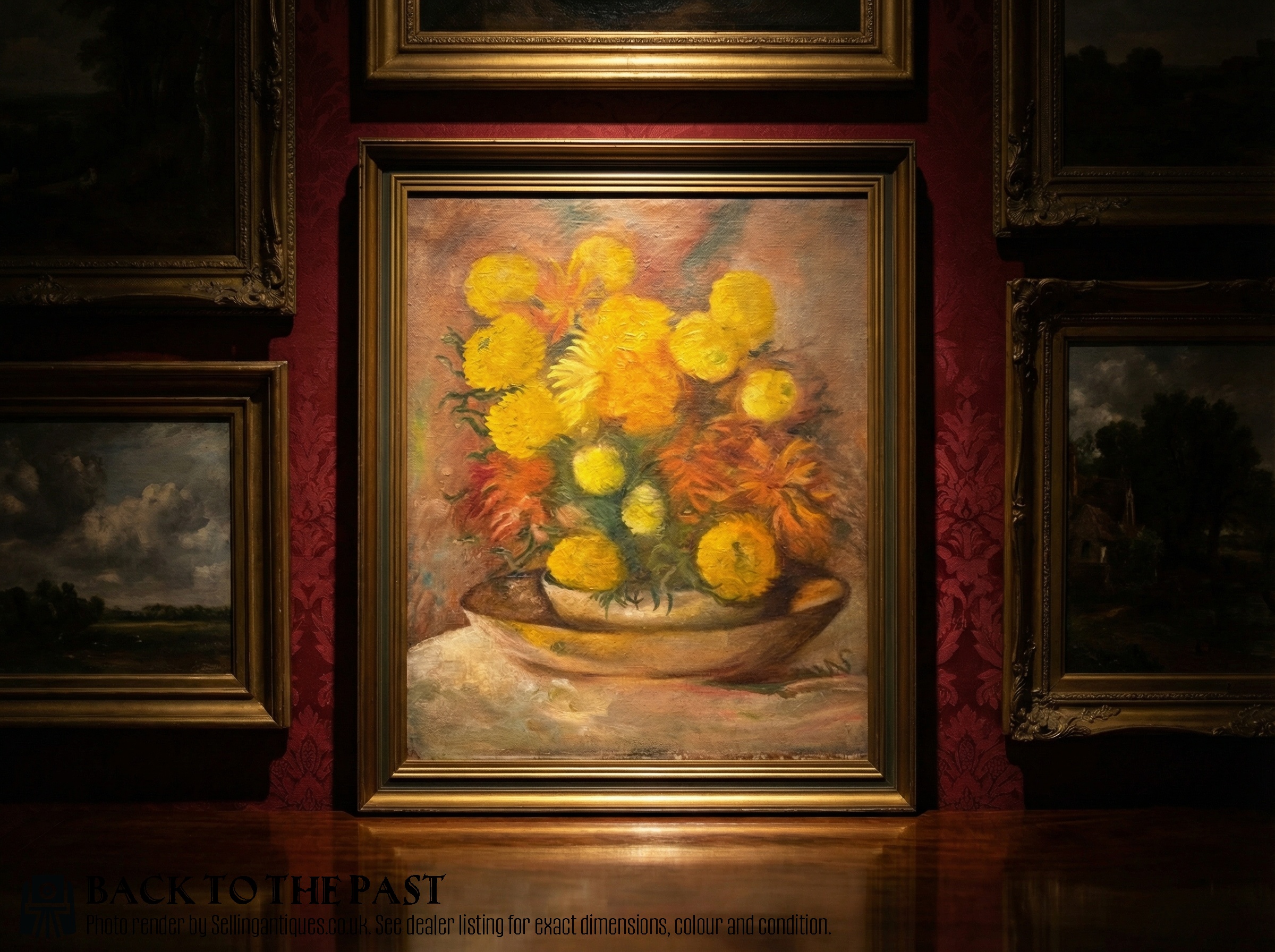
A yellow floral oil painting brings brilliant colour and botanical warmth into a room through rich brushwork.
Understanding the yellow floral oil painting
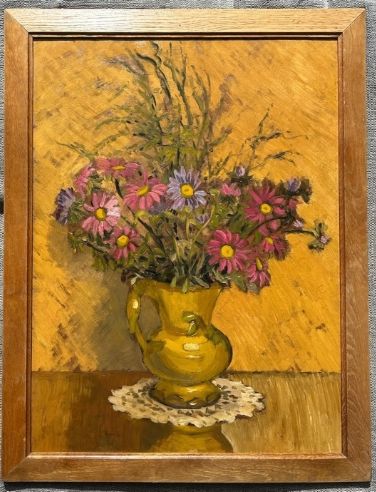
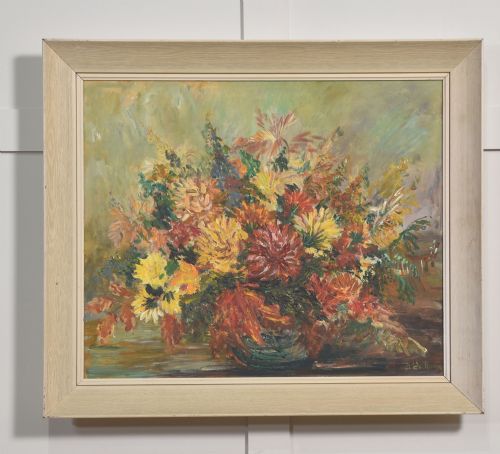
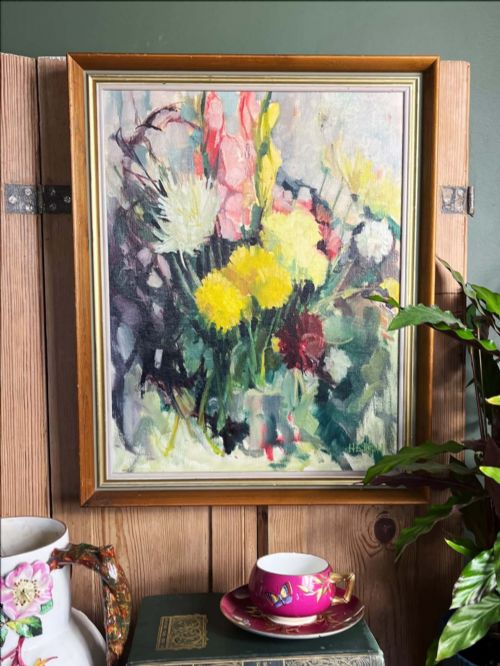
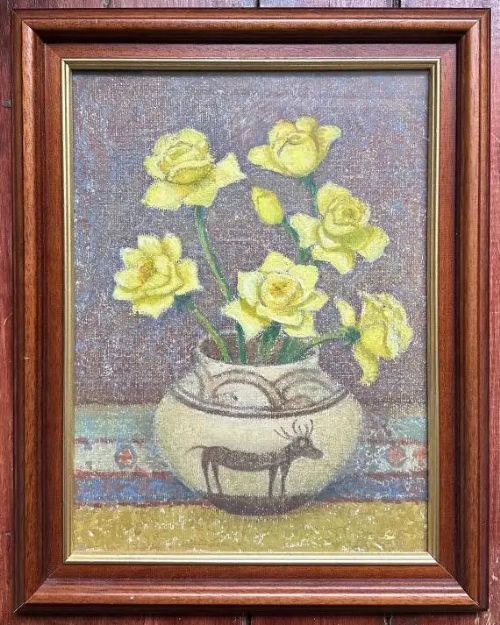
A yellow floral oil painting is typically a still life study focusing on vases, bowls or pots filled with blooms like roses, chrysanthemums and dahlias. These works emerge from several decades spanning the early to mid-twentieth century, including the nineteen-twenties, thirties, forties, fifties and sixties.
The objects take the form of wall art executed by listed painters or attributed hands working within traditions such as Mid-Century Modern, Post-Impressionism and Impressionism. Most examples on this page are presented framed in wood or gilt settings, ready to hang.
Buyers encounter subjects ranging from simple depictions of yellow blossoms to complex arrangements featuring fruit alongside the flowers. The works vary from modest board studies to large canvases signed by known artists.
Materials and technique
Artists apply oil paint directly onto stretched canvas or rigid board supports using brushes or palette knives. This medium allows for thick impasto textures, visible brushstrokes and luminous colour blending that captures natural light on petals and leaves.
Support materials include traditional woven canvas and sturdy wooden boards, often housed within period wooden frames, sometimes finished with gilt details. The physical construction reflects mid-century studio practices where artists prepared their own surfaces or utilised commercial panels.
Retail Price Guide 2026
Typical UK retail prices for yellow floral oil painting, calculated from the Sellingantiques database of over a million retail prices indexed since 2003. This retail price guide relies exclusively on Sellingantiques data; no external sources or auction records are used, so the figures do not describe the wider market.
Current listings feature pieces spanning the nineteen-twenties, thirties, forties, fifties and sixties, utilising canvas, board, oil paint, wood and gilt.
Evaluating quality and execution
The distinction between standard decorative works and superior examples lies in the confidence of the brushwork and the harmony of the colour palette. Stronger pieces display deliberate tonal contrasts and expressive handling that give depth to the floral arrangement.
Attribution and signature play a significant part in the character of a piece, distinguishing known studio practitioners from anonymous makers. The integration of frame and canvas, along with the preservation of the original paint surface, shapes the overall visual impact.
Kenneth Cozens·D. L. Williams·Emma Fordyce MacRae·Sir Matthew Smith
The Yellow Floral Oil Painting Glossary
- Impasto
- Paint applied thickly to a canvas or board, standing out in relief from the surface. This technique creates a tangible sense of texture and catches natural light in a room.
- Still life
- An artwork depicting inanimate subject matter, typically commonplace objects such as flowers, fruit and vases. Painters arrange these elements to explore form, colour and composition.
- Gilt
- A thin layer of gold leaf or gold-coloured pigment applied to wooden frames. It adds a warm reflective border that complements the bright tones within the painted canvas.
- Board
- A rigid flat panel used as a painting support instead of woven fabric stretched over wooden bars. Artists often utilised these sturdy surfaces for smaller studies and rapid compositions.
- Post-Impressionism
- An artistic movement extending the boundaries of impressionism while rejecting its limitations. Practitioners focus on vivid colours, distinct brush strokes and symbolic content.
Frequently Asked Questions
How do I hang a heavy oil painting?
Ensure you use appropriate wall fixings rated for the weight of the wooden frame and canvas.
Position the work at eye level where natural daylight can illuminate the textured paint surface.
What periods do these paintings come from?
The available works span the early to mid-twentieth century, specifically covering the nineteen-twenties through to the nineteen-sixties.
This era encompasses modernist movements and mid-century impressionism.
Are these paintings supplied with frames?
Many listings include period wooden frames, some featuring gilt finishes that complement the artwork.
Check individual descriptions to confirm whether the frame is original to the piece.
What surfaces were used by the artists?
Painters utilised both stretched canvas and rigid board supports for their floral compositions.
Canvas allows for a slight spring under the brush, while board offers a completely firm foundation.