



Metal Lined Planter
A metal lined planter brings living greenery or chilled bottles straight to the table, combining structural timber with a protective interior.
Metal Lined Planter
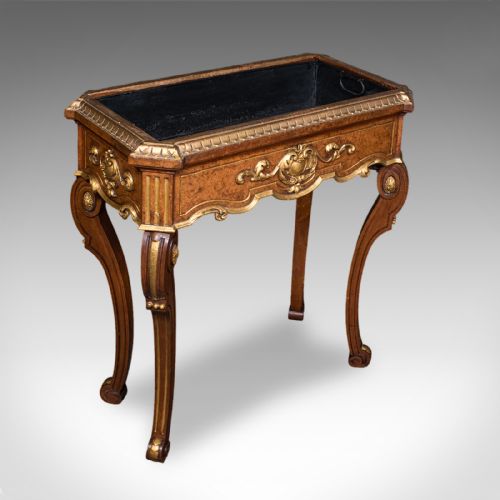
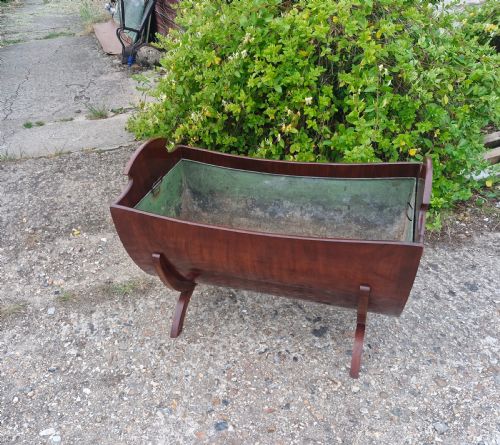
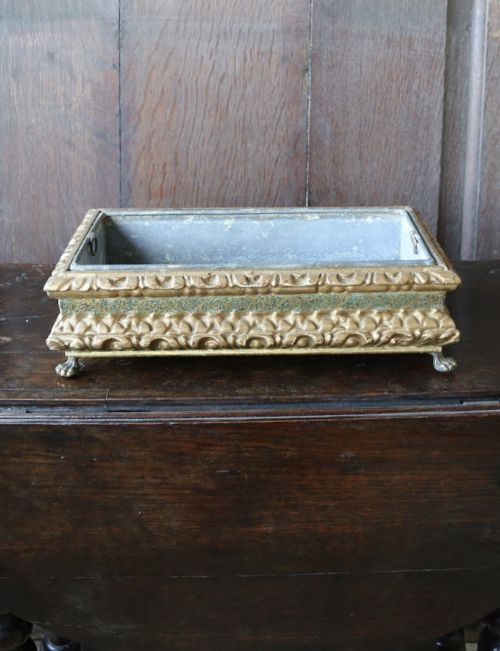
You meet pieces originating across several centuries, from 17th century Italian carved boxes to 19th century French Louis XV style burr walnut containers and British mahogany cellarettes. The forms merge decorative cabinet-making with functional interior linings of zinc, copper, or brass.
The objects serve multiple interior roles, functioning as plant stands, log baskets, champagne coolers, and decanter caddies depending on their depth and the metal insert provided. Walnut, mahogany, satinwood, and oak frequently form the exterior housing for these waterproof interiors.
How they were made
Cabinet-makers constructed the exterior bodies using figured hardwoods like mahogany, walnut, satinwood, and oak, often shaping them through carving or applying veneer. These wooden frames receive surface treatments ranging from French polish to gilt wood carving.
The waterproof function relies on metal sheet work, utilising soldered or joined zinc, copper, brass, and tin to form seamless or riveted interior liners. Ormolu mounts and brass hardware are frequently added to French Rococo revival and Louis XV style pieces to accent the woodwork.
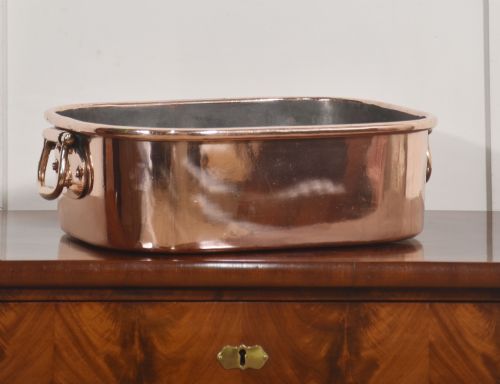
An antique copper fish kettle occasionally crosses over to live a second life as an interior decorative plant holder.
What varies in quality
The distinction between standard utility items and exceptional pieces rests on the calibre of the timber figure and the harmony of the metal mounts. Finely figured burr walnut or satinwood paired with chased ormolu elevates a utilitarian vessel into a formal salon piece.
Construction methods also separate the tiers, evident in whether a liner is bespoke to the vessel and whether internal framing uses traditional joinery rather than simple fastening. The sophistication of the carving, such as Italian Baroque gilt wood or French Rococo detailing, dictates the level of craftsmanship.
The Metal Lined Planter Glossary
- Jardiniere
- An ornamental pot or stand for holding plants or flowers. These vessels often sit on dedicated stands or take the form of table troughs.
- Cellarette
- A lockable container or box used for holding bottles of wine or spirits. They frequently feature metal linings to hold ice alongside the bottles.
- Ormolu
- Gilded bronze used as a decorative mount on furniture and decorative objects. It appears frequently on French Louis XV style pieces.
- Fish Kettle
- A long, narrow metal cooking vessel with a lid and handles. Examples in copper occasionally find alternative uses in interior display.
- Burr Walnut
- Timber taken from a walnut tree growth containing swirling grain patterns. Cabinet-makers veneer high-status furniture and planters with this material.
Metal Lined Planter: Frequently Asked Questions
What is a metal lined planter used for?
These containers hold potted plants, floral arrangements, or ice for cooling wine and champagne without moisture reaching the wooden exterior.
Historically, they served in reception rooms and dining spaces to bring greenery indoors or keep beverages chilled near the table.
How do I care for the wood and metal?
Wipe the interior metal liner dry after use to prevent corrosion from standing water or soil moisture.
Treat the exterior wood with appropriate furniture wax or polish according to whether the surface is polished hardwood, satinwood, or gilt wood.
Can I plant directly into the liner?
Many liners accommodate soil and direct planting, though using a secondary pot prevents direct contact and makes watering simpler.
Ensure drainage is managed properly so water does not sit continuously against the soldered seams of the zinc, copper, or brass.