




Vintage Mahogany Jardiniere
A vintage mahogany jardiniere brings natural greenery indoors with formal structure, offering a handsome vessel for plants that anchors a room.
Vintage Mahogany Jardiniere
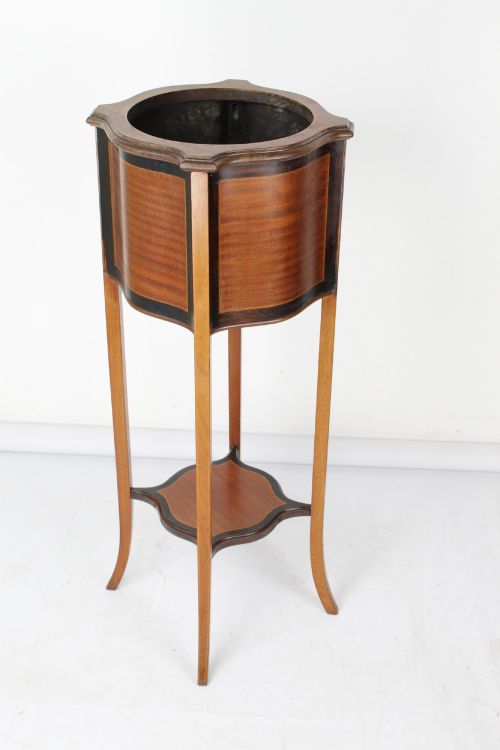
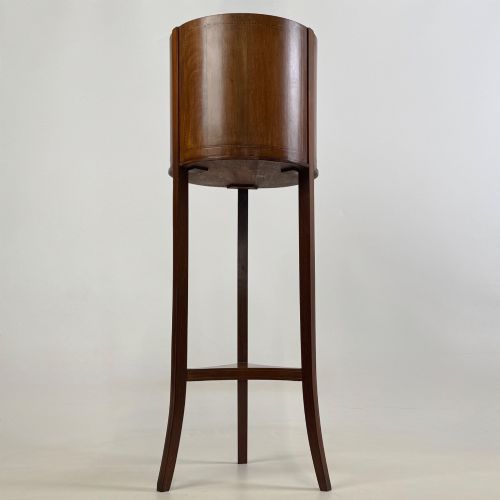
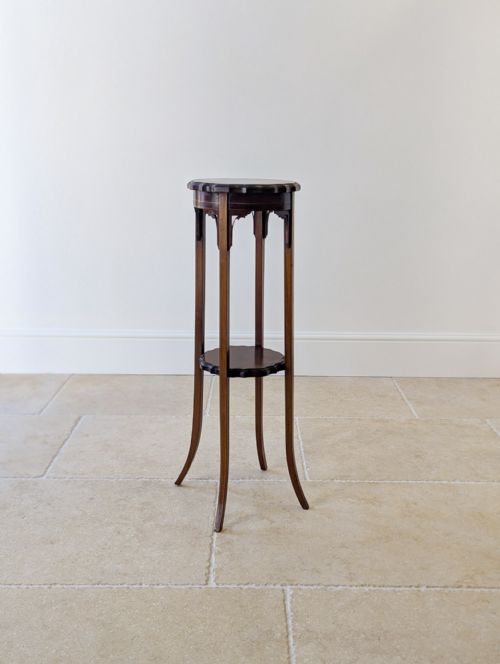
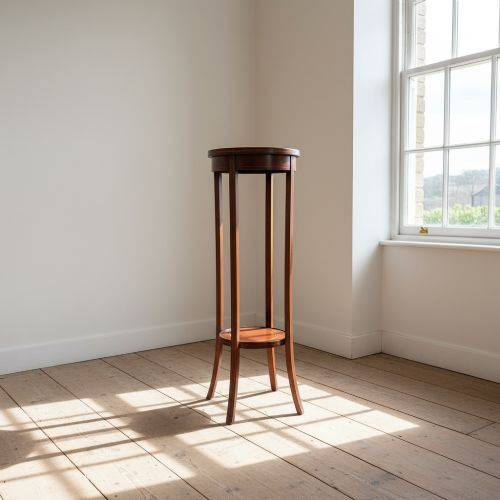
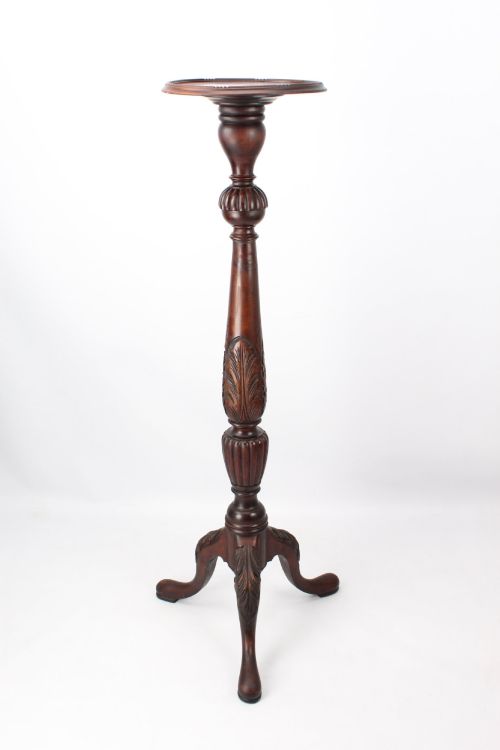
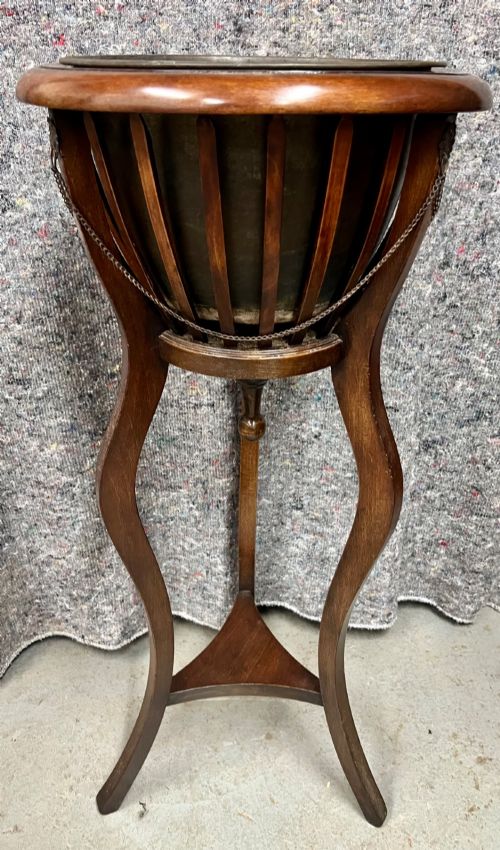
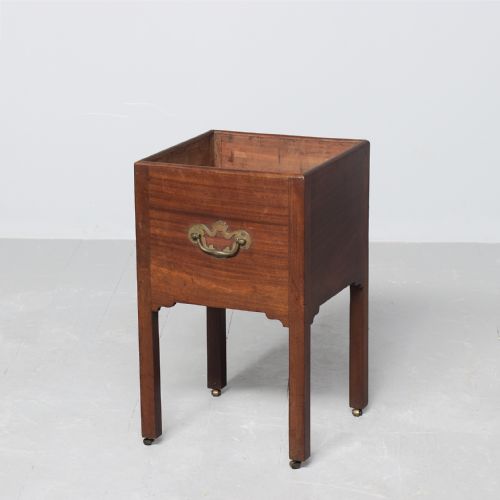
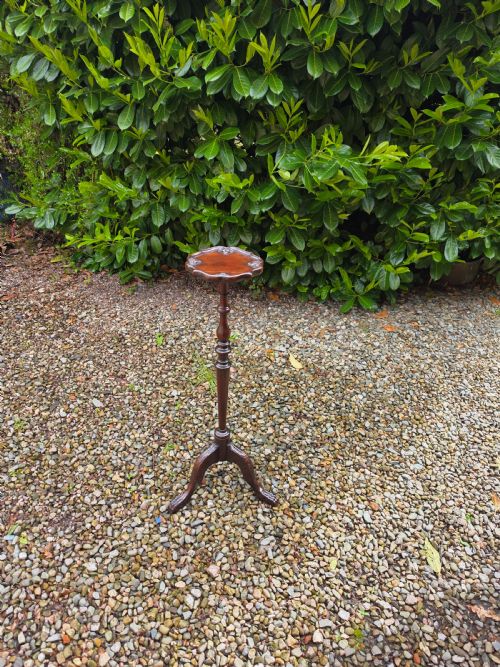
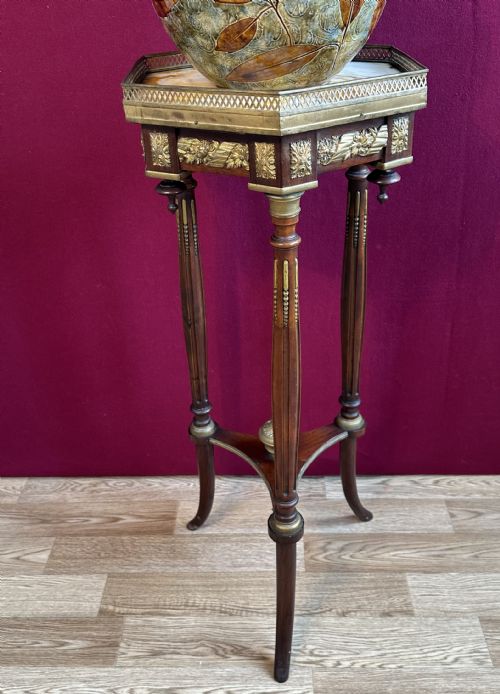
A vintage mahogany jardiniere functions primarily as a decorative planter or plant stand designed to display indoor foliage and floral arrangements within domestic interiors. These furnishings take several forms across the inventory, appearing as dedicated jardiniere stands, tall torchères, plant pedestals, and adaptable wine coolers or cellarettes.
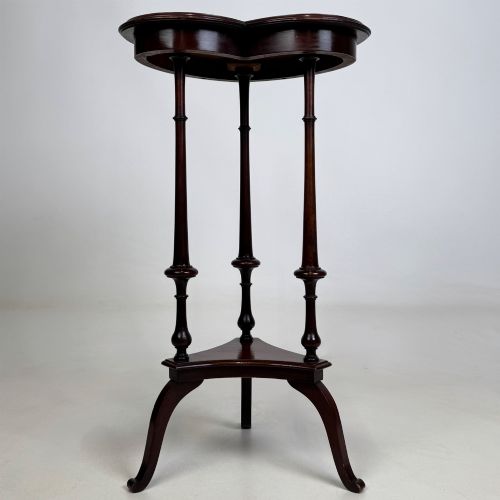
Edwardian examples dominate the selection, frequently featuring inlaid boxwood and slender proportions typical of the early twentieth century. Alongside these Edwardian pieces, the listings include heavier Georgian and Regency models, Victorian variations, and occasional French Revival or Dutch coopered designs.
The physical build ranges from simple circular platforms to sophisticated vessels equipped with metal liners or brass banding. Buyers encounter pieces intended to sit on the floor as prominent focal points as well as taller stands designed to elevate potted plants to eye level.
How they were made
Cabinetmakers constructed these pieces primarily from solid and veneered mahogany, often selecting hardwood frames that provided both structural stability and rich grain patterns. Workshops frequently incorporated satinwood and boxwood inlay to create delicate contrasting borders and decorative motifs along the tapered legs and friezes.
Metal components formed an essential part of the construction, particularly in designs meant to hold living plants or ice. Brass banding encircled coopered wooden staves, while internal zinc or metal liners protected the surrounding timber from moisture damage.
Certain formal examples integrated contrasting materials into their upper sections, featuring inset marble slabs or decorative brass mounts. Carved details appeared on specific revival pieces, ranging from subtle fluting to more pronounced flourishes on Georgian style frames.
The current selection spans multiple periods, featuring Edwardian inlaid stands alongside 19th-century cellarettes and 18th-century Georgian designs.
What varies in quality
The sophistication of the timber preparation and inlay work largely determines the grade of a piece. Finer examples display precise boxwood stringing and well-matched mahogany veneers that retain their natural depth, whereas simpler utilitarian items rely on plain timber surfaces without decorative embellishment.
Construction methods also separate standard production from superior craftsmanship. Pieces featuring tight coopered joints, robust brass binding, and well-fitted internal metal liners demonstrate a higher standard of original manufacture than those with loose assemblies or missing protective elements.
Proportion and stylistic cohesion influence the standing of an item within the range. Pieces that balance their height with stable bases and harmonious revival details command greater attention than those with awkward proportions or heavy, unrefined additions.
The Vintage Mahogany Jardiniere Glossary
- Jardiniere
- An ornamental pot or stand designed to hold plants or flowers indoors. The term applies equally to floor-standing planters and elevated wooden plant holders.
- Cellarette
- A lockable cabinet or wooden container originally used for storing bottles of wine. These deep, often brass-bound vessels frequently double as jardiniere stands.
- Torchiere
- A tall stand or pedestal originally intended to support a lamp or torch. In these listings, the form functions primarily as an elevated plant stand.
- Coopered
- Constructed from curved wooden staves joined together side by side, similar to the method used for making barrels. This technique appears frequently on round planters.
- Stringing
- A thin line of contrasting wood inlay used to outline panels or legs on furniture. This decorative detail is common on Edwardian mahogany pieces.
Vintage Mahogany Jardiniere: Frequently Asked Questions
How were jardinieres used historically?
These vessels allowed well-to-do households to bring potted palms and exotic flowering plants directly into formal reception rooms. They acted as decorative containers that concealed standard clay flowerpots.
In dining settings, deep wine coolers and cellarettes often doubled as plant holders during the off-season. This dual purpose made them versatile furniture items in nineteenth- and early twentieth-century homes.
Can I use an antique jardiniere for live plants?
Many surviving examples include original metal or zinc liners intended to catch water and protect the surrounding mahogany timber. These linings make them suitable for holding potted plants directly.
For pieces lacking an original liner, placing a modern plastic saucer inside the vessel prevents moisture from damaging the historic wood. Regular care ensures the timber remains dry during watering.
How do I tell an Edwardian stand from a Georgian one?
Edwardian examples, usually dating from around 1900 to 1910, frequently display delicate boxwood inlay, lighter framing, and slender proportions. They often reflect revival tastes like Edwardian Art Nouveau or simple neoclassical styles.
Georgian and Regency pieces tend to be heavier, relying on solid mahogany construction, brass banding, and coopered staves rather than surface inlay. Their forms are rooted in eighteenth- and early nineteenth-century wine cooler designs.
Where should I place a plant stand at home?
Tall torchères and plant stands work effectively in corners or beside windows where natural light supports healthy foliage. Their narrow footprints allow them to fit into empty spaces without crowding a room.
Shorter floor planters serve well as centrepieces within seating areas or alongside side tables. They elevate greenery to create distinct vertical layers in interior design schemes.