



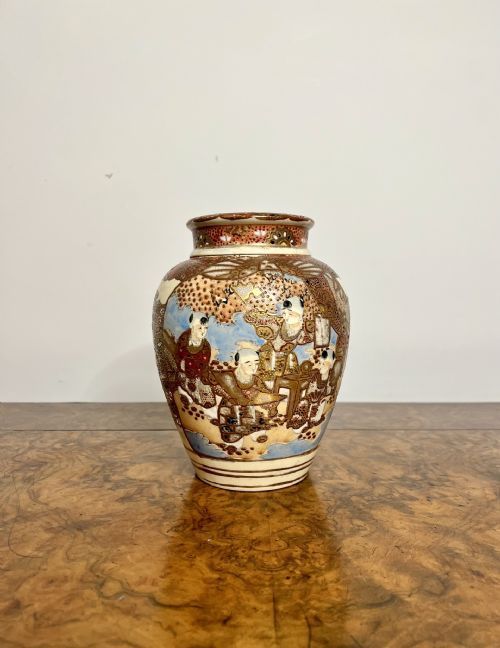
Meiji Satsuma Ceramics
Meiji satsuma ceramics bring intricate painted detail and rich gilding into the home, capturing the decorative spirit of late nineteenth-century Japan.
Meiji Satsuma Ceramics
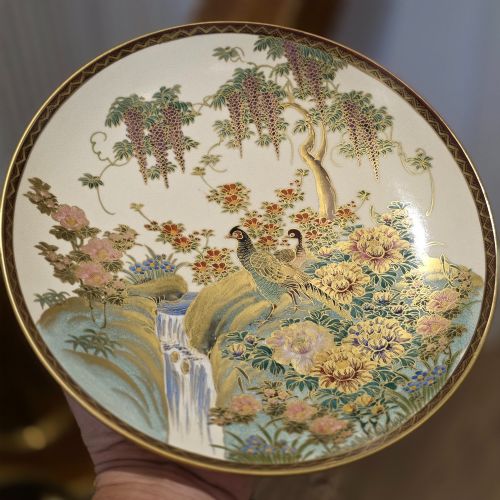
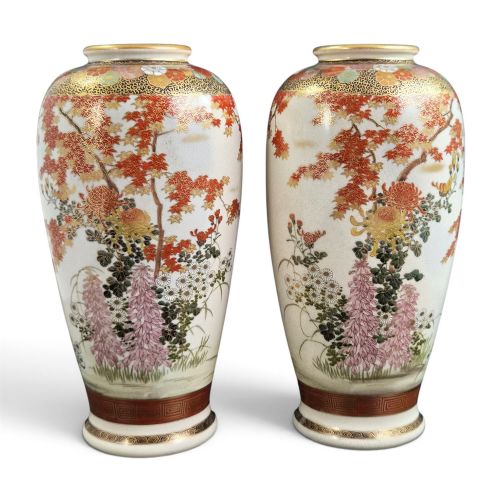
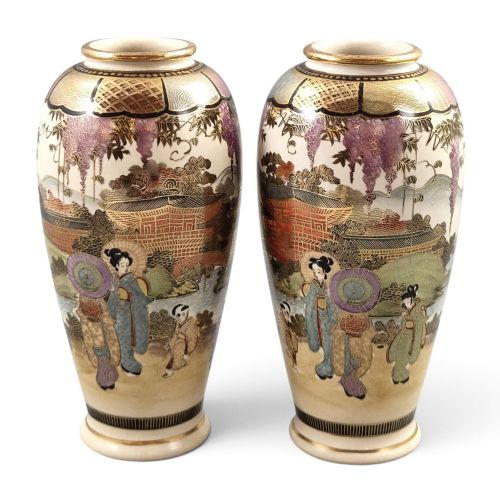
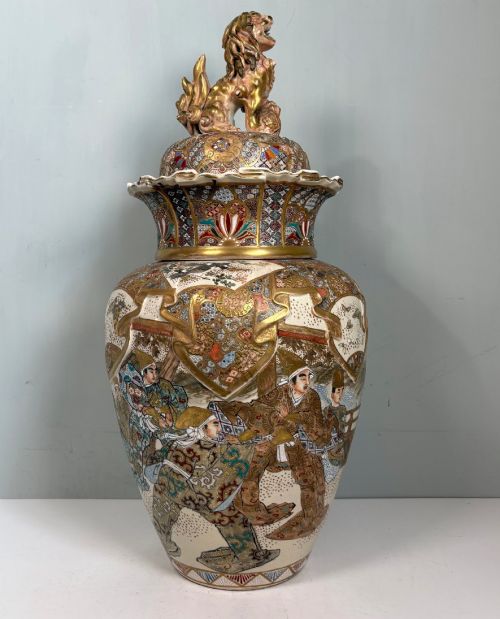
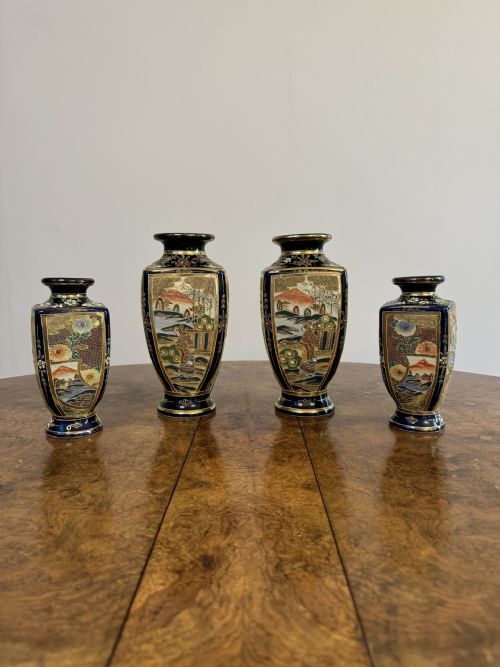
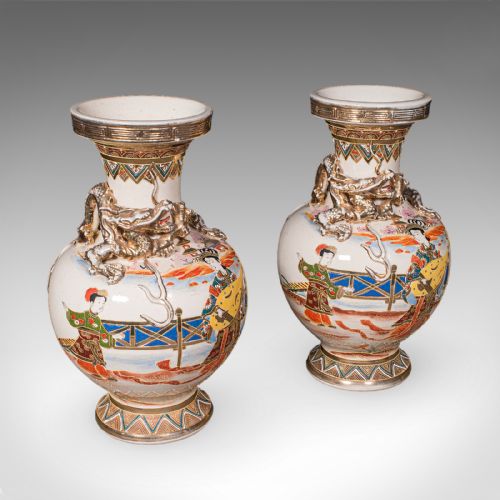
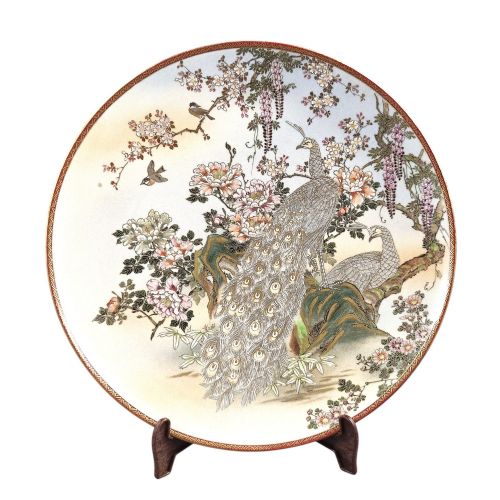
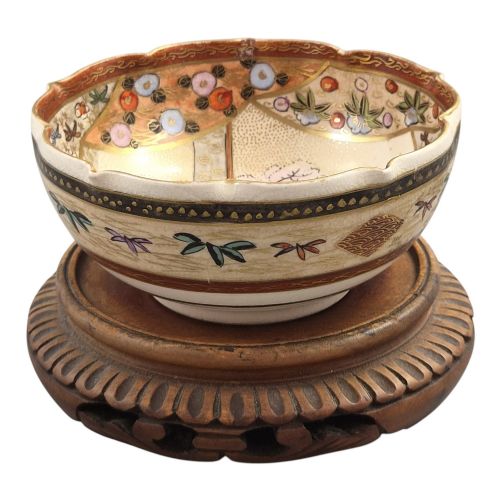
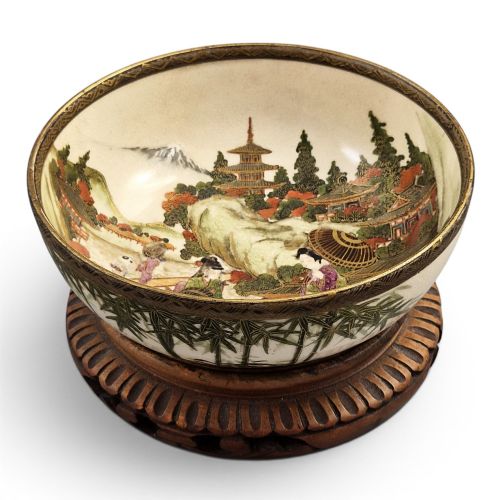
Meiji satsuma ceramics encompass a diverse range of decorative forms, primarily featuring earthenware vases, bowls, jars, and figurative okimono originating from the late nineteenth and early twentieth centuries. Vases, decorative bowls, and table lamps dominate the selection, often carrying elaborate scenes of figures, birds, and floral motifs.
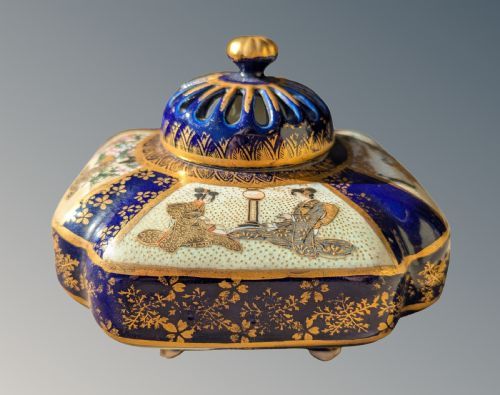
Makers and workshops working during the Meiji period produced these pieces for both domestic use and export to Western markets influenced by Japonisme. Examples span from small tea caddies and incense burners to large garnitures and chargers, reflecting the broad output of Kyoto and other regional centres.
Materials and Technique
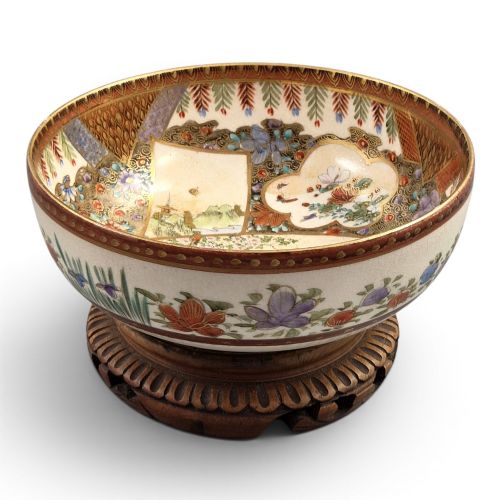
Potters built these items using earthenware bodies, which were then finished with specialised glaze and detailed enamel painting. Artisans applied gold leaf and heavy gilding to accent the intricate patterns and figural compositions.
Techniques such as moriage were utilised to create raised relief details across the surface, giving depth to floral arrangements and garments. The combination of fine brushwork and applied gold defines the distinct aesthetic of the ware.
Listings feature items dated from the 19th century through the Edwardian period, executed in earthenware with extensive gilding.
Artistic Merit and Execution
The distinction between standard commercial output and exceptional work lies in the discipline and precision of the brushwork. Master painters working for prominent workshops achieved remarkable detail in facial expressions, textiles, and background landscapes.
The density and restraint of the gilding also separate finer pieces from heavier, more congested designs. Balance in composition and subtlety of colour distinguish works by known signatures from mass-produced export ware.
Koshida·Maruni Kobe·Shozan·Kizan·Kinkozan·Kozan·Kinzan·Hotoda·Shizan·Toshozan·Makuzu Kozan II·Ryuzan
The Meiji Satsuma Ceramics Glossary
- Moriage
- A decorative technique using raised slip or clay to create three-dimensional relief patterns on ceramic surfaces. This method adds tactile texture to flowers, robes, and borders.
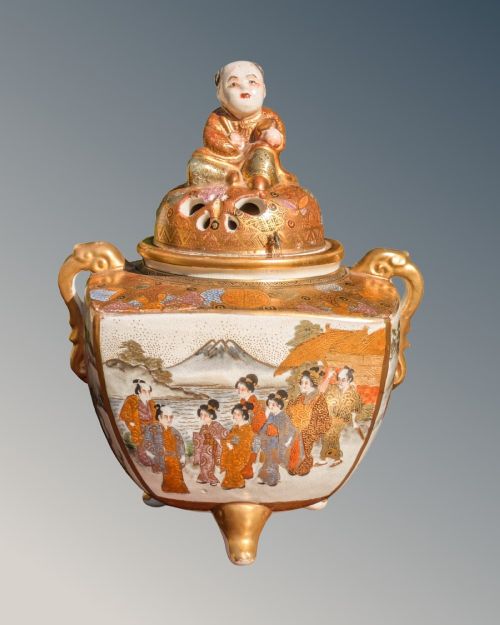
- Koro
- A traditional Japanese incense burner typically supported on three feet and fitted with a pierced cover. These vessels often feature elaborate figural or floral painted panels.
- Okimono
- A freestanding Japanese decorative figurine intended for display in an alcove or on a shelf. These carvings and ceramic figures depict deities, historical persons, and animals.
- Natsume
- A small tea caddy traditionally used in Japanese tea ceremonies for holding powdered green tea. The form is named after its resemblance to a jujube fruit.
- Garniture
- A matched set of three or more vases designed to be displayed together on a mantelpiece or sideboard. These matching sets share unified decorative schemes and proportional sizes.
Meiji Satsuma Ceramics: Frequently Asked Questions
What is satsuma ware?
Satsuma ware is a type of Japanese pottery historically characterised by an ivory-coloured, crackle-glazed earthenware body. It serves as a canvas for elaborate polychrome enamel and gilt decoration.
Originally produced in Satsuma Province, the style evolved significantly during the Meiji period to cater to international tastes, incorporating dense pictorial scenes.
How do I care for table lamps?
Table lamps require gentle dusting with a soft, dry cloth to protect the delicate enamel and gilding from abrasion. Avoid using chemical cleaners or immersing the ceramic base in water.
Wiring should be checked periodically by a qualified professional to ensure safety while preserving the original ceramic body.
Are all pieces signed?
Many fine pieces bear artist signatures, studio marks, or workshop stamps on the base, written in iron red or gold. These marks often indicate the maker or the kiln of origin.
Unsigned pieces were also common, particularly among standard export items created to meet high foreign demand during the late nineteenth century.
Where were these displayed?
During the Meiji period, these decorative items were created primarily for export to Western drawing rooms and parlours influenced by Japonisme. They functioned as striking mantel ornaments, focal points on side tables, and display cabinet centerpieces.
In Japanese interiors, specific forms like the koro and okimono held more traditional decorative roles within domestic spaces.