
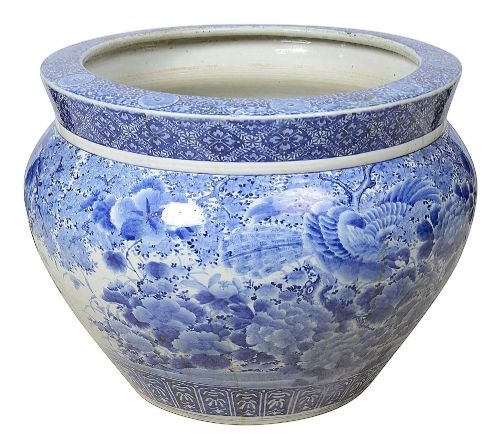


Meiji Period Plant Pot
These meiji period plant pot pieces bring domestic greenery indoors through robust bronze, porcelain, and imari forms.
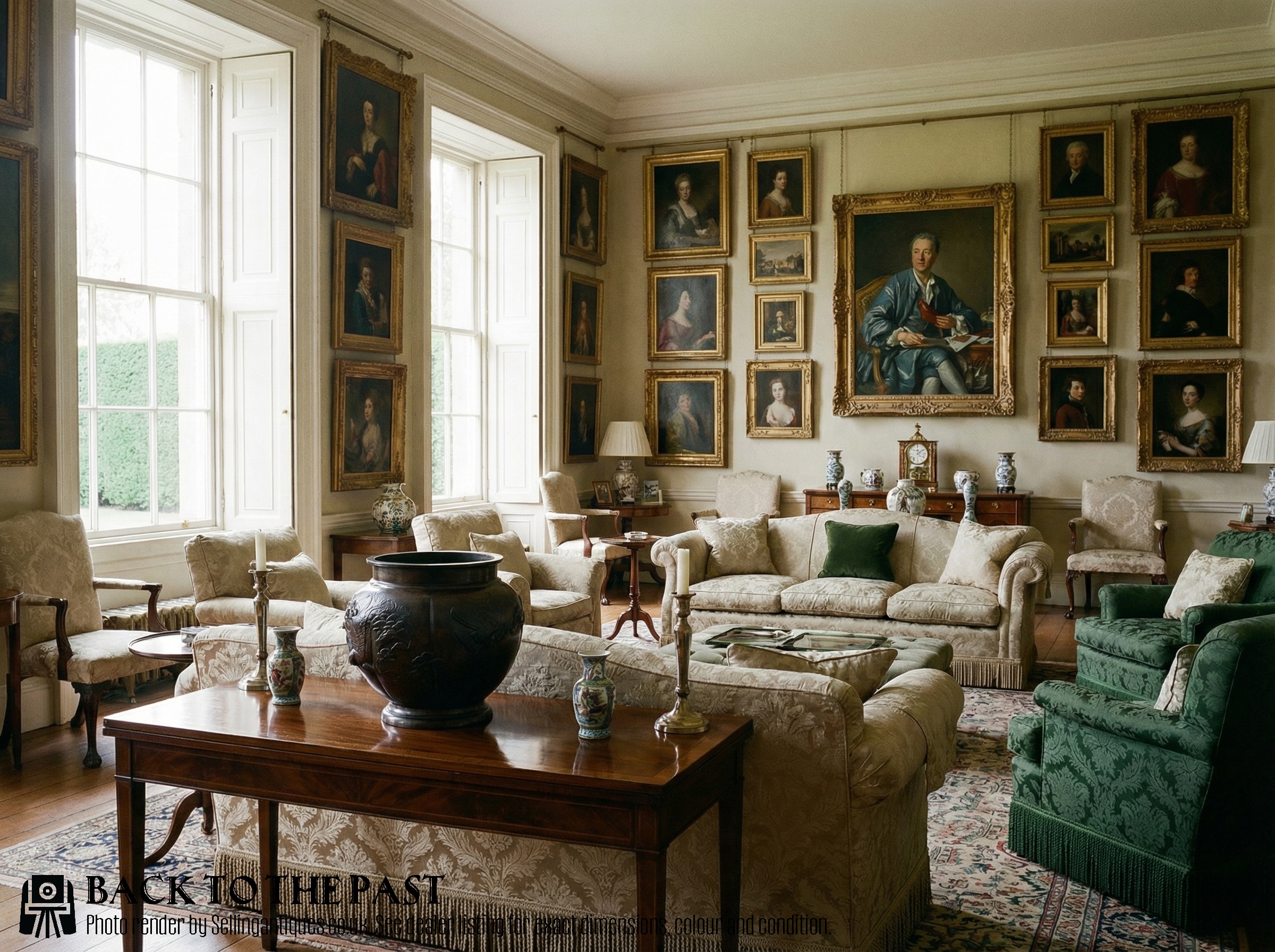
Meiji Period Plant Pot
A meiji period plant pot is typically a jardiniere, planter bowl, or plant stand originating from Japan during the 19th century and early decades of the 20th century. The pieces recorded here range from large bronze bowls to porcelain vessels and ebonised wood stands.
You will most frequently meet heavy bronze jardinieres alongside blue and white porcelain vessels. Many pieces cross stylistic boundaries into Victorian Anglo-Japanese design or combine Edo and Meiji period sensibilities.
The selection includes oval jardiniere shapes, vases adapted for planting, and dedicated portico planter tables. These items served both functional botanical roles and decorative interior display functions in period homes.
What Varies in Quality
The division between standard production and superior examples rests upon the crispness of the casting in bronze or the clarity of the cobalt underglaze in porcelain. Finer vessels display confident handling of surface decoration and substantial material weight.
Condition and integrity dictate standing within the market, particularly where enamel inlays or delicate rims are concerned. Pieces retaining original surface patination and structural soundness outrank examples with compromised materials.
Several heavy bronze jardinieres carry enough weight to double as unexpected indoor weights.
Makuzu Kozan II
The Meiji Period Plant Pot Glossary
- Jardiniere
- A large ornamental pot or bowl used for holding flowers or plants. These vessels form the majority of the metal and ceramic items found in this category.
- Imari
- A style of Japanese porcelain decorated in underglaze blue, iron red, gold, and supplementary colours. Pieces featuring this palette display distinct traditional patterns.
- Champleve
- An enamelling technique where troughs or cells are carved into a metal surface and filled with vitreous enamel before firing. This method creates vibrant, multicoloured decorative panels on bronze bodies.
- Ebonised
- Wood treated with a stain or finish to give it the dark appearance of ebony. This treatment was common on stands made for the European market during the Victorian era.
Meiji Period Plant Pot: Frequently Asked Questions
What is a meiji period plant pot?
A meiji period plant pot is a decorative vessel, usually a bronze or porcelain jardiniere, made in Japan during the late 19th or early 20th century.
These containers accommodated large indoor plants and were finished with detailed casting, enamelling, or cobalt painting.
How do I use a jardiniere indoors?
Jardinieres work best as decorative cachepots to hold potted plants, concealing standard plastic nursery containers inside.
Because many antique metal and ceramic vessels lack drainage holes, place a small saucer inside to catch excess water and protect the interior.
How do I date a meiji period planter?
Dating relies on material characteristics, stylistic markers, and any signature or foundry mark found on the base or body. Bronze work from the late 19th century often shows distinct patination compared to later 20th-century reproductions.
Cross-referencing stylistic elements like Imari patterns or Victorian Anglo-Japanese influences helps narrow the decade of production.
Are bronze jardinieres heavy?
Bronze jardinieres from this era are substantial objects, often weighing several kilograms due to thick metal casting.
This heft requires sturdy placement surfaces, such as dedicated plant stands or heavy tables, to support the combined weight of the vessel, soil, and plant.