
Meiji Period Japanese Vases
These meiji period japanese vases are historic metalwork, pottery and enamel vessels created during a transformative era of Japanese craftsmanship.

Meiji Period Japanese Vases
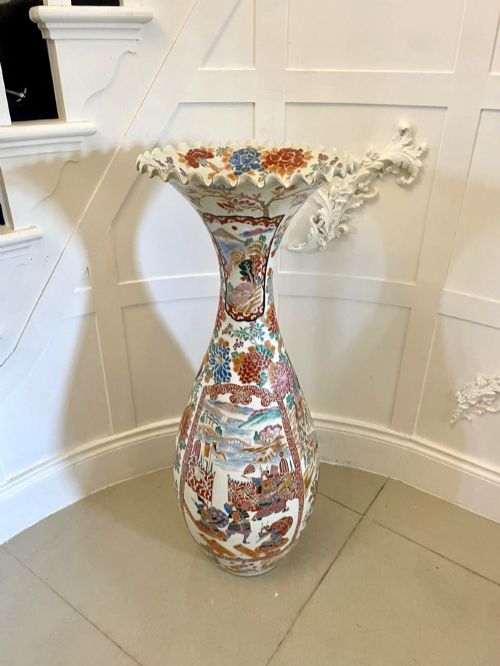
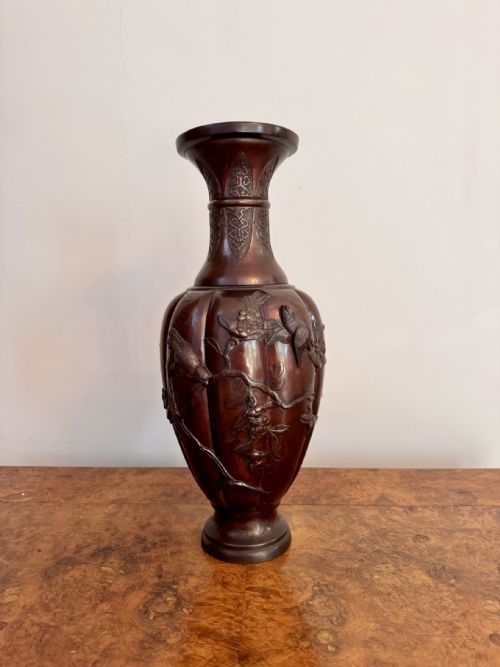
Meiji period japanese vases span a wide variety of forms, from monumental floor standing vessels and ginger jars to delicate baluster shapes and decorative baskets. Makers produced these pieces utilising rich ceramic traditions as well as industrial metalworking techniques that reached European markets during the late nineteenth and early twentieth centuries.
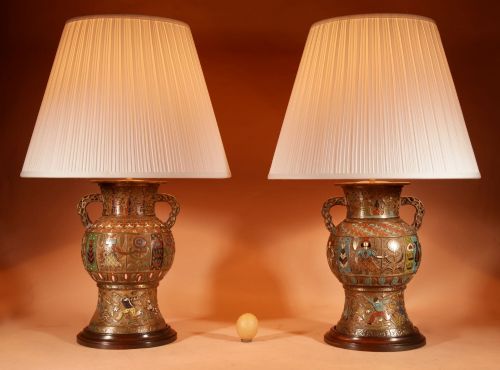
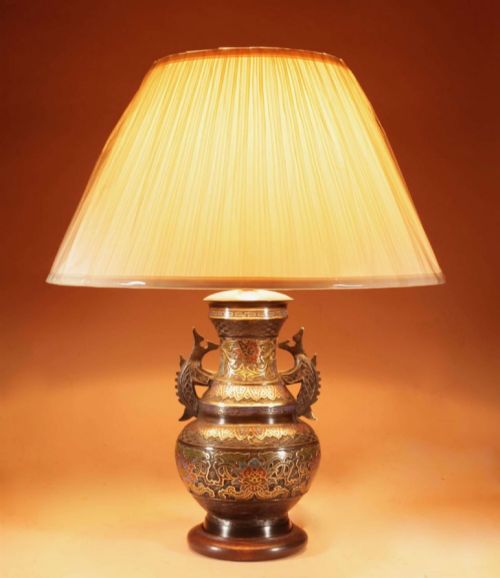
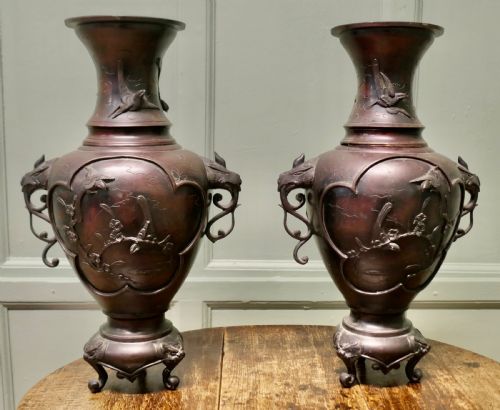
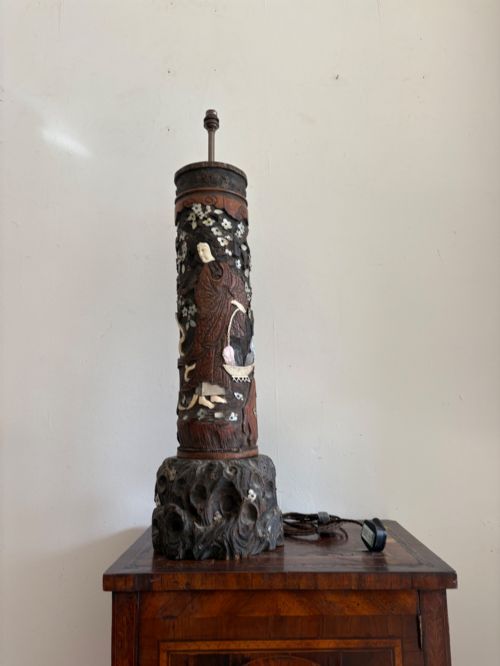
Buyers will encounter several distinct material categories on this page, dominated by cast bronze, earthenware pottery with painted enamel decoration, and porcelain. Forms range from compact cabinet items to tall floor pieces and converted table lamps.
How they were made
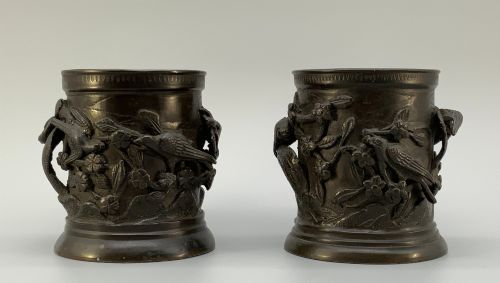
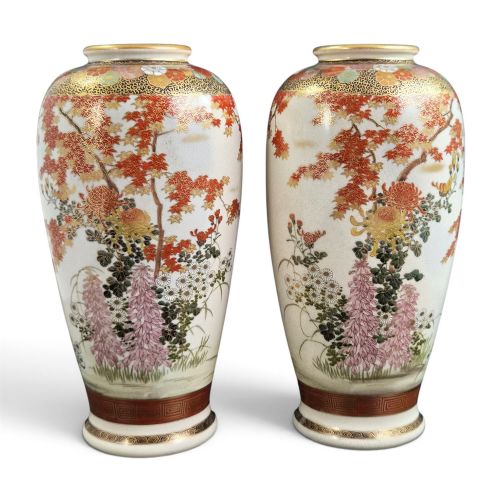
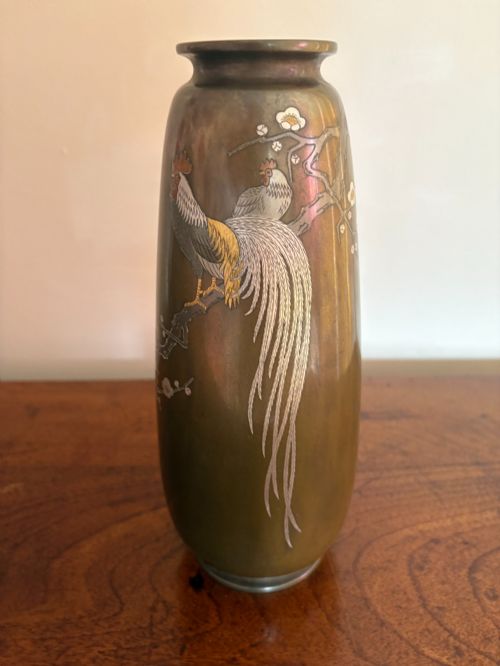
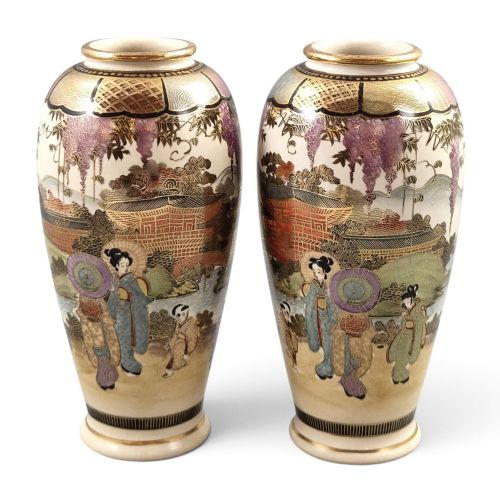
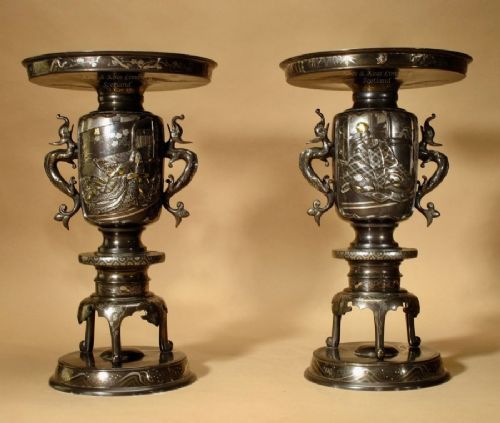
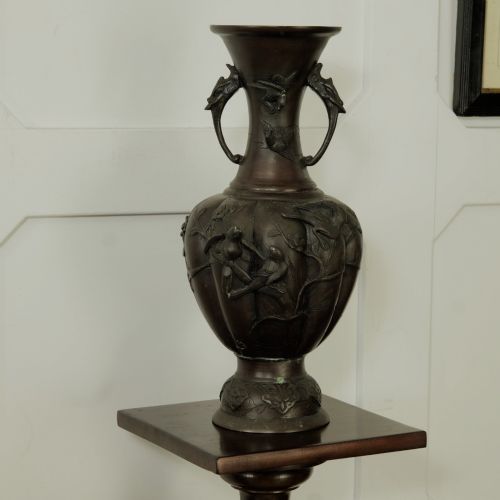
Bronze and brass vessels are cast, inlaid with other metals, or finished with champlevé enamel work. Ceramic pieces combine earthenware and porcelain bodies decorated with glaze, gold leaf, and intricate hand-painted figurative or floral scenes.
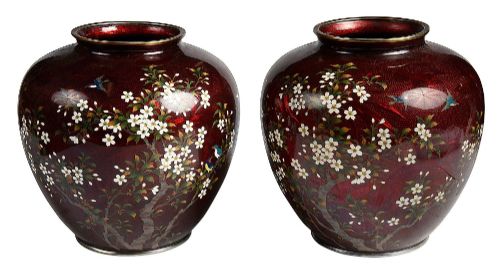
Cloisonné enamel pieces utilise thin wire partitions soldered to a metal base to contain coloured enamel pastes before firing and polishing. Sumida Gawa pottery employs applied modelled figures and heavily textured flambe glazes on earthenware bodies.
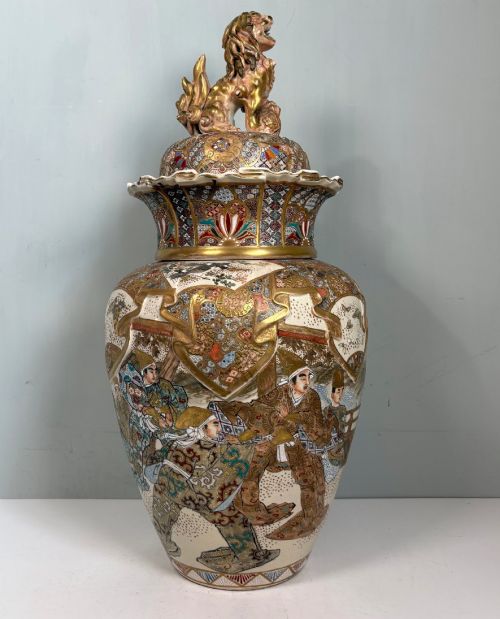
The inventory includes specialised forms such as brush pots, ginger jars, incense burners, and lidded urns.
What varies in quality
The standard of a piece rests on the precision of its execution, whether through the crispness of a bronze casting, the fineness of wirework in cloisonné, or the detail in hand-painted Satsuma and Imari ceramic palettes. Finer examples display balanced proportions, controlled glaze effects, and distinct signatures from accomplished workshops.
Mass-produced or simpler decorative items show less refined brushwork, simpler surface textures, and standard casting marks without individual artistic merit.
KANASAWA·Maruni Kobe·Shozan·Inoue Ryosai·Ban-ni·Takahara Komajiro·Kyoto Jippo·Hododa·Hayashi Kihyoe·Meizan
The Meiji Period Japanese Vases Glossary
- Imari
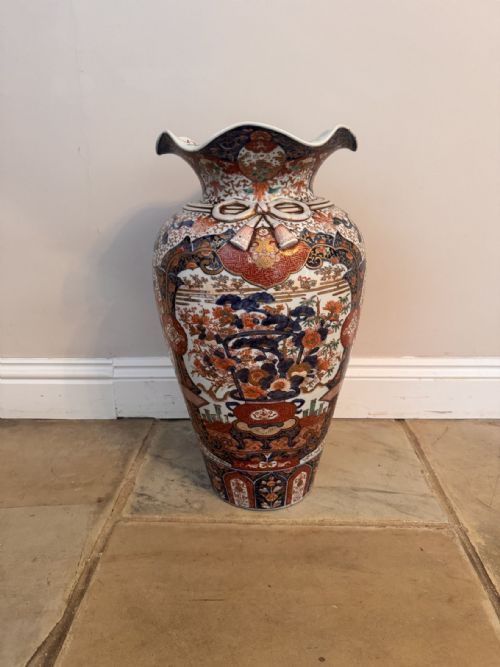
- A style of Japanese porcelain decorated in underglaze blue, iron red, and gold, named after the port from which the wares were shipped.
- Satsuma
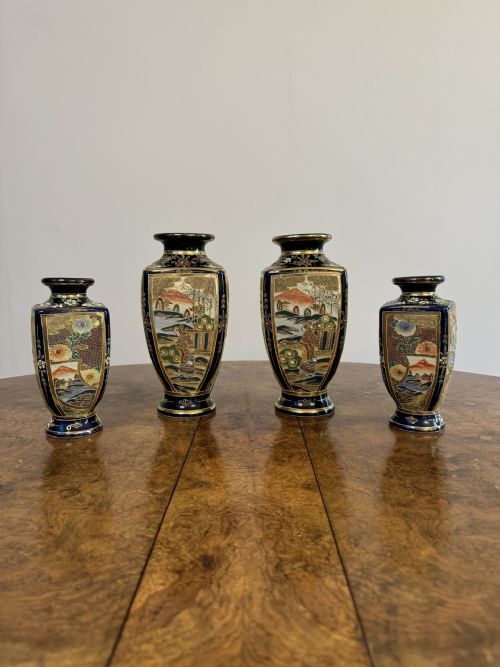
- Earthenware pottery with a ivory-coloured, crackle-glazed surface, typically decorated with polychrome enamels and gilding.
- Cloisonné
- A metalwork technique where fine wires create small compartments that are filled with enamel and fired.
- Sumida Gawa
- A type of Japanese art pottery featuring textured glazes and applied, modelled figures climbing on the vessel wall.
- Champlevé
- An enamel technique where troughs or cells are carved into a metal surface to hold the coloured paste.
- Ikebana
- Japanese flower arranging, influencing the form of specific vessels designed to hold disciplined floral displays.
Meiji Period Japanese Vases: Frequently Asked Questions
How do I date these vases?
Pieces originating from this era fall primarily between eighteen sixty-eight and nineteen twelve, aligning with the reign of the Emperor Meiji. Later examples often bridge into the Taisho period.
Examination of base marks, signatures, materials, and stylistic motifs helps narrow the production window alongside historical workshop records.
Are these pieces waterproof?
Many historic metal and ceramic vessels were intended strictly for decorative display rather than functional use with water. Structural materials like earthenware and applied enamels can be sensitive to moisture.
Using a modern liner inside a vessel is recommended if it holds fresh flower arrangements.
What is the difference between Satsuma and Imari?
Satsuma ware consists of earthenware with a characteristic ivory crackle glaze and detailed overglaze enamel painting depicting figures, gods, and nature. Imari ware is hard-paste porcelain featuring a distinct colour palette of cobalt blue, iron red, and gold.
Both styles originated in different kilns and served distinct decorative purposes in Japanese homes and export markets.
How should I display a floor vase?
Large floor standing vessels and tall urns require stable placement away from high-traffic household areas to prevent accidental impact. Their substantial height makes them suitable as standalone focal points in hallways or reception rooms.
Ensuring the floor surface is level protects both the antique base and the vessel itself.