






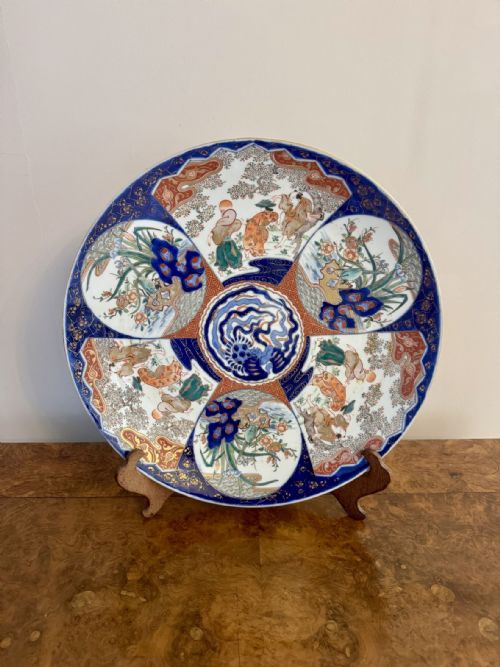
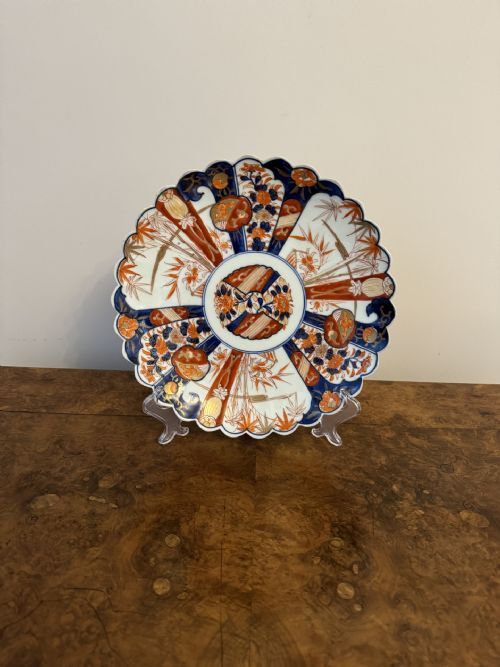
Meiji Period Japanese Charger
When you search for a meiji period japanese charger, you enter a world of large-scale decorative plates made during a pivotal era of Japanese art.
Meiji Period Japanese Charger
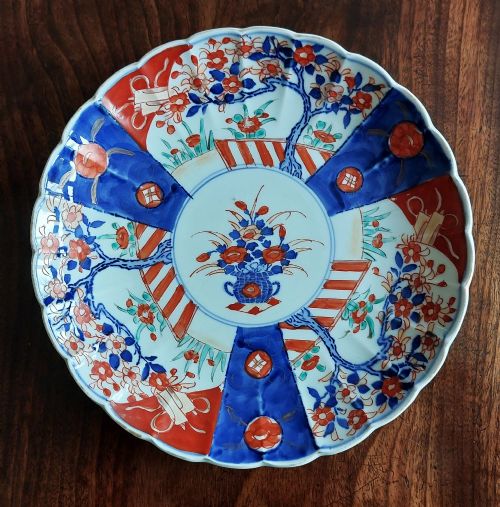
A meiji period japanese charger is a large decorative plate or dish produced in Japan between the late nineteenth and early twentieth centuries, primarily designed for display rather than dining.
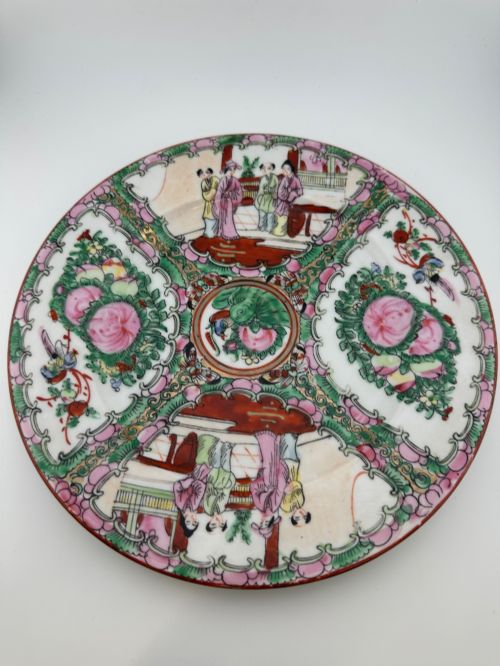
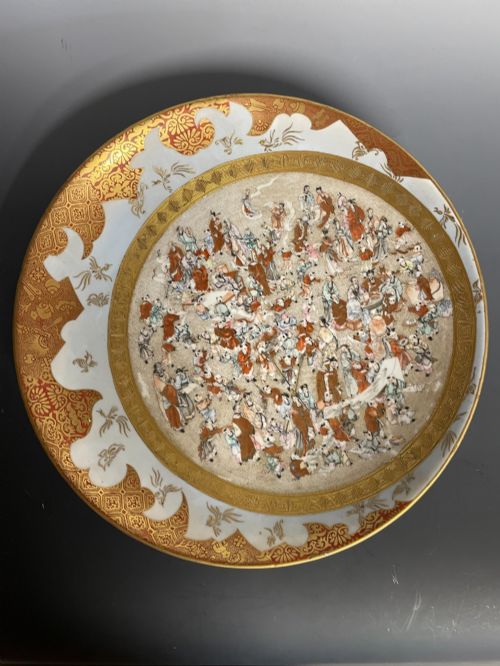
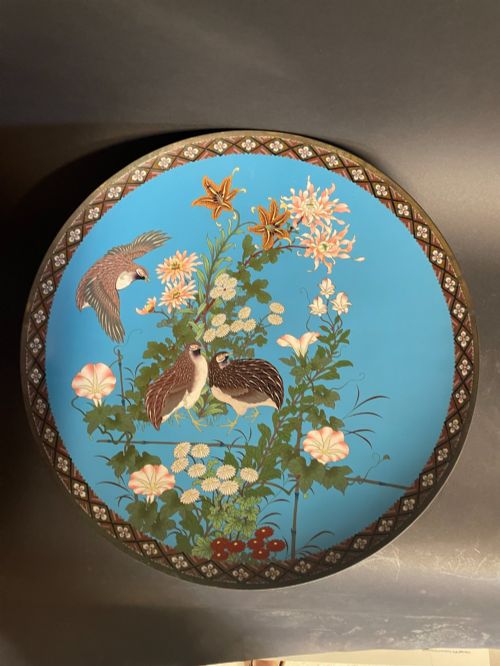
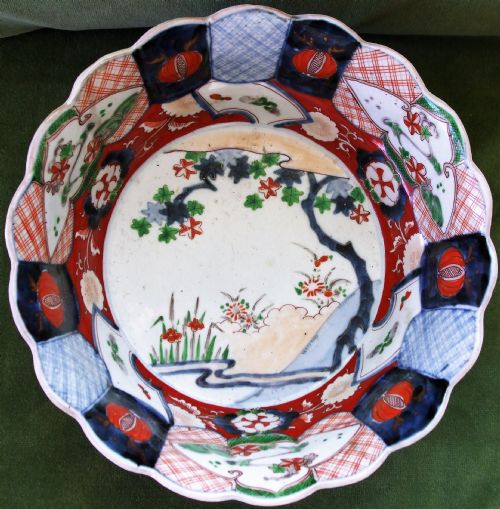
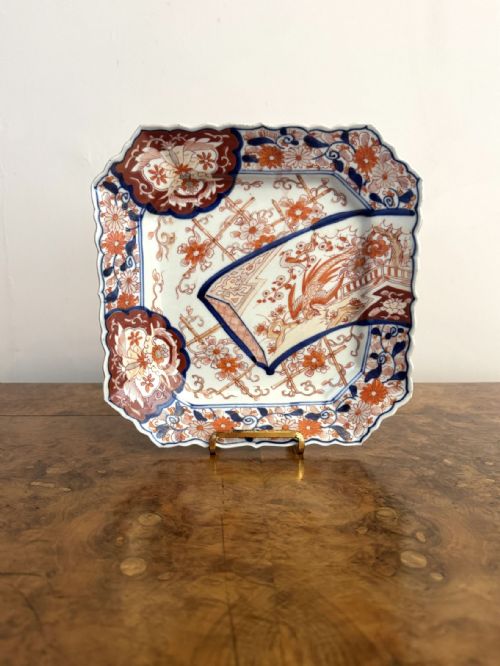
The versions you are most likely to meet on this page include porcelain pieces decorated in the Japanese Imari palette, alongside cloisonne enamel works and stoneware from Kutani and Satsuma.
These items take various forms, appearing as round chargers, scalloped edge bowls, square shaped plates, and octagonal dishes depicting birds, flora, and mythical subjects.
Materials and methods
Makers produced porcelain and pottery bodies using local clays, applying hand-painted underglaze blue and overglaze iron red, green, and gold leaf in the Imari and Arita traditions.
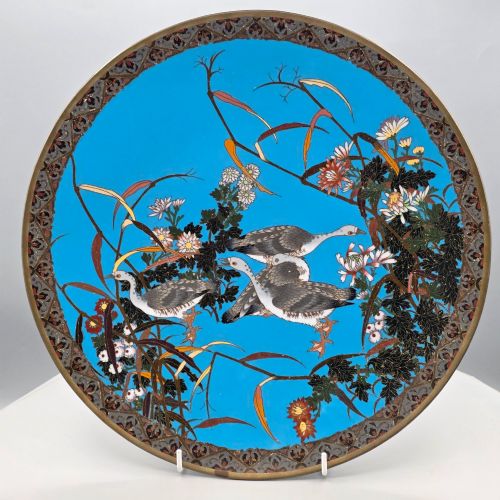
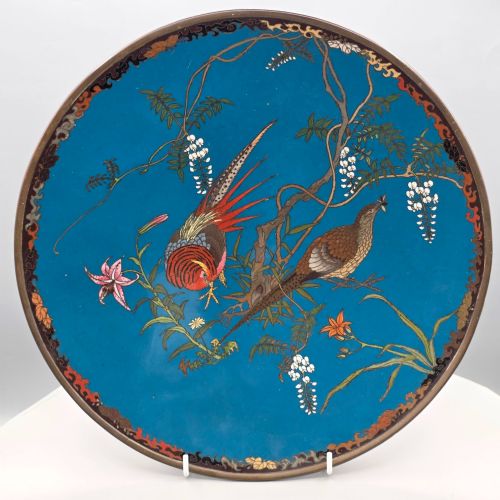
Metal vessels utilise copper or bronze bases combined with cloisonne enamel, where thin wire compartments hold coloured glass pastes fired to a smooth finish.
Mixed metal techniques on bronze also incorporate onlaid metals and gold highlights to depict figures like Hotei alongside Mount Fuji.
Look closely to spot frogs leaping among chrysanthemums and butterflies on the enamel surfaces.
Assessing quality
The distinction between standard decorative items and exceptional works lies in the precision of the hand painting and the complexity of the subject matter.
In cloisonne pieces, the fineness of the wirework and the absence of pitting across large enamel surfaces dictate the standard of the manufacture.
For porcelain chargers, the clarity of the blue and white pigments and the crispness of scalloped or moulded edges separate ordinary production from exhibition pieces.
Workshop Of Nogawa·Koshida·Fukugawa
The Meiji Period Japanese Charger Glossary
- Charger
- A large decorative plate or dish intended for display on a wall or surface rather than for table service.
- Imari
- A style of Japanese porcelain featuring a distinct palette of underglaze blue, iron red, and gilt highlights.
- Cloisonne
- A metalwork technique using soldered wires to create cells that hold coloured enamel pastes before firing.
- Kutani
- A style of Japanese coloured porcelain and pottery known for pictorial designs.
- Satsuma
- A type of Japanese earthenware featuring a crackle glaze and often decorated with elaborate moriage relief work.
Meiji Period Japanese Charger: Frequently Asked Questions
How were these chargers used originally?
These large pieces served primarily as decorative showpieces in homes and public displays rather than as functional tableware.
Owners mounted them on walls or placed them on stands to showcase detailed pictorial motifs and technical skill.
What subjects appear on these pieces?
Common decorative themes include exotic birds, cranes, geese, flowers such as chrysanthemums and peonies, and figures like Hotei.
Other examples feature natural landscapes, Mount Fuji, dragons, and phoenixes rendered in vibrant enamel or ceramic palettes.
How do I care for a antique charger?
Keep these fragile items out of direct sunlight to prevent the fading of delicate overglaze enamels and gold leaf highlights.
Dust them gently with a dry, soft cloth and avoid using water or chemical cleaning products on the surfaces.
How can I tell Imari from Kutani?
Imari wares rely heavily on a distinct combination of underglaze cobalt blue, iron red, and added gilt details on porcelain.
Kutani pieces often display earthy tones, intricate pictorial scenes, and polychrome enamels on a different ceramic body.